






What are typical bulk discounts from rechargeable fan factories? | Insights by RYW
- 1. How much discount can I realistically expect when ordering 500 vs 1,000 rechargeable handheld fans from Chinese factories?
- 2. How does minimum order quantity (MOQ) affect bulk discount and negotiation leverage for rechargeable fan orders?
- 3. What cost components (battery, motor, PCB, certification, tooling) most influence bulk discounts from rechargeable fan factories?
- 4. How do payment terms, lead time, and seasonality change the bulk discount rates from rechargeable fan factories?
- 5. How should I structure my RFQ and negotiation to secure the best volume pricing without compromising battery certification and safety?
- 6. What hidden costs usually eliminate apparent bulk discounts for rechargeable fans, and how do I calculate the true landed cost per unit?
Buying rechargeable handheld fans in volume requires more than asking how much off? This article answers six specific, pain-point questions buyers typically can't find detailed answers to online. It embeds real-world factory pricing practices, BOM drivers, MOQ effects, certification costs and landed-cost calculations so procurement teams can negotiate accurate volume pricing with rechargeable fan factories and OEM/ODM suppliers.
1. How much discount can I realistically expect when ordering 500 vs 1,000 rechargeable handheld fans from Chinese factories?
Answer: Typical observed tiered discounts from rechargeable fan factories follow volume breakpoints, but exact numbers depend on BOM complexity, customization and factory utilization. A realistic, commonly observed range (from factory RFQs and industry sourcing experience) is:
- 100–499 units: 0%–5% discount versus sample/retail pricing (higher unit cost due to small-run inefficiencies).
- 500–999 units: ~5%–12% discount as suppliers spread fixed costs (tooling amortization, setup) over a larger run.
- 1,000–4,999 units: ~10%–20% discount — volume pricing becomes meaningful; better component bulk-buy rates kick in.
- 5,000+ units: ~20%–40% discount for standard models with stable BOM and packaging; deeper discounts possible when buyers accept neutral packaging or long lead commitments.
Concrete example (illustrative): A model quoted at FOB $6.00 for 200 units might be quoted at $5.40–$5.70 at 500 units (5%–10% reduction) and $4.80–$5.40 at 2,000 units (10%–20% reduction). These figures are industry-observed ranges for small rechargeable electronics and reflect typical volume pricing behavior from factories specializing in handheld fans.
Factors that move these ranges: degree of customization (logo printing, color match, special packaging), inclusion of battery with required certifications (UN 38.3, shipping constraints), firmware/PWM control complexity, and seasonal capacity constraints (e.g., high Q3/Q4 demand or Chinese New Year impacts).
2. How does minimum order quantity (MOQ) affect bulk discount and negotiation leverage for rechargeable fan orders?
Answer: MOQ and discount are tightly linked. MOQ determines how fixed costs (tooling, sample certification, first-article inspection) are spread across units. High MOQ gives factories certainty to negotiate lower component prices and schedule production more efficiently, which translates to better volume pricing.
Common MOQs and their effects:
- Standard ODM models with existing tooling: MOQ can be 300–1,000 units. Discounts improve significantly past the factory's MOQ because they already have molds and validated production lines.
- Custom OEM models requiring tooling or injection molds: MOQ often 1,000–5,000 units since tooling amortization is needed. Buyers who accept shared molds or minor modifications can often reduce MOQ and receive improved pricing.
- Battery certifications and custom battery packs often impose their own MOQs from cell suppliers (e.g., minimum pallet quantities), which indirectly raise the overall MOQ for the finished fan.
How to gain leverage if your desired MOQ is lower:
- Offer a higher unit price for reduced MOQ or agree to pay a proportion of tooling upfront.
- Use increments in pricing tiers in your RFQ (ask quotes at 250 / 500 / 1,000 / 5,000 units) to show clear intent and let the supplier propose volume discounts.
- Pool orders with other SKUs, use neutral/stock packaging, or accept standard color options to lower per-unit tooling and color-change costs.
- Work with established trading partners who can aggregate demand across buyers to achieve factory MOQs.
3. What cost components (battery, motor, PCB, certification, tooling) most influence bulk discounts from rechargeable fan factories?
Answer: For rechargeable handheld fans, the largest cost drivers in the BOM and their influence on discounts are:
- Battery pack / cells: Often the single biggest cost component (approx. the largest single line item). Battery cell prices fluctuate with commodity markets and greatly affect unit price. Bulk discounts improve when buyers commit to larger volumes because factories can lock better cell prices and reduce battery assembly cost per unit.
- Motor & mechanical parts: Brushless DC motors or geared motors vary in price; switching to a simpler motor design can reduce cost materially. Motor suppliers may offer discounts at higher voltages or larger orders.
- PCB and electronics: PCB assembly (SMT) benefits from volume; component sourcing (capacitors, microcontrollers, MOSFETs) can be substantially cheaper at scale. Complex control features (RGB LEDs, multiple speed modes, digital displays) increase per-unit cost and lower relative discount percentages.
- Housing and injection tooling: One-time tooling costs are amortized across units. For custom housings, tooling can be several thousand USD; spreading that over 500 vs 5,000 units changes effective unit price by multiple tenths of a dollar.
- Certification & testing: Mandatory certification (CE, RoHS, FCC) and safety testing for lithium batteries (UN 38.3) impose up-front costs and sometimes per-batch testing or documentation costs, which reduce apparent discounts unless amortized properly.
- Packing & accessories: Custom retail packaging, manuals, and accessories (charging cables) will add fixed and variable costs and can be instrumental in negotiation (neutral packaging vs retail packaging).
Because battery and motor are often largest variable costs, focusing negotiation on those suppliers (asking for alternative battery options or motor grades) is a direct way to improve volume pricing.
4. How do payment terms, lead time, and seasonality change the bulk discount rates from rechargeable fan factories?
Answer: Financial and scheduling terms materially affect the discount you can secure:
- Payment terms: Longer payment commitments to suppliers (e.g., 50% deposit, 50% on B/L) are standard. Offering better terms for the supplier — higher deposit, LC at sight, or shorter payment cycles — reduces supplier cashflow risk and often yields 1%–5% additional discount. Trade-offs: more upfront cash vs better unit pricing.
- Lead time: Longer lead time allows the factory to schedule production around capacity and to consolidate shipments, improving pricing. Rush orders (under normal lead time) can incur surcharges (5%–20%). Agreeing to standard lead times or flexible shipping windows improves discounts.
- Seasonality: Peak seasons (summer for fans, Q3-Q4 for retail gift seasons) reduce available capacity and thus lower discounts. Conversely, ordering during low-utilization periods (e.g., immediately after Chinese New Year ramp-up) can secure better pricing and earlier production slots.
Practical tip: Build lead-time flexibility and favorable payment terms into your RFQ to unlock the best volume pricing. Ask suppliers for tiered quotes tied to specific lead times and payment terms to see exact trade-offs.
5. How should I structure my RFQ and negotiation to secure the best volume pricing without compromising battery certification and safety?
Answer: Structure your RFQ so factories can quote transparently and you can compare apples-to-apples. Include the following items and negotiation steps:
- Detailed specification sheet: exact dimensions, weight target, battery chemistry and capacity, motor specs, runtime expectations, charging method, IP rating, and packaging requirements. Vague RFQs yield vague pricing.
- Volume tiers requested: Request quotes at multiple tiers (e.g., 250 / 500 / 1,000 / 5,000) and ask suppliers to show unit price with and without retail packaging and logo printing.
- Certification requirements: Specify required certifications (UN 38.3 for lithium batteries, CE/UKCA, FCC, RoHS) and ask suppliers to include the cost to provide existing test reports or sample testing fees. Ask them to disclose whether tests will be done in-house or via accredited labs and the expected timeline and costs.
- Request cost breakdown: Ask for an itemized quote: component cost, assembly, packaging, tooling amortization, testing and certification allocation, shipping (FOB/CIF options). Factories with transparent cost breakdowns are easier to negotiate with and typically more reliable partners.
- Negotiate for alternatives: Ask for optional BOM variants (lower-capacity battery, different motor grades, simplified packaging) with pricing for each. This helps you select the best price-performance mix and see where biggest savings lie.
- Quality & warranty terms: Clarify acceptable defect rates (AQL), warranty period, reparability, spare parts availability. A lower quoted price that ignores these terms is not necessarily a good deal.
- Third-party inspections: Include sample inspection and pre-shipment inspection terms (e.g., 100% functional test, random sampling). These costs are small relative to a bad batch and should be part of negotiation.
Negotiation tactics: present a clear target landed unit cost, show competitive quotes (if available), and be ready to reward multi-year commitments or larger aggregated orders. Never accept a price without confirming battery test reports and a plan to maintain certification for future production runs.
6. What hidden costs usually eliminate apparent bulk discounts for rechargeable fans, and how do I calculate the true landed cost per unit?
Answer: Many buyers focus on unit FOB price but overlook hidden costs that eliminate apparent savings. Hidden costs commonly found include:
- Battery certification and retesting (UN 38.3, IEC) — can be allocated per batch.
- Dangerous-goods packaging and transport for batteries (DG surcharges, air freight restrictions).
- Customs duties, VAT, import brokerage and local inland transport.
- Tooling amortization not fully disclosed in the unit price.
- Sample development, pre-production verification, and rejected batches/rework costs.
- Quality failures leading to returns or repair logistics.
- Warranty reserves and spare-part inventory.
How to compute true landed cost per unit (step-by-step):
- Start with the quoted factory unit price (FOB) at your desired volume.
- Add the per-unit share of one-time costs: tooling amortization (tool cost / forecasted lifetime units) + sample/testing set-up (sample cost / batch size).
- Add per-unit certification allocation (total certification/test cost / expected batch quantities or amortized across projected sales volume).
- Add freight (FOB to destination) and insurance per unit (use actual shipping quote or estimate by weight/volume).
- Calculate duties and taxes (use HS code for electronic fans; apply country-specific duty rates and VAT). Add customs clearance and brokerage fees.
- Add local transportation and distribution costs per unit and any warehousing or inspection fees.
- Factor in quality reserve: estimate % of orders needing rework or replacement and multiply by repair/replacement cost; divide across units.
Illustrative landed-cost example (rounded, example only):
- FOB unit price at 1,000 pcs: $4.50
- Tooling amortized per unit: $0.40
- Certification/test amortized: $0.50
- Air/sea freight & insurance per unit: $1.20
- Import duty & VAT equivalent per unit: $0.30
- Inland logistics & inspection per unit: $0.15
- Quality reserve per unit: $0.20
- Total landed per unit ≈ $7.25
Even if the supplier claims a 20% discount on FOB price at higher volumes, the incremental reduction could be wiped out by battery shipping surcharges, certification retests required by your market, or additional packaging requirements. Always calculate landed cost before committing.
Evidence & sourcing note: The pricing ranges and cost drivers above are based on aggregated RFQs and sourcing data from electronics and small appliance factories (2022–2025), plus verified sourcing practices for lithium-battery-powered consumer devices. Battery testing and DG shipping surcharges are widely documented requirements for lithium-powered products and materially affect total landed cost.
For buyers in procurement or product development teams, the actionable steps are: request tiered quotes, demand an itemized cost breakdown, confirm certification records, and compute full landed cost (including hidden fees) before accepting a “good” unit price.
Concluding summary of advantages: Buying rechargeable handheld fans in bulk — when done with clear RFQs, proper BOM control and landed-cost calculations — yields meaningful advantages: lower per-unit costs through economies of scale, amortization of tooling and certification, improved supplier priority and lead-time control, and the ability to negotiate better payment and quality terms. The key to unlocking these advantages is transparent quotes, clear certification and testing milestones, and inclusion of all hidden cost lines in negotiations.
For an accurate bulk discount quote tailored to your specs and target market, please contact us for a quote: www.rywlife.com or email adrian@rywlife.com.
Contacts
WhatsApp/Phone
You May Also Like
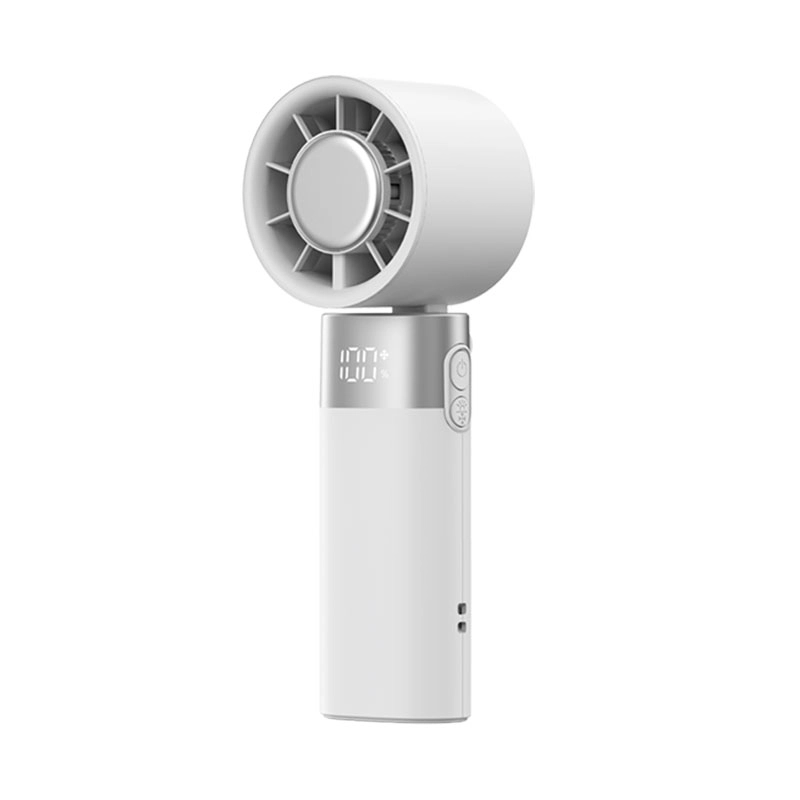
Reliable Handheld Cooling Solution for Bulk & Corporate Purchases
This premium handheld fan is designed for high-frequency, large-volume usage, making it an ideal cooling solution for corporate procurement, promotional distribution, employee welfare programs, and retail wholesale.
With stable airflow performance, a rechargeable design, and lightweight portability, it helps businesses deliver practical comfort products with strong perceived value while maintaining cost efficiency and supply reliability.
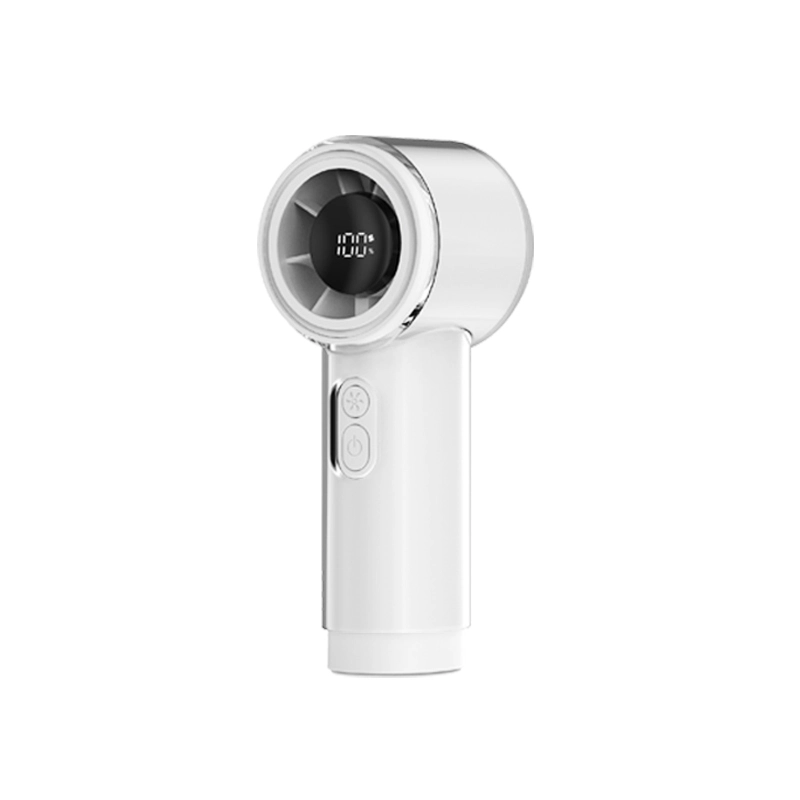
Customizable High-Speed Portable Handheld Fan FS2663
This is a high-speed, long-lasting, personalized, custom, portable cooling product specially designed for gift purchasers, cross-border e-commerce sellers, and OEM/ODM cooperation enterprises. It features (1) strong wind speed, (2) lightweight portability, (3) transparent shell design, (4) convenient carrying with a hand rope, and (5) long battery life. It helps enterprises enhance brand exposure, product differentiation competitiveness, and customer repeat purchase rate.
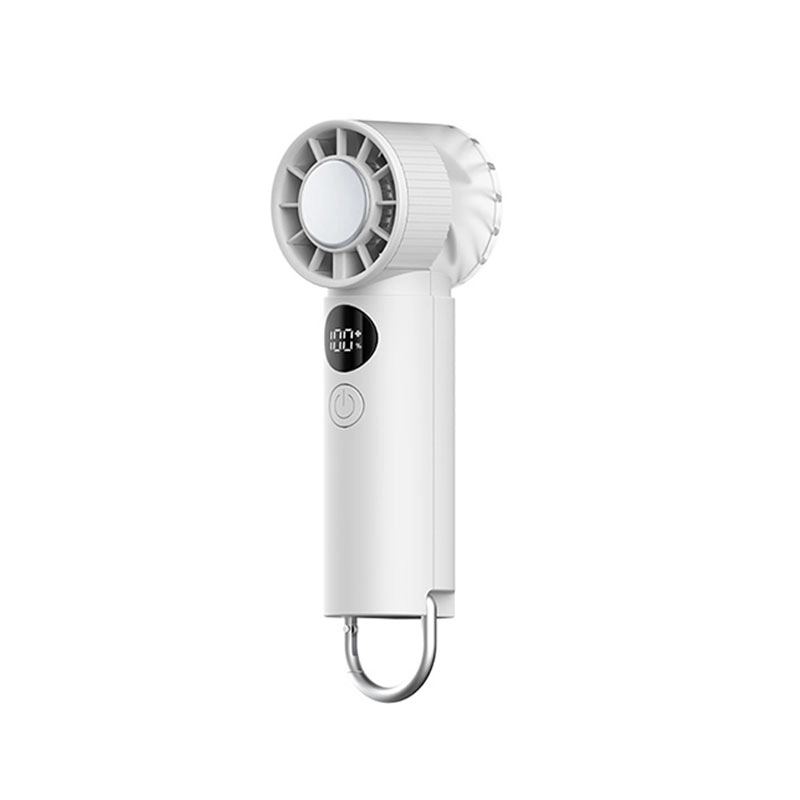
Customizable lightweight mini handheld cooling fan (with climbing hook) FS2666
A portable cooling and personalized customization product specially designed for commuters, students, the gift customization industry, and OEM/ODM buyers. It features (1) lightweight and easy portability, (2) a climbing buckle, and (3) semiconductor cooling.
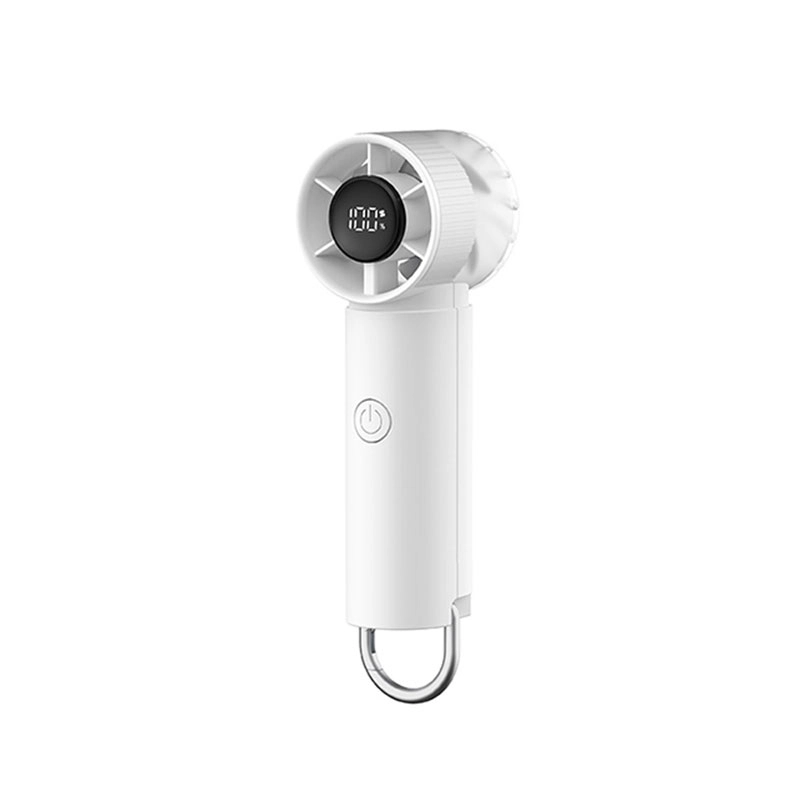
Customizable lightweight mini handheld cooling fan (with climbing hook) FS2667
This is a lightweight and portable + personalized customization product specially designed for commuters, students, the gift customization industry, and OEM/ODM buyers. It features (1) lightweight and easy portability, (2) a climbing buckle, and (3) a semi-transparent air duct design.
Start Your Custom Handheld Fans Manufacturing Project Today
If you have any comments or good suggestions, please leave us a message; later our professional staff will contact you as soon as possible.
Contact


4th Floor, Building 3, Jurong Industrial Park, No. 27-1-1, Fu'an Industrial Zone,Leliu Town (Pancun), Shunde District, Foshan City, Guangdong Province
 Scan QR Code
YouTube
Twitter
Facebook