





Handheld Battery Fan Certification: CE, RoHS, FCC Explained
- Why certification matters for portable cooling products
- Protecting consumers and brands
- Market access and regulatory compliance
- User trust and liability reduction
- Key certifications explained: CE, RoHS, FCC
- CE marking: what's required
- RoHS: restricting hazardous substances
- FCC: emissions, radio modules and digital devices
- Practical certification workflow for handheld battery fans
- Design for compliance
- Testing and documentation
- Working with labs and notified bodies
- Certification comparison table
- Implementation details: checklist, timelines and cost considerations
- Document checklist
- Typical timelines and cost drivers
- Cost and timeline example table
- How RYW Technology ensures compliance and quality
- Manufacturing and R&D capabilities
- Certifications and global reach
- Working with partners on OEM/ODM
- RYW capabilities summary
- Frequently asked questions (FAQ)
- 1. Do I need CE, RoHS and FCC for every handheld fan?
- 2. Can a single test report cover multiple markets?
- 3. How do I prove RoHS compliance for custom components?
- 4. What are common EMC failures for handheld fans?
- 5. How should I prepare documentation for a Technical File?
- 6. If my fan uses a Bluetooth module, how does that change testing?
- 7. How can a contract manufacturer help with certification?
As a consultant and product developer focused on handheld fans and portable cooling, I know the moment of truth comes when a design meets regulatory reality. This article breaks down what CE, RoHS and FCC certifications mean for battery-powered handheld fans—especially custom mini fans—how to prepare designs and documentation, and how to work with labs and manufacturers to achieve compliant products for global markets. I reference official guidance where possible and provide checklists and practical workflows you can apply immediately.
Why certification matters for portable cooling products
Protecting consumers and brands
Certification is not a checkbox; it’s a risk-management tool. For battery-operated handheld fans, non-compliance can lead to safety incidents (battery thermal events, electric shock, or excessive emissions), costly recalls, and reputational damage. I’ve seen designs with excellent thermal management fail on lab reports because of insufficient documentation or inadequate EMC mitigation. Certifications like CE and FCC help ensure products meet basic safety and electromagnetic compatibility standards, protecting both users and brand value.
Market access and regulatory compliance
If you want to sell handheld battery fans into the European Union, CE marking is mandatory for applicable directives. RoHS limits hazardous substances used in components and PCBs, and FCC rules apply to emissions and radio operation in the United States. Without the appropriate marks and declarations, customs blocks, fines, or forced removals can occur. I always start market strategy with regulatory mapping to avoid redesigns late in development.
User trust and liability reduction
Consumers increasingly search for certified and environmentally responsible products. For small, mobile devices such as custom mini fans, the presence of recognized marks and clear safety documentation reduces consumer hesitation and demonstrates due diligence, which has legal benefits in liability cases.
Key certifications explained: CE, RoHS, FCC
CE marking: what's required
CE marking is a declaration that your product meets applicable EU requirements. For handheld fans, relevant directives often include the Low Voltage Directive (LVD) for electrical safety and the Electromagnetic Compatibility (EMC) Directive. The official European Commission guidance provides an overview of CE marking obligations: European Commission: CE Marking. Practically, CE compliance requires a Technical File (design drawings, risk assessment, test reports), an EU Declaration of Conformity, and correct marking on product and packaging.
RoHS: restricting hazardous substances
The Restriction of Hazardous Substances (RoHS) Directive restricts lead, mercury, cadmium, hexavalent chromium, and certain phthalates in electrical and electronic equipment. Handheld fans often include PCBs, battery assemblies, and solder—areas where RoHS compliance matters. For official information see the EU site: EU: RoHS Directive. Manufacturers must maintain supplier declarations, material test reports (e.g., XRF or lab analysis), and ensure components meet substance limits.
FCC: emissions, radio modules and digital devices
FCC rules in the United States regulate radio frequency emissions. Even if a handheld fan has no Wi-Fi or Bluetooth, switching motors and DC-DC converters can produce conducted and radiated emissions; so many small devices require at least unintentional radiator testing. For equipment authorization processes and guidance see: FCC Equipment Authorization. If your custom mini fans include wireless modules, you’ll need either modular approvals or host testing to cover intentional radiators.
Practical certification workflow for handheld battery fans
Design for compliance
I recommend integrating regulatory considerations early in the product lifecycle. Key design activities include:
- Selecting battery cells and protection circuits certified to IEC/UL standards (e.g., IEC 62133 / UL 2054).
- EMC-aware PCB layout (grounding, filtering) to reduce the chance of radiated/conducted failures.
- Material selection for RoHS compliance and flammability considerations.
Early risk assessment (per ISO/IEC 31000 principles) and a living Technical File save time and cost later.
Testing and documentation
Typical tests to plan for handheld battery fans include:
- Electrical safety tests (LVD compliance where applicable)
- EMC emission and immunity tests (EN 55032/EN 55014 family for appliances; FCC Part 15 in the US)
- Battery safety and transport testing (IEC 62133, UN 38.3 for transport)
- Materials / RoHS screening (XRF, lab verification)
Document outputs: test reports from accredited labs, supplier material declarations (CoC, RoHS), assembly and operation manuals, and the Declaration of Conformity. I always keep a traceability matrix linking each requirement to test evidence.
Working with labs and notified bodies
Choosing an accredited lab (e.g., accredited to ISO/IEC 17025) reduces risk. For CE, some modules require Notified Body involvement—check the directive scope. For FCC, accredited test houses familiar with Part 15 and KDB procedures are invaluable. I maintain a shortlist of trusted labs in EU, US and China and advise clients to pre-engage labs during prototyping to validate early iterations.
Certification comparison table
Below is a concise comparison of CE, RoHS and FCC obligations for handheld battery fans.
| Standard/Directive | Scope | Typical Tests / Docs | Relevant Authority |
|---|---|---|---|
| CE Marking | Safety & EMC for EU market | Safety tests (LVD), EMC reports, Technical File, DoC | European Commission |
| RoHS | Restriction of hazardous substances in EEE | Supplier declarations, XRF/lab testing | European Commission |
| FCC (US) | RF emissions and radio equipment | Emission testing (Part 15), modular certification if wireless | FCC |
Implementation details: checklist, timelines and cost considerations
Document checklist
Maintain the following core documents in your Technical File:
- Design drawings and BOM (with supplier IDs)
- Risk assessment (EN ISO 12100-style for machines/appliances)
- Test reports (EMC, safety, battery, RoHS verification)
- Manufacturer's Declaration of Conformity (DoC)
- User manual and safety labeling
- Supplier CoCs and material declarations
Typical timelines and cost drivers
Timelines vary with product complexity. For a basic custom mini fan without wireless modules:
- Design for compliance and prototype tweaks: 2–6 weeks
- Testing and issue remediation: 3–8 weeks
- Documentation and DoC: 1–2 weeks
Cost drivers include number of test configurations (different battery capacities, motor types), the need for wireless tests, and how many iterations you require after initial testing. Budgeting for one full EMC and safety campaign plus RoHS verification is prudent; expect regional variation in lab fees.
Cost and timeline example table
| Phase | Estimated Time | Estimated Cost (USD) |
|---|---|---|
| Prototype testing (EMC + safety) | 3-6 weeks | 3,000 - 8,000 |
| RoHS/materials screening | 1-3 weeks | 500 - 2,000 |
| Battery/UN38.3 (if shipping by air) | 2-4 weeks | 1,000 - 3,000 |
How RYW Technology ensures compliance and quality
Manufacturing and R&D capabilities
I’ve worked with many contract manufacturers; RYW Technology Co., Ltd. stands out for integrating design, R&D, manufacturing and sales under one roof. Founded in 2018 by designers, RYW originated the Ice-Cooling Fan concept and focuses on ergonomic handheld fans. Their modern 4,000 m² facility with three production lines and an in-house R&D team of over 30 experts enables faster prototype iterations and tighter control of quality—critical when moving from prototype to mass production of custom mini fans.
Certifications and global reach
RYW is ISO9001-certified and holds a full suite of global certifications, including CE, CB, UKCA, PSE, KC, UL, FCC, and CCC. This breadth of credentials simplifies multi-region launches because the company already understands the evidence and process each regulatory body requires. I trust partners who can coordinate testing and documentation across regions—the time savings and reduced rework are real.
Working with partners on OEM/ODM
RYW specializes in professional OEM and ODM services, rapid prototyping and agile development. For brands seeking custom mini fans tailored to aesthetics, airflow or battery life, RYW’s end-to-end process—from industrial design to certification support—reduces friction. Their philosophy, Refined in Heart, Simple in Form, aligns with my emphasis on user-centered design that’s also regulatory-aware.
RYW capabilities summary
| Feature | RYW Strength |
|---|---|
| Facility | 4,000 m², three production lines |
| R&D Team | >30 in-house experts; rapid prototyping |
| Certifications | ISO9001, CE, CB, UKCA, PSE, KC, UL, FCC, CCC |
| Products | Handheld Fans, Ice-Cooling Fans, portable cooling solutions |
Contact: adrian@rywlife.com
Frequently asked questions (FAQ)
1. Do I need CE, RoHS and FCC for every handheld fan?
It depends on your target markets. For the EU, CE (and RoHS) are typically required. For the US, FCC testing is needed at least for emissions (unintentional radiators) and certainly if you include wireless modules. Map your target countries early and plan tests accordingly.
2. Can a single test report cover multiple markets?
Some tests (like IEC/EN safety tests) are mutually recognized in several regions, but each market may require different standards or documentation. EMC tests in EU (EN) and US (FCC) have different limits and procedures, so you often need separate reports. Work with a lab experienced in multi-region certification to maximize reuse.
3. How do I prove RoHS compliance for custom components?
Maintain supplier declarations of conformity and perform periodic XRF spot checks or laboratory chemical analysis on suspect components. For critical parts (e.g., solder, battery tabs, plated parts), a lab analysis is the strongest evidence.
4. What are common EMC failures for handheld fans?
Common issues include motor switching noise causing radiated emissions, insufficient grounding or filtering on DC-DC converters, and cable routing that creates antennas. Early EMC pre-compliance scans help identify hotspots before formal testing.
5. How should I prepare documentation for a Technical File?
Include design drawings, BOM with supplier IDs, risk assessments, test reports, user manuals, labeling, and supplier declarations. Keep a traceability matrix linking each directive clause to corresponding evidence. That makes audits and market surveillance much easier to handle.
6. If my fan uses a Bluetooth module, how does that change testing?
Bluetooth introduces intentional radiator rules. You’ll need RF testing for spurious emissions, conducted/radiated output power, and possibly modular approval depending on the module's certification status. Ensure the module’s grant covers your integration scenario.
7. How can a contract manufacturer help with certification?
An experienced OEM/ODM—like RYW—can assist in selecting compliant components, provide initial test fixtures, coordinate with accredited labs, and supply necessary production QA documentation. This reduces integration risk and shortens time to market.
If you’d like hands-on help mapping certification needs for a specific handheld fan project or to discuss OEM/ODM options for custom mini fans, contact me or reach out directly to RYW Technology: adrian@rywlife.com. Explore product options and certification support to accelerate your product launch.
Everything You Need to Know About best rechargeable portable fan
OEM/ODM small portable air conditioner fan Manufacturers and Suppliers
Top ventilateur portatif rechargeable Manufacturers and Suppliers
Everything You Need to Know About rechargeable hand fan wholesale
About Customization
How long is the production time?
Can you provide customized packaging and labels?
Yes, the MOQ is 1,000
Can we do our logo on the machine?
About Logistics
What payment methods do you accept?
About Cooperation
How should I start working with you?
You May Also Like
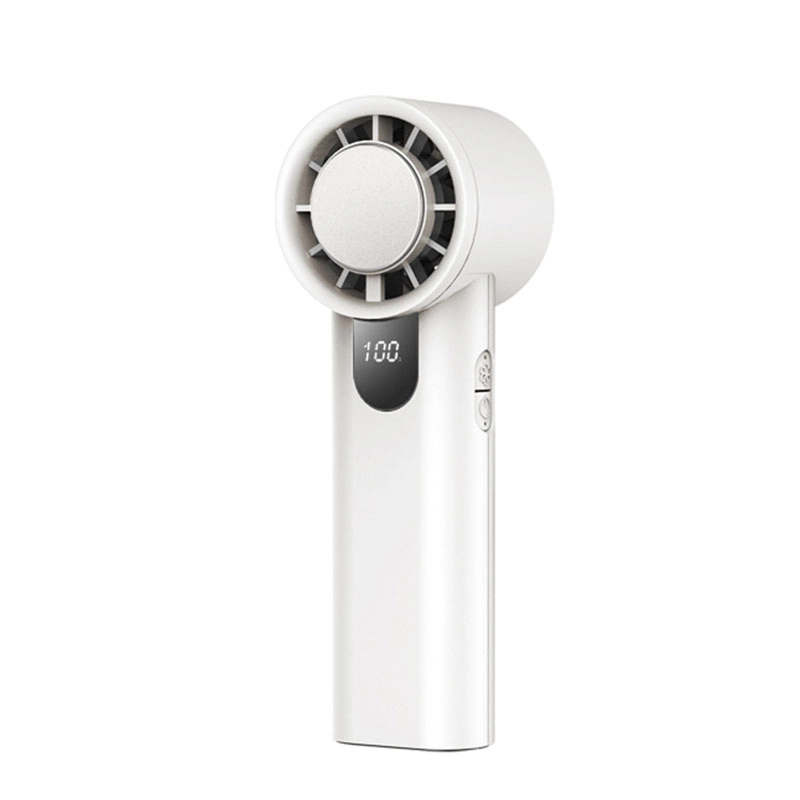
Customizable high-speed handheld fan
Experience powerful breeze on the go with RYW’s Customizable High-Speed Handheld Fan. This hand held electric fan offers personalized designs and compact size, perfect as custom mini fans for travel or events. Stay cool anytime with style and convenience.
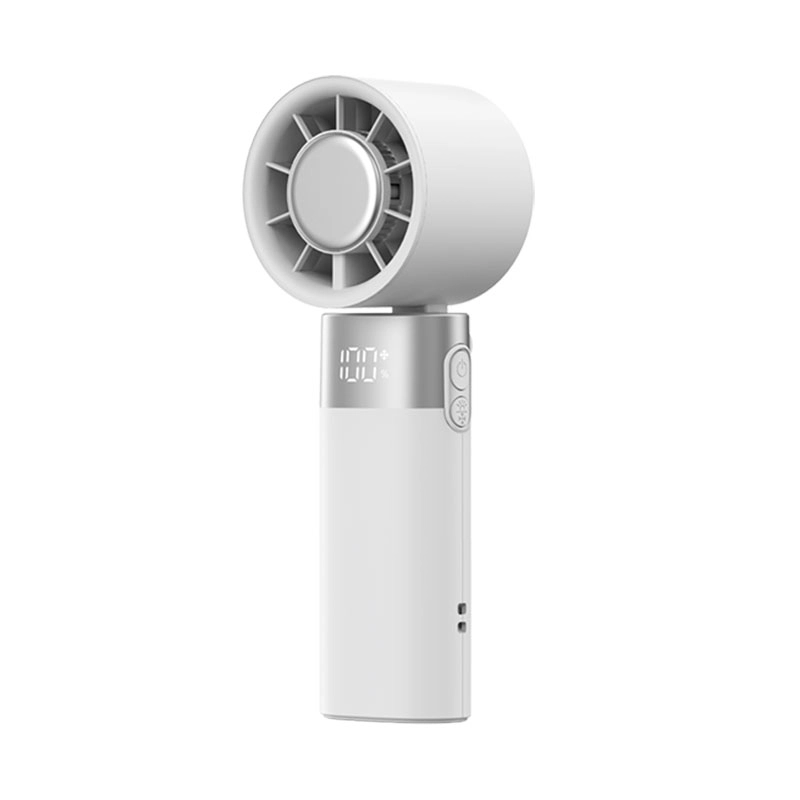
Reliable Handheld Cooling Solution for Bulk & Corporate Purchases
This premium handheld fan is designed for high-frequency, large-volume usage, making it an ideal cooling solution for corporate procurement, promotional distribution, employee welfare programs, and retail wholesale.
With stable airflow performance, a rechargeable design, and lightweight portability, it helps businesses deliver practical comfort products with strong perceived value while maintaining cost efficiency and supply reliability.
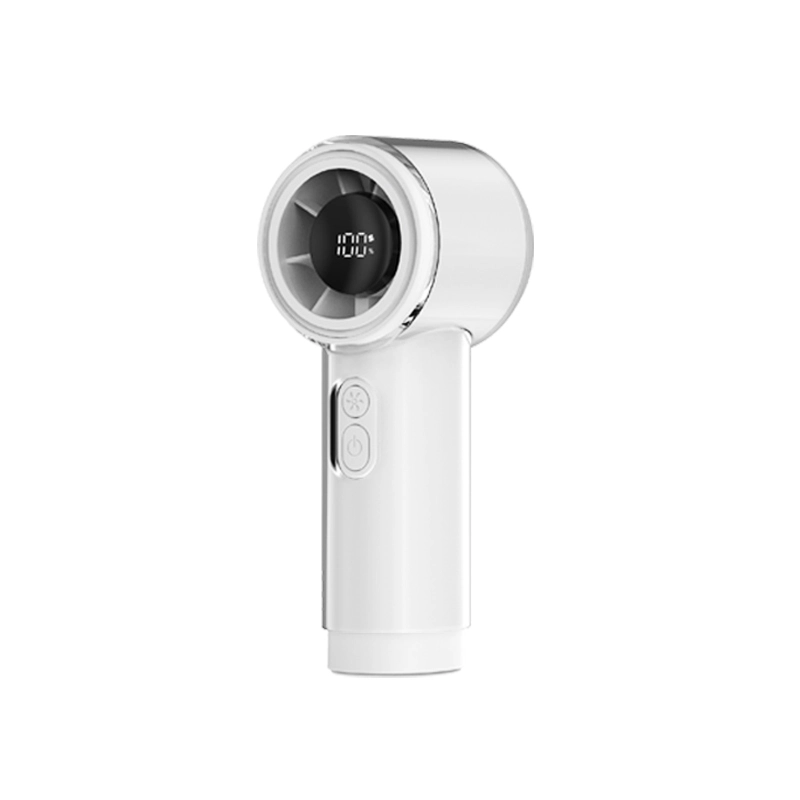
Customizable High-Speed Portable Handheld Fan FS2663
This is a high-speed, long-lasting, personalized, custom, portable cooling product specially designed for gift purchasers, cross-border e-commerce sellers, and OEM/ODM cooperation enterprises. It features (1) strong wind speed, (2) lightweight portability, (3) transparent shell design, (4) convenient carrying with a hand rope, and (5) long battery life. It helps enterprises enhance brand exposure, product differentiation competitiveness, and customer repeat purchase rate.
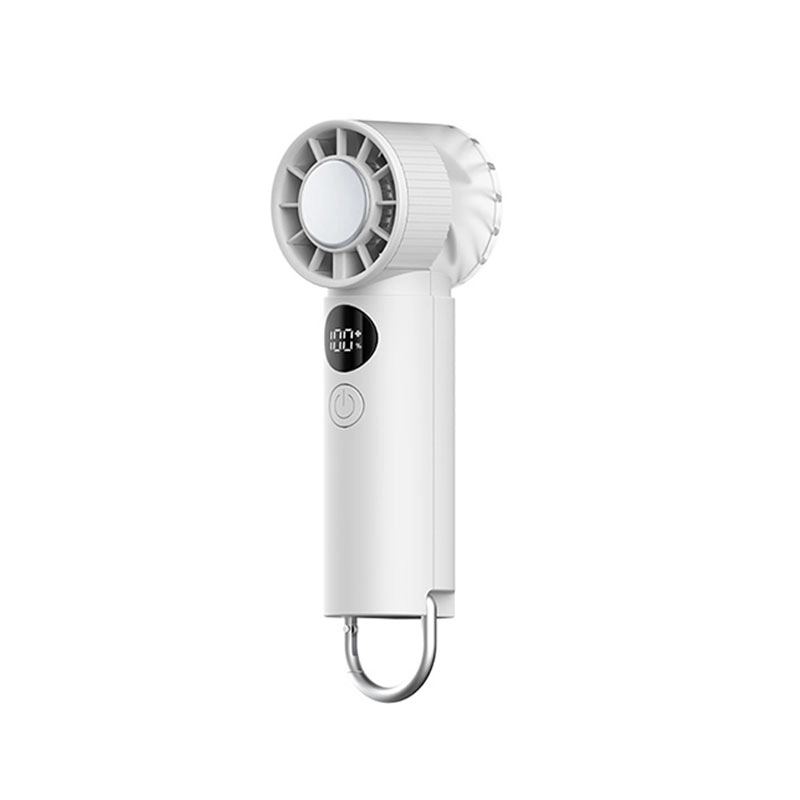
Customizable lightweight mini handheld cooling fan (with climbing hook) FS2666
A portable cooling and personalized customization product specially designed for commuters, students, the gift customization industry, and OEM/ODM buyers. It features (1) lightweight and easy portability, (2) a climbing buckle, and (3) semiconductor cooling.
Get a Quote for Handheld Fan Solution
If you have any comments or good suggestions, please leave us a message; later our professional staff will contact you as soon as possible.
Contact


4th Floor, Building 3, Jurong Industrial Park, No. 27-1-1, Fu'an Industrial Zone,Leliu Town (Pancun), Shunde District, Foshan City, Guangdong Province
 Scan QR Code
YouTube
Twitter
Facebook