


Best Rechargeable Portable Fan: How to Choose by Battery, Airflow and Use Case
- Quick Answer
- Key Takeaways
- Best Rechargeable Portable Fan by Use Case
- Why Rechargeable Portable Fans Are a Better Choice
- What to Look for When Buying a Rechargeable Portable Fan
- 1. Battery Capacity
- 2. Runtime at Different Speeds
- 3. Airflow and CFM
- 4. Noise Level
- 5. Charging Method
- What Does mAh Mean on a Rechargeable Fan?
- Rechargeable Fan vs Battery-Operated Fan: Which Is Better?
- Comparing Common Types of Rechargeable Portable Fans
- Safety, Certifications and Supplier Documentation
- B2B Buyer Checklist for Rechargeable Portable Fans
- Product Performance
- Compliance and Quality
- OEM/ODM and Retail Requirements
- How to Test a Rechargeable Portable Fan Before Ordering
- Information to Confirm Before Requesting a Quote
- Maintenance and Battery Care
- RYW Technology: Rechargeable Portable Fan Manufacturing and OEM/ODM Support
- Frequently Asked Questions
- Discuss Your Rechargeable Fan Project with RYW
Quick Answer
The best rechargeable portable fan depends on where it will be used. For travel and commuting, choose a lightweight handheld fan with USB-C charging and enough runtime for daily use. For desk or bedroom use, prioritize quiet operation, stable airflow and a larger battery. For outdoor, retail or OEM/ODM projects, compare mAh, runtime test conditions, airflow, noise, safety certifications, charging interface, packaging requirements and supplier documentation before ordering.
Key Takeaways
- A good rechargeable portable fan should balance battery capacity, airflow, noise level and portability instead of focusing on only one specification.
- Battery capacity is measured in mAh, but actual runtime also depends on motor power, speed setting, blade design and battery efficiency.
- Higher airflow usually feels cooler, but it can reduce battery life and increase noise.
- USB-C charging is preferred for travel, retail and private-label products because it is convenient and widely compatible.
- Buyers should confirm CE, FCC, RoHS, UL/ETL, PSE, KC or other certifications based on the target market and product configuration.
- For wholesale or OEM/ODM projects, buyers should ask for test reports, sample validation, packaging options, logo customization and after-sales support.
Best Rechargeable Portable Fan by Use Case
The phrase best rechargeable portable fan does not refer to one single model for every situation. The right choice depends on the user’s environment, expected runtime, airflow needs, noise tolerance and purchase purpose.
| Use Case | Best Fan Type | Priority Specs | Suggested Page |
|---|---|---|---|
| Travel and commuting | Mini handheld rechargeable fan | Lightweight body, USB-C charging, pocket-friendly size | USB rechargeable mini handheld travel fan |
| Desk or home office | Rechargeable desk or foldable fan | Stable base, quiet low-speed mode, larger battery | foldable USB rechargeable handheld fan |
| Outdoor heat or events | High-speed rechargeable handheld fan | Strong airflow, durable housing, larger battery | high-speed handheld fan with power bank function |
| Stroller, tent or clip use | Rechargeable clip-on fan | Clip design, adjustable angle, safe grille | rechargeable clip USB fan |
| Retail or private label | OEM/ODM rechargeable fan | Certifications, packaging, logo options, sample process | wholesale rechargeable handheld fan FAQ |
For individual users, the best fan is usually the one that fits the daily use scenario. For B2B buyers, the best rechargeable portable fan is the one that matches product positioning, target market compliance, packaging requirements and expected quality level. Buyers can also review the full handheld fan product range when comparing models.
Why Rechargeable Portable Fans Are a Better Choice
Rechargeable portable fans combine compact size with cordless operation. Common categories include handheld fans, mini desk fans, neck fans, foldable fans and clip-on fans. They provide targeted airflow for personal cooling without requiring a wall outlet during use.
Compared with disposable battery fans, rechargeable fans can reduce the need for replacement batteries and are more convenient for travel, commuting, outdoor events, offices and retail programs. Modern rechargeable fans often use lithium-ion batteries, USB-C charging, multiple speed settings and efficient motors to balance airflow and runtime.
For buyers comparing products, the main question is not simply “which fan is strongest?” A stronger fan may use more power, create more noise and shorten runtime. A better question is: which rechargeable portable fan provides the right balance of battery life, airflow, noise and portability for the intended use?
What to Look for When Buying a Rechargeable Portable Fan
When choosing the best rechargeable portable fan, compare the following factors before making a purchase or placing a bulk order.
1. Battery Capacity
Battery capacity is usually measured in mAh. Many rechargeable portable fans commonly use batteries from around 2,000 mAh to 10,000 mAh, depending on product size and intended use. This range is a general product-category reference, not a guarantee for every model.
- 2,000–3,000 mAh is often suitable for short trips, commuting or occasional use.
- 4,000–5,000 mAh can support longer daily use with better runtime flexibility.
- 5,000 mAh or above may be more suitable for desk fans, outdoor use or users who need longer low-speed operation.
However, mAh alone does not guarantee runtime. Two fans with the same battery capacity may perform differently because of motor efficiency, blade design, speed settings and battery management. For a deeper sourcing reference, review the minimum battery capacity requirements for handheld fans.
2. Runtime at Different Speeds
Runtime should be checked by speed level, not only by the maximum advertised number. A fan may run for many hours on low speed but only a much shorter time on high speed.
- How long does the fan run on low, medium and high speed?
- What battery capacity was used in the runtime test?
- Was the test performed under normal room temperature?
- Does high-speed mode maintain stable airflow over time?
For B2B buyers, runtime test conditions are especially important. A supplier should be able to explain how the runtime was measured and provide consistent test data for samples and production batches.
3. Airflow and CFM
Airflow is often measured in CFM, or cubic feet per minute. Higher CFM usually means stronger airflow, but it may also increase power consumption and noise.
For personal cooling, airflow should be judged together with distance and comfort. A handheld fan may feel strong at close range but not at a desk distance. A desk fan may need wider air coverage rather than only high-speed airflow.
A practical way to evaluate airflow is to test the fan at common use distances, such as 30 cm and 1 m. Buyers can compare this with the recommended CFM for portable fans to decide whether a model fits the intended use.
4. Noise Level
Noise is measured in dB. A fan for office, bedroom or study use should have a quiet low-speed mode. A high-speed fan for outdoor use may be louder, but that can be acceptable if the main goal is strong cooling.
- Noise level at low, medium and high speed
- Whether the sound is smooth or has buzzing tones
- Whether vibration increases after extended use
- Whether the fan remains stable when placed on a desk
For quiet environments, low-speed noise is more important than maximum airflow. Buyers comparing office-use models can also review the guide to quietest portable fans for office use.
5. Charging Method
USB-C charging is now preferred for most rechargeable portable fans. It is convenient, widely compatible and better suited for travel chargers, power banks and retail users.
Older micro-USB charging can still work, but it may be less convenient for modern users. For retail or private-label projects, USB-C may also improve product appeal because many customers already use USB-C cables for phones, tablets and other devices.
- USB-C or micro-USB interface
- Charging time
- Cable quality
- Charging protection
- Compatibility with power banks and common adapters
What Does mAh Mean on a Rechargeable Fan?
mAh stands for milliampere-hour. It describes battery capacity. In simple terms, a higher mAh number usually means the battery can store more energy.
However, mAh does not directly tell you how strong the fan is or exactly how long it will run. Runtime depends on several factors:
- Motor power
- Speed setting
- Blade size and blade design
- Circuit efficiency
- Battery quality
- Temperature and usage conditions
For example, a 5,000 mAh fan may run for many hours on low speed but much less time on high speed. This is why buyers should compare runtime by speed level instead of judging only by battery capacity.
For B2B projects, buyers should request runtime test data for each speed setting. This helps avoid confusion between marketing claims and real-use conditions.
Rechargeable Fan vs Battery-Operated Fan: Which Is Better?
Rechargeable fans and battery-operated fans can both provide portable cooling, but they are not the same.
| Comparison Point | Rechargeable Fan | Battery-Operated Fan |
|---|---|---|
| Power source | Built-in rechargeable battery | Disposable or replaceable batteries |
| Long-term cost | Usually lower after repeated use | Can be higher if batteries are replaced often |
| Convenience | Can be charged by USB cable or power bank | Requires spare batteries |
| Travel use | Convenient if USB charging is available | Useful where charging is not available |
| B2B consideration | Requires battery safety and charging documentation | Requires battery compatibility and packaging clarity |
For most daily-use products, rechargeable fans are more convenient and practical. Battery-operated fans may still be useful for emergency kits or locations where charging access is limited.
Comparing Common Types of Rechargeable Portable Fans
| Fan Type | Typical Battery Range | Typical Use | Main Advantage | Main Trade-Off |
|---|---|---|---|---|
| Handheld fan | 1,500–4,000 mAh | Travel, commuting, outdoor walking | Lightweight and easy to carry | Smaller battery and shorter high-speed runtime |
| Mini desk fan | 3,000–8,000 mAh | Office, home, bedside | Stable airflow and longer low-speed use | Less pocket-friendly |
| Neck fan | 2,000–6,000 mAh | Walking, outdoor activities, hands-free cooling | Hands-free operation | Fit and comfort vary by user |
| Clip-on fan | 3,000–8,000 mAh | Strollers, tents, shelves, small spaces | Flexible mounting position | Clamp strength and grille safety are important |
| Foldable fan | 3,000–10,000 mAh | Travel, desk, multi-use scenarios | Portable but more stable than pocket fans | Hinge durability should be checked |
The best choice depends on the balance between use case, battery life, airflow, noise and product design.
Safety, Certifications and Supplier Documentation
Safety is especially important for rechargeable products because they include lithium batteries and charging circuits. A reliable rechargeable portable fan should be designed with appropriate protection against overcharge, overdischarge, overheating and short circuits.
For consumer markets, buyers should check whether the product has the required safety and EMC documentation. Certifications and requirements may vary by country or region, so buyers should confirm the rules for their target market before importing or selling.
Common certification and compliance topics may include CE, FCC, RoHS, UL/ETL, PSE, KC, CCC, UN38.3 or other documents depending on the market, battery configuration and shipping method. For USB fan compliance planning, buyers can review the USB fan certification checklist.
- Product specification sheet
- Battery capacity and runtime test report
- Charging and electrical safety information
- Relevant certification or compliance documents
- Material and packaging information
- User manual
- Warranty and after-sales policy
- Sample approval process
- Batch inspection process
B2B Buyer Checklist for Rechargeable Portable Fans
If you are sourcing rechargeable portable fans for retail, distribution, promotional gifts or private-label programs, use this checklist before placing an order.
Product Performance
- What battery capacity does the product use?
- What is the runtime on each speed setting?
- What is the airflow performance?
- What is the noise level at low, medium and high speed?
- Does the fan maintain stable performance after long use?
- Is the charging interface USB-C?
Compliance and Quality
- Which certifications are available for the exact model?
- Are test reports available for the exact battery configuration?
- Does the supplier have quality management processes?
- Are incoming materials and production batches inspected?
- Is battery safety documentation available?
OEM/ODM and Retail Requirements
- Can the supplier support logo customization?
- Can packaging be customized?
- Can colors or accessories be adjusted?
- What is the sample process?
- What information is needed before quotation?
- What are the quality control steps before shipment?
- What after-sales support is available?
How to Test a Rechargeable Portable Fan Before Ordering
A sample test should reflect real use conditions. When checking a sample, do not only turn it on for a few seconds. Test it as a customer would use it.
- Charge the fan fully before testing.
- Test low, medium and high speed.
- Measure runtime at the speed most relevant to your market.
- Feel airflow at common distances.
- Listen for vibration, buzzing or unstable motor noise.
- Check whether the fan becomes hot during use or charging.
- Inspect the charging port and cable connection.
- Check the grille, handle, clip, hinge or base for durability.
- Review packaging, user manual and warning labels.
- Confirm certification documents and test reports.
Information to Confirm Before Requesting a Quote
Before asking a supplier for a quotation, prepare the details that affect product cost, compliance and delivery planning. These items should be confirmed for each project instead of assumed from a general buying guide.
- Target market and required certifications
- Fan type, size, battery capacity and charging interface
- Expected runtime and speed settings
- Logo, color, packaging or accessory customization
- Sample quantity and sample approval requirements
- Order quantity, carton requirements and shipping method
- Documentation needed for import, retail listing or marketplace compliance
- Timeline, inspection requirements and after-sales expectations
Maintenance and Battery Care
Proper care can help a rechargeable portable fan maintain airflow and battery performance. Buyers and end users should follow the product manual for cleaning, charging and storage.
- Clean dust from the grille and blades according to the manufacturer’s instructions.
- Do not wash electrical parts directly with water unless the product is designed for that use.
- Avoid storing the fan in very hot or very cold environments.
- If the fan will not be used for a long time, store it with partial battery charge rather than leaving it fully drained.
- Use compatible charging cables and adapters.
- Avoid blocking the air inlet or outlet during use.
For B2B buyers, maintenance instructions should be clear in the user manual. A good manual can reduce customer complaints and after-sales risk. For more user-care guidance, see the guide on how to clean and maintain a portable cooling fan.
RYW Technology: Rechargeable Portable Fan Manufacturing and OEM/ODM Support
RYW Technology Co., Ltd. was founded in 2018 and focuses on personal cooling solutions, including handheld fans and rechargeable portable fan products. The company provides OEM/ODM services and supports product development, customization and production for brand, retail and distribution needs.
According to current site information, RYW has a 4,000 m² facility, three production lines and an in-house R&D team of over 30 experts. The company’s available certification information includes CE, FCC, RoHS, GB and ISO9001.
For buyers developing rechargeable portable fans, RYW can be considered for product discussion, sample review, customization, packaging requirements and market-specific compliance planning. Before placing an order, buyers should still confirm product specifications, certification documents, battery details, packaging requirements and delivery terms for the exact project.
Frequently Asked Questions
What is the best rechargeable portable fan?
The best rechargeable portable fan is the one that matches the intended use. For travel, choose a lightweight handheld fan with USB-C charging. For desk or bedroom use, choose a quiet fan with stable airflow and a larger battery. For outdoor use, prioritize stronger airflow and longer high-speed runtime. For wholesale or OEM/ODM projects, also check certifications, packaging, test reports and supplier quality control.
How long does a rechargeable portable fan last?
Runtime depends on battery capacity, motor power and speed setting. Smaller handheld fans may run for a few hours, while larger rechargeable fans can run much longer on low speed. Always compare runtime by low, medium and high speed instead of relying only on the maximum advertised runtime.
What does mAh mean on a fan?
mAh means milliampere-hour and describes battery capacity. A higher mAh battery can usually store more energy, but actual fan runtime also depends on motor efficiency, blade design, speed level and battery quality.
What mAh is good for a rechargeable fan?
For short trips or commuting, 2,000–3,000 mAh may be enough. For longer daily use, 4,000–5,000 mAh provides more flexibility. For desk, outdoor or long-runtime use, 5,000 mAh or above may be more suitable. The best choice depends on size, airflow and use case.
Is USB-C important for rechargeable portable fans?
Yes. USB-C is convenient, widely compatible and better suited for modern travel chargers and power banks. For retail and private-label products, USB-C can also improve user experience because many customers already use USB-C cables.
Is a rechargeable fan better than a battery-operated fan?
A rechargeable fan is usually better for repeated daily use because it can be charged again and does not require frequent disposable battery replacement. Battery-operated fans can still be useful for emergency situations or locations where charging access is limited.
What certifications should a rechargeable portable fan have?
Certification requirements depend on the target market. Buyers may need CE, FCC, RoHS, UL/ETL, PSE, KC, CCC, UN38.3 or other documents. B2B buyers should ask suppliers for test reports and certificates that match the exact product model and battery configuration.
Can rechargeable portable fans be customized for wholesale orders?
Many rechargeable portable fans can be customized for wholesale or OEM/ODM projects, including logo, color, packaging and some design details. Buyers should confirm customization options, sample process, certification requirements, production timeline and quality control steps with the supplier.
Discuss Your Rechargeable Fan Project with RYW
Choosing the best rechargeable portable fan requires more than comparing product photos or battery size. A good fan should match the user’s real scenario and balance battery capacity, runtime, airflow, noise, charging method, safety and portability.
For retail, wholesale or OEM/ODM projects, buyers should also evaluate certifications, test reports, packaging, sample approval and supplier quality control. Share your target market, product type, battery requirements, packaging needs and certification requirements with RYW before requesting a quotation.
Handheld Battery Fan Buying Guide: Specs for Bulk Purchases
Top Portable Fan Suppliers for Wholesale and OEM Services
Rechargeable Fan Battery Types: Li-ion vs NiMH
Top 10 Portable Mini Fans for Travel and Outdoor Use
You May Also Like
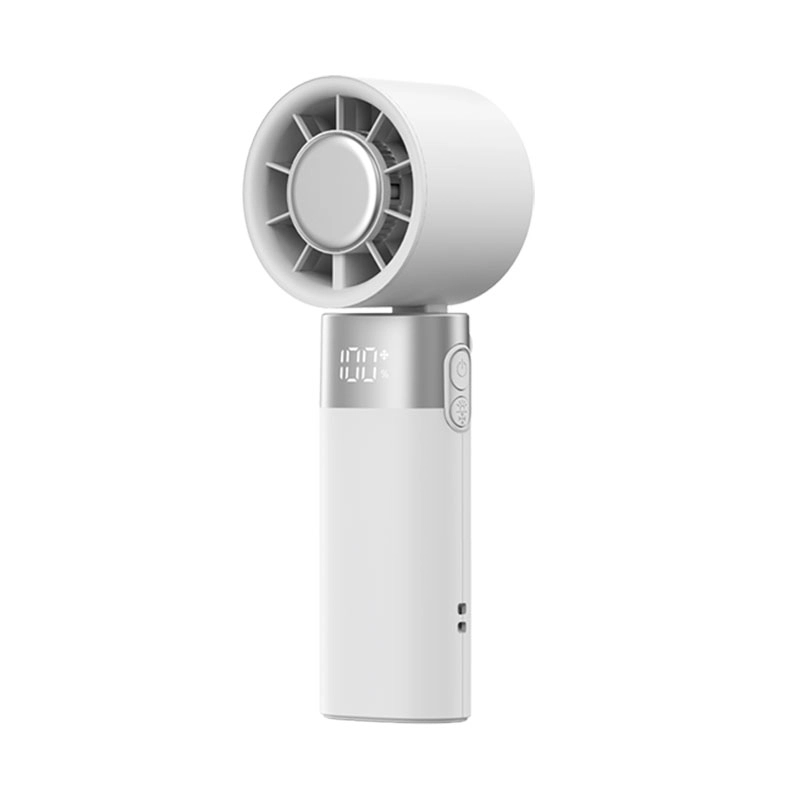
Reliable Handheld Cooling Solution for Bulk & Corporate Purchases
This premium handheld fan is designed for high-frequency, large-volume usage, making it an ideal cooling solution for corporate procurement, promotional distribution, employee welfare programs, and retail wholesale.
With stable airflow performance, a rechargeable design, and lightweight portability, it helps businesses deliver practical comfort products with strong perceived value while maintaining cost efficiency and supply reliability.
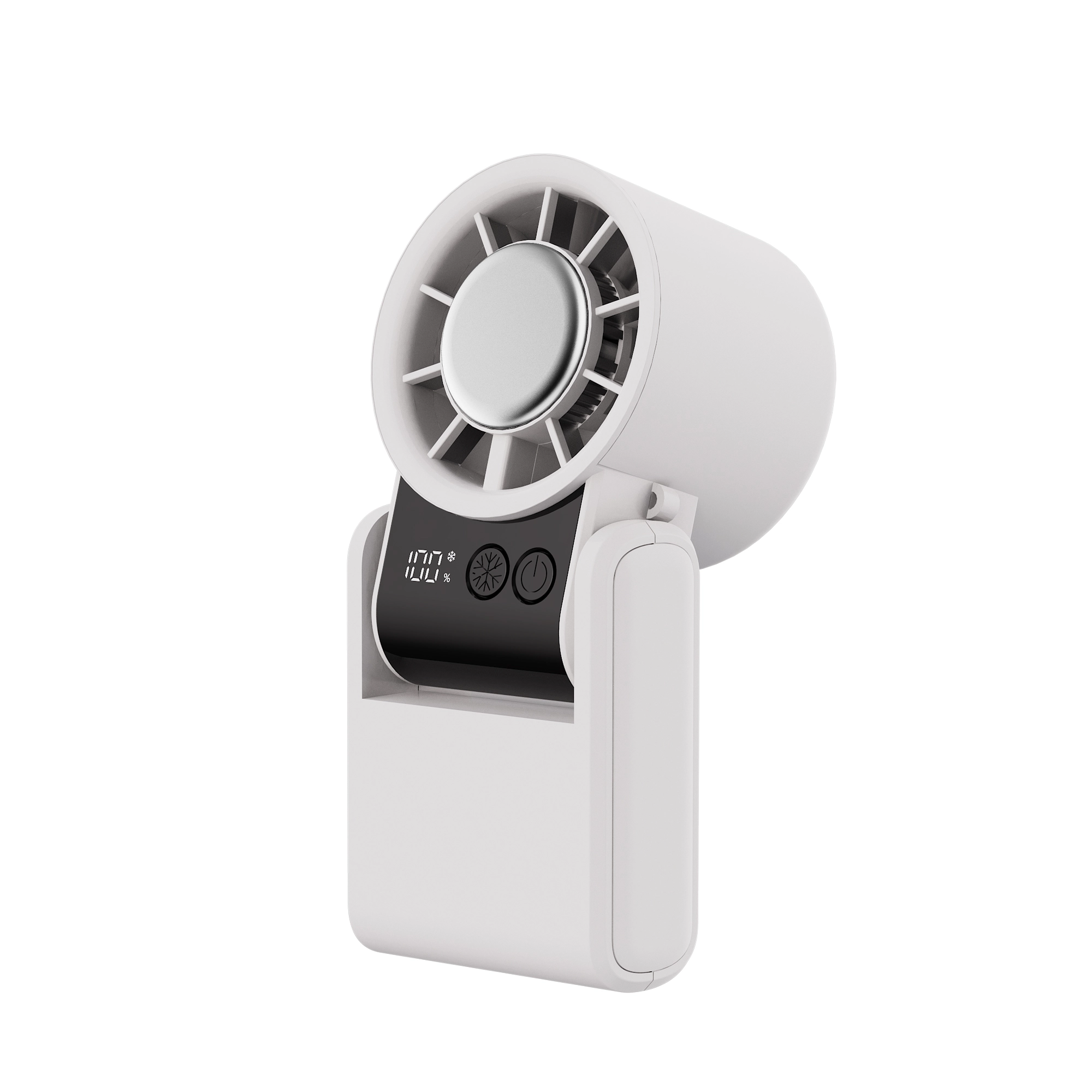
Reliable Handheld Cooling Solutions for Bulk and Corporate Orders
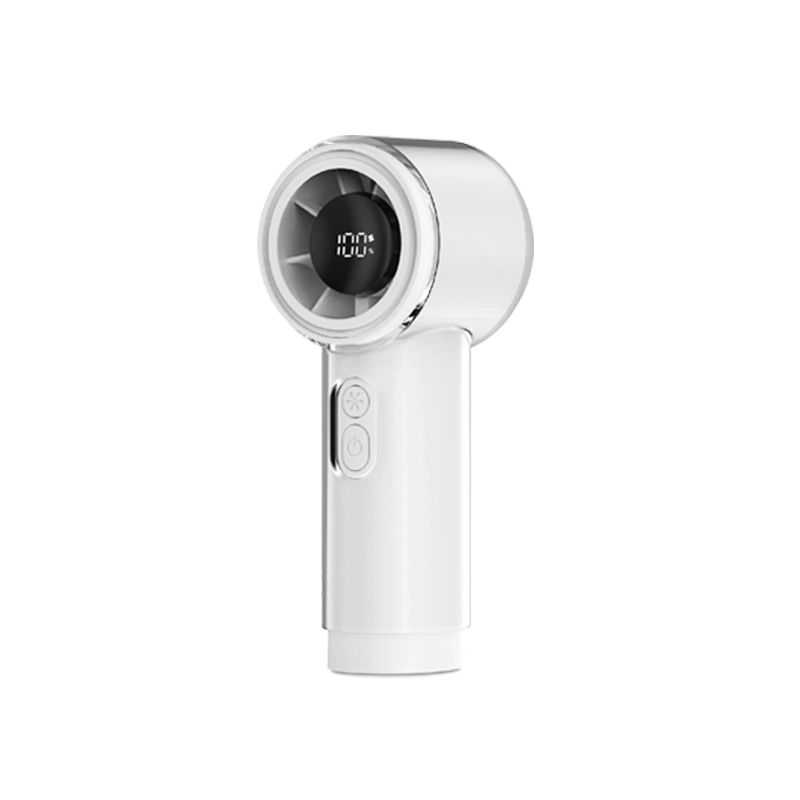
Customizable High-Speed Portable Handheld Fan FS2663
This is a high-speed, long-lasting, personalized, custom, portable cooling product specially designed for gift purchasers, cross-border e-commerce sellers, and OEM/ODM cooperation enterprises. It features (1) strong wind speed, (2) lightweight portability, (3) transparent shell design, (4) convenient carrying with a hand rope, and (5) long battery life. It helps enterprises enhance brand exposure, product differentiation competitiveness, and customer repeat purchase rate.
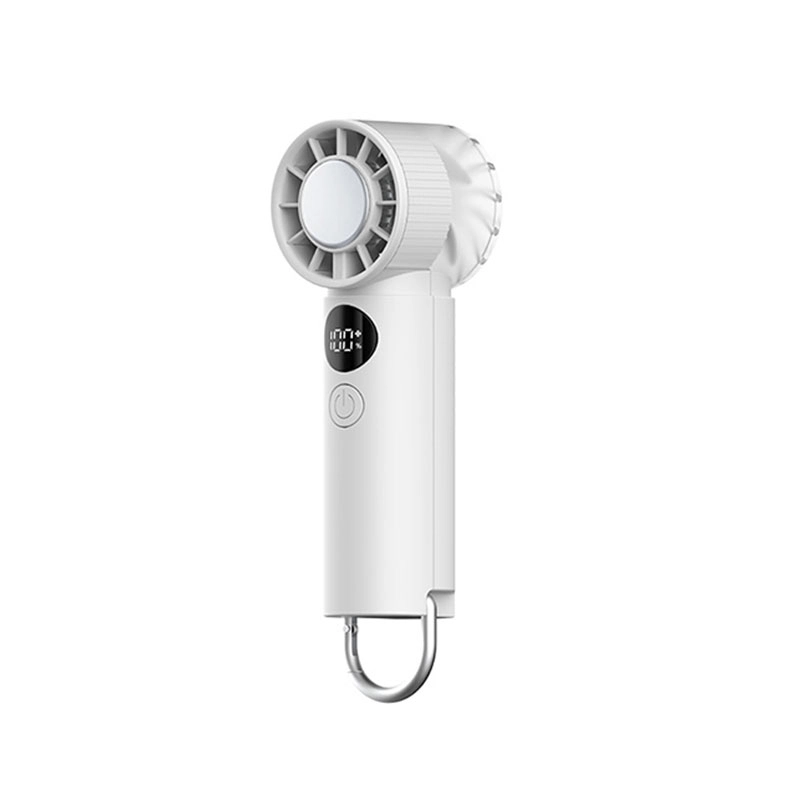
Customizable lightweight mini handheld cooling fan (with climbing hook) FS2666
A portable cooling and personalized customization product specially designed for commuters, students, the gift customization industry, and OEM/ODM buyers. It features (1) lightweight and easy portability, (2) a climbing buckle, and (3) semiconductor cooling.
Get a Quote for Handheld Fan Solution
If you have any comments or good suggestions, please leave us a message; later our professional staff will contact you as soon as possible.
Contact


4th Floor, Building 3, Jurong Industrial Park, No. 27-1-1, Fu'an Industrial Zone,Leliu Town (Pancun), Shunde District, Foshan City, Guangdong Province
 Scan QR Code
YouTube
Twitter
Facebook