






What battery type is used in handheld fans? | Insights by RYW
- 1. What battery type provides the longest real-world runtime for high-speed handheld fans without significantly increasing weight?
- 2. Are rechargeable Li-ion (built-in) handheld fans safe to carry on airplanes and what battery specs matter for TSA/FAA limits?
- 3. How do I compare mAh ratings across Li-ion, NiMH and alkaline batteries to predict actual run time for a specific fan?
- 4. Can I replace the internal lithium-polymer battery in a USB-rechargeable handheld fan, and how to do it safely?
- 5. What charging standards (USB-C PD, Quick Charge) are compatible with high-power handheld fans and will fast charging harm battery life?
- 6. For outdoor use and festivals, which battery type supports hot-swap or external power bank use for all-day operation?
What Battery Type Is Used in Handheld Fans? In-Depth Buyer Guide
Choosing the right battery for a handheld fan affects runtime, weight, safety, portability and serviceability. This guide answers six specific, frequently asked long-tail questions from buyers — with data-driven explanations, real-world calculations and actionable purchase recommendations. Semantic topics covered include rechargeable battery, lithium-ion, LiPo, NiMH AA, 18650 cells, battery capacity (mAh), USB-C charging, battery protection circuit, run time, and power bank compatibility.
1. What battery type provides the longest real-world runtime for high-speed handheld fans without significantly increasing weight?
Summary answer: high-energy-density lithium-ion (Li-ion) or lithium-polymer (LiPo) packs typically deliver the best runtime-to-weight ratio. Typical built-in LiPo packs for handheld fans range from ~1,500 mAh to 5,000 mAh (nominal 3.7 V). Discrete 18650 Li-ion cells (2,500–3,500 mAh) can provide longer runtime but add weight and require proper holders/electronics.
Why: Li-ion/LiPo chemistries offer far higher energy density than NiMH or alkaline cells. Energy (Wh) = (mAh × V) / 1000. Example: a 3,000 mAh 3.7 V Li-ion pack = 11.1 Wh. To match that energy with NiMH AAs (each ~2,000 mAh at 1.2 V), you'd need multiple cells in series and parallel, which increases weight and volume.
Practical runtime estimate: fan power draw varies by speed (commonly 2.5–8 W for handheld fans). If a fan draws 4 W at high speed, a 11.1 Wh battery yields roughly 11.1 / 4 = 2.8 hours. Accounting for boost/efficiency losses (10–20%), expect ~2.2–2.5 hours.
Recommendation: for high-speed use where weight matters, choose Li-ion/LiPo packs with 3,000–5,000 mAh and look for devices that specify real-world run times at each speed. If you prefer replaceable cells and slightly longer runtime per dollar, a fan built around 18650 cells is a good alternative — verify the device has battery holders and a quality protection circuit.
2. Are rechargeable Li-ion (built-in) handheld fans safe to carry on airplanes and what battery specs matter for TSA/FAA limits?
Short answer: Yes, most small built-in Li-ion/LiPo batteries in handheld fans are safe to carry in carry-on luggage if they are under FAA/TSA limits — but some rules apply. The key spec is watt-hours (Wh). The FAA limits most lithium batteries to 100 Wh per battery for routine carriage in carry-on; up to 160 Wh requires airline approval. Spare (loose) lithium batteries must be in carry-on and not checked.
How to calculate Wh if only mAh and voltage are listed: Wh = (mAh × V) / 1000. Example: a 2,500 mAh 3.7 V pack = 2,500 × 3.7 / 1000 = 9.25 Wh (well under 100 Wh).
Practical guidance: confirm your handheld fan's battery label or user manual for Wh or mAh and voltage. If the device uses replaceable 18650 cells, check each cell’s Wh (e.g., 3,500 mAh × 3.7 V = 12.95 Wh). Always carry spare lithium batteries in carry-on, protect terminals, and consult the airline if planning batteries between 100–160 Wh.
3. How do I compare mAh ratings across Li-ion, NiMH and alkaline batteries to predict actual run time for a specific fan?
Issue: mAh alone is not a direct runtime predictor across chemistries because voltage differs. Convert to watt-hours to compare energy content: Wh = (mAh × V) / 1000. Example comparisons:
- 3,000 mAh Li-ion pack at 3.7 V → 11.1 Wh
- 2,400 mAh NiMH AA × 3 cells in series (1.2 V each) → 2,400 × 3.6 / 1000 = 8.64 Wh
- 2,500 mAh alkaline AA × 3 cells in series (1.5 V each) → 2,500 × 4.5 / 1000 = 11.25 Wh (but alkalines have voltage sag under load)
Other factors: discharge curve (Li-ion maintains voltage better under load), internal resistance (affects voltage drop and heating), and temperature. A fan’s motor electronics may include boost converters; these add ~10–20% overhead and reduce usable energy. To estimate runtime: compute Wh of battery, divide by measured fan power (W) and subtract losses (10–20%).
Practical tip: if a manufacturer lists runtime at high/medium/low speeds, use those figures as primary guidance. If not, measure device current draw with a USB power meter for USB-powered fans or use the Wh calculation for battery packs.
4. Can I replace the internal lithium-polymer battery in a USB-rechargeable handheld fan, and how to do it safely?
Short answer: Sometimes yes, but only if the fan is designed for serviceability or you have electronics repair experience. Many modern handheld fans have glued-in LiPo packs and integrated protection PCBs — replacing them requires skill and caution. Incorrect replacement risks fire, shorting, or loss of protection circuitry.
Safe-replacement checklist:
- Confirm the fan’s warranty and service policy. If under warranty, contact the manufacturer or authorized service center.
- Obtain an exact-spec replacement: same chemistry (Li-ion/LiPo), identical nominal voltage (e.g., 3.7 V), equal or slightly higher mAh, and matching connector type and polarity.
- Ensure the replacement includes a battery protection circuit (overcharge, over-discharge, short-circuit protection) or that the fan’s internal PCB provides equivalent protection.
- Use proper tools and ESD-safe workspace. Avoid puncturing or deforming cells. Reapply adhesive and seals per original design to prevent movement and shorting.
- Test charging and discharge under supervision; monitor temperature the first few cycles.
If you’re not experienced with lithium battery repair, have the replacement performed by a qualified technician or ask the vendor about a battery-replacement program. Replacing cells without restoring protection circuits is not recommended.
5. What charging standards (USB-C PD, Quick Charge) are compatible with high-power handheld fans and will fast charging harm battery life?
Compatibility: Most handheld fans with USB charging accept 5 V charging via micro-USB or USB-C. Some higher-end fans implement USB-C Power Delivery (PD) or QC to allow higher input voltages (9 V or 12 V) and faster charging. However, the fan’s internal charge controller determines supported profiles — the charger must match the device's supported voltage/current or default to 5 V.
Will fast charging harm battery life? Fast charging increases charge current and can raise cell temperature, which accelerates calendar and cycle aging. Modern Li-ion/LiPo chemistries and quality charge controllers mitigate this by using multi-stage charging and thermal-management. Typical trade-offs:
- Standard charging (0.5 C to 1 C): better long-term cycle life (300–1000+ cycles depending on cell quality).
- Fast charging (above 1 C): faster charge, modest reduction in cycle life over years; acceptable if device and cells are designed for it.
Recommendation: Use the manufacturer-supplied charger or a reputable USB-C PD charger that negotiates the correct power profile. Avoid forcing higher voltages/currents than the fan supports. If battery longevity is the priority, charge at lower currents and avoid high-temperature charging conditions.
6. For outdoor use and festivals, which battery type supports hot-swap or external power bank use for all-day operation?
Best options: fans that accept external USB power (5 V input) or use removable battery packs (18650 cells or replaceable Li-ion packs) enable effectively unlimited run time when paired with a power bank or spare batteries.
Considerations:
- Power banks: choose a quality power bank rated for continuous 2 A+ output at 5 V for high-speed fans. For extended events, 10,000–20,000 mAh power banks are common; a 20,000 mAh (5 V) power bank contains ~74 Wh (20,000 mAh × 3.7 V/1000 ≈ 74 Wh usable after conversion losses) and can run many fans for multiple hours depending on draw.
- Auto-shutoff: some power banks shut off at low draw (e.g., when the fan runs at low speed). Choose a power bank with a low auto-off threshold or one labeled for low-power devices.
- Hot-swap removable cells: fans using 18650 cells allow you to swap discharged cells with charged spares. This is fast and efficient for multi-day events; ensure you carry cells in protective cases and transport them per airline rules if flying.
- Pass-through charging: if you need to charge the battery while powering the fan, pick a fan or power bank that explicitly supports pass-through (charging the bank while outputting power), although pass-through can slightly increase thermal stress.
Practical setup: carry a 10,000–20,000 mAh power bank with USB-C or USB-A output and a short rated cable; if you expect high-speed continuous use, bring a spare charged battery pack or extra 18650 cells to hot-swap.
Concluding summary — advantages of each battery approach
Li-ion/LiPo (built-in) — Advantages: highest energy density, lightweight, compact, USB-C fast charging possible and predictable run times. Best for users prioritizing portability and integrated design. Disadvantages: serviceability can be limited unless designed for replacement.
18650 removable Li-ion cells — Advantages: high per-cell capacity, easy to hot-swap, economical for heavy users, long runtime if you carry spares. Disadvantages: heavier than optimized LiPo packs and require correct holders/protection circuits.
NiMH (AA/AAA) — Advantages: replaceable with widely available cells, safer chemistry compared with LiPo for DIY repairs, decent cycle life. Disadvantages: lower energy density, bulkier for same runtime, voltage and performance vary under load.
Disposable alkaline — Advantages: easy to replace in emergencies, no charging needed. Disadvantages: poor energy-to-weight ratio for continuous use and higher long-term cost.
Overall buying guidance: determine whether you prioritize lowest weight, easiest serviceability, or the ability to hot-swap external power. For most buyers seeking the best runtime-to-weight tradeoff, a Li-ion/LiPo fan with 3,000–5,000 mAh and USB-C charging is the optimal choice. For continuous festival use, prefer removable 18650-based fans or USB-powered fans paired with a high-capacity power bank. Always verify battery Wh for air travel, use manufacturer-recommended chargers, and prefer products with built-in battery protection circuits.
For a tailored recommendation or bulk purchase quote based on runtime, weight and airport rules, contact us for a quote at adrian@rywlife.com or visit www.rywlife.com.
Contacts
WhatsApp/Phone
You May Also Like
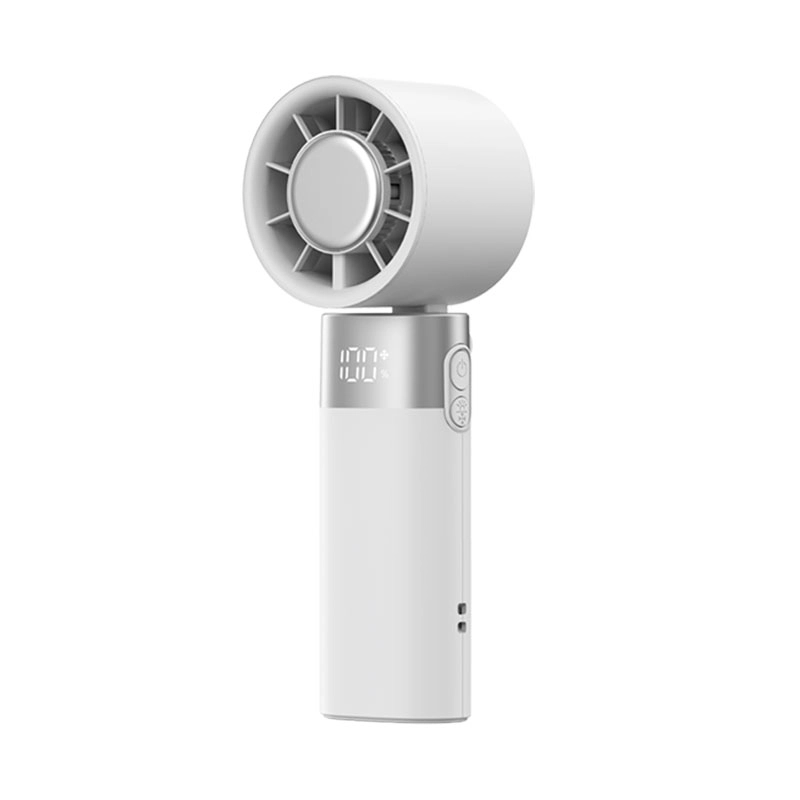
Reliable Handheld Cooling Solution for Bulk & Corporate Purchases
This premium handheld fan is designed for high-frequency, large-volume usage, making it an ideal cooling solution for corporate procurement, promotional distribution, employee welfare programs, and retail wholesale.
With stable airflow performance, a rechargeable design, and lightweight portability, it helps businesses deliver practical comfort products with strong perceived value while maintaining cost efficiency and supply reliability.
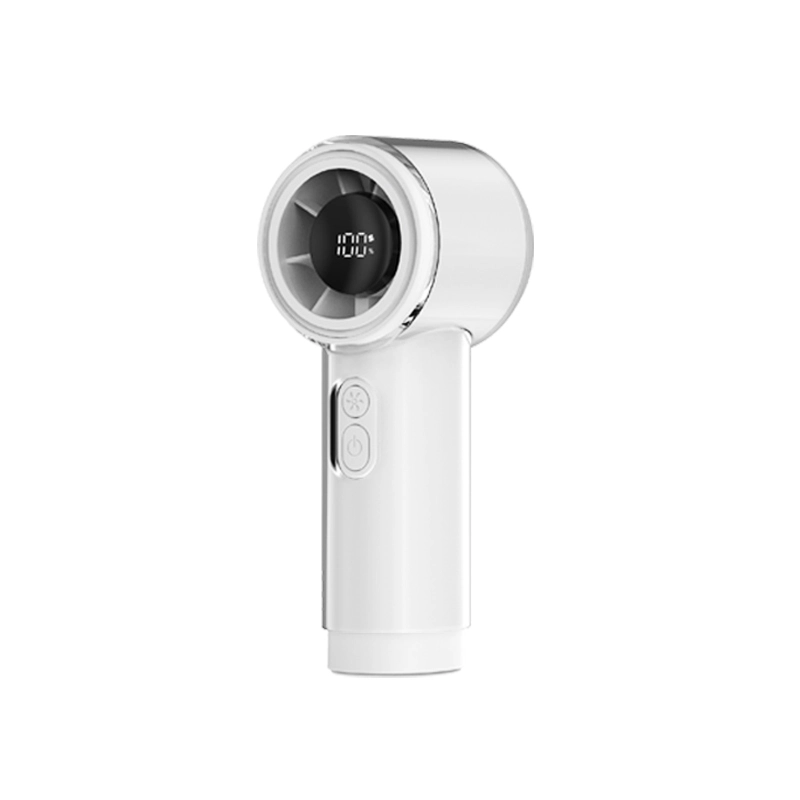
Customizable High-Speed Portable Handheld Fan FS2663
This is a high-speed, long-lasting, personalized, custom, portable cooling product specially designed for gift purchasers, cross-border e-commerce sellers, and OEM/ODM cooperation enterprises. It features (1) strong wind speed, (2) lightweight portability, (3) transparent shell design, (4) convenient carrying with a hand rope, and (5) long battery life. It helps enterprises enhance brand exposure, product differentiation competitiveness, and customer repeat purchase rate.
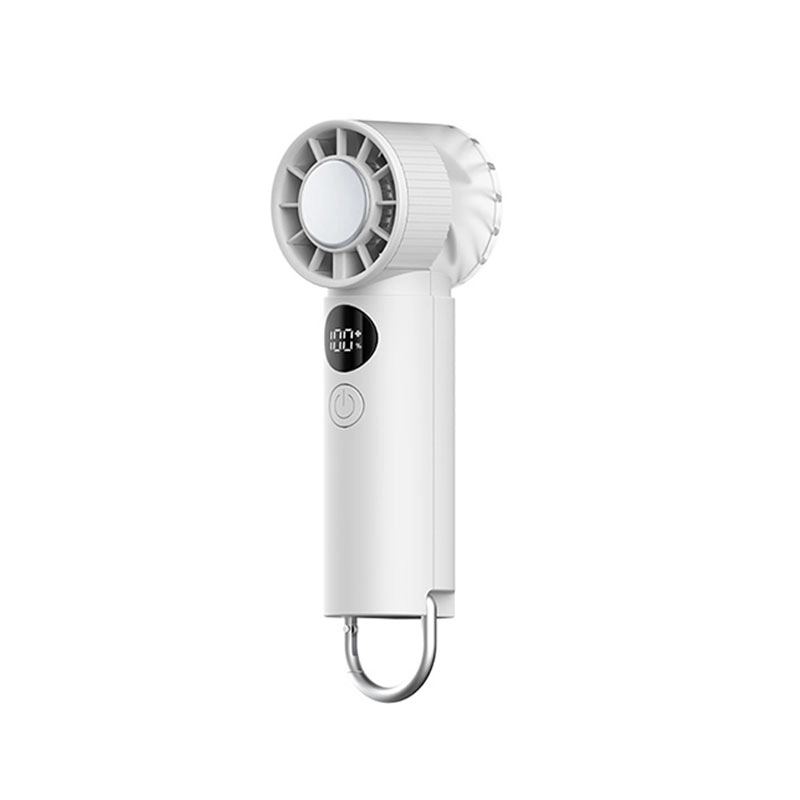
Customizable lightweight mini handheld cooling fan (with climbing hook) FS2666
A portable cooling and personalized customization product specially designed for commuters, students, the gift customization industry, and OEM/ODM buyers. It features (1) lightweight and easy portability, (2) a climbing buckle, and (3) semiconductor cooling.
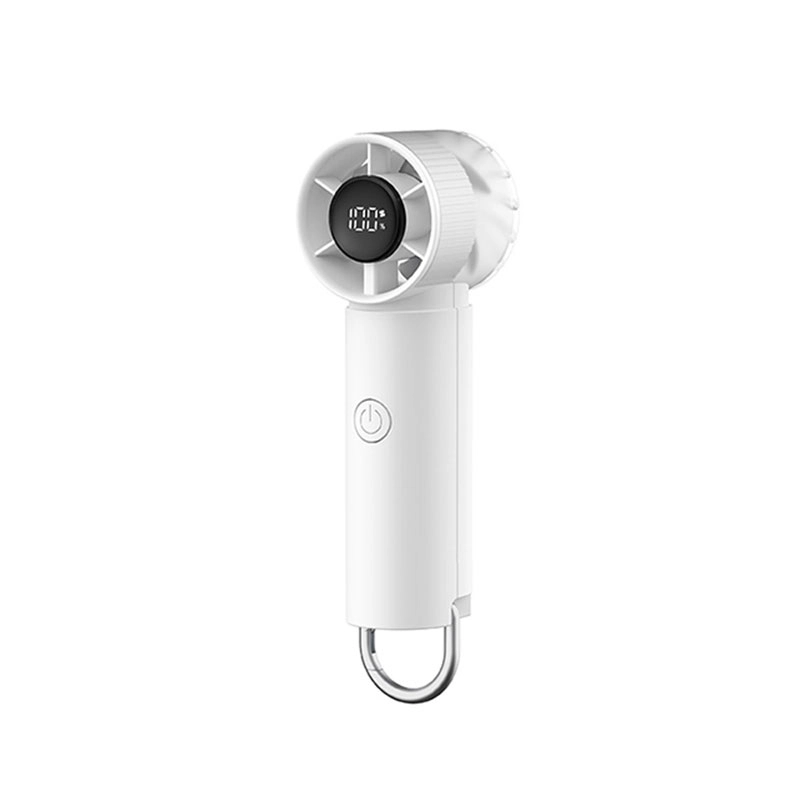
Customizable lightweight mini handheld cooling fan (with climbing hook) FS2667
This is a lightweight and portable + personalized customization product specially designed for commuters, students, the gift customization industry, and OEM/ODM buyers. It features (1) lightweight and easy portability, (2) a climbing buckle, and (3) a semi-transparent air duct design.
Start Your Custom Handheld Fans Manufacturing Project Today
If you have any comments or good suggestions, please leave us a message; later our professional staff will contact you as soon as possible.
Contact


4th Floor, Building 3, Jurong Industrial Park, No. 27-1-1, Fu'an Industrial Zone,Leliu Town (Pancun), Shunde District, Foshan City, Guangdong Province
 Scan QR Code
YouTube
Twitter
Facebook