






How to verify a rechargeable fan manufacturer's factory audit? | Insights by RYW
- 1) How can I verify a supplier's UN38.3 and IEC 62133 battery certificates are genuine and match the production batches I will receive?
- 2) The factory gives a production lead time and capacity estimate—how do I validate those numbers are real for my order size?
- 3) What exact on-the-floor quality control practices should I demand for handheld rechargeable fans, and how do I verify they are actually followed?
- 4) How do I validate social compliance and audit reports (BSCI/SMETA/RBA) — especially when the factory uses subcontractors for battery or PCB work?
- 5) How do I confirm the factory’s ESD, SMT and motor assembly controls are sufficient to prevent early-life failures in rechargeable fans?
- 6) I received a third-party factory audit report—what red flags indicate it’s unreliable, and how should I escalate verification?
How to verify a rechargeable fan manufacturer's factory audit?
This guide answers six specific, beginner pain-point questions about verifying factory audits for rechargeable handheld fans. It embeds best practices—battery testing (UN38.3, IEC 62133), lab accreditations (CNAS/ILAC), third-party auditors (SGS, Bureau Veritas, Intertek, TÜV), AQL sampling, production capability checks, ESD/SMT controls and social compliance (BSCI/SMETA/RBA)—and gives step-by-step verification actions you can use on-site or remotely.
1) How can I verify a supplier's UN38.3 and IEC 62133 battery certificates are genuine and match the production batches I will receive?
Why this matters: lithium batteries are the highest safety risk for rechargeable handheld fans. Forged or generic certificates leave you exposed to shipping bans, recalls, and liability.
Step-by-step verification:
- Ask for the full test report, not a one-page summary. You need the report number, date, sample identification (sample IDs or serial numbers), lab name and accreditation marks (CNAS/ILAC-MRA or equivalent).
- Confirm the lab accreditation: visit the testing lab’s website and search their accreditation directory for the report number or contact the lab directly by phone/email to confirm the report and the sample reference. Accredited labs will verify chain-of-custody details.
- Match sample IDs: require the supplier to provide photographs of the tested sample showing label, batch number, and barcode/serial. Cross-check those IDs against the report's sample description and manufacturing dates.
- Request raw data & witness logs where possible: for UN38.3, temperature profiles, vibration graphs and discharge curves; for IEC 62133, cell-level test parameters. Labs sometimes provide raw logs on request or allow you to witness tests.
- Require batch traceability: get the BOM with cell supplier name and cell model (or cell supplier batch codes). Ask the manufacturer for supplier invoices or delivery notes for those battery cells for the production lot you intend to buy.
- Consider independent re-test on arriving pre-shipment samples: random sample(s) from the production lot tested by an independent accredited lab (CNAS/ILAC) to confirm conformity prior to shipment.
Red flags: generic PDFs without lab accreditation logos, report dates older than the production date, mismatched serial/batch numbers, refusal to provide raw data or allow re-testing.
2) The factory gives a production lead time and capacity estimate—how do I validate those numbers are real for my order size?
Why this matters: many failures (delayed launches, stockouts) come from overpromised capacity or unseen subcontracting.
How to verify production capability:
- Request a capacity sheet: number of injection machines (tonnage), SMT lines, motor assembly stations, battery assembly lines, and functional test jigs. Ask machine IDs and shift patterns. These are objective inputs you can use to estimate throughput.
- Use cycle-time math: for each critical process, ask the supplier the standard cycle time (injection molding cycle, SMT line throughput, motor balance/load test cycle). Calculate theoretical capacity = machines × cycles per hour × hours per shift × shifts per day. Ask them to show production logs that align with these calculations.
- Ask for historical output documentation: VAT invoices, shipping manifests, export declarations or customer packing lists from the previous 3–6 months showing similar product volumes. This is a reliable indicator they have actually produced at that scale.
- Check backlog and current orders: ask for a production schedule (Gantt) that shows task-by-task capacity allocation for the next 60–90 days. Look for clear lead time commitments and committed ship dates for other customers; excessive confirmed orders with no capacity plan is a red flag.
- Inspect sub-contracting: confirm whether battery pack assembly, motor winding, or PCB fabrication is outsourced. Ask for a subcontractor list, their audit certificates, and recent purchase orders between factory and subcontractors.
Remote verification tips: request a live video walkthrough showing machines running, time-stamped photos of production logs, and samples taken from the line with visible lot labels. Cross-check machine serial plates and tooling IDs shown on camera with the capacity sheet.
3) What exact on-the-floor quality control practices should I demand for handheld rechargeable fans, and how do I verify they are actually followed?
Why this matters: handheld fans combine mechanical, electronic and battery components—each needs targeted QC to avoid field failures and returns.
Key QC practices and how to verify them:
- Incoming Quality Control (IQC): require documented incoming inspection procedures for batteries, motors, PCBs, housings. Ask for IQC checklists and sampled incoming inspection records showing lot numbers and acceptance criteria.
- In-line process controls: insist on standard operating procedures (SOPs) for critical steps (battery pack welding, motor assembly, balance testing, final assembly). Verify by asking QA to perform a SOP read-and-demonstrate during a live audit or recorded close-up video of the operation with workers following the SOP.
- Functional testing: handheld fans should have dedicated functional test jigs for motor RPM, current draw, battery charge/discharge, speed control, and safety interlocks. Request test reports with test limits, pass/fail logs, and an explanation of failure handling (scrap vs rework).
- Burn-in and aging: for electronics and motors, require a burn-in protocol (number of hours, temperature) for at least a high-risk sample. Ask to see burn-in racks and time-stamped logs; older factories will have historical failure rate logs and rework records.
- Sampling and AQL: specify acceptance quality limits (commonly used: critical defects = 0, major = AQL 2.5, minor = AQL 4.0) and require pre-shipment inspection (PSI) by a reputable inspection firm (SGS, AsiaInspection/SGS, Bureau Veritas) using ANSI/ASQ Z1.4 sampling plans. Ask for inspection reports that list defect types and corrective actions.
- Traceability: require that each production lot has batch labels and a manufacturing trace file that links IQC/IQC results, operator IDs, assembly dates, and functional test IDs. Request examples of traceability sheets during audit.
Red flags: no functional test jigs, lack of burn-in logs, inconsistent IQC records, QA's inability to find lot trace files on request.
4) How do I validate social compliance and audit reports (BSCI/SMETA/RBA) — especially when the factory uses subcontractors for battery or PCB work?
Why this matters: reputational and compliance risk increases if critical processes are moved to non-audited subcontractors, especially battery assembly.
Verification steps:
- Obtain the full social audit report and the corrective action plan (CAP) with timestamps. Look for auditor interviews, worker lists, payroll evidence, and OHS records in the report.
- Check audit scope and date: ensure the audit covered all relevant production buildings and on-site subcontracting. Many audits exclude off-site subcontractors; if battery assembly is outsourced, you must audit or request the subcontractor’s audit reports.
- Verify auditor/company authenticity: confirm the audit was conducted by a recognized body (e.g., SGS, Intertek) and that their stamp/signature matches their published records. Where possible, cross-check via the audit body’s client portal or contact them to confirm completion and scope.
- Request worker interview evidence: social audits should include anonymous worker interviews and proof of a grievance mechanism. Ask for redacted summaries of interviews and proof the factory implemented corrective actions (photos, training records, payroll corrections).
- Require an up-to-date subcontractor list: include addresses and the scope of work for each. For any subcontractor performing battery assembly or PCB work, obtain their social/compliance certificates or conduct a focused remote audit.
Red flags: audit older than 12 months without re-assessment, CAP items unresolved for multiple audit cycles, missing subcontractor details, or refusal to share payroll/HR records under confidentiality.
5) How do I confirm the factory’s ESD, SMT and motor assembly controls are sufficient to prevent early-life failures in rechargeable fans?
Why this matters: improper ESD control or poor SMT and assembly practices cause hidden defects—populated PCBs and brushless motors are vulnerable to ESD and poor soldering.
What to check and how:
- ESD controls: verify ESD floors, wrist straps, ionizers, and grounding points. During an on-site or remote audit, ask QA to demonstrate wrist straps’ continuity checks and show ESD equipment calibration records.
- SMT and soldering: confirm the factory has reflow ovens with recorded profiles and AOI (automated optical inspection) or X-ray capabilities for multi-layer PCBs. Request oven profile logs and AOI rejection rates.
- Motor assembly and balancing: for BLDC or DC motors used in handheld fans, inspect the rotor/stator assembly SOPs, rotor balancing machine records, and motor run-in logs. Ask for balancing tolerance specs and sample balance certificates.
- Welding and battery pack assembly: verify spot-welding parameters (current, time) or ultrasonic welding records and associated equipment maintenance logs. Request a demonstration or recent weld-strength test reports.
- ESD & process training: request employee training records for ESD and SMT processes. Cross-check that operators on the line have recent training dates and certification traces.
Red flags: no oven profile records, absence of AOI/X-ray or functional ICT, no ESD signage or test records, lack of motor balancing certificates.
6) I received a third-party factory audit report—what red flags indicate it’s unreliable, and how should I escalate verification?
Why this matters: Buyers assume third-party reports are definitive. In practice, not all audit reports are equally reliable or complete.
Red flags to look for:
- Missing raw evidence: credible audits will include photos, worker lists, payroll extracts, and corrective action documentation. A report consisting only of checkboxes without supporting evidence is weak.
- Vague scope or dates: if the audit scope doesn’t list specific production lines, buildings, or subcontractors—or if the audit date precedes major capacity changes—treat it cautiously.
- Inconsistent auditor identity: verify the auditor’s name, signature and accreditation. Some reports use freelance auditors without corporate QA oversight—confirm via the audit firm's client portal.
- Reused or template reports: identical language across different factories or impossible findings (e.g., very low nonconformities for high-risk processes) can indicate a superficial audit.
- Unwillingness to share corrective evidence: if the supplier or auditor refuses to show corrective action evidence, photos, or verification visits, escalate testing.
How to escalate and re-verify:
- Ask the audit firm to provide raw evidence (photos, interview transcripts) and to confirm scope and auditor identity.
- Commission a targeted re-audit focused on disputed areas (battery assembly, subcontractors, ESD/SMT). Use an accredited auditor (SGS, Bureau Veritas, Intertek or TÜV) and specify witness testing and documentation requirements in the SOW.
- Use risk-based independent verification: for high-risk items (batteries, battery pack welds), require batch-level incoming inspection and pre-shipment tests by an accredited lab. For process controls, request live-streamed line checks and time-stamped evidence.
Concluding summary — Advantages of verifying factory audits before buying handheld rechargeable fans
Verifying factory audits thoroughly reduces safety, compliance and commercial risk. It ensures battery safety (UN38.3/IEC 62133), confirms reliable production capacity and traceability, validates QC regimes (functional tests, burn-in, AQL), protects brand reputation via social compliance (BSCI/SMETA/RBA) and prevents costly recalls. Using accredited labs and recognized audit firms, plus targeted on-site or remote verification steps, gives you defensible evidence for product release and shipping.
For a tailored audit checklist, pre-shipment test plan or a factory verification service for rechargeable handheld fans, contact us for a quote: www.rywlife.com • adrian@rywlife.com
Contacts
WhatsApp/Phone
You May Also Like
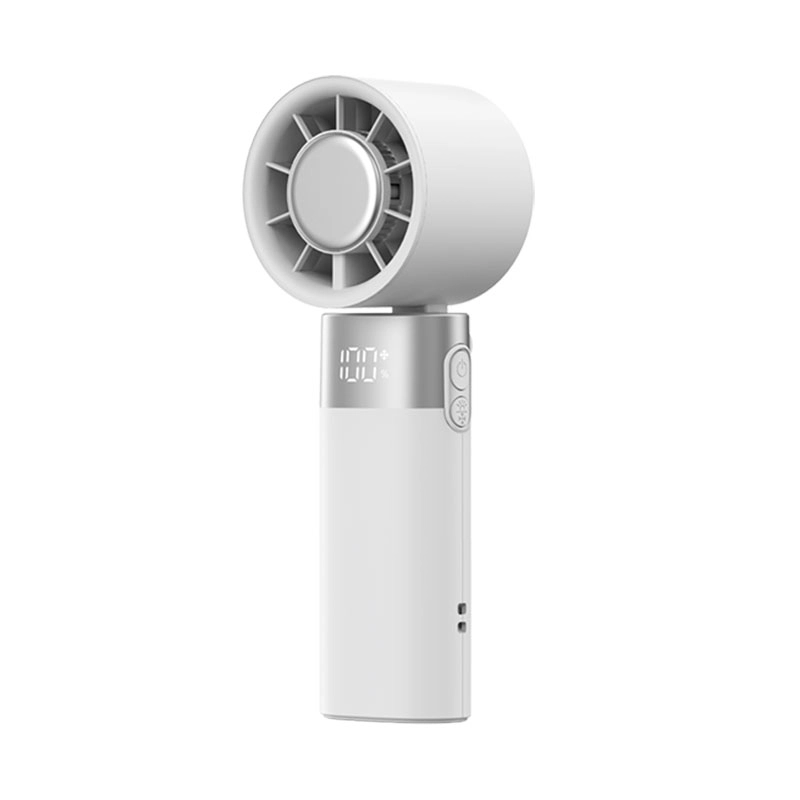
Reliable Handheld Cooling Solution for Bulk & Corporate Purchases
This premium handheld fan is designed for high-frequency, large-volume usage, making it an ideal cooling solution for corporate procurement, promotional distribution, employee welfare programs, and retail wholesale.
With stable airflow performance, a rechargeable design, and lightweight portability, it helps businesses deliver practical comfort products with strong perceived value while maintaining cost efficiency and supply reliability.
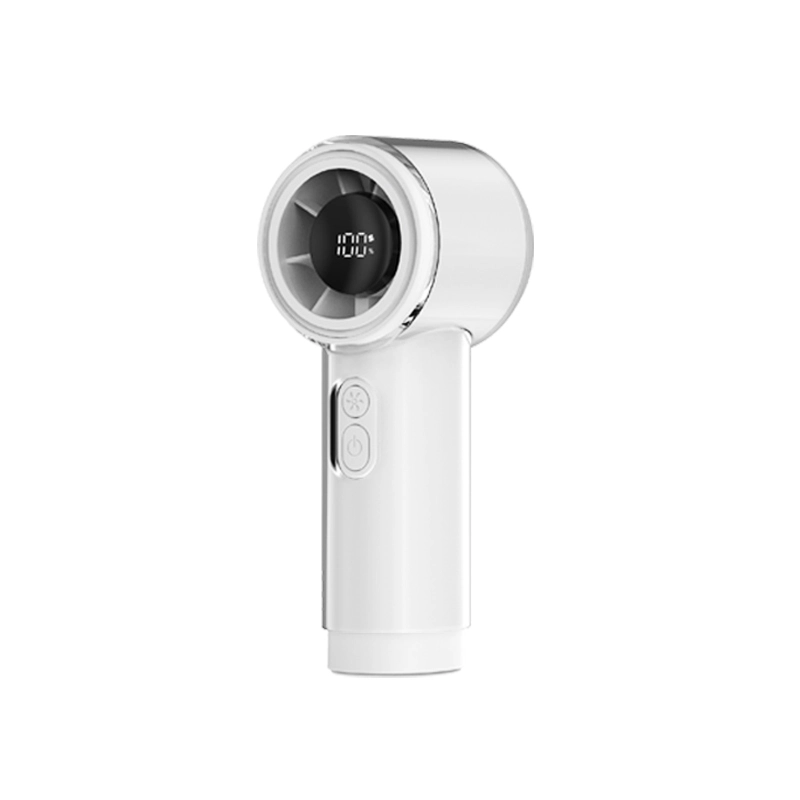
Customizable High-Speed Portable Handheld Fan FS2663
This is a high-speed, long-lasting, personalized, custom, portable cooling product specially designed for gift purchasers, cross-border e-commerce sellers, and OEM/ODM cooperation enterprises. It features (1) strong wind speed, (2) lightweight portability, (3) transparent shell design, (4) convenient carrying with a hand rope, and (5) long battery life. It helps enterprises enhance brand exposure, product differentiation competitiveness, and customer repeat purchase rate.
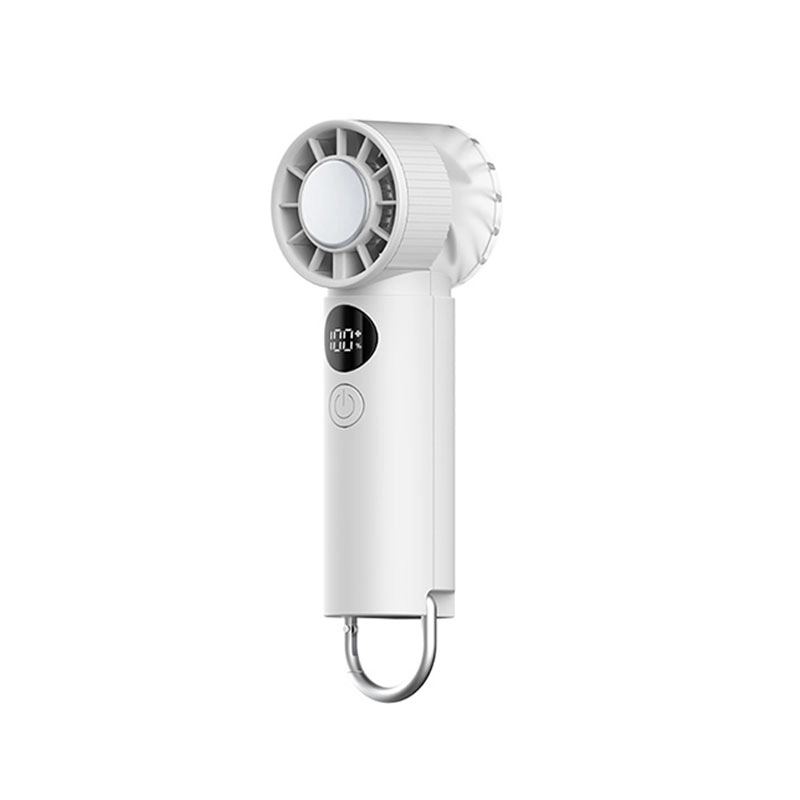
Customizable lightweight mini handheld cooling fan (with climbing hook) FS2666
A portable cooling and personalized customization product specially designed for commuters, students, the gift customization industry, and OEM/ODM buyers. It features (1) lightweight and easy portability, (2) a climbing buckle, and (3) semiconductor cooling.
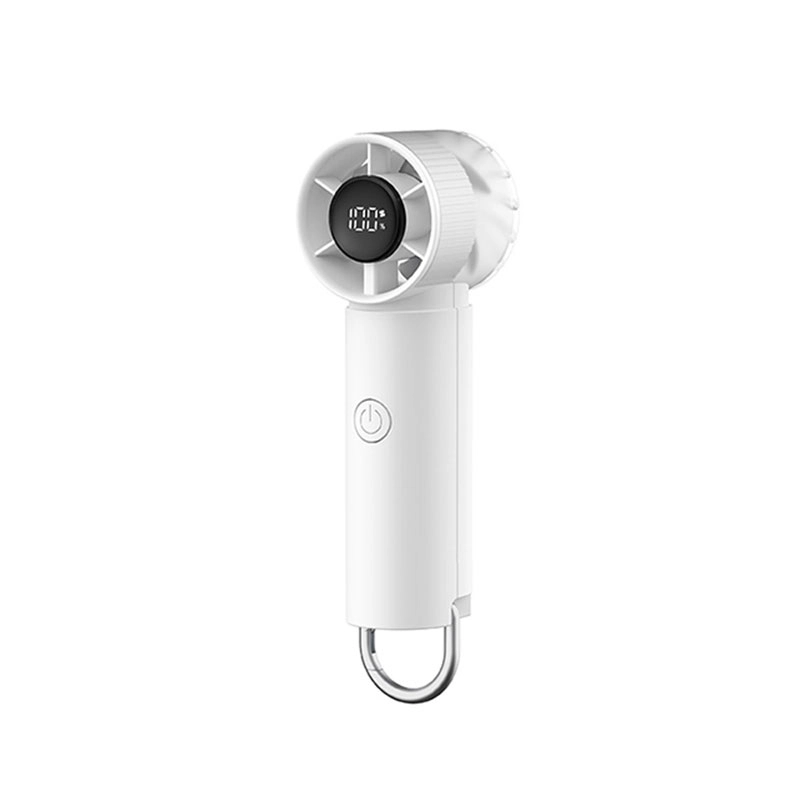
Customizable lightweight mini handheld cooling fan (with climbing hook) FS2667
This is a lightweight and portable + personalized customization product specially designed for commuters, students, the gift customization industry, and OEM/ODM buyers. It features (1) lightweight and easy portability, (2) a climbing buckle, and (3) a semi-transparent air duct design.
Start Your Custom Handheld Fans Manufacturing Project Today
If you have any comments or good suggestions, please leave us a message; later our professional staff will contact you as soon as possible.
Contact


4th Floor, Building 3, Jurong Industrial Park, No. 27-1-1, Fu'an Industrial Zone,Leliu Town (Pancun), Shunde District, Foshan City, Guangdong Province
 Scan QR Code
YouTube
Twitter
Facebook