






What certifications should a rechargeable fan manufacturer have? | Insights by RYW
- 1) Do I need UN 38.3 for a handheld rechargeable fan with an internal Li-ion battery under 100 Wh — and what does it change for shipping & labeling?
- 2) Which product safety standard should I test to: IEC 60335-2-80, UL 507 or IEC 62368-1 for portable rechargeable fans?
- 3) What battery certifications and labeling do EU retailers actually request (IEC 62133, UN 38.3, producer obligations)?
- 4) For US mass retailers, which factory and social-compliance certifications are non-negotiable before onboarding a rechargeable fan supplier?
- 5) How do EMC and radio tests differ for USB-charged handheld fans that include Bluetooth speed control modules?
- 6) What documentation and traceability will customs and EU/UK retailers demand to clear customs and obtain shelf placement (DoC, test reports, batch traceability)?
- Common third-party labs and marks buyers look for
- Concluding summary: advantages of a comprehensive certification strategy
What certifications should a rechargeable fan manufacturer have? — 6 buyer questions answered
Rechargeable handheld fans combine small motors, electronics, charging circuits and lithium batteries. That mix triggers product-safety, battery, EMC/radio, transport, environmental and social-compliance requirements. Below are six specific, pain-oriented questions buyers and new manufacturers frequently ask — each answered with current standards, test expectations and practical next steps.
1) Do I need UN 38.3 for a handheld rechargeable fan with an internal Li-ion battery under 100 Wh — and what does it change for shipping & labeling?
Short answer: Yes — UN 38.3 test documentation is required for lithium cells and batteries before they are transported commercially by air, sea or road. Whether your battery is under 100 Wh, between 100–300 Wh, or above 300 Wh determines handling, packaging and airline acceptance rules, but UN 38.3 applies to all sizes because it verifies cell/battery safety under transport stresses.
Key points:- UN 38.3 tests (altitude simulation, thermal, vibration, shock, external short circuit, forced discharge, etc.) must be performed by an accredited lab; a passing test report is required for dangerous-goods declarations and common retailer due diligence.- For air transport, IATA rules allow consumer lithium-ion batteries installed in equipment up to 100 Wh with fewer restrictions; batteries 100–300 Wh typically need airline approval; >300 Wh are largely prohibited on passenger aircraft. These thresholds affect how much inventory you can air-freight and whether you must ship as cargo vs. carried-in-equipment.- Labeling/marking: batteries and packages must carry the appropriate UN number/labels, handling marks and shipper declarations per IMDG (sea) and IATA (air). Retail packaging should also include the battery capacity (Wh), warnings and recycling icons per local rules.Practical steps:- Get cell-level and pack-level UN 38.3 from your battery supplier or an independent lab (SGS, Intertek, TÜV SÜD).- Keep the UN 38.3 report, battery MSDS, and properly formatted transport documents in your technical file and with shipments.
2) Which product safety standard should I test to: IEC 60335-2-80, UL 507 or IEC 62368-1 for portable rechargeable fans?
This is a common source of confusion because handheld rechargeable fans include motor circuitry and battery systems. The correct standard depends on target market and product design.
Guidance:- EU (CE): For fans sold into the EU as household appliances, EN/IEC 60335-2-80 (particular requirements for fans) is the harmonized standard that demonstrates conformity with the Low Voltage Directive (where applicable) and General Product Safety principles. EMC compliance (EN 55014‑1/2 or related EMC standards for household appliances) and RoHS/REACH must also be addressed.- US: UL 507 is the recognized safety standard for electric fans. For battery-powered designs, regulators and retailers still expect testing against UL 507. Many US listings are achieved via UL or ETL testing to UL 507 plus battery/charging circuit assessments.- Chargers and external power supplies: If you include a USB adapter or dedicated charger, test it to the applicable safety standard for power supplies — many labs and notified bodies accept EN 62368-1 for modern power electronics; older EN 60950-1 entries are being phased out.Practical approach:- Work with a notified/accepted lab (TÜV/SGS/Intertek) to determine the combination of EN 60335-series + EMC + battery standards that produces a complete CE Technical File and Declaration of Conformity (DoC) for the EU, and equivalent UL/ETL test reports for the US.- If selling across regions, build a compliance matrix mapping each standard to your product variants so you avoid re-testing surprises.
3) What battery certifications and labeling do EU retailers actually request (IEC 62133, UN 38.3, producer obligations)?
EU retail buyers commonly request a package of battery documentation before placing large orders. They expect more than a single-cell test report — they want traceability, safety and regulatory compliance.
Typical EU buyer checklist:- IEC 62133:2017 (or latest) test report for rechargeable cells and batteries (safety requirements for portable sealed secondary cells containing alkaline or other non-acid electrolytes). IEC 62133 is the primary functional safety standard for portable rechargeable batteries used in consumer devices.- UN 38.3 transport test report (pack and/or cell-level, as applicable).- MSDS/SDS for cells and battery pack components.- Battery Directive (2006/66/EC) compliance: appropriate battery disposal symbol, CE marking context clarified (CE is for the whole product), and producer/producer-responsible registrations (EPR) in specific member states as required.- WEEE and separate electronic waste/disposal labeling if the device contains a battery and falls under WEEE obligations.- A complete Technical File: test reports from accredited labs (SGS/Intertek/TÜV), DoC referencing harmonized standards used, risk assessment and instructions with battery-specific warnings.Practical tip: buyers often insist on cell supplier traceability (batch numbers) and copies of supplier declarations of conformity. Maintain a battery supplier chain of custody and include supplier test certificates in your dossier.
4) For US mass retailers, which factory and social-compliance certifications are non-negotiable before onboarding a rechargeable fan supplier?
Retailers prioritize product safety test evidence AND supply-chain/social compliance. You should expect to produce factory-level audits and management-system certifications in addition to product test reports.
Common retailer demands:- Factory audits: Sedex/SMETA, BSCI, or Intertek/UL Responsible Sourcing audits. Large chains often require factory audits conducted within 12 months of onboarding.- Quality management: ISO 9001 certification is frequently required or preferred because it demonstrates controlled manufacturing and corrective-action systems.- Environmental and ethical: Many buyers request evidence of environmental management (ISO 14001) or social compliance (SA8000) depending on the retailer and country.- Third-party test reports: UL or ETL listing (UL 507 for fans), FCC test report (if radio or EMI concerns), RoHS and REACH test reports for hazardous substances.Practical action: Prepare audit readiness (labor practices, H&S, documentation control) and keep product test reports accessible. Many buyers will not ship a first order without an accepted audit and a full set of accredited-lab test reports.
5) How do EMC and radio tests differ for USB-charged handheld fans that include Bluetooth speed control modules?
Adding Bluetooth (or any radio) to a consumer fan drastically changes certification scope: you now must address both EMC/unintentional emissions and radio-specific directives/standards.
Key distinctions and requirements:- EMC (unintentional emissions/immunity): For the EU, test to the applicable EMC standards for household appliances (EN 55014‑1 for emissions, EN 55014‑2 for immunity or equivalent harmonized standards). For the US, test to FCC Part 15 (unintentional radiator) limits.- Radio module certification: Bluetooth modules that are fully modular and have their own FCC ID or EU-type approval (RED) can reduce the testing burden, but integration testing is still required. Even a pre-certified module does not exempt the final product from EMC testing and RF exposure evaluation (SAR) if close to the body.- Radio Equipment Directive (RED) in EU: the finished product must meet RED requirements (essential requirements include health and safety, EMC, efficient use of spectrum). You need a Technical File demonstrating compliance and likely an EU Declaration of Conformity.Practical steps:- Use a certified Bluetooth module with documentation (FCC ID, EU certification), but budget for final-product EMC and RF tests including spurious emissions and, if applicable, SAR or RF exposure measurements.- Work with an accredited lab experienced in combined EMC + radio testing to avoid re-tests after enclosure or firmware changes.
6) What documentation and traceability will customs and EU/UK retailers demand to clear customs and obtain shelf placement (DoC, test reports, batch traceability)?
Customs clearance is largely about correct product classification, accurate labeling and availability of conformity evidence if requested. Retailers will add their own documentation expectations focused on safety, environment and due diligence.
Essential documentation you must have available and often submit:- Declaration of Conformity (DoC) listing applicable directives and harmonized standards (CE for EU, UKCA for UK if required) plus the technical references (EN/IEC numbers) used to show conformity.- Complete third-party test reports from accredited labs (EN/IEC/UL standards referenced clearly). For batteries: IEC 62133 and UN 38.3; for EMC: EN 55014 / FCC Part 15; for safety: EN 60335-2-80 / UL 507 evidence.- Technical File: schematic, BOM, risk assessment, user manual with battery warnings, lab reports and supplier declarations — keep it for 10 years in EU best practices.- Batch traceability: cell/pack lot numbers, production dates, and a recall-ready traceability system. Retailers and authorities expect you to identify affected units quickly if a safety issue arises.- Registrations & EPR: WEEE registration numbers, battery producer registrations (varies by EU member state) and an EU Authorized Representative if you are non-EU.Practical compliance checklist:- Maintain electronic and printed copies of DoC and test reports with each shipment and provide them on request to customs or retail buyers.- Proactively register for WEEE and battery EPR where required before launching sales in specific markets.
Common third-party labs and marks buyers look for
Buyers commonly accept test reports from accredited labs such as TÜV SÜD/TÜV Rheinland, Intertek, SGS, UL and Bureau Veritas. For US safety listing, UL or ETL to UL standards is typical. For EU CE technical files, a CB/IECEE report may speed cross-country acceptance.
Concluding summary: advantages of a comprehensive certification strategy
Investing in the right certifications and documentation up front — product safety testing (EN/IEC/UL standards), battery tests (IEC 62133, UN 38.3), EMC/radio approvals (EN 55014, FCC, RED), environmental compliance (RoHS, REACH, WEEE) and factory/social audits (ISO 9001, BSCI/Sedex) — delivers clear advantages: faster customs clearance, smoother retail onboarding, reduced recall and liability risk, better negotiating power with major buyers, and broader market access (EU, UK, US, Asia). A documented traceability and technical file also shortens corrective-action cycles if issues arise.
If you want, we can perform a compliance gap analysis for your rechargeable handheld fan product line and provide a step-by-step certification roadmap and price quote — contact us to get started.
Website: www.rywlife.com | Email: adrian@rywlife.com
Contacts
WhatsApp/Phone
You May Also Like
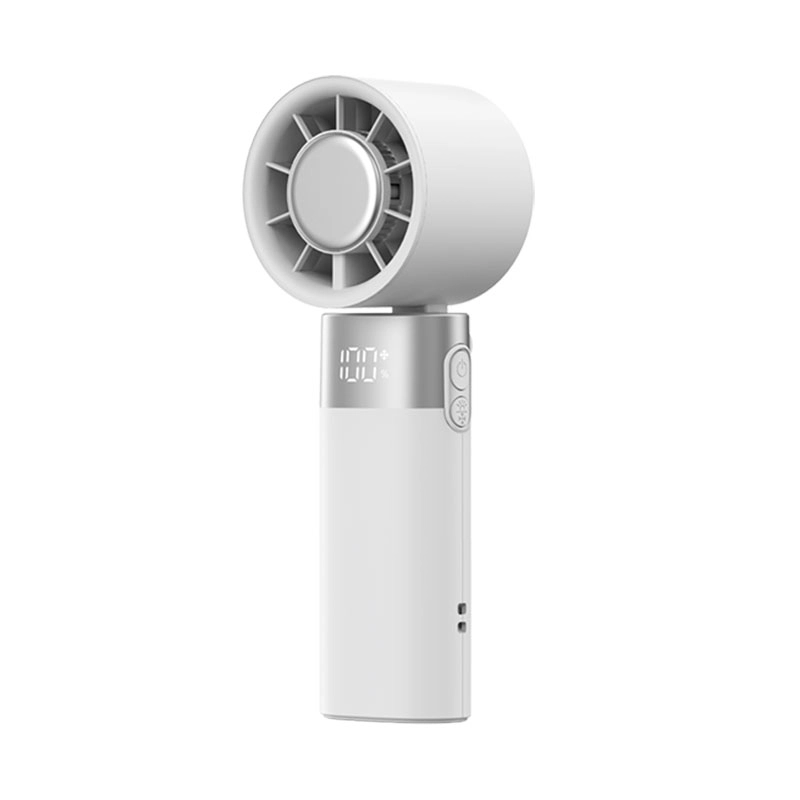
Reliable Handheld Cooling Solution for Bulk & Corporate Purchases
This premium handheld fan is designed for high-frequency, large-volume usage, making it an ideal cooling solution for corporate procurement, promotional distribution, employee welfare programs, and retail wholesale.
With stable airflow performance, a rechargeable design, and lightweight portability, it helps businesses deliver practical comfort products with strong perceived value while maintaining cost efficiency and supply reliability.
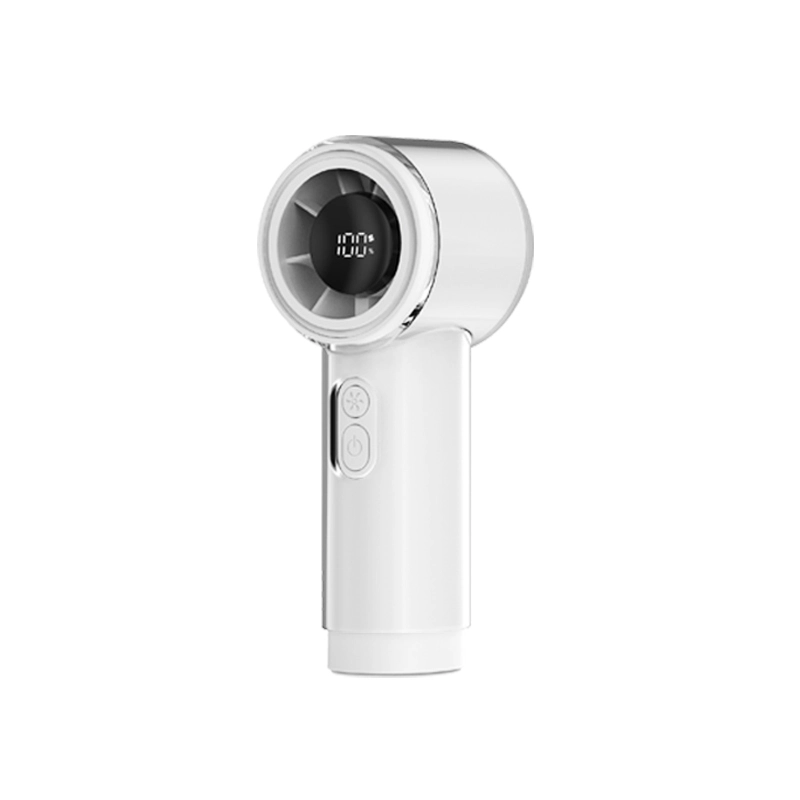
Customizable High-Speed Portable Handheld Fan FS2663
This is a high-speed, long-lasting, personalized, custom, portable cooling product specially designed for gift purchasers, cross-border e-commerce sellers, and OEM/ODM cooperation enterprises. It features (1) strong wind speed, (2) lightweight portability, (3) transparent shell design, (4) convenient carrying with a hand rope, and (5) long battery life. It helps enterprises enhance brand exposure, product differentiation competitiveness, and customer repeat purchase rate.
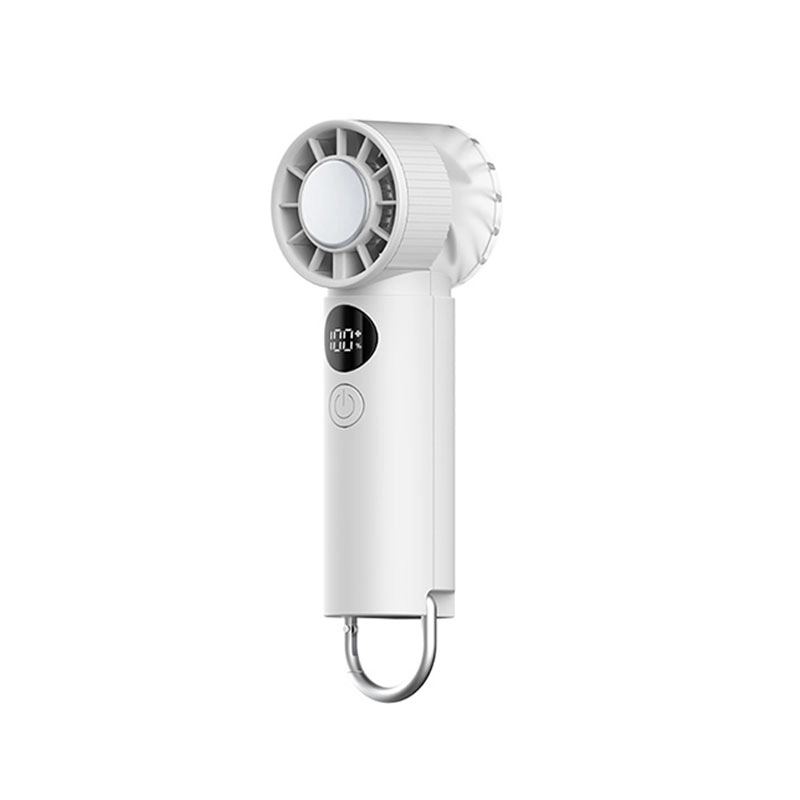
Customizable lightweight mini handheld cooling fan (with climbing hook) FS2666
A portable cooling and personalized customization product specially designed for commuters, students, the gift customization industry, and OEM/ODM buyers. It features (1) lightweight and easy portability, (2) a climbing buckle, and (3) semiconductor cooling.
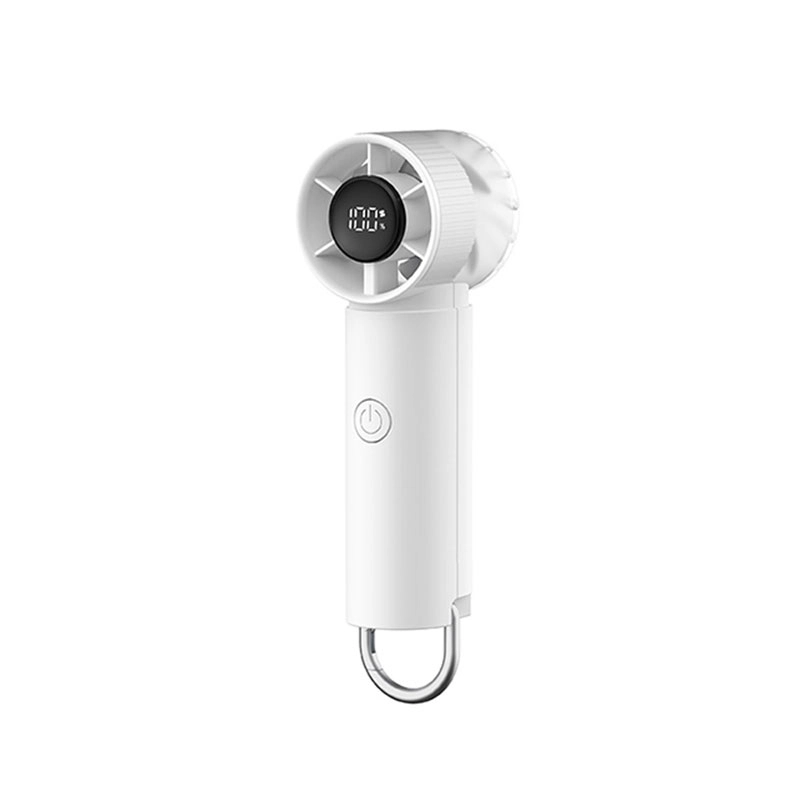
Customizable lightweight mini handheld cooling fan (with climbing hook) FS2667
This is a lightweight and portable + personalized customization product specially designed for commuters, students, the gift customization industry, and OEM/ODM buyers. It features (1) lightweight and easy portability, (2) a climbing buckle, and (3) a semi-transparent air duct design.
Start Your Custom Handheld Fans Manufacturing Project Today
If you have any comments or good suggestions, please leave us a message; later our professional staff will contact you as soon as possible.
Contact


4th Floor, Building 3, Jurong Industrial Park, No. 27-1-1, Fu'an Industrial Zone,Leliu Town (Pancun), Shunde District, Foshan City, Guangdong Province
 Scan QR Code
YouTube
Twitter
Facebook