






What battery types do rechargeable fan manufacturers use? | Insights by RYW
- 1. What battery chemistry should I choose for a lightweight handheld fan that needs 6+ hours runtime and fast USB charging?
- 2. How can I verify the actual capacity (mAh) versus manufacturer claims on handheld fan batteries?
- 3. Are removable 18650 cell packs safer and more serviceable than built-in LiPo pouches in handheld fans?
- 4. What charging protocol and max charge current should a rechargeable fan support to safely fast-charge a 5000 mAh battery?
- 5. Which certifications (IEC62133, UN38.3, CE, UL) should I require for bulk orders of handheld fans containing lithium batteries?
- 6. How do motor draw and battery C-rate affect battery life and peak performance in high-speed handheld fans?
1. What battery chemistry should I choose for a lightweight handheld fan that needs 6+ hours runtime and fast USB charging?
For a lightweight handheld fan that must deliver 6+ hours runtime while supporting fast USB charging, manufacturers overwhelmingly specify lithium-based chemistries — either single-cell Li-ion (cylindrical 18650/21700 or a single 3.7V pouch cell) or multi-cell Li-Po (lithium polymer) packs. Why? Lithium cells provide the best energy density (Wh/kg) and lowest weight for a given capacity compared to NiMH.
Practical numbers and how to calculate runtime:
- Typical small handheld fan motor draw: 2–6 W (low to high speed). Convert to current: I = P / Vpack. For a 3.7V single-cell pack, a 3 W motor draws ~0.81 A; a 6 W motor draws ~1.62 A.
- Example: a 4000 mAh (4.0 Ah) 3.7V Li-ion cell stores ~14.8 Wh. If the motor draws 3 W continuous, runtime ≈ 14.8 Wh / 3 W ≈ 4.9 hours. For a 6+ hour target at similar motor draw, choose 6000–8000 mAh (22.2–29.6 Wh) or reduce motor power.
Fast charging considerations:
- USB-A 5V/2A or USB-C 5V/3A are common on consumer handheld fans. For a 4000 mAh Li-ion (3.7V); charging at 2A (5V USB) gives practical charge time ≈ 2.5–3.5 hours (account for charge inefficiencies).
- If you need faster charge times and the pack supports it, look for USB-C PD or QC-compatible designs with a proper BMS that accept higher voltages (9V or 12V) — but these require cells and BMS rated for the higher input and may increase BOM cost.
Recommendation: Choose a Li-ion pouch or cylindrical pack (3.7V nominal per cell) sized ~5000 mAh for balanced weight and runtime. Verify the product supports at least 5V/2A charging and includes a protection circuit (BMS/PCM) for safe fast charging.
2. How can I verify the actual capacity (mAh) versus manufacturer claims on handheld fan batteries?
Capacity fraud or inflated specs are common pain points in low-cost consumer electronics. Use these practical verification steps before buying in volume or retail:
1) Check cell format and supplier spec sheets: If the product uses removable cells (18650, 21700), you can verify real-world cell datasheets (e.g., Samsung, LG, Panasonic) for true capacity and discharge curves. Genuine cells list capacity (mAh), nominal voltage, max continuous discharge (A), and cycle life.
2) Calculate watt-hours (Wh): Convert capacity into Wh with Wh = (mAh / 1000) × nominal voltage. A claimed 5000 mAh at 3.7V = 18.5 Wh. If the advertised runtime contradicts that Wh versus motor power, flag it.
3) Request third-party test reports: OEMs should provide independent battery test reports (actual mAh measurement under standard discharge conditions, e.g., 0.2C or 0.5C). For bulk procurement, demand IEC 61960 or manufacturer charge/discharge curves.
4) On-device runtime tests: For small-batch validation, run the fan at a known power draw (measure motor current with a clamp meter or inline multimeter) and time until cutoff. Compare energy used to claimed mAh.
5) Watch for suspicious marketing language: Phrases like “equivalent to 5000 mAh” or “effective capacity” often indicate marketing inflation.
Takeaway checklist for buyers: request cell supplier and part numbers, ask for capacity test reports and discharge curves, verify Wh math, and run a physical runtime test on a sample unit.
3. Are removable 18650 cell packs safer and more serviceable than built-in LiPo pouches in handheld fans?
Tradeoffs between removable cylindrical cells (18650/21700) and integrated LiPo pouch packs:
Removable cylindrical cells (18650/21700)
- Advantages: Easy to replace, widely available branded cells, straightforward capacity verification by checking cell part numbers. Higher mechanical robustness due to metal can. For serviceability and aftermarket replacement, removable cells win.
- Disadvantages: Requires a secure battery compartment and safe contact design. If the fan uses unprotected loose cells, risk of user error increases unless the product includes a proper holder and protection.
Integrated LiPo pouch packs
- Advantages: Slim form-factor for compact handheld fans, higher packaging efficiency (better space utilization), lighter at equivalent capacity. Easier to optimize internal layout for ergonomics.
- Disadvantages: Less user-serviceable; damage or swelling typically requires sending back the unit. Requires PCB-based protection (BMS/PCM) and mechanical cushioning to avoid puncture.
Safety comparison: both chemistries are safe when cells are authentic and the final design includes appropriate protection (overcharge/discharge and short-circuit protection), thermal management and proper manufacturing controls. For manufacturers, integrating a certified BMS and protection IC (and adhering to IEC62133 and UN38.3) is critical regardless of format.
Recommendation: For consumers who value repairability and supply-chain transparency, choose products using standard removable cells from reputable brands. For ultra-slim, lightweight designs where serviceability is secondary, a well-specified LiPo pouch with full certifications is appropriate.
4. What charging protocol and max charge current should a rechargeable fan support to safely fast-charge a 5000 mAh battery?
Safe fast charging requires coordination among cell chemistry, BMS, and charger capability. The two main practical limits are cell recommended charge rate (C-rate) and the BMS/charging circuit design.
Charge-rate guidance:
- Typical safe continuous charge rates for Li-ion consumer cells: 0.5C–1C (0.5× to 1× the cell capacity in amps). For a 5000 mAh cell, 0.5C = 2.5 A, 1C = 5 A. Many handheld fan packs accept 0.5C (2–2.5 A) safely.
- Practical consumer USB constraints: Standard USB-A/USB-C 5V/2A or 5V/3A chargers are common; these translate to ~2A–3A into the power path. Expect realistic charge currents of 1.0–2.5 A inside the device after accounting for conversion inefficiency.
What to require:
- For a 5000 mAh pack aiming for a ~2–3 hour charge time, design for at least 0.5C charging (~2.5 A) and include an intelligent charging IC and BMS with thermal monitoring.
- Ensure the product supports USB-C PD or QC if you want faster top-up rates, but confirm the BMS cell charge limits — higher input voltage must be correctly stepped and regulated for safety.
Safety features to insist on: temperature sensing, charge termination (CV/CC), overcurrent/short protection, and cell balancing for multi-cell packs. Also demand manufacturer tests demonstrating safe charging cycles (IEC 62368-1, IEC 62133 test evidence where applicable).
5. Which certifications (IEC62133, UN38.3, CE, UL) should I require for bulk orders of handheld fans containing lithium batteries?
For procurement, require the following minimum certifications and documentation to ensure compliance, safety, and ship-ability:
1) IEC 62133 (or IEC 62133-2 for Li-ion) – Safety tests for portable rechargeable cells and batteries. This is the primary safety standard for consumer lithium cells.2) UN38.3 – Required for transport of lithium cells/batteries. Shipment by air or sea will often be rejected without a UN38.3 test report.3) CE (for EU market) – Declares conformity to applicable EU directives; when lithium batteries are present, ensure the technical file documents relevant safety compliance.4) FCC (for devices with radio/USB data functionality) – If the fan has wireless features or charger with wireless communication.5) UL listing (e.g., UL 2054 or UL 62133-equivalent) – For North American buyers, UL or an equivalent third-party safety certification strengthens product acceptance.6) RoHS and REACH compliance statements – For chemical & material compliance in the EU.
Request these from your supplier: full test reports, not just certificates. For example, ask for IEC 62133 test report pages showing test results, UN38.3 test report, and third-party lab stamp/number. For shipping advice, include battery Wh calculations on documentation; most handheld fan packs are under 100 Wh and therefore generally acceptable in carry-on, but provide the Wh value anyway.
6. How do motor draw and battery C-rate affect battery life and peak performance in high-speed handheld fans?
Motor draw (power) and battery discharge capability (C-rate) are tightly linked:
- C-rate definition: A 1C discharge on a 4000 mAh pack is 4 A continuous. The battery’s specified max continuous discharge (e.g., 1.5A, 4A, 10A) limits the peak power you can safely draw without overheating or shortening cycle life.
- Example: If you want a 6 W peak performance on a 3.7V pack: current = 6 W / 3.7 V ≈ 1.62 A. For a 4000 mAh cell, that is ~0.4C — well within typical consumer cell limits. But if a high-speed motor requires 20 W peak briefly, current ≈ 5.4 A and demands a cell rated for that continuous/peak current (≥1.35C for a 4000 mAh pack).
Why this matters for lifetime and performance:
- High discharge rates raise cell temperature, increasing capacity fade and reducing cycle life. For many Li-ion cells, higher C discharges accelerate capacity loss — expect fewer cycles if you regularly run at >1C.
- Voltage sag: under high current, internal resistance causes voltage to drop. Lower voltage means lower motor torque and reduced effective runtime. Cells with lower internal resistance (higher quality cells) mitigate this.
Buyer practicalities:
- Always check the battery’s continuous discharge rating (A). Match it to expected motor peak draw plus a safety margin (20–30%).
- Ask suppliers for discharge curves at different currents (0.2C, 0.5C, 1C) to confirm expected voltage under load.
Actionable rule-of-thumb: for portable high-speed handheld fans, design the battery pack to supply at least 1.5× the expected continuous motor current to preserve cycle life and provide stable peak performance.
Conclusion — advantages of each rechargeable battery type used in handheld fans
Lithium-ion (cylindrical 18650/21700): strong energy density, well-known branded cells, easy replaceability (if designed for it) and robust mechanical packaging. LiPo (pouch) packs: best space efficiency and light weight for slim fan form-factors, excellent for integration but less user-serviceable. NiMH: lower cost and tolerant of abuse, but much lower energy density, heavier and typically phased out for modern compact fans.
For buyers and OEMs: prioritize certified Li-ion/LiPo packs with clear cell part numbers, an appropriate BMS, IEC 62133 and UN38.3 test reports, and discharge/charge curves. Verify realistic runtime by calculating Wh versus motor power and insist on proper charging specs (USB-C PD or at least 5V/2A for reasonable fast-charging).
For a quote or specification sheet tailored to your handheld fan project, contact us at www.rywlife.com or adrian@rywlife.com. We can provide supplier vetting, technical checklists and sample testing services.
Contacts
WhatsApp/Phone
You May Also Like
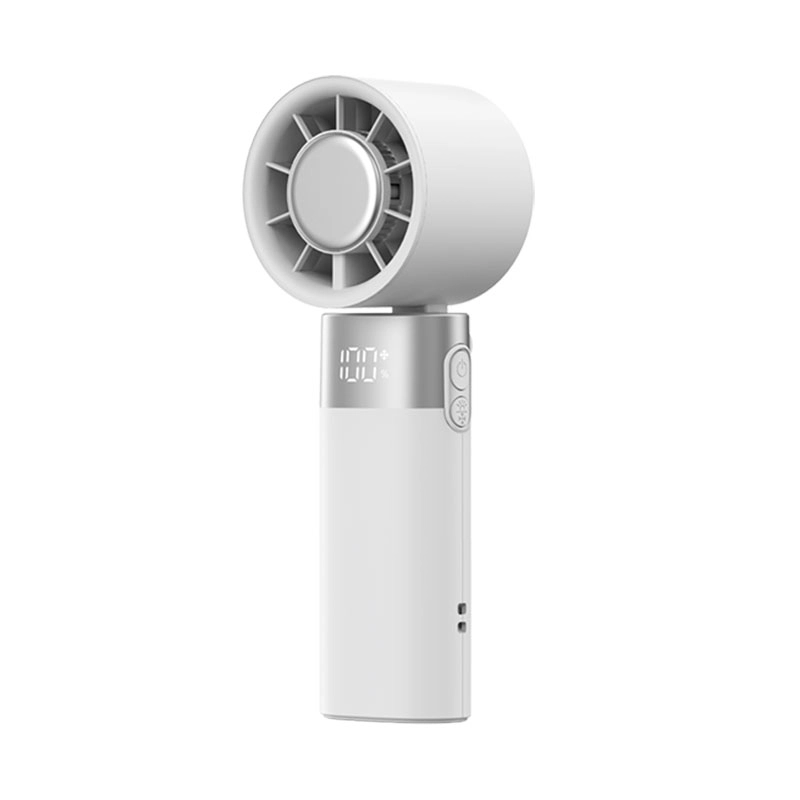
Reliable Handheld Cooling Solution for Bulk & Corporate Purchases
This premium handheld fan is designed for high-frequency, large-volume usage, making it an ideal cooling solution for corporate procurement, promotional distribution, employee welfare programs, and retail wholesale.
With stable airflow performance, a rechargeable design, and lightweight portability, it helps businesses deliver practical comfort products with strong perceived value while maintaining cost efficiency and supply reliability.
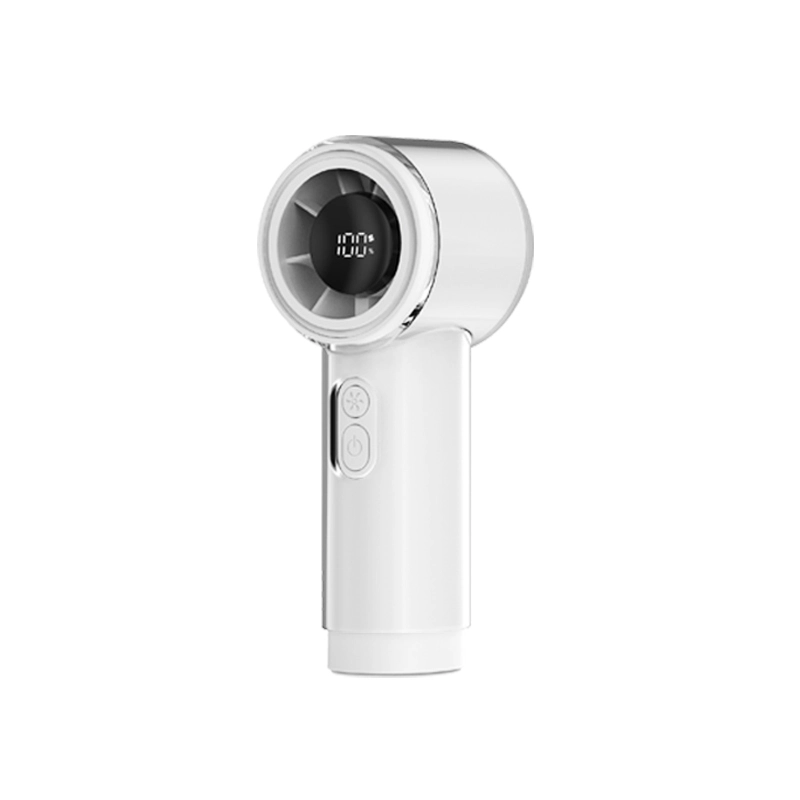
Customizable High-Speed Portable Handheld Fan FS2663
This is a high-speed, long-lasting, personalized, custom, portable cooling product specially designed for gift purchasers, cross-border e-commerce sellers, and OEM/ODM cooperation enterprises. It features (1) strong wind speed, (2) lightweight portability, (3) transparent shell design, (4) convenient carrying with a hand rope, and (5) long battery life. It helps enterprises enhance brand exposure, product differentiation competitiveness, and customer repeat purchase rate.
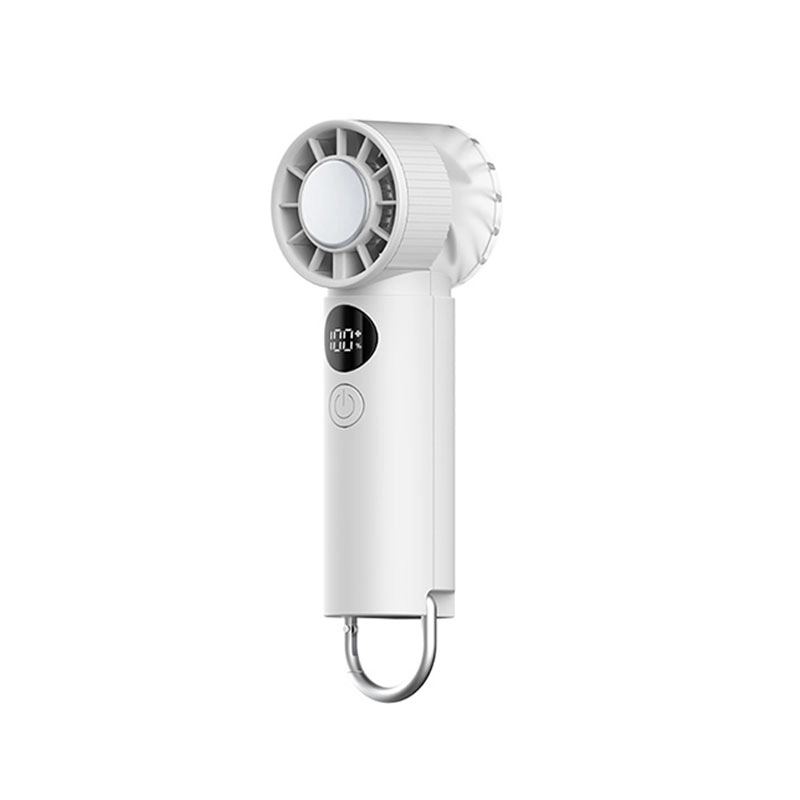
Customizable lightweight mini handheld cooling fan (with climbing hook) FS2666
A portable cooling and personalized customization product specially designed for commuters, students, the gift customization industry, and OEM/ODM buyers. It features (1) lightweight and easy portability, (2) a climbing buckle, and (3) semiconductor cooling.
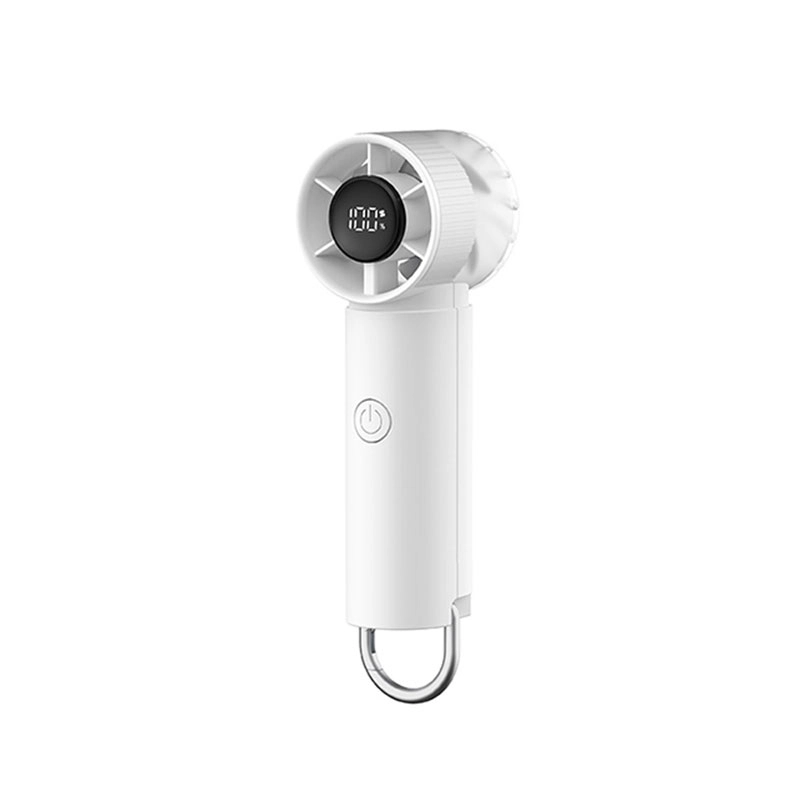
Customizable lightweight mini handheld cooling fan (with climbing hook) FS2667
This is a lightweight and portable + personalized customization product specially designed for commuters, students, the gift customization industry, and OEM/ODM buyers. It features (1) lightweight and easy portability, (2) a climbing buckle, and (3) a semi-transparent air duct design.
Start Your Custom Handheld Fans Manufacturing Project Today
If you have any comments or good suggestions, please leave us a message; later our professional staff will contact you as soon as possible.
Contact


4th Floor, Building 3, Jurong Industrial Park, No. 27-1-1, Fu'an Industrial Zone,Leliu Town (Pancun), Shunde District, Foshan City, Guangdong Province
 Scan QR Code
YouTube
Twitter
Facebook