





What is the minimum order quantity for OEM fans? | Insights by RYW
- 1. What is the typical minimum order quantity (MOQ) for OEM battery-powered handheld fans with custom branding (silkscreen + bespoke retail packaging)?
- 2. How does adding an injection-molded custom housing change MOQ and upfront costs for OEM handheld fans?
- 3. Does getting CE / FCC / UL certification for a handheld electric fan increase the MOQ? If so, by how much?
- 4. Can I get samples or a small pilot run below MOQ, and what should I expect to pay and how long will it take?
- 5. How do lithium battery rules (UN 38.3 and IEC 62133) affect MOQ, shipping, and costs for rechargeable handheld fans?
- 6. What negotiation levers can startups use to reduce MOQ or the effective cost-per-unit for OEM handheld fans?
- 7. How do I calculate landed unit cost at different MOQ levels, including tooling amortization and compliance testing?
- Closing: Practical checklist before placing an OEM handheld-fan order
- Authoritative references and further reading
- Why choose RYW for OEM handheld fans?
OEM Minimum Order Quantity for Handheld Fans — 7 Focused Questions Buyers Need Answered
When sourcing OEM handheld fans (battery-powered, USB, or purely mechanical), MOQ is often the first obstacle for startups and event buyers. Below are seven long-tail, purchase-focused questions procurement teams ask but rarely find thorough, standards-backed answers to. Each answer references applicable standards and authoritative sources where appropriate.
1. What is the typical minimum order quantity (MOQ) for OEM battery-powered handheld fans with custom branding (silkscreen + bespoke retail packaging)?
Typical MOQs vary by how much customization you request:
- Promotional, low-tech handheld fans (paper/plastic, printed branding): MOQs can start as low as 100–500 units because tooling and production are simple.
- Battery-powered or USB rechargeable handheld fans with off-the-shelf housings and printed logos: common MOQs typically start at 500–1,500 units. Electronic assembly increases handling and testing overhead, which raises minimums.
- Electronic fans with custom PCB, new enclosure tooling, or bespoke retail packaging: MOQs frequently begin at 1,000–5,000 units. Custom injection molds and packaging artwork drive higher minimums because of tooling and setup costs.
These ranges reflect sourcing norms reported across supplier platforms and buyer guides (see Alibaba's MOQ overview for sourcing marketplaces: Alibaba: Minimum Order Quantity guide).
2. How does adding an injection-molded custom housing change MOQ and upfront costs for OEM handheld fans?
Custom injection molding introduces two main cost drivers that push MOQ upward:
- Tooling (mold) cost: A new two-cavity or multi-cavity injection mold for a handheld fan housing commonly costs from several thousand to tens of thousands of USD depending on complexity, steel grade, and number of cavities. Suppliers typically expect you to amortize that tooling across the production run, which raises the effective MOQ to reduce per-unit tooling cost.
- Quality validation and sample cycles: Custom tooling requires sample sign-off and potentially multiple mold revisions. Suppliers prefer larger orders to justify these cycles.
Because tooling is a fixed upfront cost, suppliers usually set higher MOQs (often 2,000–10,000 units) for products requiring new molds. If you need lower quantities, consider these alternatives: use an existing housing (white-label), accept minor logo or color changes only, or negotiate a cost-sharing tooling agreement with the factory.
3. Does getting CE / FCC / UL certification for a handheld electric fan increase the MOQ? If so, by how much?
Certification itself does not legally mandate a higher MOQ, but it affects practical ordering economics in three ways:
- Testing costs: EMC and electrical safety testing (e.g., EMC tests for radio/noise, or safety testing under IEC/EN household appliance standards) are often several hundred to several thousand USD per model/sample test campaign. Factories factor these costs into pricing and MOQ discussions.
- Model variation: Each model variant (different PCB, battery, or housing) typically requires separate certification or test reports. Minimizing SKUs reduces the number of test campaigns and therefore makes smaller MOQs easier to justify.
- Documentation & technical file: Preparing required technical files and maintaining post-market obligations increases supplier overhead for small orders.
If a supplier must fund or arrange certification for your model, they commonly expect larger initial orders—often aligned with the higher end of their MOQ range (1,000–5,000 units). If you provide existing test reports or accept sales under limited-market exemptions, MOQ pressure can be reduced. For regulatory context see FCC equipment authorization (FCC Equipment Authorization) and household appliance safety standards like IEC 60335 (refer to IEC publications for exact clauses).
4. Can I get samples or a small pilot run below MOQ, and what should I expect to pay and how long will it take?
Yes—most reputable suppliers offer samples or limited pilot runs, but expect three things:
- Higher per-unit cost: Suppliers may charge sample prices 2–10x the expected production unit price to cover setup and small-lot inefficiencies.
- Lead time differences: Samples can take 2–6 weeks (or longer for custom tooling) depending on component availability and whether safety/EMC test samples are required. Pilot runs that approximate production may take 4–12 weeks.
- Limited warranty/support: Some factories treat sample batches as “prototype” and exclude them from standard production warranties unless a production order follows.
Negotiate a clear sample-to-production pathway in the contract: lock in unit price and MOQ for a formal production order within a defined window, and seek partial tooling cost credits if production proceeds.
5. How do lithium battery rules (UN 38.3 and IEC 62133) affect MOQ, shipping, and costs for rechargeable handheld fans?
Rechargeable handheld fans introduce battery safety and transport constraints that materially affect procurement economics:
- Safety testing: Rechargeable cells and assembled battery packs typically require conformance to IEC 62133 (IEC 62133) and passing UN 38.3 transport tests (see the UN recommendations: UN Transport of Dangerous Goods). Tests are charged per battery/pack design and test lab campaign, often several thousand USD.
- Shipping restrictions and costs: Air transport of lithium batteries is tightly regulated; some shipments must go by sea or comply with special packing/labeling which increases logistics cost and sometimes minimum shipment sizes. Carriers may impose minimum freight volumes for hazardous goods.
- Factory acceptance: Some factories will not assemble battery packs for very small orders due to QA/control risk; others will, but at High Quality pricing and with stricter documentation requirements.
Overall, batteries increase the supplier’s risk and paperwork, which typically leads to higher MOQs or higher per-unit charges for small runs. Plan for added test campaigns and transport documentation when estimating landed costs for rechargeable fans.
6. What negotiation levers can startups use to reduce MOQ or the effective cost-per-unit for OEM handheld fans?
Practical levers buyers have used successfully:
- Consolidate SKUs: Order a single color/model initially to avoid multiple certification and tooling runs.
- Share tooling or molds: Ask the factory for access to an existing mold (white-label) to avoid tooling costs and lower MOQ.
- Pay partial tooling up front: Offer to co-fund tooling in exchange for a reduced per-unit price or profit-sharing on future runs.
- Buy components or subassemblies: Procure housings or PCBs in larger quantities from other buyers or marketplaces to reduce assembly MOQ requirements from the contract manufacturer.
- Agree to longer lead times: Factories may accept smaller pilot runs if you accept a longer lead time to batch production with other orders.
- Leverage trade shows and local sourcing: Meet multiple suppliers and compare offers; some smaller factories accept smaller MOQs to build relationships.
Negotiate clear contract terms (price breaks at volume thresholds, tooling amortization schedule, sample-to-production guarantees) to protect cash and reduce perceived supplier risk.
7. How do I calculate landed unit cost at different MOQ levels, including tooling amortization and compliance testing?
Use a simple amortization formula to compare scenarios. Components of landed unit cost include:
- Unit manufacturing cost (Cu)
- Tooling cost (Ct) amortized over order quantity (Q): Ct/Q
- Testing & certification cost (Ctest) amortized over Q: Ctest/Q
- Shipping, duties, and insurance per unit (Cs)
- Other overheads (packaging, inspection, warranty provision) per unit (Co)
Estimated landed unit cost = Cu + (Ct / Q) + (Ctest / Q) + Cs + Co
Example (illustrative only): if Cu = $6, Ct = $10,000 (new mold), Ctest = $3,000, Cs = $1.50, Co = $0.50
- At Q = 1,000: unit cost ≈ 6 + (10,000/1,000) + (3,000/1,000) + 1.5 + 0.5 = 6 + 10 + 3 + 1.5 + 0.5 = $21.00
- At Q = 5,000: unit cost ≈ 6 + (10,000/5,000) + (3,000/5,000) + 1.5 + 0.5 = 6 + 2 + 0.6 + 1.5 + 0.5 = $10.60
Note: The numbers above are an illustrative calculation to show how tooling and testing amortization lowers per-unit cost as Q grows. Replace with actual quotes from suppliers, laboratory invoices for testing, and shipping estimates when you run your own calculations.
Closing: Practical checklist before placing an OEM handheld-fan order
- Decide on exact scope: branding only vs. new housing vs. electronics changes.
- Ask suppliers for itemized quotes: unit price at multiple MOQ tiers, tooling cost, sample price, and lead time.
- Confirm battery model & test status (UN 38.3, IEC 62133) if rechargeable.
- Clarify certification responsibility and who pays for tests and documentation.
- Request written amortization terms for tooling if you fund the mold (credit against future orders).
- Plan logistics: shipping method, restrictive rules for lithium batteries, and incoterms.
Authoritative references and further reading
- Hand fan history and types: Wikipedia: Hand fan
- Battery pack testing standard (overview): IEC 62133 (Wikipedia)
- Transport & testing recommendations for dangerous goods: UN Recommendations on the Transport of Dangerous Goods (Wikipedia)
- FCC guidance on equipment authorization (EMC / radio modules): FCC Equipment Authorization
- Marketplace guidance on MOQs and sourcing practices: Alibaba: Minimum Order Quantity guide
Why choose RYW for OEM handheld fans?
RYW combines manufacturing experience, battery safety expertise, and flexible MOQ programs tailored to brands and event buyers:
- Flexible MOQ tiers and tooling amortization options for startups — we offer pilot runs and clear upgrade paths to production quantities.
- Battery & safety compliance support — RYW coordinates UN 38.3 / IEC 62133 testing and helps prepare technical files for market entry.
- Transparent costing — line-item quotes (unit, tooling, testing, freight) so clients can run accurate landed-cost models before ordering.
- Turnkey solutions — from white-label housings and private-label branding to fully custom injection-mold projects backed by production QA.
Contact RYW via our website www.rywlife.com or email adrian@rywlife.com to discuss your MOQ needs and get a tailored sourcing plan.
Contacts
WhatsApp/Phone
You May Also Like
Reliable Handheld Cooling Solution for Bulk & Corporate Purchases
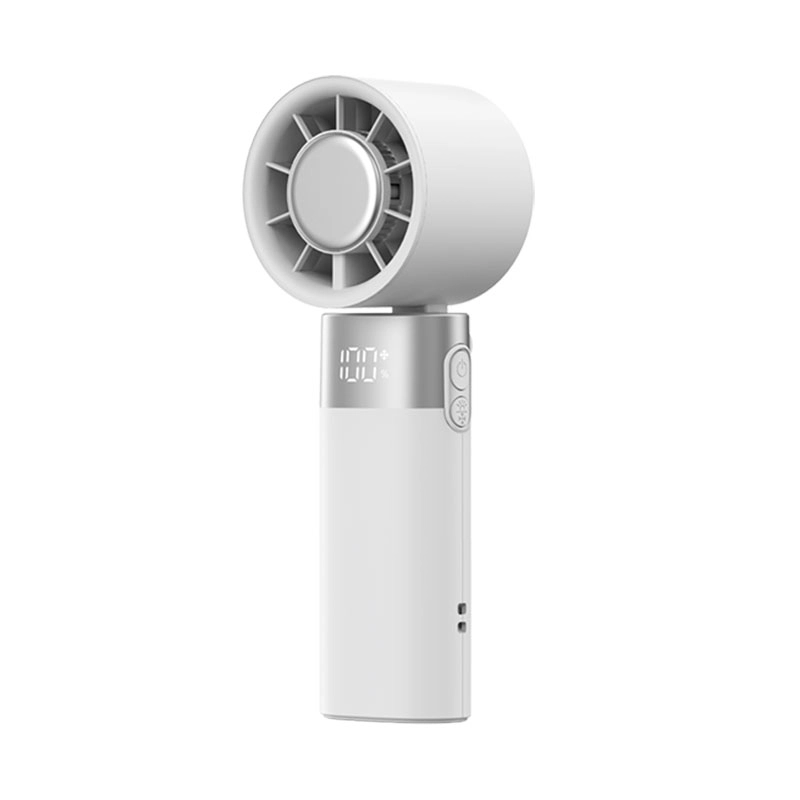
This premium handheld fan is designed for high-frequency, large-volume usage, making it an ideal cooling solution for corporate procurement, promotional distribution, employee welfare programs, and retail wholesale.
With stable airflow performance, a rechargeable design, and lightweight portability, it helps businesses deliver practical comfort products with strong perceived value while maintaining cost efficiency and supply reliability.
Customizable High-Speed Portable Handheld Fan FS2663
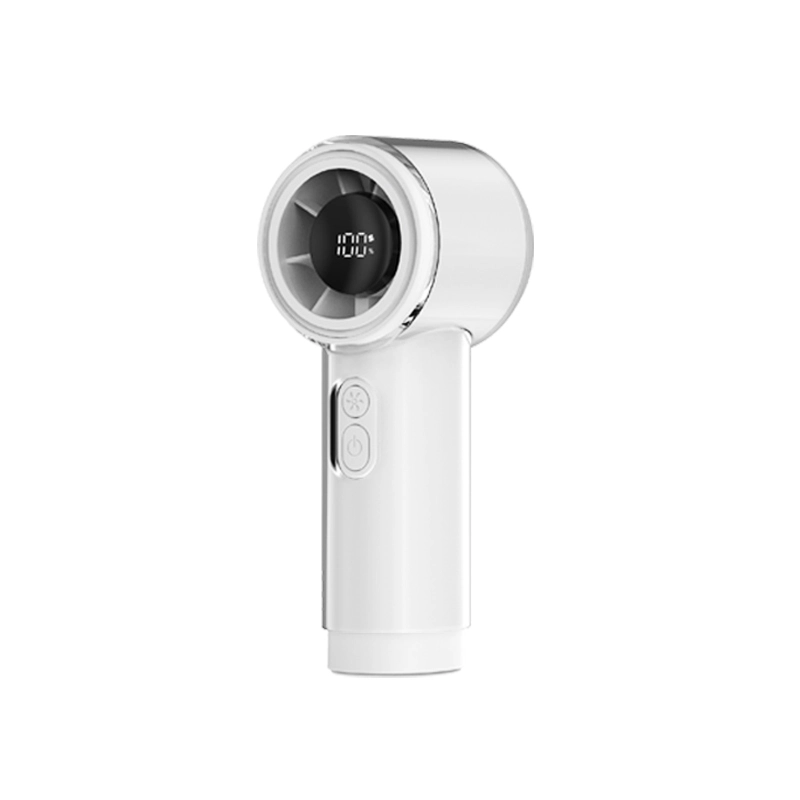
This is a high-speed, long-lasting, personalized, custom, portable cooling product specially designed for gift purchasers, cross-border e-commerce sellers, and OEM/ODM cooperation enterprises. It features (1) strong wind speed, (2) lightweight portability, (3) transparent shell design, (4) convenient carrying with a hand rope, and (5) long battery life. It helps enterprises enhance brand exposure, product differentiation competitiveness, and customer repeat purchase rate.
Customizable lightweight mini handheld cooling fan (with climbing hook) FS2666
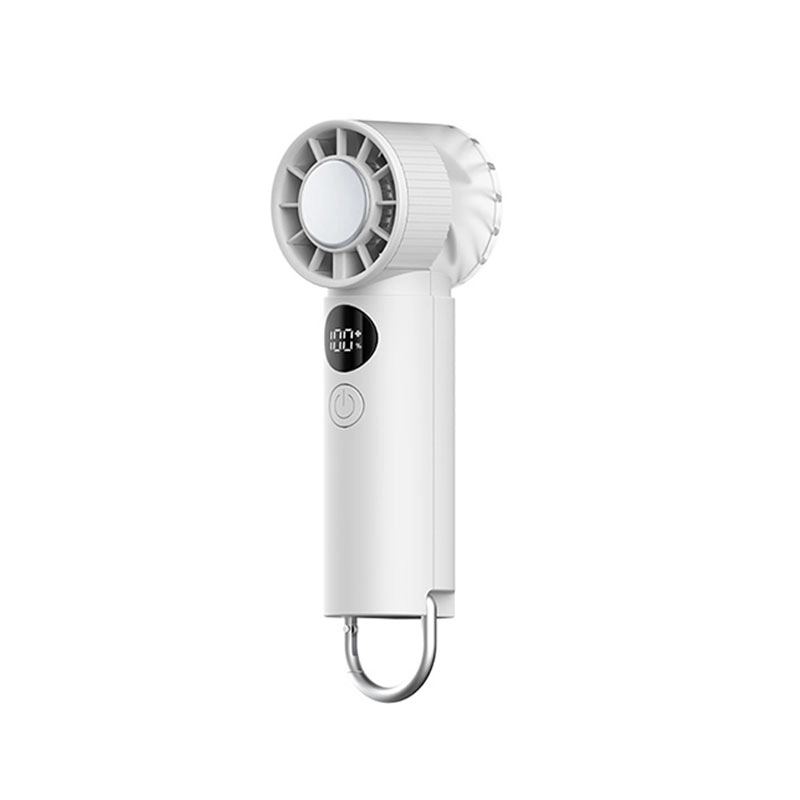
A portable cooling and personalized customization product specially designed for commuters, students, the gift customization industry, and OEM/ODM buyers. It features (1) lightweight and easy portability, (2) a climbing buckle, and (3) semiconductor cooling.
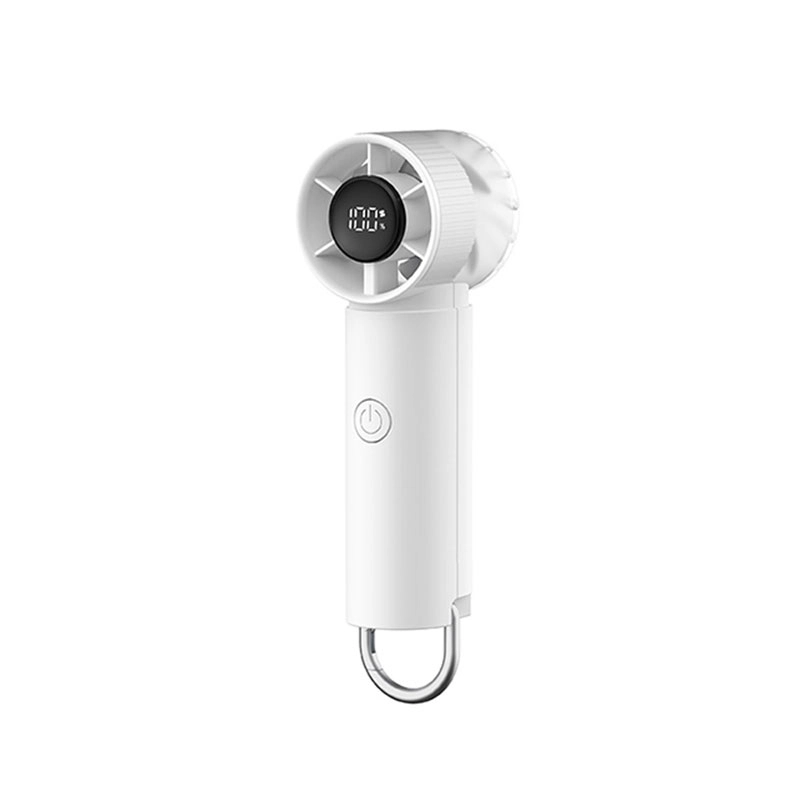
Customizable lightweight mini handheld cooling fan (with climbing hook) FS2667
This is a lightweight and portable + personalized customization product specially designed for commuters, students, the gift customization industry, and OEM/ODM buyers. It features (1) lightweight and easy portability, (2) a climbing buckle, and (3) a semi-transparent air duct design.
Start Your Custom Handheld Fans Manufacturing Project Today
If you have any comments or good suggestions, please leave us a message; later our professional staff will contact you as soon as possible.
Contact


4th Floor, Building 3, Jurong Industrial Park, No. 27-1-1, Fu'an Industrial Zone,Leliu Town (Pancun), Shunde District, Foshan City, Guangdong Province
 Scan QR Code
YouTube
Twitter
Facebook