






What motor types are used in handheld fans? | Insights by RYW
- 1) For a 3.7V rechargeable handheld fan used 8 hours daily, which motor type (brushed vs BLDC vs coreless) gives the best real-world battery life and why?
- 2) How do bearing types (sleeve vs ball) paired with motor types affect noise, lifespan and performance in handheld fans used at multiple angles?
- 3) Can a BLDC motor in a handheld fan be controlled with PWM without causing audible whining, and what PWM frequency/settings should manufacturers use?
- 4) Why do some pocket fans with coreless motors have high RPM but poor airflow, and how should buyers evaluate torque and blade matching?
- 5) What maintenance and failure modes are specific to brushed motors in handheld fans, and how to estimate remaining life or perform brush replacement?
- 6) When choosing a commercial handheld fan to OEM/ODM, what motor specs (KV, torque, power, efficiency, magnet material) should I require from manufacturers to ensure consistent performance?
1) For a 3.7V rechargeable handheld fan used 8 hours daily, which motor type (brushed vs BLDC vs coreless) gives the best real-world battery life and why?
Most portable handheld fans run on a 3.7V Li-ion cell or two-cell packs. Real-world battery life depends on motor electrical efficiency, the motor controller (if BLDC), and mechanical matching to the blade. In practice:
Brushed DC motors: simple, low-cost. Typical medium-speed current draw for pocket fans: ~200–600 mA at 3.7V (0.74–2.2 W). Efficiency (motor + gearbox losses) is often lower — expect effective motor electrical-to-mechanical efficiencies in the 40–65% range in small brushed units. Because of brush friction and commutation losses, battery life tends to be shorter under sustained medium/high loads.
Brushless DC (BLDC) motors: preferred for best battery runtime in the same form factor. When combined with a proper BLDC driver, small BLDC motors commonly show 15–40% better energy use per unit airflow than equivalent brushed units because electronic commutation and neodymium magnet rotor designs reduce copper and friction losses. Typical medium-speed current draw for efficient BLDC pocket fans: ~120–450 mA at 3.7V (0.44–1.67 W), depending on blade size and pitch.
Coreless (ironless rotor) motors: coreless brushed motors can achieve very high RPM and quick response; they have low rotor inertia so spin up quickly. However, as brushed designs they still suffer brush wear and not always better efficiency than a well-designed BLDC. They can be efficient at low loads but often consume more current under continuous load when tuned for high RPM.
Practical recommendation: For daily 8-hour use, BLDC motors give the best real-world battery life when paired with an efficient driver and well-matched blade geometry. Expect roughly 20–40% longer runtime vs similar-performing brushed models in typical consumer handheld fans (actual gain depends on motor quality, blade efficiency and drive electronics). Always check manufacturer test results: runtime measured at nominal voltage, specific speed setting, and measured in hours at defined airflow (CFM) is the reliable figure.
2) How do bearing types (sleeve vs ball) paired with motor types affect noise, lifespan and performance in handheld fans used at multiple angles?
Bearing choice is a critical, often-overlooked factor. Bearings determine friction, noise, and how performance changes with angle.
Sleeve (bushing) bearings: low cost, small form factor. They often run quietly when new at a fixed horizontal orientation. However, sleeve bearings have higher friction and are sensitive to orientation — performance and noise degrade when the fan is tilted or used vertically. Typical useful life in small sleeve bearings ranges from several thousand to ~10,000 hours depending on lubrication and operating temperature. At end-of-life they can produce grinding noise and increased current draw.
Ball bearings: higher initial cost but lower friction under varied orientations, better axial and radial load tolerance, and longer service life. In handheld fans that are frequently moved, tilted or used for prolonged periods, ball bearings maintain consistent RPM and lower noise over time. Life expectancy for quality miniature ball bearings in portable fans commonly exceeds 10,000–30,000 hours under typical loads.
Pairing guidance:
- BLDC + ball bearing = best long-term quiet operation, consistent torque and longer life.
- Brushed/coreless + sleeve bearing = lowest BOM cost, acceptable for occasional use and short-life consumer giveaways.
For buyers concerned about noise and durability, insist on ball bearings or at least documented bearing life hours in the spec sheet. Look for sound-pressure-level (dBA) measurements at 1 m and saddle tests at multiple angles in manufacturer test data.
3) Can a BLDC motor in a handheld fan be controlled with PWM without causing audible whining, and what PWM frequency/settings should manufacturers use?
Short answer: Yes — but the implementation matters.
Why audible whining occurs: PWM switching at frequencies within or near the human hearing range (typically 20 Hz–20 kHz) and mechanical resonance with fan blades or housing can produce audible tones. Motor drivers that use low PWM frequency or abrupt current steps can excite resonance.
Best practices to avoid audible noise:
- Use switching frequencies above the audible range — typically >20 kHz — for PWM in the MOSFET/driver stage. Many quality hand-fan BLDC controllers use PWM switching at 20–60 kHz so the switching artifacts are ultrasonic.
- Use proper commutation algorithm. BLDC motors can be commutated with trapezoidal (6-step) or sinusoidal waveforms. Sinusoidal or field-oriented control (FOC) reduces torque ripple and audible noise but is more complex and expensive. For High Quality handheld fans, sinusoidal commutation/FOC reduces whine and vibration.
- Use controlled acceleration and microstepping. Rapid changes in motor current/RPM can cause transient resonance. Ramping the PWM duty or using closed-loop RPM control reduces excitation.
- Apply EMI/EMC filtering and mechanical dampening. A combination of PCB layout, snubbers, and damped blade mounts lowers the chance of audible or electrical noise.
Practical takeaways for buyers/OEMs: demand driver specs (PWM freq, commutation type) and ask for an audio profile (dBA at each speed). For low-noise handheld fans, require BLDC with high-frequency PWM (>20 kHz) and, for highest-end products, sinusoidal commutation or FOC.
4) Why do some pocket fans with coreless motors have high RPM but poor airflow, and how should buyers evaluate torque and blade matching?
High RPM alone does not guarantee good airflow (CFM). Airflow depends on torque, blade area, pitch, and how the motor maintains RPM under load.
Key concepts:
- KV vs torque: Motor KV (RPM per volt) is meaningful in brushless hobby motors but for small handheld motors the equivalent is no-load RPM per volt. High-KV/coreless motors reach high free-run RPMs but often have low torque — so when blades present aerodynamic load, RPM collapses and delivered airflow is low.
- Blade design: Blade diameter, chord, pitch and number of blades determine how much air is moved for a given shaft torque. A low-torque motor with a large-pitch blade will stall or drop RPM; a modest-pitch optimized blade can produce better net CFM at medium RPM.
- Matching: The right pairing of motor torque curve and blade load is essential. Manufacturers must publish motor torque (mN·m) at operating points and fan airflow curves (CFM vs RPM). Without these graphs, high RPM claims are meaningless.
Buyer checklist to avoid poor airflow despite high RPM:
- Ask for delivered airflow (CFM or L/min) at each speed setting and measured distance (e.g., at 0.5 m) rather than only no-load RPM.
- Request torque or stall current figures. A motor that holds RPM under nominal blade load (measured current rise within spec) is better.
- Prefer motors with lower KV but higher continuous torque for larger-blade handheld fans, or use multi-blade small-diameter designs matched to coreless motor torque characteristics.
5) What maintenance and failure modes are specific to brushed motors in handheld fans, and how to estimate remaining life or perform brush replacement?
Brushed motors have unique wear mechanisms that buyers and service engineers should understand:
Common failure modes:
- Brush wear: Carbon brushes erode against the commutator over time, creating dust and eventually reducing contact area, causing intermittent operation or loss of torque.
- Commutator pitting and grooving: Arcs and brush wear create surface damage; this increases electrical noise and reduces brush life.
- Overheating: Excessive current (stall conditions, blocked blades) can overheat windings or melt adhesives.
Estimating remaining life:
- Manufacturers sometimes provide brush life hours (e.g., 1,000–5,000 hours for small consumer motors). Actual life depends on load, duty cycle, and duty temperature.
- Monitor symptoms: progressive drop in top speed, intermittent stuttering, rising current draw, and presence of carbon dust are signs brushes nearing end-of-life.
Field maintenance:
- Cleaning: Remove dust and clean commutator gently with isopropyl alcohol; remove carbon debris from the housing. Do not introduce oil to the commutator.
- Brush replacement: For serviceable designs (rare in ultra-low-cost pocket fans), brushes can be replaced. Ensure correct brush material and spring tension; otherwise motor performance will degrade.
- Preventive design: If long life is required, specify brushless motors at design stage. For low-cost disposable fans, accept limited life and price accordingly.
6) When choosing a commercial handheld fan to OEM/ODM, what motor specs (KV, torque, power, efficiency, magnet material) should I require from manufacturers to ensure consistent performance?
If you’re specifying motors for an OEM handheld fan, require clear, testable electrical and mechanical specs. Minimum recommended data sheet items:
- Rated voltage and nominal cell type (e.g., 3.7V Li-ion single cell) and test voltage used for measurements.
- No-load RPM (at test voltage) and no-load current.
- Rated load current and RPM at defined load or at a specified blade configuration.
- Stall current and stall torque (mN·m). Stall current identifies safety/thermal needs.
- Continuous torque at rated temperature and maximum allowable temperature rise.
- Efficiency curve or at least nominal motor efficiency at medium load (%) — for BLDC aim for 70%+ overall motor efficiency in small sizes.
- Bearing type and bearing life hours (L10 life) for requested duty cycle — specify ball bearing if the product will be used at varying angles.
- Magnet material: specify neodymium (NdFeB) if you need high torque density in compact form.
- Controller/driver details: commutation method (trapezoidal/sinusoidal/FOC), PWM switching frequency, microcontroller/driver part or board-level options, protection features (overcurrent, thermal shutdown), and protocol for speed control (PWM voltage or digital).
- Acoustic performance: sound pressure levels (dBA) at specified distances (typically 0.5 m and 1 m) at each speed setting.
- Environmental: IP rating (if needed for sweat/splash resistance), operating temperature range, storage requirements.
- Test reports: supply baseline test reports for runtime (hrs) at different speeds using the target battery pack, thermal rise, and life-cycle test (e.g., 1000/5000/10000 cycles) with pass/fail criteria.
Example targets for a mid-to-high quality 3.7V handheld fan:
- Motor type: BLDC with neodymium magnets
- No-load current: <80–120 mA at 3.7V
- Medium-speed running current: 200–450 mA (depending on blade size)
- Efficiency: >70% at medium load
- Bearing: ball bearing, L10 life >10,000 hours under rated load
- Noise: <40 dBA at 1 m on medium speed
- Driver: PWM switching >20 kHz, sinusoidal or improved trapezoidal commutation
Requiring these measurable specs in procurement reduces variability between batches and avoids field complaints about poor battery life, noisy fans, or early failures.
Conclusion
Choosing the right motor type for a handheld fan requires matching motor electrical characteristics (efficiency, torque, RPM), controller quality (PWM frequency, commutation), bearing choice and blade design to the intended use case. For most buyers and OEMs who need long runtime, low noise, and durability, BLDC motors with ball bearings and a high-frequency driver are the best compromise. Brushed or coreless motors still have valid roles where ultra-low cost, very-high-RPM bursts or extremely compact packaging are the priority — but expect shorter life and potentially higher noise or variable performance.
For OEM or bulk purchases, always require measured performance data (CFM vs current, dBA levels, bearing life, runtime at defined battery conditions) so you avoid buying on no-load RPM claims alone.
Contact us for a quote or motor selection assistance at www.rywlife.com or email adrian@rywlife.com.
Contacts
WhatsApp/Phone
You May Also Like
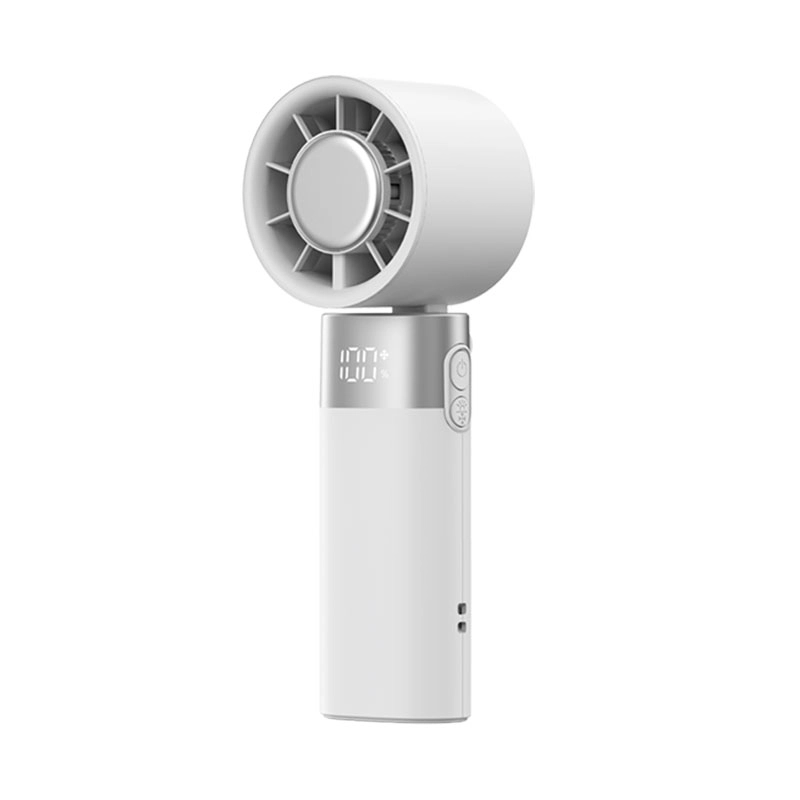
Reliable Handheld Cooling Solution for Bulk & Corporate Purchases
This premium handheld fan is designed for high-frequency, large-volume usage, making it an ideal cooling solution for corporate procurement, promotional distribution, employee welfare programs, and retail wholesale.
With stable airflow performance, a rechargeable design, and lightweight portability, it helps businesses deliver practical comfort products with strong perceived value while maintaining cost efficiency and supply reliability.
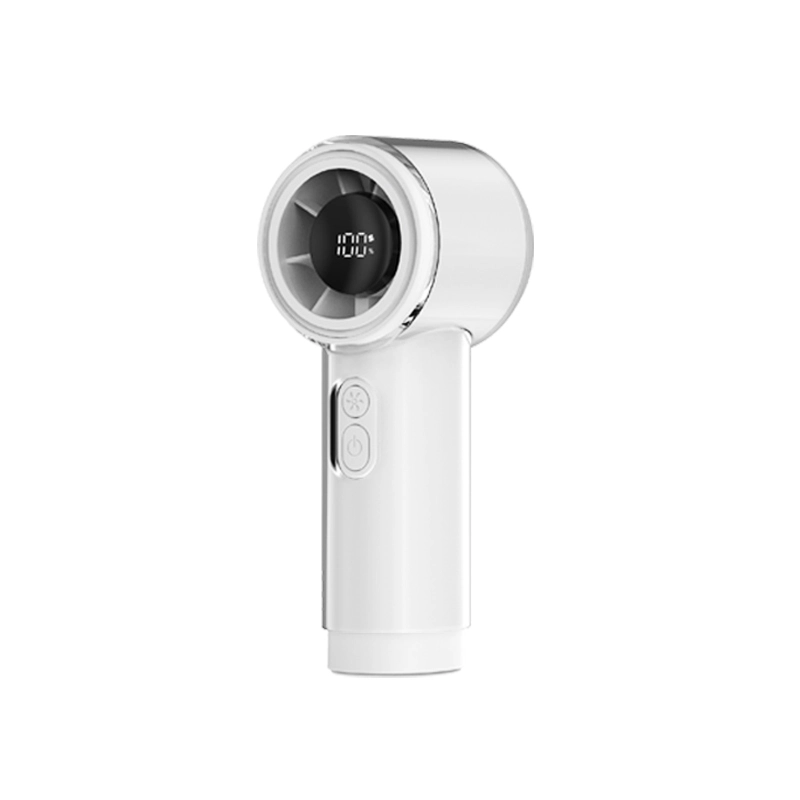
Customizable High-Speed Portable Handheld Fan FS2663
This is a high-speed, long-lasting, personalized, custom, portable cooling product specially designed for gift purchasers, cross-border e-commerce sellers, and OEM/ODM cooperation enterprises. It features (1) strong wind speed, (2) lightweight portability, (3) transparent shell design, (4) convenient carrying with a hand rope, and (5) long battery life. It helps enterprises enhance brand exposure, product differentiation competitiveness, and customer repeat purchase rate.
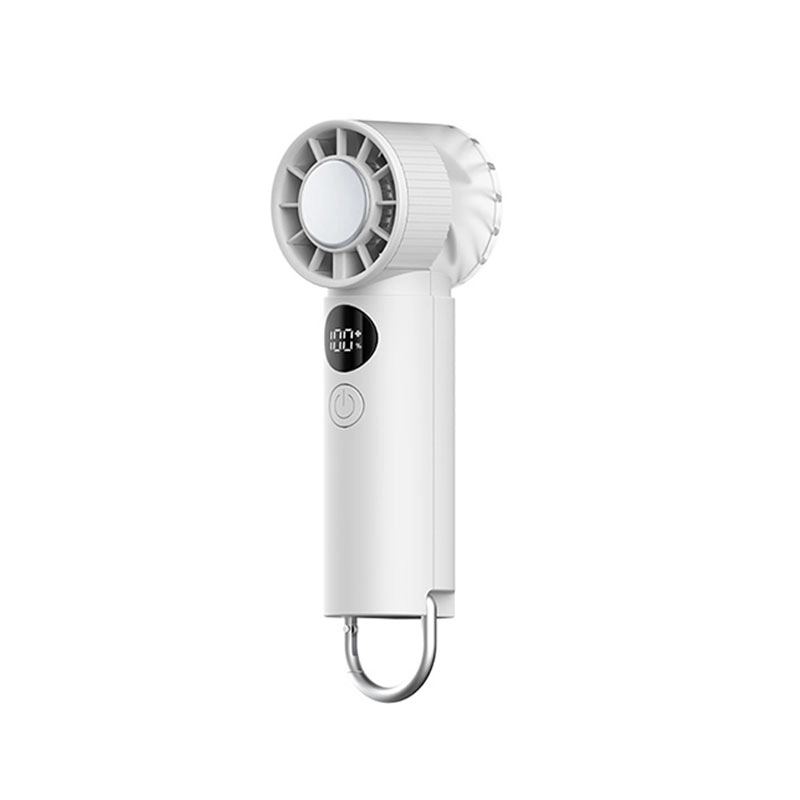
Customizable lightweight mini handheld cooling fan (with climbing hook) FS2666
A portable cooling and personalized customization product specially designed for commuters, students, the gift customization industry, and OEM/ODM buyers. It features (1) lightweight and easy portability, (2) a climbing buckle, and (3) semiconductor cooling.
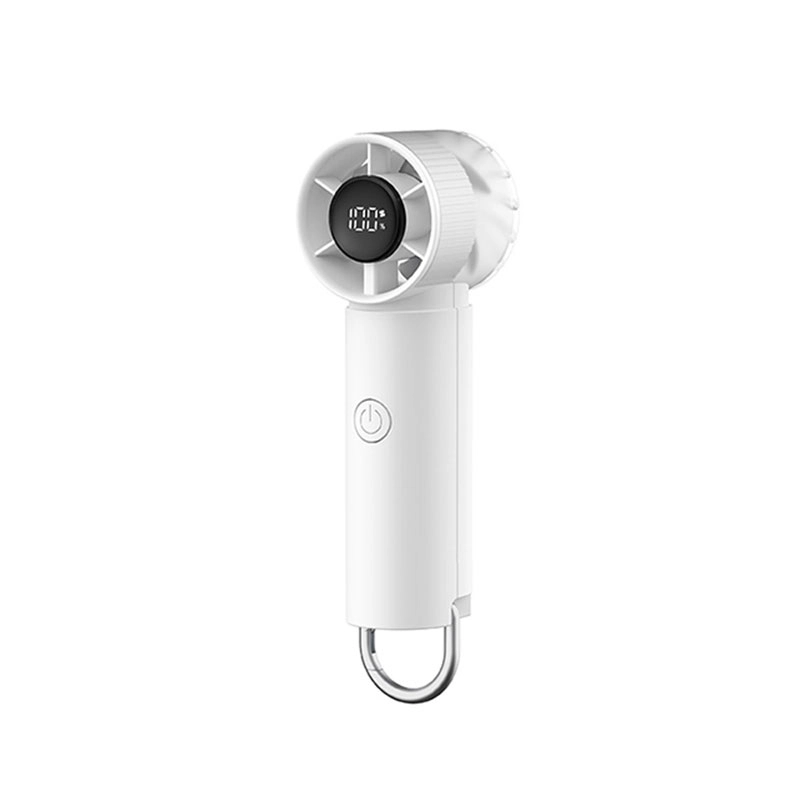
Customizable lightweight mini handheld cooling fan (with climbing hook) FS2667
This is a lightweight and portable + personalized customization product specially designed for commuters, students, the gift customization industry, and OEM/ODM buyers. It features (1) lightweight and easy portability, (2) a climbing buckle, and (3) a semi-transparent air duct design.
Start Your Custom Handheld Fans Manufacturing Project Today
If you have any comments or good suggestions, please leave us a message; later our professional staff will contact you as soon as possible.
Contact


4th Floor, Building 3, Jurong Industrial Park, No. 27-1-1, Fu'an Industrial Zone,Leliu Town (Pancun), Shunde District, Foshan City, Guangdong Province
 Scan QR Code
YouTube
Twitter
Facebook