






Do manufacturers offer mixed-model bulk orders for fans? | Insights by RYW
- Can I place a mixed-model bulk order if I need different fan models under a low total MOQ per campaign?
- How do manufacturers calculate unit pricing and surcharges for mixed-model bulk orders of handheld fans?
- Will mixed-model orders increase lead times or cause staggered shipments, and how can I optimize production scheduling?
- What quality control and certification procedures apply when mixing models (different electronics/specs) in one bulk order?
- How are custom packaging, labeling, and serialization handled for mixed-model bulk fan orders?
- What are the best logistics and freight consolidation strategies to minimize costs for mixed-model fan shipments?
Can I place a mixed-model bulk order if I need different fan models under a low total MOQ per campaign?
Short answer: Yes—many handheld-fan manufacturers accept mixed-model bulk orders, but acceptance depends on how you structure the order against the factory's MOQ (minimum order quantity) policy and production scheduling.
What to do (step-by-step):
- Ask the factory for SKU-level MOQ and a blended-MOQ option. Some factories maintain a per-SKU MOQ (e.g., 100–500 pieces per style) while others let you meet a total-order MOQ if you accept a surcharge or longer lead time.
- Negotiate a compromise MOQ: propose a split (e.g., 50–70% of the total order as the primary SKU and the remainder split across secondary SKUs). Factories are more flexible if a single model forms the majority of the run.
- Offer to pay a small upcharge per secondary SKU to cover line-change and inventory complexity. Typical surcharges in small electronics and promotional product manufacturing commonly range from 'token' fees to 5–20% of unit price, depending on complexity and tooling needs.
- Bundle SKUs that share production processes (same housing, motor and PCB revisions) — batch mixing is easier and cheaper than mixing across different electrical specs or tooling.
Why it matters: If you present a clear production plan and accept modest surcharges or longer lead times, most OEM/ODM plants will accommodate mixed-model bulk orders. This approach reduces your inventory risk and allows A/B testing across markets without full MOQs per SKU.
How do manufacturers calculate unit pricing and surcharges for mixed-model bulk orders of handheld fans?
Unit pricing for mixed-model orders is typically computed from the total cost stack; manufacturers break costs into direct materials, labor, tooling amortization, and operational overhead. When you mix models, incremental costs appear in three areas:
- Setup and line-change overhead — additional labor to switch jigs, reprogram assembly stations, and re-verify fixtures.
- Inventory handling and SKUs management — separate component reels, separate packing inserts, and extra stock-keeping complexity.
- Quality assurance and documentation — more inspections, more sampling per model, and more paperwork (e.g., labeling, certificates) per SKU.
How to get a transparent quote:
- Ask for a full quote breakdown: per-model unit price at the factory gate, per-model sample fees (if any), per-SKU setup fee, and expected surcharge for mixed runs.
- Request cost curves: unit price at different blended volumes (e.g., 1,000 total units split 800/100/100 vs. 1,000 of a single SKU). This shows the marginal cost of model diversity.
- Lock down packaging and accessory decisions early — packaging variations cause the largest surcharges in promotional handheld fans.
Pricing tip: If you commit to repeat orders or a rolling replenishment plan, you can often eliminate the per-SKU setup fee after the first batch. Many suppliers will amortize setup costs over forecasted 3–6 months of orders.
Will mixed-model orders increase lead times or cause staggered shipments, and how can I optimize production scheduling?
Yes, mixed-model orders usually increase lead times modestly because of additional setup events and QA steps. The exact impact depends on the manufacturer's line capacity and how you arrange production.
Typical impacts and mitigation strategies:
- Lead-time impact: Expect 10–30% extra production time relative to a single-model run if models are similar; if models require different tooling or PCB revisions, lead times can double. Request the factory's production schedule to see how mixed batches fit into blocks.
- Staggered shipments: Factories may propose shipping models as they are completed (partial shipments). Negotiate shipment windows and specify if you prefer consolidated shipment to minimize freight costs.
- Optimizing scheduling: Group models with shared components into contiguous production blocks to reduce changeover frequency. Use a production matrix that lists identical components (motors, housings, batteries) so the manufacturer can sequence builds efficiently.
- Buffer stock strategy: Maintain safety stock of your highest-volume SKU and use mixed-model runs primarily to top up lower-volume SKUs to avoid stockouts.
Logistics note: If manufacturers propose partial shipments, compare total landed cost of staggered shipments (more airfreight or LCL admin) vs. waiting for consolidated FCL output.
What quality control and certification procedures apply when mixing models (different electronics/specs) in one bulk order?
Mixing models complicates QC and compliance because each SKU must individually meet electrical, safety, and labeling requirements. Common certifications include CE, RoHS, and in some markets FCC or BIS-equivalent approvals. Here's how to manage QC effectively:
- Pre-production samples: Require pre-production samples for each model and ask for test reports (in-house or third-party) for key safety items—battery safety, motor insulation, and EMC where applicable.
- Model-specific test plans: Create a QC checklist for each SKU covering visual, functional, battery/cell safety, and packaging checks. Ensure the factory attaches inspection tags per SKU and batch.
- Third-party inspections: For mixed orders, increase sample sizes during AQL inspections; sampling plans should be per-SKU rather than per-bulk to spot model-specific defects.
- Certificates and documentation: Ask the manufacturer to provide a per-model compliance dossier (component certificates, test reports, Declaration of Conformity). If models differ electrically, they must be tested separately for EMC and safety standards.
Practical tip: Add a clause in your purchase order that non-conforming SKUs will be separated and either reworked or withheld from shipment pending corrective action. This prevents cross-contamination of good and bad inventory in consolidated packs.
How are custom packaging, labeling, and serialization handled for mixed-model bulk fan orders?
Custom packaging and labeling are a major complexity driver for mixed-model orders. If your order mixes models but requires unique packaging per model (different SKUs, barcodes, or instructions), this will create separate packing lines and usually increase costs.
Recommended approach:
- Standardize packaging elements where possible—same retail box size and one size of polybag reduces line changes and packing errors.
- Use modular artwork templates: Work with the supplier to create a master dieline with variable fields (SKU, barcode, CE mark, color image). This allows faster printing runs and less waste.
- Serialization and traceability: If you need serial numbers or batch codes, require the factory to print or apply serialized labels per unit and deliver a manifest mapping serial numbers to SKU and pallet/box numbers. This is essential for warranty and recall management.
- Packed-for-retail vs. bulk-for-distribution: Decide early if some models will be shipped in retail-ready packs while others are bulk-packed for fulfillment. Mixing packing methods increases handling time and error risk.
Packaging cost control: Consolidate packaging SKUs, buy packaging centrally, or use neutral packaging with secondary inserts for different models. This often reduces the marginal packing surcharge for mixed-model runs.
What are the best logistics and freight consolidation strategies to minimize costs for mixed-model fan shipments?
Mixed-model orders can increase freight admin and handling costs but there are several proven strategies to keep landed cost low:
- Consolidation: Ask the manufacturer to consolidate mixed SKUs into full container loads (FCL) at factory or port consolidation centers. Consolidating into FCL usually beats multiple LCL or air shipments on unit landed cost.
- Palletized packing with manifests: Insist on pallet-level manifests that identify SKUs and counts on each pallet. This simplifies customs clearance and distribution at destination.
- Freight terms and Incoterms: Negotiate clear Incoterms (FOB vs. EXW vs. CIF) so responsibility for consolidation and freight booking is explicit. If you are inexperienced, FOB plus a freight forwarder is common and gives you control over consolidation and routing.
- Use bonded warehousing and split delivery: Ship consolidated containers to a bonded warehouse near your market and do final SKU-level distribution from there—this defers duties and simplifies multi-destination fulfillment.
- Insurance and inspection: For mixed-model loads, ensure the cargo insurance covers partial-loss scenarios and instruct the forwarder to check manifests during loading for discrepancies.
Cost example (rule-of-thumb): freight cost per unit typically decreases as you approach full-container utilization. For mixed-model orders, prioritizing consolidation and manifest accuracy yields the largest savings versus paying for multiple smaller shipments.
Advantages of mixed-model bulk ordering: Mixed-model bulk purchasing reduces your inventory risk, enables market testing with lower upfront investment per SKU, and improves flexibility to respond to seasonal demand. When negotiated well, blended MOQs and consolidated production can lower overall carrying cost and speed SKU rollout—especially when you standardize components, packaging, and QC processes.
Ready to get a quote? Contact us for a tailored mixed-model bulk proposal at www.rywlife.com or email adrian@rywlife.com. Our purchasing team will provide a transparent, line-item factory quote including MOQ options, blended pricing, lead-time schedules, and packing/serialization plans.
Contacts
WhatsApp/Phone
You May Also Like
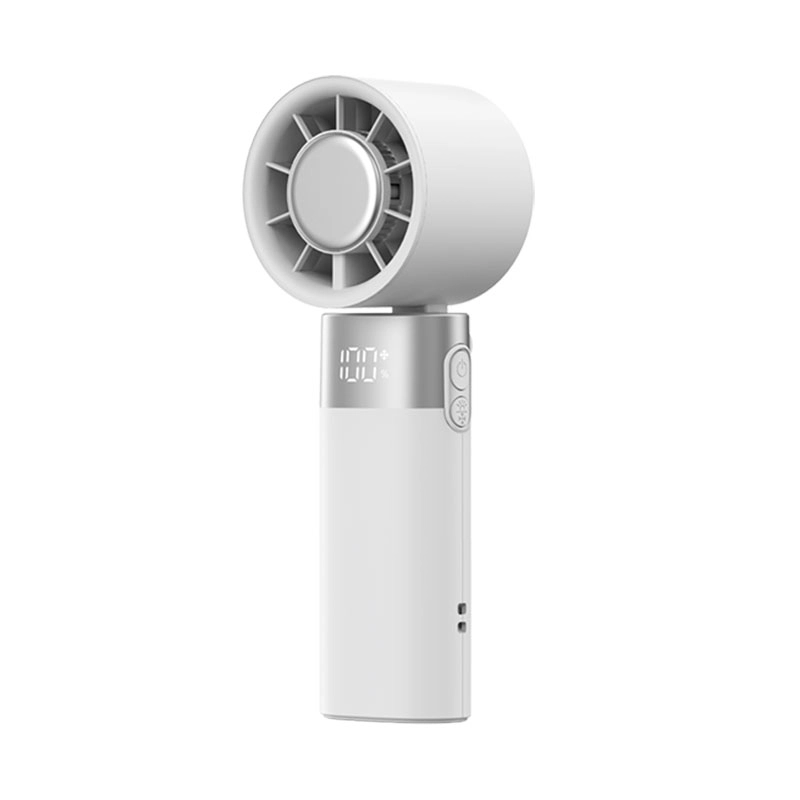
Reliable Handheld Cooling Solution for Bulk & Corporate Purchases
This premium handheld fan is designed for high-frequency, large-volume usage, making it an ideal cooling solution for corporate procurement, promotional distribution, employee welfare programs, and retail wholesale.
With stable airflow performance, a rechargeable design, and lightweight portability, it helps businesses deliver practical comfort products with strong perceived value while maintaining cost efficiency and supply reliability.

Customizable High-Speed Portable Handheld Fan FS2663
This is a high-speed, long-lasting, personalized, custom, portable cooling product specially designed for gift purchasers, cross-border e-commerce sellers, and OEM/ODM cooperation enterprises. It features (1) strong wind speed, (2) lightweight portability, (3) transparent shell design, (4) convenient carrying with a hand rope, and (5) long battery life. It helps enterprises enhance brand exposure, product differentiation competitiveness, and customer repeat purchase rate.
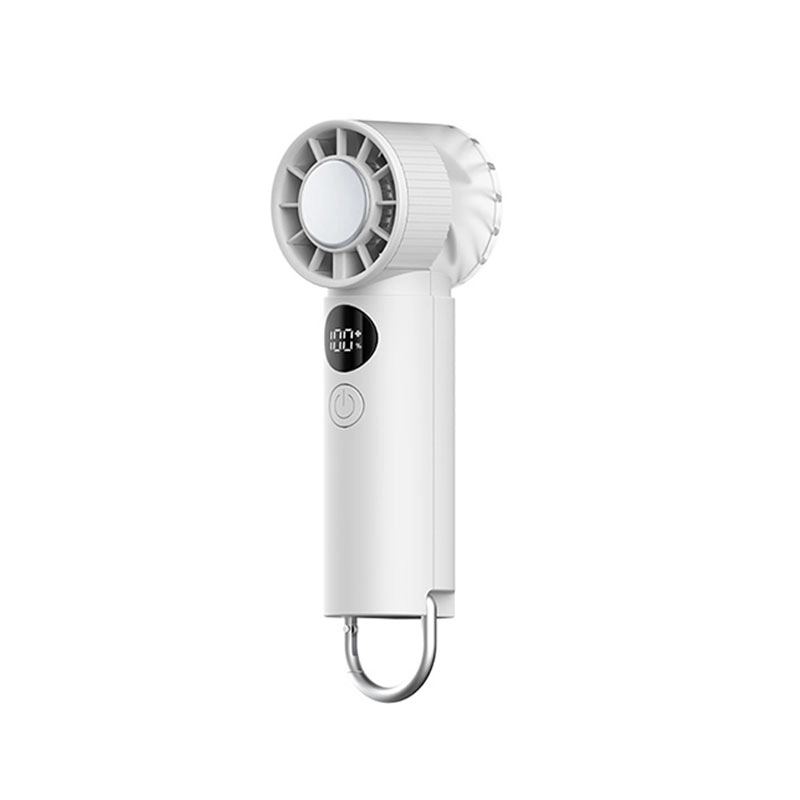
Customizable lightweight mini handheld cooling fan (with climbing hook) FS2666
A portable cooling and personalized customization product specially designed for commuters, students, the gift customization industry, and OEM/ODM buyers. It features (1) lightweight and easy portability, (2) a climbing buckle, and (3) semiconductor cooling.
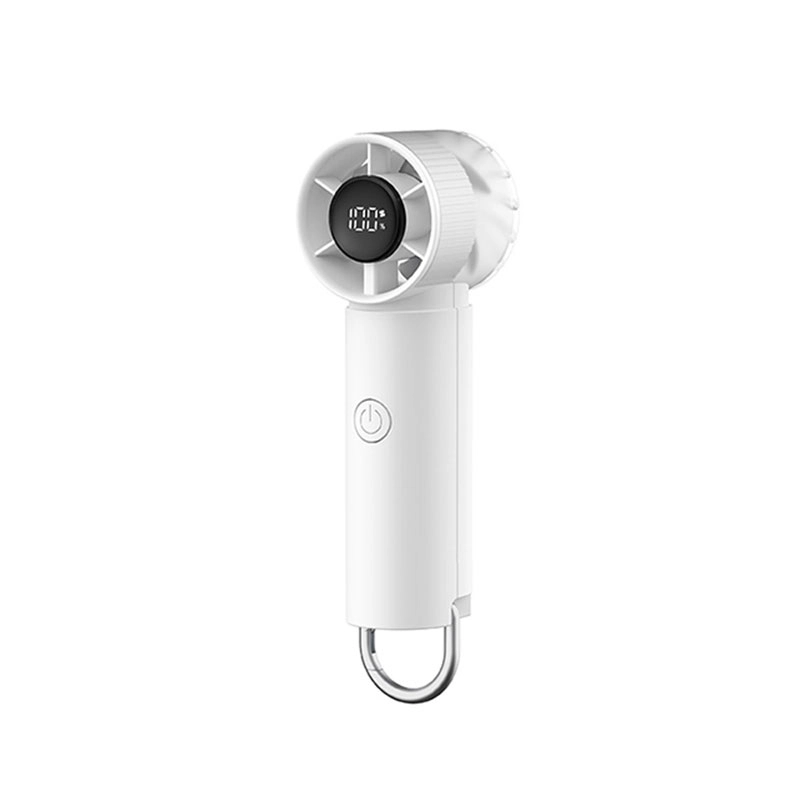
Customizable lightweight mini handheld cooling fan (with climbing hook) FS2667
This is a lightweight and portable + personalized customization product specially designed for commuters, students, the gift customization industry, and OEM/ODM buyers. It features (1) lightweight and easy portability, (2) a climbing buckle, and (3) a semi-transparent air duct design.
Start Your Custom Handheld Fans Manufacturing Project Today
If you have any comments or good suggestions, please leave us a message; later our professional staff will contact you as soon as possible.
Contact


4th Floor, Building 3, Jurong Industrial Park, No. 27-1-1, Fu'an Industrial Zone,Leliu Town (Pancun), Shunde District, Foshan City, Guangdong Province
 Scan QR Code
YouTube
Twitter
Facebook