






How long does a handheld electric fan battery last? | Insights by RYW
- 1) How long does a handheld electric fan battery last on low, medium and high speeds for common capacities (1,000 / 2,000 / 5,000 mAh)?
- 2) How to calculate expected runtime from mAh and motor wattage (step‑by‑step with examples)
- 3) How do battery chemistry, cell brand and protection PCB affect real-world battery life and safety?
- 4) How many charge cycles will a handheld fan battery last before it drops to ~80% capacity and how can I test it?
- 5) What charging time should I expect and how do charging current and cable type (USB‑A vs USB‑C / PD) impact it?
- 6) How do ambient temperature, motor type (brushless vs brushed) and blade design affect battery consumption?
- 7) When and how can a handheld fan battery be replaced safely, and what certifications should replacement batteries have?
- 8) For procurement: what battery specs, test documents and factory practices should buyers require to avoid outdated or misleading claims?
- Conclusion: RYW advantages
1) How long does a handheld electric fan battery last on low, medium and high speeds for common capacities (1,000 / 2,000 / 5,000 mAh)?
Runtimes depend on battery energy (Wh), motor power draw (W) and overall system efficiency. Use the formula in question 2 to estimate precisely. Typical real-world ranges for small handheld fans:
- 1,000 mAh (nominal 3.7 V ≈ 3.7 Wh): low speed 4–10 hours, medium 2–4 hours, high 0.8–1.6 hours.
- 2,000 mAh (≈ 7.4 Wh): low 8–20 hours, medium 4–8 hours, high 1.6–3.2 hours.
- 5,000 mAh (≈ 18.5 Wh): low 20–50 hours, medium 10–25 hours, high 4–10 hours.
Why ranges? Different motors (brushed vs brushless), blade design, electronics and heat losses change draw. The numbers above are realistic, conservative industry ranges for modern, efficient brushless handheld fans.
2) How to calculate expected runtime from mAh and motor wattage (step‑by‑step with examples)
Use these steps:
- Convert mAh to Wh: Wh = (mAh / 1000) × nominal cell voltage. Most handheld fans use Li‑ion/Li‑Po cells at 3.7 V nominal.
- Estimate motor/system power draw in watts (W). Include the motor, control electronics and losses. Use measured values if possible; typical draws: low 0.3–1 W, medium 1–3 W, high 2–6 W.
- Runtime (hours) ≈ Battery Wh ÷ System W × usable fraction. Use a usable fraction of 0.85 to allow for protection cutoffs and conversion inefficiency.
Examples:
- 2,000 mAh: Wh = (2000/1000)×3.7 = 7.4 Wh. If high speed draw ≈ 3 W: runtime ≈ 7.4 ÷ 3 × 0.85 ≈ 2.1 hours.
- 5,000 mAh with low speed draw 0.6 W: Wh = 18.5 Wh → runtime ≈ 18.5 ÷ 0.6 × 0.85 ≈ 26 hours.
Measurement tip: use a USB power meter to measure current draw from the fan while running at each speed for real data.
3) How do battery chemistry, cell brand and protection PCB affect real-world battery life and safety?
Key points:
- Chemistry: Almost all handheld fans use lithium‑ion (Li‑ion) or lithium‑polymer (Li‑Po) cells; both have similar energy density but different form factors. Cell quality matters more than Li‑ion vs Li‑Po.
- Cell brand and model: Reputable cells (Samsung, LG, Panasonic, Sanyo) have more consistent capacity, internal resistance and cycle life. Cheap no‑name cells can show higher self‑discharge, worse capacity retention and safety risks.
- Protection PCB / PCM: A proper protection circuit is essential—overcharge, overdischarge, overcurrent and short‑circuit protection. Absence or poor design significantly reduces safety and usable lifecycle.
Procurement implication: insist on the cell part numbers, datasheets, and a copy of the protection board specification. Avoid vague claims like long‑lasting battery without cell-level details.
4) How many charge cycles will a handheld fan battery last before it drops to ~80% capacity and how can I test it?
Industry experience: quality Li‑ion/Li‑Po cells commonly retain about 80% capacity after 300–500 full charge/discharge cycles. Higher‑quality cells and conservative depth of discharge (DoD) can extend that—e.g., 500+ cycles to 80% for High Quality cells under controlled conditions.
Testing method for buyers:
- Request a third‑party cycle life test or demand the manufacturer-run dataset showing capacity vs cycle count under IEC/IEEE standard conditions.
- Field test: fully charge, fully discharge and measure capacity (mAh or Wh) every 50–100 cycles using a regulated charge/discharge station.
Tip: shallower cycles (charging more often and avoiding deep discharges) prolong calendar and cycle life.
5) What charging time should I expect and how do charging current and cable type (USB‑A vs USB‑C / PD) impact it?
Charging time ≈ battery capacity (mAh) ÷ charging current (mA) × inefficiency factor (≈1.1–1.3). Many handheld fans use 5 V USB charging at 1 A or 2 A:
- 1,000 mAh at 1 A: nominal ~1–1.5 hours (allow 1.2–2 hours with inefficiency).
- 2,000 mAh at 1 A: ~2–2.5 hours; at 2 A: ~1–1.3 hours.
- 5,000 mAh at 2 A: ~2.5–3.5 hours (realistic 3–4 hours).
USB‑C (with USB Power Delivery) can enable higher charging currents and shorter times if the fan’s charge controller supports it. If the fan is limited to 5 V/1 A by its PCB, a USB‑C cable won’t speed charging unless the internal charging circuit supports higher current/PD negotiation.
6) How do ambient temperature, motor type (brushless vs brushed) and blade design affect battery consumption?
Ambient temperature:
- Cold (<0–10°C) reduces available capacity temporarily and increases internal resistance—runtime drops noticeably.
- Hot (>40°C) accelerates aging and permanent capacity loss over time.
Motor type and efficiency:
- Brushless DC motors (BLDC) are more efficient and more controllable than small brushed motors, typically giving longer runtime for the same airflow.
- Motor controller quality matters—PWM frequency and drive efficiency impact audible noise and power use.
Blade and aerodynamic design:
- Well‑designed blades (optimized pitch and sweep) produce more airflow per watt. Cheap blunt blades consume the same power but deliver less effective airflow—so perceived runtime vs comfort can be misleading.
7) When and how can a handheld fan battery be replaced safely, and what certifications should replacement batteries have?
Replacement considerations:
- Replace the pack when measured capacity drops below your acceptable runtime threshold, or if physical damage, swelling or leakage appears.
- Only use replacement packs with the same voltage, connector and matching protection circuitry. Ideally, the supplier uses spot‑welded cells and a proper PCM; avoid DIY soldering of Li‑ion cells.
Essential certifications and documents for replacement batteries:
- Cell datasheet and manufacturer part number
- UN38.3 (transport safety tests)
- IEC 62133 (safety standard for portable rechargeable cells)
- MSDS (material safety data sheet)
- RoHS / CE where applicable and a battery pack test report showing over‑charge/over‑discharge/short‑circuit protection
8) For procurement: what battery specs, test documents and factory practices should buyers require to avoid outdated or misleading claims?
Purchase checklist:
- Cell specification: manufacturer, model number, nominal voltage, typical capacity (mAh), internal resistance, rated cycles.
- Protection: schematic or spec of the protection PCB (overcharge, overdischarge, overcurrent, balancer if multi‑cell).
- Runtime claim validation: ask for test protocol showing how runtime was measured (battery SOC start/stop, ambient temp, load profile for each speed).
- Charging spec: recommended charger voltage/current, max charge current, USB‑C/PD support if claimed.
- Safety and transport: UN38.3, IEC62133 test reports, MSDS, and factory quality control (IQC/FQC) reports.
- Warranty and after‑sales: cycle‑based warranty or time‑based warranty and clear RMA process for swollen/damaged batteries.
- Factory processes: cell sourcing traceability, spot welding vs soldering, BMS/PCM test bench results, aging/burn‑in tests.
Red flags: vague up to X hours without a test description, missing cell part numbers, absence of UN38.3 or IEC62133 documentation.
Conclusion: RYW advantages
At RYW (www.rywlife.com), we focus on real‑world battery performance and safe sourcing. Our advantages for handheld fan buyers:
- Transparent cell sourcing: we provide cell part numbers and datasheets from reputable manufacturers.
- Verified runtime data: runtimes measured under documented test protocols (ambient temp, load profile, SOC endpoints).
- Safety compliance: UN38.3 and IEC62133 test reports on file for battery packs; PCM protection and correct assembly practice (spot‑welded cells, tested protection boards).
- QC & longevity: cycle life test data and burn‑in results; conservative spec’ing to ensure durability in real use.
- After‑sales support: clear warranty terms and replacement/repair process (contact adrian@rywlife.com).
If you need a custom runtime target or a procurement checklist tailored to a specific fan model or factory, contact us via adrian@rywlife.com and we’ll provide a detailed spec sheet and test plan.
Contacts
WhatsApp/Phone
You May Also Like
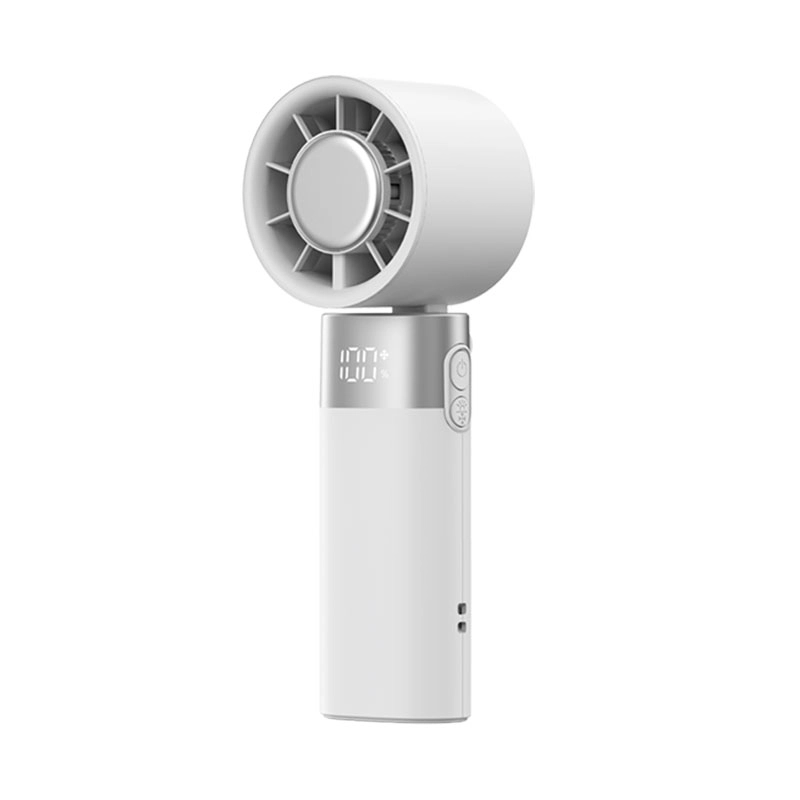
Reliable Handheld Cooling Solution for Bulk & Corporate Purchases
This premium handheld fan is designed for high-frequency, large-volume usage, making it an ideal cooling solution for corporate procurement, promotional distribution, employee welfare programs, and retail wholesale.
With stable airflow performance, a rechargeable design, and lightweight portability, it helps businesses deliver practical comfort products with strong perceived value while maintaining cost efficiency and supply reliability.
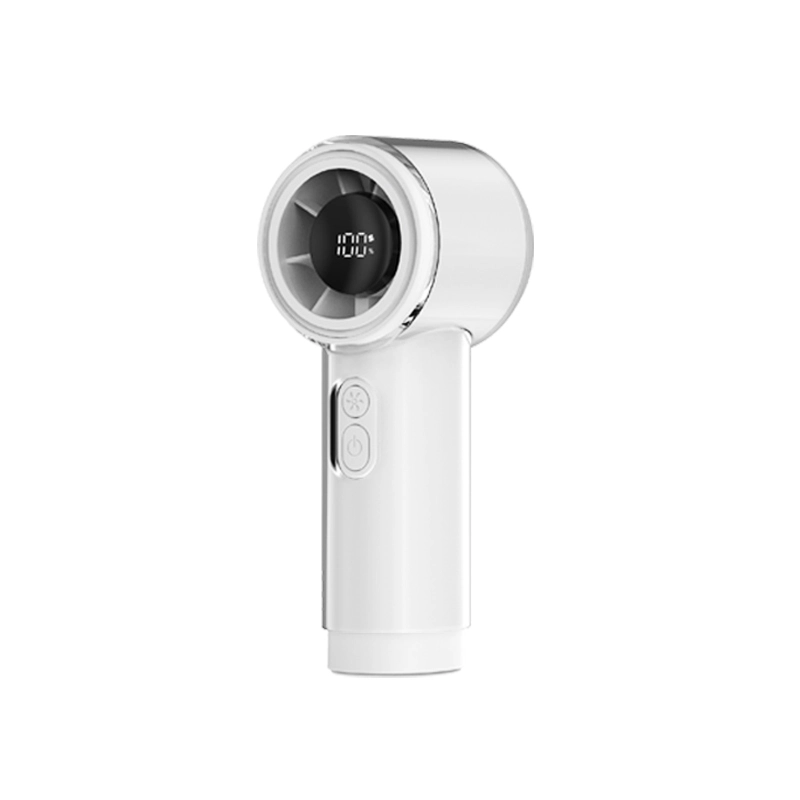
Customizable High-Speed Portable Handheld Fan FS2663
This is a high-speed, long-lasting, personalized, custom, portable cooling product specially designed for gift purchasers, cross-border e-commerce sellers, and OEM/ODM cooperation enterprises. It features (1) strong wind speed, (2) lightweight portability, (3) transparent shell design, (4) convenient carrying with a hand rope, and (5) long battery life. It helps enterprises enhance brand exposure, product differentiation competitiveness, and customer repeat purchase rate.
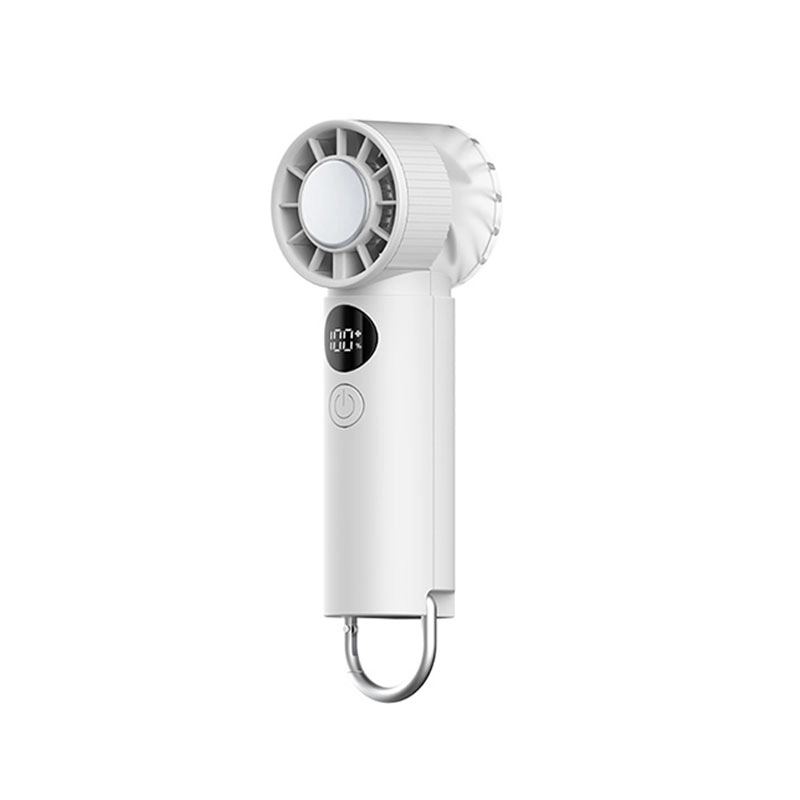
Customizable lightweight mini handheld cooling fan (with climbing hook) FS2666
A portable cooling and personalized customization product specially designed for commuters, students, the gift customization industry, and OEM/ODM buyers. It features (1) lightweight and easy portability, (2) a climbing buckle, and (3) semiconductor cooling.
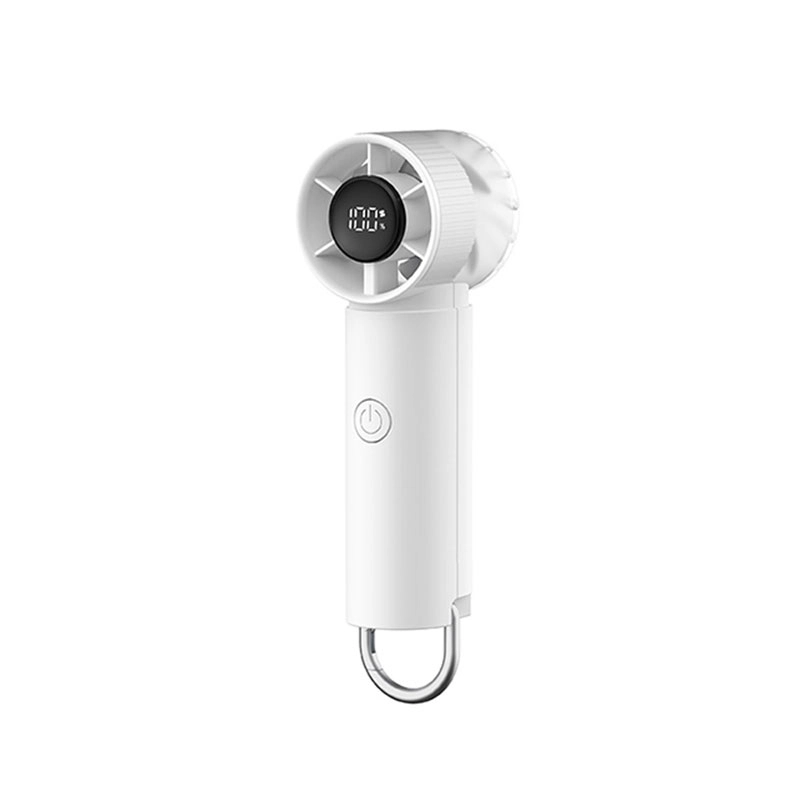
Customizable lightweight mini handheld cooling fan (with climbing hook) FS2667
This is a lightweight and portable + personalized customization product specially designed for commuters, students, the gift customization industry, and OEM/ODM buyers. It features (1) lightweight and easy portability, (2) a climbing buckle, and (3) a semi-transparent air duct design.
Start Your Custom Handheld Fans Manufacturing Project Today
If you have any comments or good suggestions, please leave us a message; later our professional staff will contact you as soon as possible.
Contact


4th Floor, Building 3, Jurong Industrial Park, No. 27-1-1, Fu'an Industrial Zone,Leliu Town (Pancun), Shunde District, Foshan City, Guangdong Province
 Scan QR Code
YouTube
Twitter
Facebook