






How fast do handheld electric fans charge? | Insights by RYW
- 1. How long will a 1500–3000 mAh handheld fan actually take to fully charge with a 5V/1A adapter versus a 5V/2A or USB-C PD charger?
- 2. Why does my handheld fan charge slower from a power bank than from a wall adapter?
- 3. How can I measure the actual charging current and calculate real charge time for my handheld fan?
- 4. Will using a fast charger (QC/PD) damage my handheld fan battery or shorten its lifespan?
- 5. Why does my handheld fan stop charging at ~80% or report incorrect battery levels?
- 6. For buyers: What charge-time vs runtime ratio should I demand when sourcing handheld fans for all-day use or commercial resale?
As a professional content writer with deep SEO, experience and many years in the handheld fans industry, I answer six specific beginner pain points about charging speed and battery behavior for handheld electric fans. This guide uses measurable terms (mAh, volts, amps, USB standards) and practical tests you can perform at home or in sourcing decisions to verify vendor claims.
1. How long will a 1500–3000 mAh handheld fan actually take to fully charge with a 5V/1A adapter versus a 5V/2A or USB-C PD charger?
Short answer: Expect about 1.8–4 hours with a 5V/1A adapter, and roughly 1–2 hours with a 5V/2A adapter—if the fan electronics accept the higher current. Use this industry-ready formula to estimate:
- Charge time (hours) ≈ (Battery capacity mAh ÷ Charging current mA) × 1.2
Why the ×1.2? Real batteries and chargers aren’t 100% efficient due to heat and the CC/CV (constant-current / constant-voltage) end-stage where current tapers off. Example calculations using realistic capacities:
- 1500 mAh at 1 A (1000 mA): (1500 ÷ 1000) × 1.2 ≈ 1.8 hours
- 2000 mAh at 1 A: ≈ 2.4 hours
- 3000 mAh at 1 A: ≈ 3.6 hours
- 3000 mAh at 2 A (2000 mA): ≈ 1.8 hours
Important caveat: Many handheld fans include internal charging circuitry that limits input to 1 A even if you plug into a 2 A or USB-C PD adapter. Always check the fan spec sheet for supported input (e.g., 5V/1A, 5V/2A, or PD 9V/2A). If the spec sheet is vague, assume the lower charging current.
2. Why does my handheld fan charge slower from a power bank than from a wall adapter?
There are three common causes:
- Power-bank output limits: Many power banks throttle output to 1 A or lower on specific ports; some require multiple ports used or a specific port marked for fast charge.
- Load negotiation/protocols: USB-C PD and Quick Charge require a handshake between the charger and the device. If the fan’s charging IC only speaks basic USB 5V, the power bank won’t step up voltage or current.
- Simultaneous operation: If you run the fan while charging, the device draws current for operation and charging happens slower because part of the current offsets runtime consumption.
How to verify: use a USB power meter or check the power bank output specs. If the power bank supports PD but the fan doesn't, you’ll see the fan draw 5V and limited mA—hence slower charging.
3. How can I measure the actual charging current and calculate real charge time for my handheld fan?
Steps to measure accurately (industry-standard approach):
- Fully discharge the fan to its cutoff (use it until it shuts off or shows empty).
- Connect a USB power meter between the charger and the fan. These meters show V (volts), A (amps) and accumulated mAh or Wh.
- Record the average charging current during the initial charging stage (the highest steady current during CC phase).
- Watch the accumulated mAh reading until it reports near full (or until charging stops). Note total hours elapsed.
Interpretation: The accumulated mAh gives you the usable battery capacity; it’s often slightly less than the rated mAh due to protection circuits. If the initial current is 0.9 A and the fan’s rated at 2000 mAh, expected charge time ≈ (2000 ÷ 900) × 1.15–1.25 ≈ 2.6–2.8 hours. The USB meter is the single most reliable tool to remove guesswork.
4. Will using a fast charger (QC/PD) damage my handheld fan battery or shorten its lifespan?
Short answer: No—if the fan’s charging circuitry supports fast charging standards and the fan uses a quality Li-ion/LiPo cell. If it doesn’t, the fan will simply fall back to 5V negotiation and accept only the current its internal circuit allows.
Key technical points:
- Battery chemistry: Most handheld fans use Li-ion or LiPo cells and charge via CC-CV. Provided the charging IC regulates current correctly, fast charging at a supported higher current won’t “damage” the battery more than normal fast-charging behavior.
- Heat and cycle life: Charging faster generates more heat. Elevated temperature accelerates capacity fade over many cycles. Manufacturers that prioritize long battery life often limit charging current to keep cell temperature and degradation low.
- Protection circuits: A reputable fan includes overcurrent, overvoltage, thermal protection and proper cell balancing (for multi-cell packs). Lack of these protections is a bigger risk than fast charging per se.
Practical recommendation: If lifespan is a priority, choose a fan with a moderate charge current (e.g., 1–2 A) and verified thermal protections, or use a quality charger that matches the device’s stated input spec.
5. Why does my handheld fan stop charging at ~80% or report incorrect battery levels?
Common causes and fixes:
- Battery calibration drift: The fuel gauge IC can lose calibration after many cycles. Recalibrate by fully discharging and then fully charging once, using a USB power meter to confirm.
- Tapering and reporting: CC-CV charging means the last 10–20% charges slowly. If you’re timing until the LED changes, misinterpretation of the LED behavior can make it look like it stopped at 80%.
- Faulty battery or protection circuit: Aging cells can lose capacity and can cause the protection circuit to stop charging early. Replace the battery pack or contact the manufacturer if under warranty.
- Software/firmware misreport: Some fans use simple LED indicators tied to voltage thresholds rather than a true coulomb counter, which can appear inaccurate.
How to diagnose: Use a USB power meter to see whether current has tapered to near-zero (true full) or whether charging stopped while current remained available (indicating protection or fault). If current stops prematurely, contact your supplier or request a replacement unit.
6. For buyers: What charge-time vs runtime ratio should I demand when sourcing handheld fans for all-day use or commercial resale?
Buyers should evaluate two linked specs: battery capacity (mAh) and supported input charging current (A or W). Use these guidelines when assessing vendor claims:
- Runtime expectations: A common 2000 mAh fan often yields 4–12 hours of runtime depending on speed setting. Expect 4–6 hours on high, 8–12+ on low. Always request vendor runtime curves at different RPM/speed settings.
- Charge-time targets for all-day readiness: For field or events where fast turnaround matters, specify a maximum full-charge time of ≤2.5 hours for fans with 2000–3000 mAh batteries. That generally requires a supported input of 2 A or a PD-enabled charging circuit.
- Charge-to-runtime ratio: A practical procurement metric is hours runtime per hour charge (R/H). Example:
- A 2500 mAh fan that runs 10 hours on low and charges in 2 hours gives R/H = 5 hours runtime per charging hour — excellent for shifts or event rotations.
- Verification tests: Ask suppliers for test logs (USB meter data, temperature logs during charging, cycle life claims). If they can’t provide measured charging current traces or only give “typical” numbers, insist on sample testing before bulk buy.
Additional procurement checks: PID of battery cell (if available), cycle life (e.g., 300–500 cycles for consumer Li-ion), presence of USB-C vs micro-USB, and whether the vendor supports PD/QC protocols. These items affect both charge speed and long-term user satisfaction.
Practical charging and maintenance tips:
- Use the charger rated in the product spec. Cheap adapters or damaged cables reduce charging current.
- Avoid charging in high ambient temperatures or direct sunlight—heat slows charging and shortens battery life.
- Don’t keep the fan plugged in constantly; Li-ion packs prefer partial charges. For long-term storage keep batteries around 40–60%.
- If the device supports USB-C PD and you need fast turnover, choose a PD-capable model and match it to a PD charger that supplies the specified voltage and current.
If you need assistance running these measurements, validating supplier claims, or specifying charging targets for a production or retail purchase, contact us for a verification quote.
Contact: www.rywlife.com | adrian@rywlife.com
Conclusion — Advantages of understanding charging behavior when buying handheld fans
Knowing how fast handheld electric fans charge, and why charge rates vary, gives you a tangible advantage when purchasing or specifying products: it enables predictable turnaround for events or shifts, ensures buyers select the right battery capacity vs fast-charge trade-off, reduces warranty and service costs by selecting devices with proper protection circuits, and ensures user satisfaction by matching runtime and charging behavior to real-world use. When sourcing, prioritize transparent specs (mAh, supported input current, charging protocol), insist on USB meter test logs if possible, and choose PD-capable models only if the device electronics support PD/QC negotiation. For measurement, a USB power meter is the essential tool for validating vendor claims.
For a custom quote, sample testing, or help writing supplier test requirements, contact us at www.rywlife.com or email adrian@rywlife.com.
Contacts
WhatsApp/Phone
You May Also Like
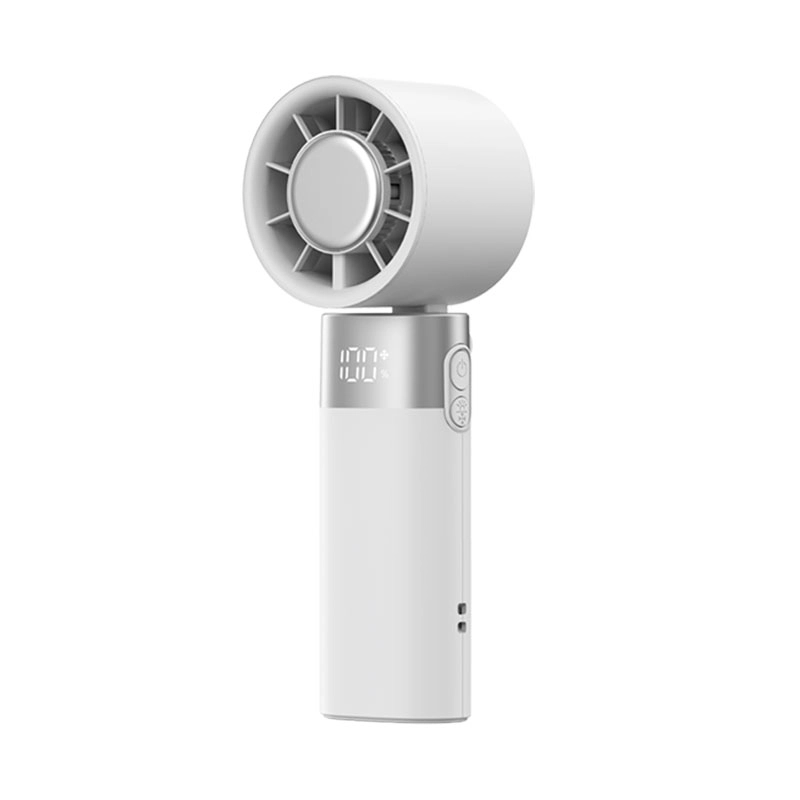
Reliable Handheld Cooling Solution for Bulk & Corporate Purchases
This premium handheld fan is designed for high-frequency, large-volume usage, making it an ideal cooling solution for corporate procurement, promotional distribution, employee welfare programs, and retail wholesale.
With stable airflow performance, a rechargeable design, and lightweight portability, it helps businesses deliver practical comfort products with strong perceived value while maintaining cost efficiency and supply reliability.
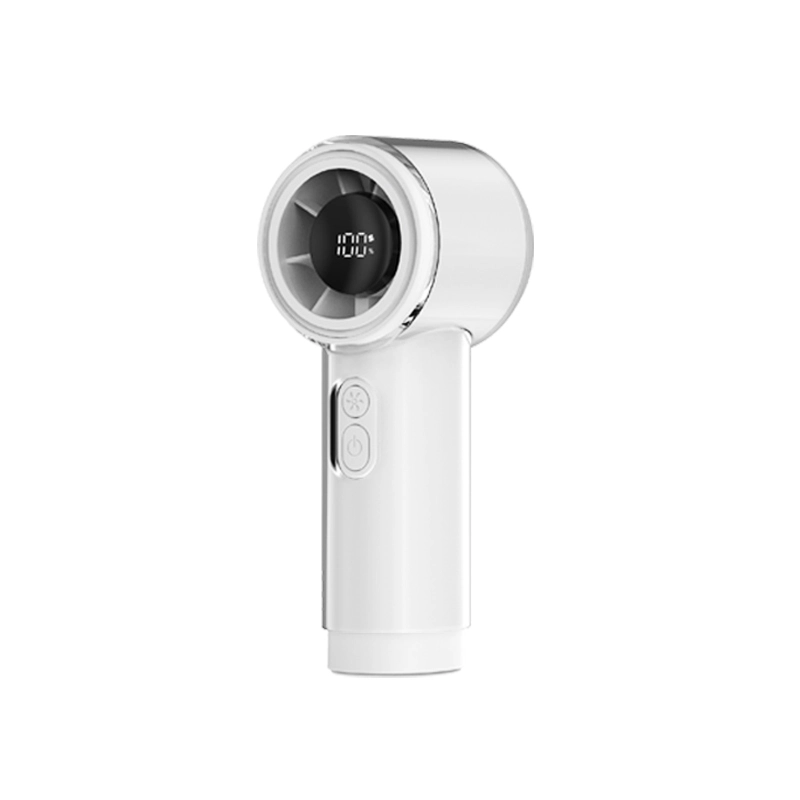
Customizable High-Speed Portable Handheld Fan FS2663
This is a high-speed, long-lasting, personalized, custom, portable cooling product specially designed for gift purchasers, cross-border e-commerce sellers, and OEM/ODM cooperation enterprises. It features (1) strong wind speed, (2) lightweight portability, (3) transparent shell design, (4) convenient carrying with a hand rope, and (5) long battery life. It helps enterprises enhance brand exposure, product differentiation competitiveness, and customer repeat purchase rate.
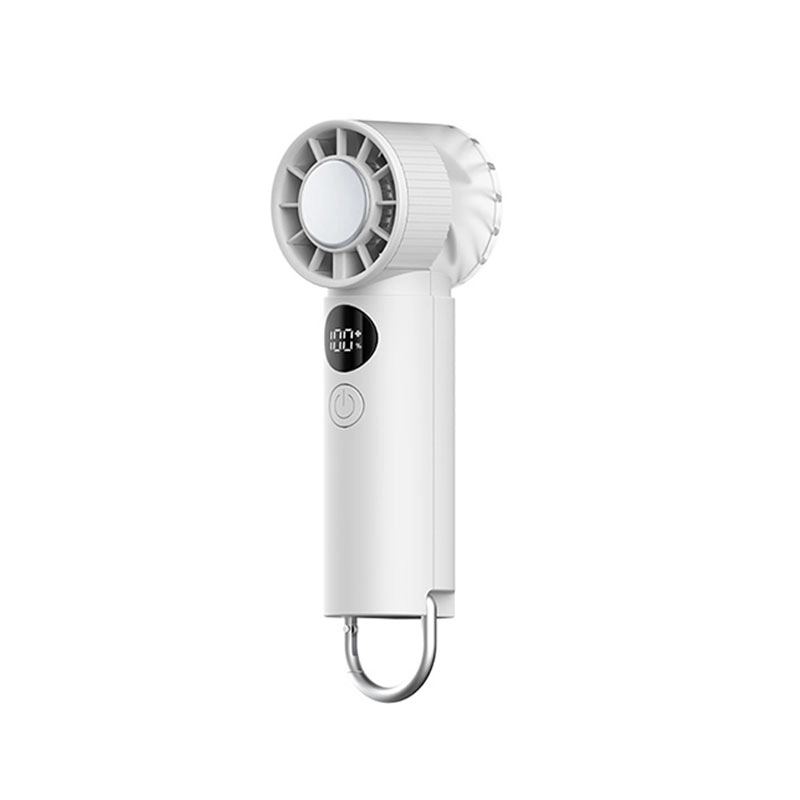
Customizable lightweight mini handheld cooling fan (with climbing hook) FS2666
A portable cooling and personalized customization product specially designed for commuters, students, the gift customization industry, and OEM/ODM buyers. It features (1) lightweight and easy portability, (2) a climbing buckle, and (3) semiconductor cooling.
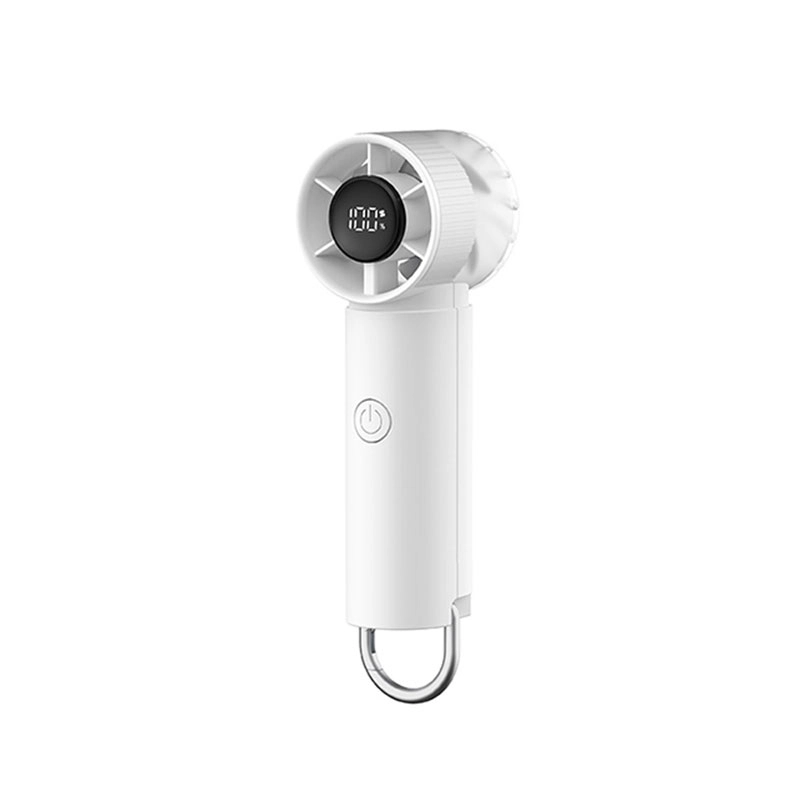
Customizable lightweight mini handheld cooling fan (with climbing hook) FS2667
This is a lightweight and portable + personalized customization product specially designed for commuters, students, the gift customization industry, and OEM/ODM buyers. It features (1) lightweight and easy portability, (2) a climbing buckle, and (3) a semi-transparent air duct design.
Start Your Custom Handheld Fans Manufacturing Project Today
If you have any comments or good suggestions, please leave us a message; later our professional staff will contact you as soon as possible.
Contact


4th Floor, Building 3, Jurong Industrial Park, No. 27-1-1, Fu'an Industrial Zone,Leliu Town (Pancun), Shunde District, Foshan City, Guangdong Province
 Scan QR Code
YouTube
Twitter
Facebook