






What are current market trends for handheld fans? | Insights by RYW
- 1) How do I compare real-world runtime of USB-C rechargeable handheld fans: interpreting mAh, Wh and speed settings?
- 2) Which motor type (brushless vs brushed) gives the best balance of airflow (CFM), noise (dB), and lifespan for handheld fans?
- 3) What battery and air-travel restrictions apply to handheld fans when shipping internationally or carrying on flights?
- 4) How do I evaluate airflow performance beyond marketing claims: testing CFM, blade design, and real-user scenarios?
- 5) When buying private-label handheld fans in bulk, what MOQ, quality checks, certifications, and lead times should I expect and negotiate?
- 6) Are eco-friendly or recyclable handheld fan materials practical now, and what lifecycle improvements should buyers demand?
1) How do I compare real-world runtime of USB-C rechargeable handheld fans: interpreting mAh, Wh and speed settings?
Many product pages quote battery capacity in mAh but omit voltage or realistic runtime per speed. To compare apples-to-apples, convert mAh to watt-hours (Wh): Wh = (mAh / 1000) × nominal cell voltage (typically 3.7 V for single-cell Li-ion). Example: a 2000 mAh cell ≈ 7.4 Wh. Manufacturer-specified runtime often assumes the lowest speed; high speed can draw 2–6× more current.
Typical real-world figures (consumer handheld fans, 2022–2024 product surveys):- Small mini fans (1,000–2,000 mAh): 2–10 hours (low to high) - Mid-range fans (2,500–4,000 mAh): 4–18 hours - Large or multi‑function models (5,000 mAh+ or integrated powerbank): 8–24+ hoursThese ranges depend on motor efficiency (brushless vs brushed), fan blade aerodynamics and electronics (PWM speed control improves efficiency).
How to estimate runtime for a specific model:- Obtain the battery Wh (or convert mAh to Wh). - Check the fan's power draw in watts (often omitted; estimate using current in amps × 5 V for USB-powered fans). - Runtime (hours) ≈ Battery Wh / Power draw (W) × 0.85 (account for conversion losses).Example: 7.4 Wh battery powering a fan that draws 2 W at medium speed: 7.4 / 2 × 0.85 ≈ 3.2 hours.
Buyer checklist: insist on Wh or nominal voltage + mAh, ask for measured current draw at each speed, and request standardized runtime tests (e.g., continuous run at high/medium/low) in the spec sheet. Models with USB-C PD or fast-charging may recharge faster but still require clear runtime specs per speed.
2) Which motor type (brushless vs brushed) gives the best balance of airflow (CFM), noise (dB), and lifespan for handheld fans?
Motor choice is a primary market trend: brushless DC (BLDC) motors are increasingly standard for mid- to high-end handheld fans because they offer better efficiency, quieter operation and longer service life than brushed DC motors.
Comparative points:- Efficiency: BLDC motors typically deliver 10–30% better energy efficiency for the same output, translating to longer runtime per Wh. - Lifespan: BLDC motors have no brushes to wear; typical rated lifespans exceed 10,000–20,000 hours vs. 3,000–10,000 for brushed motors depending on build and duty cycle. - Noise: BLDC setups combined with optimized blade geometry often achieve lower SPL (sound pressure level), making 30–50 dB feasible at low/medium speeds. Brushed motors tend to be louder at comparable airflow.
Airflow metrics: handheld fans rarely publish standardized CFM, but you should expect approximate ranges:- Pocket/mini fans: 5–20 CFM- Standard handhelds (higher performance): 20–60 CFMCFM per watt (efficiency) is the critical metric: higher CFM/W indicates more cooling for same battery drain. Request measured CFM and power consumption at each speed from suppliers, or ask for a short wind-tunnel test report.
Recommendation: for consumer or promotional units where cost is critical, a high-quality brushed motor may be acceptable. For retail-touchpoint products or High Quality giveaways, insist on BLDC motors for quieter operation, longer warranty and better perceived quality.
3) What battery and air-travel restrictions apply to handheld fans when shipping internationally or carrying on flights?
Understanding battery regulations is essential for both buyers and sellers. For passengers and couriers, IATA/ICAO limits for lithium‑ion batteries apply and influence design and logistics.Key points (current standard practice under IATA/ICAO):- Installed batteries in devices: lithium-ion batteries with a rating up to 100 Wh are generally allowed in carry-on. - Spare batteries: generally must be carried in carry-on; spares are restricted and may require airline approval if between 100–160 Wh. - Batteries >160 Wh are typically prohibited for passenger aircraft without special approvals.For shipping (air freight): small consumer handheld fans typically ship under UN3481 (lithium-ion batteries packed with or contained in equipment) and must comply with packing, labeling and documentation (e.g., state of charge limits for airline transport, and carrier-specific acceptance criteria). Freight forwarders will require the battery's Wh rating and may ask for UN38.3 test documentation for lithium batteries.
Practical advice:- When buying/importing, request the battery’s Wh, UN38.3 test report, and whether the battery is removable (spare battery rules differ). - Label product listings with 'battery included' and specify whether the battery is removable.- For B2B orders, ask the supplier for IATA-compliant shipping paperwork and preferred air/sea freight options.This is a recurring pain point for sellers: many product pages omit Wh and UN38.3, causing customs/airline delays. Always request those documents before bulk shipping.
4) How do I evaluate airflow performance beyond marketing claims: testing CFM, blade design, and real-user scenarios?
Marketing often touts “strong wind” or “high RPM” without context. Useful, verifiable metrics to request or test are:- CFM (cubic feet per minute): gives volumetric airflow; ask for measured CFM at each speed (standardized test conditions). - CFM/W: airflow per watt indicates efficiency — important for battery-powered fans.- SPL (dB): noise level at 1 m on each speed. - Static pressure and wind speed (m/s) at 10 cm or 30 cm can indicate usable cooling distance.- RPM and blade geometry: blade count, pitch and diameter matter; more RPM with poor blade design can be less efficient than lower RPM with optimized blades.Testing methods:- Simple in-house: measure runtime at each speed, subjective cooling at 10–30 cm, and SPL with a calibrated sound meter.- Lab-level: use a small wind tunnel or anemometer to measure wind speed and a volumetric rig to calculate CFM. Ask suppliers for third-party test reports or internal wind-tunnel data.Real-user scenarios matter: perceivable comfort depends on focused wind (higher m/s at user distance) rather than only CFM. For outdoor use, blade design and head shape that concentrate airflow create a better perceived cooling effect than wide but weak airflow.
5) When buying private-label handheld fans in bulk, what MOQ, quality checks, certifications, and lead times should I expect and negotiate?
Private-label procurement is common in the promotional and retail handheld fan market. Typical benchmarks and negotiation points (as of 2022–2024 sourcing practice):- MOQ: ranges widely. Simple promotional units may have MOQs of 300–1,000 units; more complex or branded models often require 1,000–5,000 units for favorable pricing. Some factories accept lower MOQs at higher per-unit cost. - Lead time: prototype/sample 7–21 days; production lead time typically 30–60 days after sample approval, longer during peak seasons.Essential quality checks and certifications to require:- Electrical/safety: CE (EU), FCC (US) where applicable, and local safety standards.- Chemical: RoHS compliance for hazardous substances.- Battery: UN38.3 test report and, if exporting to EU, battery regulations for labeling and waste.- Transport: IATA/IMDG documentation for air/sea shipping.- Product tests: drop/vibration, battery cycle life (charge/discharge cycles), ingress protection if marketed as splash-resistant (IP54+), and EMC testing if the fan includes wireless features (Bluetooth, LED controllers).Quality control process recommendations:- Pre‑production sample approval (PPS) and production inspection (AQL) at shipment (e.g., 2.5/4.0 AQL). - Random battery capacity and cycle testing on samples. - Third-party factory audits or supplier scorecards (quality, lead-time performance, CSR/ISO 9001).Negotiate: tooling charges, warranty terms, defect rate thresholds, replacement policies, and penalties for late delivery. Including acceptance tests in the contract reduces disputes on arrival.
6) Are eco-friendly or recyclable handheld fan materials practical now, and what lifecycle improvements should buyers demand?
Environmental concerns are a growing market trend: buyers increasingly expect reduced single-use plastics, recycled content and take-back options. Practical, verifiable steps suppliers and buyers can take today:- Material requests: ask suppliers for percentage of post-consumer recycled (rABS) or bio-based plastics used in housings. rABS and rPP are in commercial use for small electronics enclosures.- Design for disassembly: request replaceable batteries and modular designs that ease recycling. Non‑glued assemblies and standard fasteners improve end-of-life processing. - Packaging: demand reduced plastic, recyclable cardboard trays, and minimal packaging volume.- Certifications and statements: while there isn’t a single universal eco-label for handheld fans, request ISO 14001 management system certification for the factory, supplier declarations of recycled content, and compliance with EU Batteries Regulation and RoHS.Limitations and realism: full recyclability is constrained by mixed-material components and embedded batteries. Prioritize actions with measurable impact: specified % recycled plastics, removable battery modules, and take-back or WEEE-compliant disposal options in target markets.
For buyers focused on sustainability, require supplier documentation (material spec sheets and recycling pathways) and include sustainability KPIs in the purchase agreement.
Conclusion — Advantages of Modern Handheld Fans
Modern handheld fans combine portability, efficient brushless motors, longer runtime through higher-capacity Li-ion cells (expressed clearly in Wh), and improved noise/airflow performance. They are versatile for personal cooling, outdoor recreation, and promotional uses. Properly specified devices with clear Wh ratings, third-party battery testing (UN38.3), CE/RoHS/FCC compliance, and measured airflow/noise data reduce buyer risk. For private-label procurement, negotiating clear MOQs, lead times, QA checks and eco-material commitments will protect product quality and brand reputation.
Contact us for a tailored quote or technical sourcing support: visit www.rywlife.com or email adrian@rywlife.com.
Contacts
WhatsApp/Phone
You May Also Like
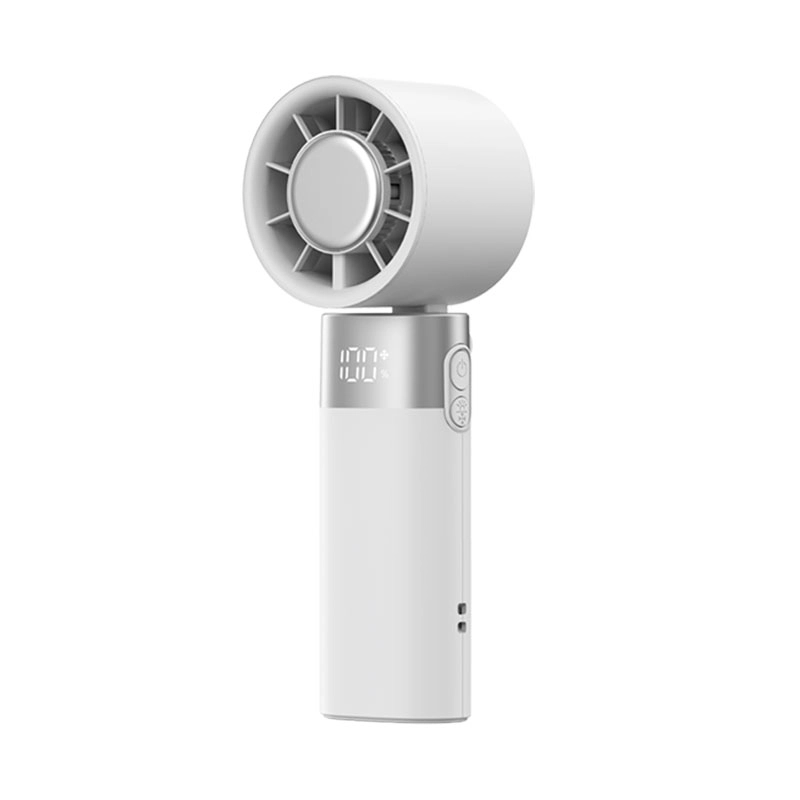
Reliable Handheld Cooling Solution for Bulk & Corporate Purchases
This premium handheld fan is designed for high-frequency, large-volume usage, making it an ideal cooling solution for corporate procurement, promotional distribution, employee welfare programs, and retail wholesale.
With stable airflow performance, a rechargeable design, and lightweight portability, it helps businesses deliver practical comfort products with strong perceived value while maintaining cost efficiency and supply reliability.
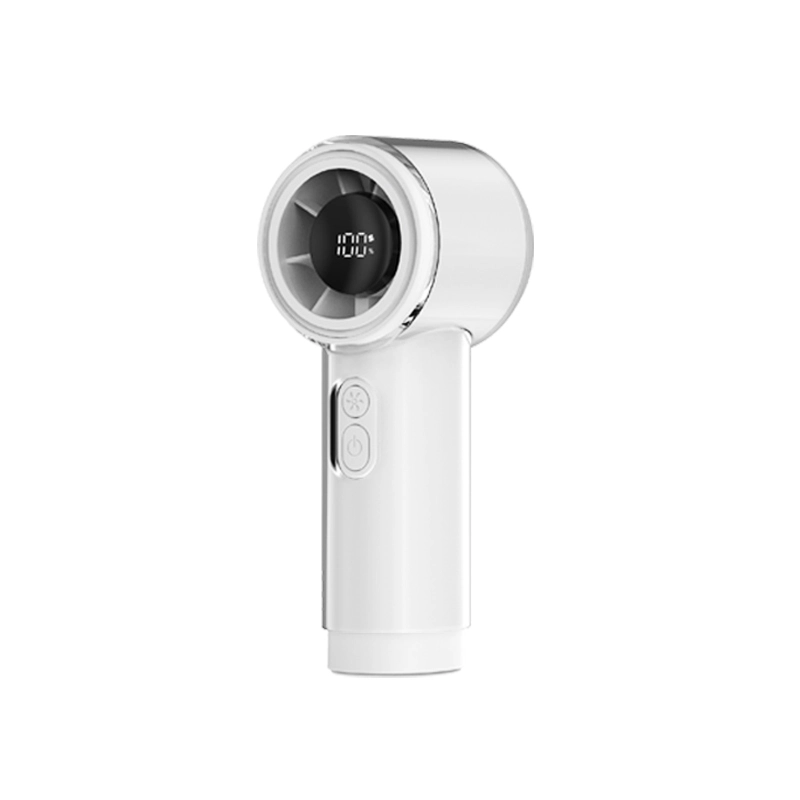
Customizable High-Speed Portable Handheld Fan FS2663
This is a high-speed, long-lasting, personalized, custom, portable cooling product specially designed for gift purchasers, cross-border e-commerce sellers, and OEM/ODM cooperation enterprises. It features (1) strong wind speed, (2) lightweight portability, (3) transparent shell design, (4) convenient carrying with a hand rope, and (5) long battery life. It helps enterprises enhance brand exposure, product differentiation competitiveness, and customer repeat purchase rate.
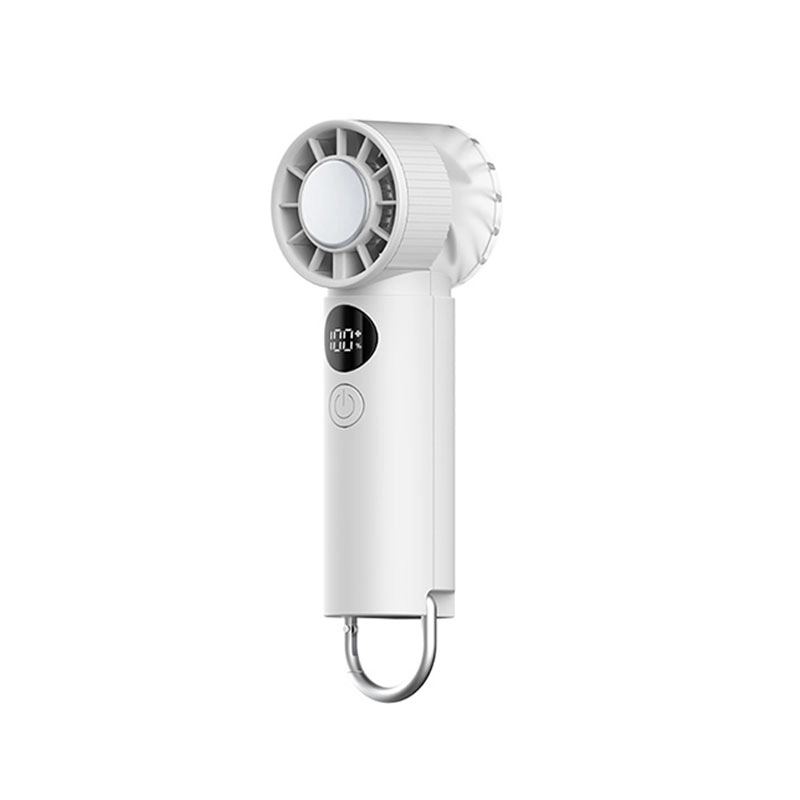
Customizable lightweight mini handheld cooling fan (with climbing hook) FS2666
A portable cooling and personalized customization product specially designed for commuters, students, the gift customization industry, and OEM/ODM buyers. It features (1) lightweight and easy portability, (2) a climbing buckle, and (3) semiconductor cooling.
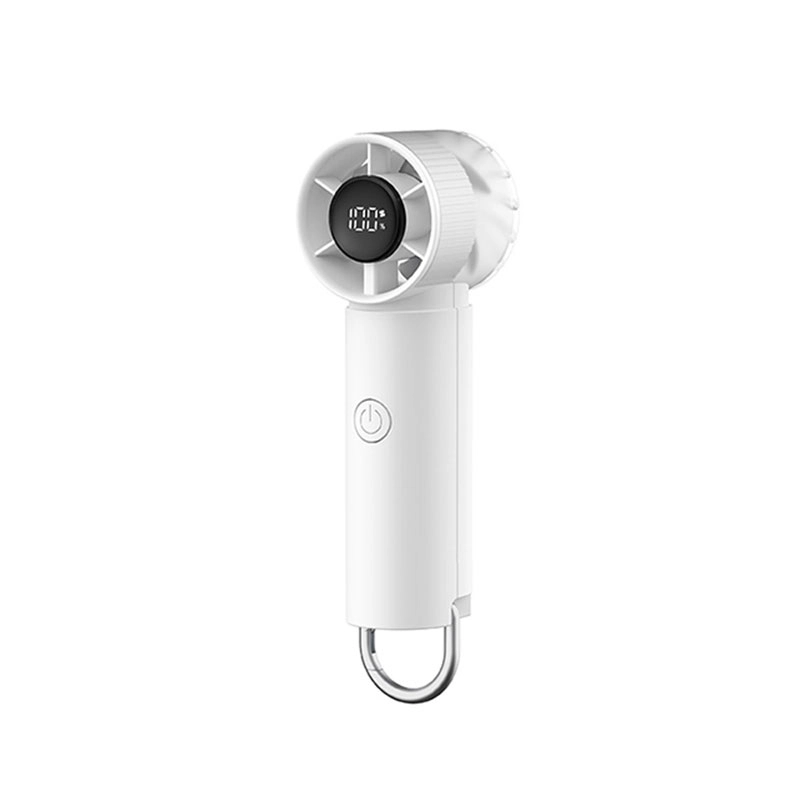
Customizable lightweight mini handheld cooling fan (with climbing hook) FS2667
This is a lightweight and portable + personalized customization product specially designed for commuters, students, the gift customization industry, and OEM/ODM buyers. It features (1) lightweight and easy portability, (2) a climbing buckle, and (3) a semi-transparent air duct design.
Start Your Custom Handheld Fans Manufacturing Project Today
If you have any comments or good suggestions, please leave us a message; later our professional staff will contact you as soon as possible.
Contact


4th Floor, Building 3, Jurong Industrial Park, No. 27-1-1, Fu'an Industrial Zone,Leliu Town (Pancun), Shunde District, Foshan City, Guangdong Province
 Scan QR Code
YouTube
Twitter
Facebook