






How noisy is a handheld electric fan in decibels? | Insights by RYW
- 1) What decibel range should I expect for a handheld electric fan at 1 meter on low/medium/high speeds?
- 2) How can I measure my handheld fan’s noise accurately at home (distance, weighting, apps vs. meters)?
- 3) Which internal components (motor, bearings, blades, grille) create the most decibels — and roughly how much difference can each make?
- 4) Does battery level or voltage sag make a handheld fan louder — and how many decibels will change during discharge?
- 5) Are manufacturers’ dB claims reliable and how should I compare noise specs across models?
- 6) What decibel thresholds should I use to choose a handheld fan for sleep, office, travel, or recording environments?
1) What decibel range should I expect for a handheld electric fan at 1 meter on low/medium/high speeds?
Measured sound levels for handheld electric fans are normally reported as A-weighted decibels (dB(A)) — the standard weighting for human-perceived loudness. Typical, curated ranges measured at ~1 meter from the front of the fan are:
- Low speed: ~25–35 dB(A). This is comparable to a whisper or a quiet rural room.
- Medium speed: ~35–45 dB(A). Comparable to a quiet office or soft conversation in the background.
- High speed (maximum RPM): ~45–60+ dB(A). This is similar to normal conversation (around 60 dB) at the top end and can be intrusive in quiet environments.
Why ranges instead of exact numbers? Measured SPL depends on fan design, motor type, blade geometry, and measurement method (distance, microphone orientation, background noise). Many high-end brushless DC handheld fans advertise values as low as 25–30 dB(A) on low speed; low-cost brushed fans commonly sit higher in the 40–55 dB(A) band at top speed.
2) How can I measure my handheld fan’s noise accurately at home (distance, weighting, apps vs. meters)?
To obtain reliable decibel measurements you should follow simple best practices for sound measurement:
- Use A-weighting (dB(A)) and the “slow” response setting to approximate perceived loudness.
- Measure at a consistent distance. Product testing commonly uses 1 meter; for handheld use, also measure at 0.3–0.5 m (typical face/desk distance) to understand perceived noise in use.
- Control background noise: background SPL should be at least 10 dB lower than the fan to avoid large measurement error. If background is high, subtract it (logarithmically) or test in quieter surroundings.
- Smartphone apps: some can be useful for comparative checks; accuracy varies. If you need lab-grade accuracy, use a calibrated sound level meter (compliant with IEC/ANSI standards). Smartphone microphones introduce ±2–6 dB error unless calibrated with a reference meter.
- Average multiple readings across 15–60 seconds and test each speed setting. Measure near common use positions (e.g., 0.5 m from face, on a bedside table) to get practical SPLs.
Document the measurement distance, weighting, and background SPL when comparing models. Look for dB(A) values reported with distance stated.
3) Which internal components (motor, bearings, blades, grille) create the most decibels — and roughly how much difference can each make?
Noise sources in handheld electric fans are usually ranked by their contribution to SPL:
- Motor type and control electronics: Brushless DC (BLDC) motors with proper electronic commutation are typically quieter and produce smoother acoustic signatures than brushed motors. In practice, a BLDC system can reduce noise by several dB compared with basic brushed motors at comparable airflow, because it reduces mechanical commutation noise and electrical vibration.
- Bearings and mechanical fit: Poorly fitted parts, loose housings, and low-quality sleeve bearings introduce tonal rattles and broadband noise. High-quality ball or precision sleeve bearings and tight assembly cut rattles and special tonal peaks — potentially a reduction of a few to several dB in the mid/high frequency band.
- Blade design and tip speed: Blade shape, number of blades, and tip speed control turbulent noise. Optimized aerofoil blades can deliver the same airflow at lower RPM, reducing acoustic power. Blade redesign is often one of the largest single contributors to quieter fans.
- Grille and housing turbulence: Meshes, grills, and openings generate turbulence and high-frequency hiss. Smoother housings and optimized grille patterns lower broadband noise.
Quantifying exact dB contributions is model-dependent. Conservative rule of thumb from practical product testing: improvements in motor and electronics plus aerodynamic blades together can reduce overall SPL by 5–12 dB compared to budget designs at the same airflow. A perceived halving of loudness is about −10 dB, so a 5–12 dB improvement is significant in real use.
4) Does battery level or voltage sag make a handheld fan louder — and how many decibels will change during discharge?
Battery voltage primarily affects RPM. Typical behaviors are:
- Voltage drop lowers RPM and usually reduces SPL because acoustic power scales nonlinearly with tip speed. A decrease in speed commonly reduces noise; a 10–20% RPM drop can reduce SPL by a few dB.
- However, if the motor drive struggles with voltage sag (especially on cheap drivers), it can introduce motor click, coil whine, or irregular commutation that increases tonal noise even as average SPL falls.
- Pulse-width modulation (PWM) controllers on many fans can create tonal switching noise at certain duty cycles as the battery discharges. Designers avoid audible PWM frequencies, but poorly implemented drivers sometimes produce whine in the audible band.
Realistic expectation: steady, well-designed fans usually get marginally quieter (a few dB) as the battery discharges; poorly designed fans may show small increases in tonal artifacts even when average SPL drops. To verify, perform SPL measurements at full charge and at ~20% charge in the same conditions.
5) Are manufacturers’ dB claims reliable and how should I compare noise specs across models?
Manufacturer claims vary in usefulness. Use this checklist to evaluate and compare noise specs:
- Check the weighting and distance: reliable specs will state “dB(A) at 1 m” or give the measurement distance. Absence of distance makes comparisons meaningless.
- Speed-labeled values: manufacturers should give dB(A) for each speed (low/medium/high). Be wary of single-value claims without speed context.
- Test standard disclosure: the best specs mention test conditions and instruments (e.g., “measured with a calibrated meter, A-weighted”). Brands that provide PDFs or third-party lab reports are more credible.
- Independent tests: look for hands-on reviews with measured SPLs or third-party lab data. Independent review sites often report dB(A) at 0.5 m and 1 m for apples-to-apples comparison.
- Marketing terms: words like “whisper,” “ultra-quiet,” or “silent” are subjective; insist on numeric dB(A) data and measurement distance.
When comparing products, normalize values to the same distance and weighting. If one product lists 30 dB(A) at 1 m and another lists 40 dB(A) with no distance, you cannot compare directly—ask the vendor for details or measure yourself under consistent conditions.
6) What decibel thresholds should I use to choose a handheld fan for sleep, office, travel, or recording environments?
Choose a fan based on the target environment and acceptable noise threshold. These practical thresholds refer to A-weighted levels and perceived comfort:
- Sleep / bedrooms: aim for ≤30 dB(A) background from the fan for minimal sleep disturbance. 30–35 dB(A) can still be acceptable for many users when placed at bedside, especially if the fan produces a steady low-frequency hum that masks other sounds.
- Office / library usage: 30–40 dB(A). For shared office desks or quiet library spaces, target ≤40 dB(A) so the fan is unlikely to be distracting to nearby people.
- Personal travel / outdoors: 40–55 dB(A) is often acceptable as background noise outdoors or in transit, but positioning matters—closer to the face will feel louder.
- Recording or content creation: ≤25–30 dB(A) plus a non-tonal broadband signature. Even low SPL fans can produce tonal harmonics that microphones pick up; for critical recordings avoid any fan or use mufflers and distance.
Placement and use are key: moving a fan from 0.3 m to 1 m can reduce SPL by roughly 4–8 dB depending on source directivity, so keep distance in mind. Also consider using lower speeds, acoustic dampening (soft mounts), or positioning to the side rather than directly in front of a microphone or sleeping person.
Concluding summary — Advantages of handheld electric fans
Handheld electric fans offer targeted spot cooling, low energy use, portability, and a range of noise options from ultra-quiet (≈25–30 dB(A)) to high-performance cooling (45–60 dB(A)). Choosing a brushless motor design, optimized blades, and validated dB(A) specs will give the best balance of airflow (CFM), battery life, and minimal noise signature for your intended environment.
For measurements, comparisons, or a tailored quote on quiet handheld fan models and bulk purchasing, contact us at www.rywlife.com or adrian@rywlife.com.
Contacts
WhatsApp/Phone
You May Also Like
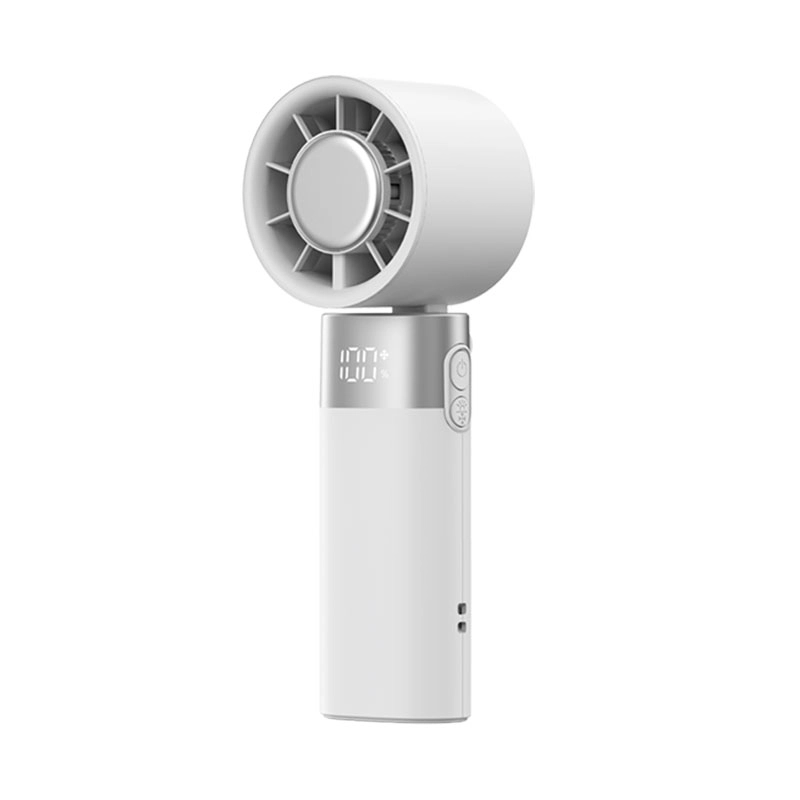
Reliable Handheld Cooling Solution for Bulk & Corporate Purchases
This premium handheld fan is designed for high-frequency, large-volume usage, making it an ideal cooling solution for corporate procurement, promotional distribution, employee welfare programs, and retail wholesale.
With stable airflow performance, a rechargeable design, and lightweight portability, it helps businesses deliver practical comfort products with strong perceived value while maintaining cost efficiency and supply reliability.
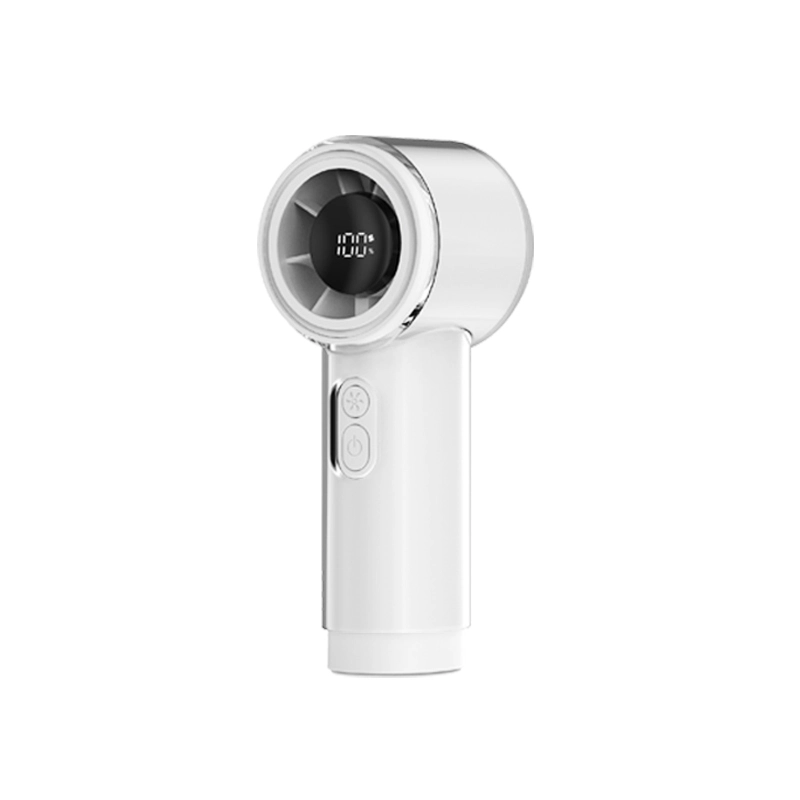
Customizable High-Speed Portable Handheld Fan FS2663
This is a high-speed, long-lasting, personalized, custom, portable cooling product specially designed for gift purchasers, cross-border e-commerce sellers, and OEM/ODM cooperation enterprises. It features (1) strong wind speed, (2) lightweight portability, (3) transparent shell design, (4) convenient carrying with a hand rope, and (5) long battery life. It helps enterprises enhance brand exposure, product differentiation competitiveness, and customer repeat purchase rate.
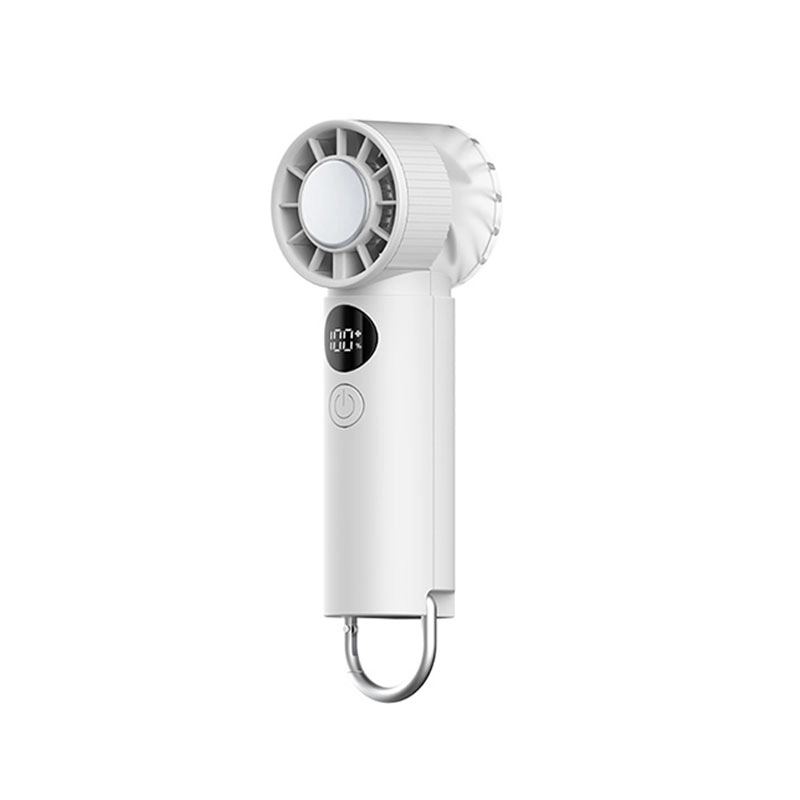
Customizable lightweight mini handheld cooling fan (with climbing hook) FS2666
A portable cooling and personalized customization product specially designed for commuters, students, the gift customization industry, and OEM/ODM buyers. It features (1) lightweight and easy portability, (2) a climbing buckle, and (3) semiconductor cooling.
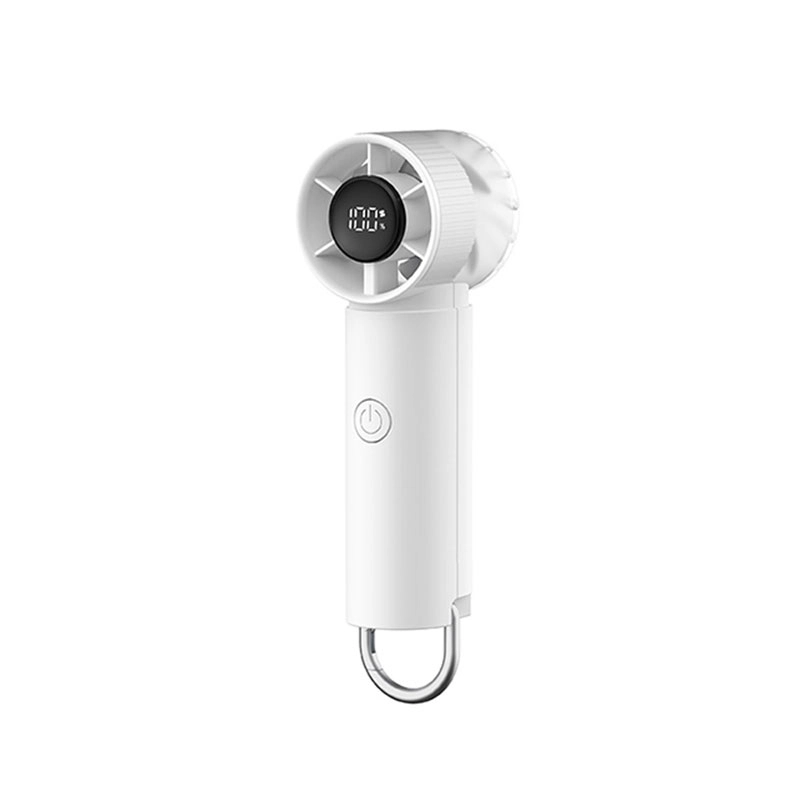
Customizable lightweight mini handheld cooling fan (with climbing hook) FS2667
This is a lightweight and portable + personalized customization product specially designed for commuters, students, the gift customization industry, and OEM/ODM buyers. It features (1) lightweight and easy portability, (2) a climbing buckle, and (3) a semi-transparent air duct design.
Start Your Custom Handheld Fans Manufacturing Project Today
If you have any comments or good suggestions, please leave us a message; later our professional staff will contact you as soon as possible.
Contact


4th Floor, Building 3, Jurong Industrial Park, No. 27-1-1, Fu'an Industrial Zone,Leliu Town (Pancun), Shunde District, Foshan City, Guangdong Province
 Scan QR Code
YouTube
Twitter
Facebook