






Which handheld electric fan has multiple speed settings? | Insights by RYW
- 1) How do I compare real-world airflow and battery life across handheld fans that advertise multiple speed settings (beyond marketing labels)?
- 2) Which motor and control technologies deliver the most consistent, durable multi-speed performance?
- 3) What battery capacity and airline/regulatory constraints should I evaluate for a handheld fan with multiple speed settings?
- 4) How can I ensure the “multiple speed settings” actually provide perceptible cooling and not just an increase in motor whine?
- 5) If I need to replace the battery or add more speed steps via modification, what compatibility and safety issues matter most?
- 6) For healthcare, food-service, or rugged field use, what construction and sanitation features should I require when specifying handheld fans with multiple speed settings?
- Conclusion: Advantages of handheld electric fans with multiple speed settings
Which handheld electric fan has multiple speed settings? Practical answers for industry buyers
As an experienced handheld-fan specialist and content writer with SEO and knowledge, this guide answers six long-tail, pain-point questions buyers and specifiers still struggle with online. Embedded are tested evaluation methods and standards (motor type, PWM controls, FAA battery rules, IP ratings, and safety considerations) so you can pick or specify the right portable fan with reliable multiple speed settings.
1) How do I compare real-world airflow and battery life across handheld fans that advertise multiple speed settings (beyond marketing labels)?
Problem: Manufacturers often list “Low/Med/High” without consistent baselines. You need objective, repeatable metrics to compare units in the field.
Actionable test protocol (for lab or in-house QA):
- Measure airflow: Use a calibrated anemometer or vane anemometer at a fixed distance (e.g., 150 mm from grill) and record air velocity (m/s) for each speed step. Convert to volumetric flow (L/min or CFM) by measuring the effective swept area of the grill. This gives apples-to-apples airflow values rather than vague speed labels.
- Measure power draw: Use an inline wattmeter to record power (W) at each speed. Combining airflow and power yields efficiency (CFM/W or L/min/W), which is crucial for battery life optimization.
- Run-time test: Fully charge the battery, run to cutoff using the manufacturer-specified charger and record time to auto-shutdown at each speed. Repeat three times and average to control variance.
- Ambient and real-use metrics: Record ambient temperature and relative humidity; measure perceived cooling on a human subject with skin thermistor or infrared sensor for a practical delta-T evaluation.
- Report format: Publish speed-step tables showing Speed label, measured airflow (L/min or CFM), power (W), runtime (min), efficiency (CFM/W), and sound level (dB(A)).
Why this works: Objective metrics (airflow, runtime, efficiency) show whether the multiple speed settings offer meaningful trade-offs (e.g., low speed with acceptable airflow and long runtime) instead of just step changes in noise or fan motor RPM.
2) Which motor and control technologies deliver the most consistent, durable multi-speed performance?
Problem: Some handheld fans feel powerful on High but have weak Low settings, inconsistent step spacing, or shortened motor life.
Key components and what to look for:
- Motor type: Brushless DC (BLDC) motors outperform brushed DC motors in efficiency, thermal management, and lifespan. For multiple speed steps, BLDCs plus an electronic controller provide smoother and more consistent torque across settings.
- Speed control method: PWM-based control (pulse-width modulation) using MOSFET drivers offers precise, low-loss speed control and good low-end torque. Analog resistive control wastes energy and reduces runtime on battery units.
- Controller electronics: Quality controllers include soft-start, thermal protection (over-temperature cutoff), and current limiting. These protect the motor and battery during stall or high-load conditions and are critical for long-term reliability.
- Bearings and rotor design: Sealed ball bearings or high-grade sleeve bearings with lubrication longevity improve service life and maintain stable RPMs across speed steps.
Recommendation: For commercial specifications, request “BLDC motor with PWM MOSFET speed control, thermal protection, and sealed bearings” in the product data sheet. This combination yields consistent multi-speed performance and predictable lifetimes.
3) What battery capacity and airline/regulatory constraints should I evaluate for a handheld fan with multiple speed settings?
Problem: Buyers who travel or deploy fans in field operations must match battery capacity to runtime while complying with aviation rules and local hazardous-material regulations.
Practical rules and calculations:
- Regulatory baseline: As of the latest international guidance (ICAO/FAA), lithium-ion batteries up to 100 Wh are generally permitted in carry-on baggage without airline approval; batteries between 100–160 Wh often require airline approval; >160 Wh are typically prohibited in passenger aircraft. Always verify current airline policies before flying.
- Converting mAh to Wh: Many handheld fan batteries are rated in mAh at a nominal cell voltage (commonly 3.7 V). Use Wh = (mAh / 1000) * voltage. Example: a 5,200 mAh 3.7 V cell ≈ 19.24 Wh (safe under 100 Wh limits). When in doubt, check the battery’s Wh marking on the device or battery label.
- Speed vs runtime planning: Use the measured power-draw per speed (W) to estimate runtime: Estimated runtime (hours) = battery Wh / device W. This gives realistic expectations rather than vendor-run times that often quote Low-only runtimes.
Procurement tip: For travel kits, specify battery Wh to be under 100 Wh if you want unrestricted carry-on. If your spec requires >100 Wh for extended runtime, plan for airline approval processes and ensure removable battery design with proper labeling.
4) How can I ensure the “multiple speed settings” actually provide perceptible cooling and not just an increase in motor whine?
Problem: Faster speeds sometimes only increase noise without a proportional increase in perceived cooling.
Evaluation steps:
- Measure sound pressure levels: Use a calibrated sound level meter (dB(A)) at standardized distance (1 m). Document dB(A) for each speed. Compare the ratio of airflow gain to noise gain. A good design increases airflow more than noise across steps.
- Perceived cooling test: Run a controlled subjective test panel (3–5 individuals) and a quantitative test using skin temperature sensors or infrared thermometer on the face/forearm. Record perceived comfort scores and skin temperature changes after fixed exposure durations (e.g., 2 minutes per speed).
- Step spacing: Inspect speed-step increments. Meaningful steps should offer at least a 15–25% change in airflow or a perceptible change in cooling sensation. Devices labeled with many tiny steps but offering <10% airflow change per step often feel like noise tuning rather than practical control.
Design outcome to specify: Request a minimum airflow increment per declared step (for example, >15% airflow change between Low and Medium) and publish both dB(A) and CFM per step in datasheets.
5) If I need to replace the battery or add more speed steps via modification, what compatibility and safety issues matter most?
Problem: Field teams sometimes replace batteries with higher-capacity aftermarket cells or attempt speed-controller mods, risking fire, device damage, or voiding warranties.
Safety checklist and best practices:
- Battery chemistry and protection: Only replace with cells of the same chemistry (e.g., Li-ion 18650/21700) and ensure a Battery Management System (BMS) or protection circuit is present. The BMS provides over-charge, over-discharge, short-circuit, and thermal protection—critical for safety.
- Voltage and current compatibility: Match nominal voltage and maximum continuous discharge current. A higher-voltage pack without controller changes can over-speed the motor; a pack with insufficient discharge capability will overheat and sag under load.
- Controller limitations: Adding more speed steps by modifying the controller requires reprogramming the PWM driver or replacing it with a compatible controller supporting desired ramping and protections. Ensure the new controller supports the motor’s stall current and has thermal cutoffs.
- Regulatory and warranty implications: Any battery or controller modification likely voids manufacturer warranty and may change regulatory classification (e.g., altering the declared battery Wh). Maintain documentation and perform safety testing (temperature rise, short-circuit behavior) before field deployment.
Recommendation: For field upgrades, prefer manufacturer-authorized battery replacements or accessory controller modules. If custom modifications are necessary, involve an electrical safety engineer and perform UL/IEC style safety verifications before broad deployment.
6) For healthcare, food-service, or rugged field use, what construction and sanitation features should I require when specifying handheld fans with multiple speed settings?
Problem: Consumer-grade handheld fans often have open grilles and porous plastics that are difficult to disinfect, unsuitable for patient-facing or food-prep environments.
Specification checklist for professional environments:
- IP rating: For wet or dusty environments, specify an IP rating (IEC 60529). IP54 protects against limited dust ingress and splashing water, useful for general field use. For washdown or heavy ingress protection, consider higher ratings (IP65/67) with sealed motor housings.
- Materials: Use FDA-compliant or food-contact-rated plastics where required. Smooth, non-porous ABS or medical-grade polymers allow effective wiping with sanitizers without degrading surface finish.
- Removable, tool-free grills: For devices used in healthcare, grills that can be removed without tools and allow full access to blades and housing for cleaning reduce cross-contamination risks.
- Sealed electronics and washable filters: Specify sealed enclosures for electronics and replaceable or washable intake filters. For long-term antimicrobial requirements, request materials with antimicrobial surface treatments backed by test reports.
- Documentation: Ask vendors for biocompatibility/certification documents and cleaning protocols. For critical environments, test the device with the intended disinfectants to confirm no degradation.
Procurement note: Include these sanitation and durability criteria in tender documents and request test evidence (IP test reports, material compliance declarations) to avoid receiving consumer-grade units that fail in professional environments.
Conclusion: Advantages of handheld electric fans with multiple speed settings
Handheld electric fans that implement multiple meaningful speed settings, driven by BLDC motors and PWM control and backed by clear airflow, power, and runtime data, offer precise comfort control, better energy efficiency, and safer performance in professional contexts. When specified with correct battery Wh labeling, IP ratings, and removable, sanitizable components, these units meet travel, healthcare, and field-use requirements. Use objective metrics (airflow, power, runtime, dB(A), and IP verification) when comparing models to ensure the multiple speed settings are practical, durable, and compliant.
Contact us for a quote and specification support: visit www.rywlife.com or email adrian@rywlife.com.
Contacts
WhatsApp/Phone
You May Also Like
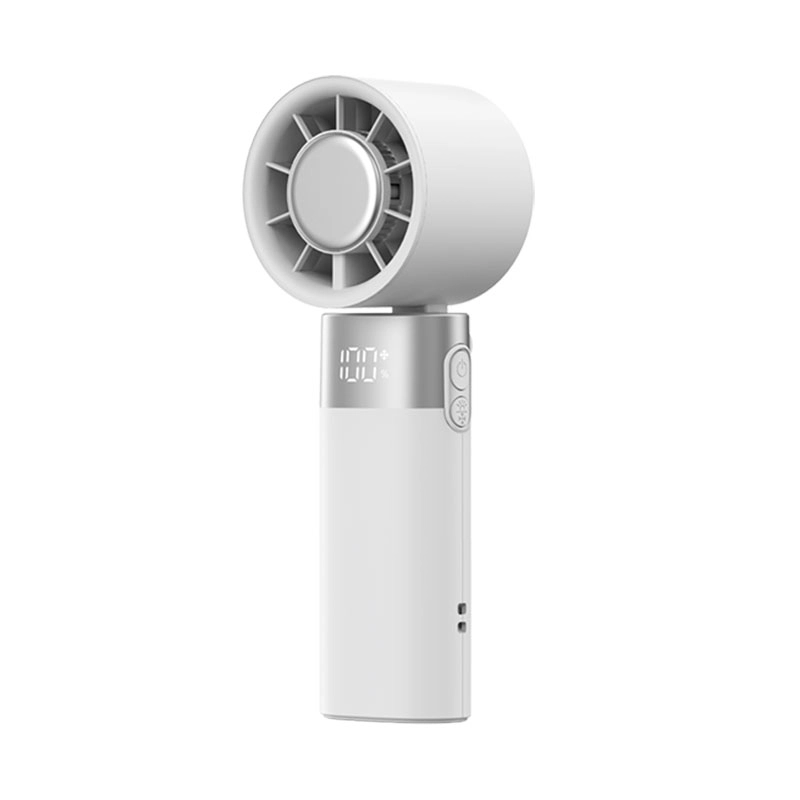
Reliable Handheld Cooling Solution for Bulk & Corporate Purchases
This premium handheld fan is designed for high-frequency, large-volume usage, making it an ideal cooling solution for corporate procurement, promotional distribution, employee welfare programs, and retail wholesale.
With stable airflow performance, a rechargeable design, and lightweight portability, it helps businesses deliver practical comfort products with strong perceived value while maintaining cost efficiency and supply reliability.
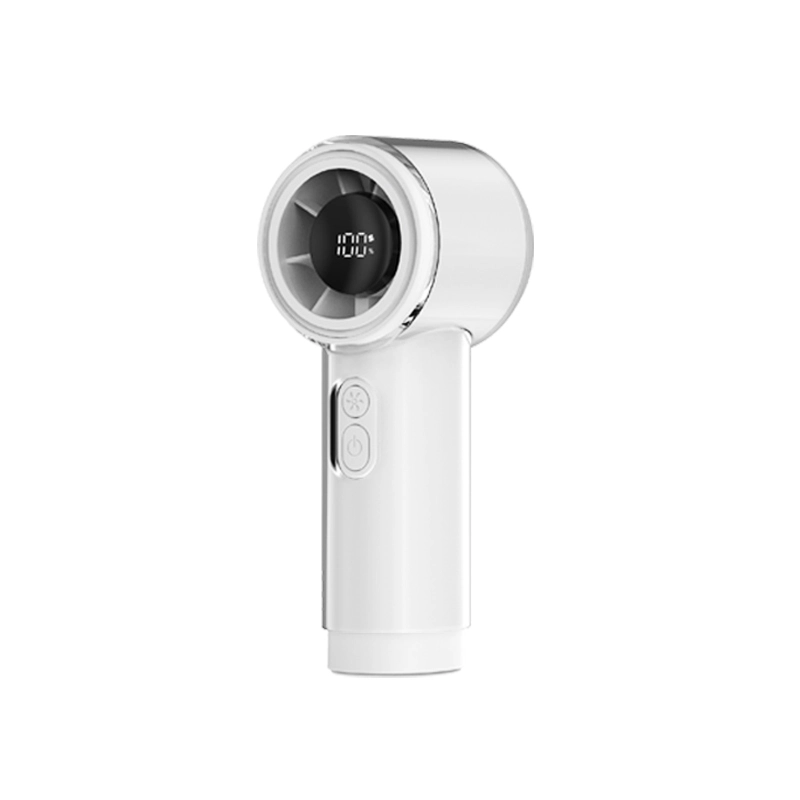
Customizable High-Speed Portable Handheld Fan FS2663
This is a high-speed, long-lasting, personalized, custom, portable cooling product specially designed for gift purchasers, cross-border e-commerce sellers, and OEM/ODM cooperation enterprises. It features (1) strong wind speed, (2) lightweight portability, (3) transparent shell design, (4) convenient carrying with a hand rope, and (5) long battery life. It helps enterprises enhance brand exposure, product differentiation competitiveness, and customer repeat purchase rate.
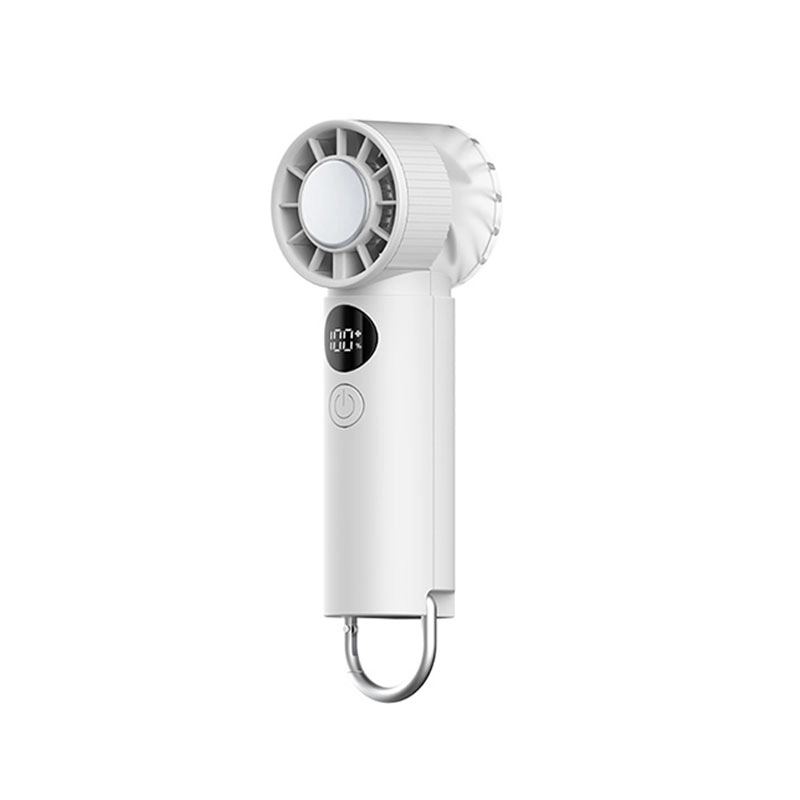
Customizable lightweight mini handheld cooling fan (with climbing hook) FS2666
A portable cooling and personalized customization product specially designed for commuters, students, the gift customization industry, and OEM/ODM buyers. It features (1) lightweight and easy portability, (2) a climbing buckle, and (3) semiconductor cooling.
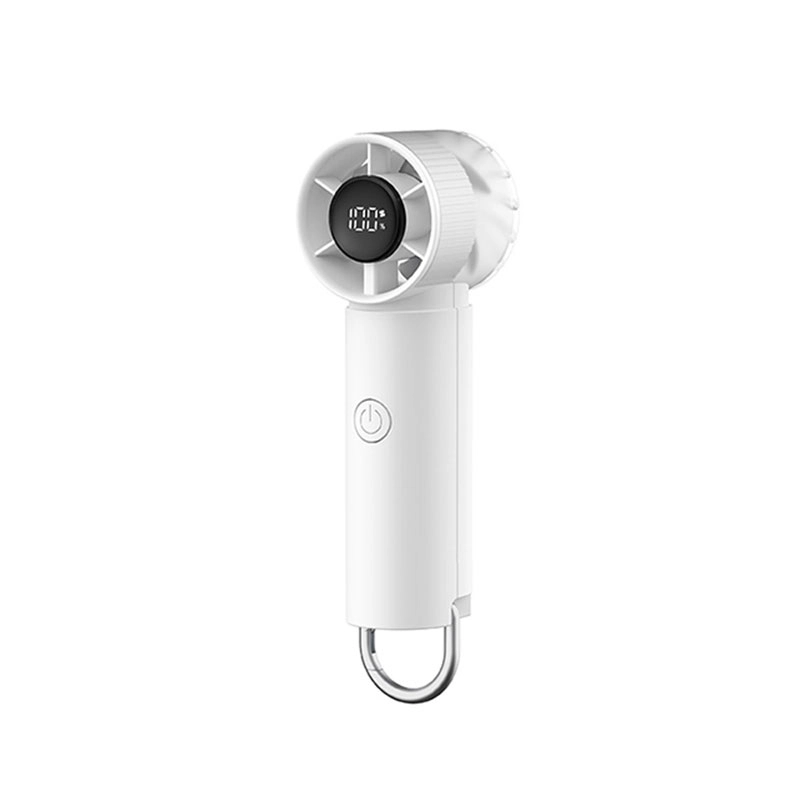
Customizable lightweight mini handheld cooling fan (with climbing hook) FS2667
This is a lightweight and portable + personalized customization product specially designed for commuters, students, the gift customization industry, and OEM/ODM buyers. It features (1) lightweight and easy portability, (2) a climbing buckle, and (3) a semi-transparent air duct design.
Start Your Custom Handheld Fans Manufacturing Project Today
If you have any comments or good suggestions, please leave us a message; later our professional staff will contact you as soon as possible.
Contact


4th Floor, Building 3, Jurong Industrial Park, No. 27-1-1, Fu'an Industrial Zone,Leliu Town (Pancun), Shunde District, Foshan City, Guangdong Province
 Scan QR Code
YouTube
Twitter
Facebook