






How long does a handheld electric fan battery last? | Insights by RYW
- 1. How can I accurately calculate my handheld fan's runtime when the manual only shows mAh?
- 2. My handheld fan used to last hours but now dies quickly. How do I diagnose battery degradation vs other issues?
- 3. Can I use a power bank to extend runtime, and what power bank specs will actually run my fan at full speed?
- 4. Does fast charging or using different chargers affect my handheld fan battery lifespan and safety?
- 5. My fan is sealed—can I replace the internal battery safely, and what should I ask the manufacturer?
- 6. When buying a handheld fan for full-day outdoor use, what battery capacity and motor wattage should I target?
As an industry expert in handheld fans and rechargeable battery systems, I answer six specific, frequently asked beginner questions about handheld electric fan battery life. The answers give calculations, diagnostics, real-world examples, and purchasing guidance so you can choose and maintain fans with confidence.
1. How can I accurately calculate my handheld fan's runtime when the manual only shows mAh?
Many beginners see a battery spec in mAh and expect an easy hours figure. The correct approach is to convert mAh (milliamp-hours) to watt-hours (Wh) then divide by the fan's power draw (watts).
Formula: runtime (hours) = battery capacity (Wh) / device power (W). Convert mAh to Wh: Wh = (mAh / 1000) × nominal cell voltage (usually 3.7V for a single Li-ion cell).
Example calculations (realistic figures):
- 2000 mAh battery → 2 Ah × 3.7 V = 7.4 Wh. If the fan draws 2.0 W at high speed: 7.4 / 2.0 = 3.7 hours at high speed.
- 4000 mAh battery → 4 Ah × 3.7 V = 14.8 Wh. At 1.0 W low-speed draw: 14.8 / 1.0 = 14.8 hours low speed.
- If the motor label or spec lists current (A) at 5 V USB input, convert: watts = volts × amps. For example, 5 V × 0.6 A = 3.0 W.
Practical notes: advertised runtime often assumes lowest fan speed and ideal conditions. Account for boost circuitry and conversion losses (USB boost/step-up) — expect 5–15% reduction versus the raw Wh calculation. Use the above conversion for realistic runtime estimates and when comparing mAh across models.
2. My handheld fan used to last hours but now dies quickly. How do I diagnose battery degradation vs other issues?
Battery health loss is common and has specific diagnostic signs. Use these steps to isolate the cause:
- Compare runtime by speed: if all speeds die much sooner, suspect battery capacity loss. If only high speed is affected, check motor/load or boost circuitry.
- Measure voltage under load with a USB power meter (in-line volt/amp meter) while the fan runs. A steady drop to below ~3.2 V (for a single Li-ion) under load indicates capacity loss or internal resistance increase.
- Check charge acceptance: if the fan reaches 100% quickly but runtime is short, capacity is reduced (high internal resistance).
- Look for environmental or mechanical issues: stiff blades, debris, or a worn motor increases current draw and shortens runtime even with a healthy battery.
Typical Li-ion degradation: 300–500 full charge cycles to ~80% capacity for many consumer cells; high-quality packs can exceed 500 cycles. Heat accelerates degradation: storing or using the fan above 40°C will shorten battery life. If a replacement battery is available and runtime still low, swap to confirm.
3. Can I use a power bank to extend runtime, and what power bank specs will actually run my fan at full speed?
Yes—most USB-chargeable handheld fans run from a power bank. Key specs to match:
- Output voltage and current: Many fans take 5 V via USB; to run at full speed you typically need a bank that can supply 5 V at 1–2 A (5–10 W). Check the fan's charging/power label (e.g., 5 V/1 A).
- Power bank capacity (mAh) at 3.7 V vs advertised 5 V: be cautious — conversion and step-up reduce usable capacity. Roughly convert: usable Wh = (mAh × 3.7 V) / 1000; then divide by fan wattage to estimate extension hours.
Example: A 10,000 mAh power bank (typical 3.7 V cell spec) → 10 Ah × 3.7 V = 37 Wh. For a fan drawing 3 W at high speed: 37 / 3 ≈ 12.3 hours theoretical (allow 80% for conversion losses → ~9.8 hours).
Practical tips:
- Use a power bank that provides continuous output (not just short bursts). Cheap banks may drop current if draw is low/high.
- If the fan accepts USB-C PD and can draw higher voltage, ensure the bank supports the required PD profile; otherwise use the standard 5 V output.
- A power bank with pass-through charging (charging while powering) may produce extra heat; avoid prolonged pass-through to protect battery life.
4. Does fast charging or using different chargers affect my handheld fan battery lifespan and safety?
Charging behavior affects battery longevity. Most handheld fans use internal Li-ion cells with a charging circuit that accepts a limited current (often 5 V/1–2 A). Fast chargers (higher voltage/current profiles) will only help if the fan's internal charge controller supports them.
Guidelines:
- Use the manufacturer-recommended charger or a quality USB charger that matches the fan’s charging input rating (voltage/current). If the fan lists 5 V/1 A, avoid pushing a 5 V/3 A charge unless the firmware supports negotiation.
- USB-C PD or QC chargers can be safe if the fan negotiates the profile; otherwise the fan will default to 5 V and draw only what it’s designed to accept.
- Aggressive fast charging (high current into a cell) raises temperature and accelerates cycle aging. If faster charging is supported, the fan should have thermal and charge control to mitigate damage.
- Avoid repeated full discharge: Li-ion batteries fare better when charged before reaching near 0%. Shallow cycles (partial charges) extend cycle life.
5. My fan is sealed—can I replace the internal battery safely, and what should I ask the manufacturer?
Many compact handheld fans are sealed for space and safety. Replacing the battery yourself risks damage, fire, and warranty void. Steps to follow:
- Check warranty and user manual for battery replacement guidance.
- Contact the manufacturer or authorized service to ask: exact cell chemistry, nominal voltage, capacity (mAh), connector type, and whether an authorized replacement pack exists.
- If replacement by an authorized service is not available, consider buying a new unit if the cost of professional replacement approaches retail price.
If you do proceed with an out-of-warranty replacement through a qualified technician, insist on these specs: same nominal voltage (e.g., 3.7 V single cell or matched series pack), equal or higher capacity (mAh) and a protection circuit (PCM/BMS) to prevent overcharge/overdischarge and balance cells. Always use cells from reputable manufacturers (Panasonic, Samsung, LG, Sanyo) for safety and predictable cycle life.
6. When buying a handheld fan for full-day outdoor use, what battery capacity and motor wattage should I target?
“Full-day” depends on use pattern and environment. Define your target: continuous runtime (e.g., 8–12 hours) or intermittent bursts. Use the Wh calculation to match capacity with motor draw.
Practical guidelines:
- For continuous moderate airflow (reasonable breeze) aim for a battery pack of 3000–5000 mAh if the fan’s power draw is ~1–2 W. Example: 4000 mAh → ~14.8 Wh; at 1.5 W draw gives ~9.9 hours theoretical (account for losses → ~8–9 hours).
- For stronger airflow (higher motor wattage 2.5–4 W) target 5000–10,000 mAh or plan to carry a compact power bank for extension.
- Consider weight vs capacity: higher mAh increases weight and size. If portability is critical, pick a higher-efficiency fan (blade design, brushless motor) rather than just bigger battery.
- Look for features that optimize real-world runtime: multiple speeds, efficient brushless DC motors, low-power modes, and an accurate battery level indicator.
Also evaluate charging conveniences: USB-C fast charge and power-bank compatibility make extended outdoor use practical without buying the largest internal battery.
Buyer checklist: confirm the fan’s nominal voltage/current, measure or note advertised mAh, check motor wattage or listed runtime at different speeds, and plan for ambient-temperature effects (hotter conditions reduce usable runtime).
Concluding summary:
Handheld electric fans deliver portable cooling with widely varying battery runtimes depending on mAh, motor wattage, speed setting, and temperature. By converting mAh to Wh and dividing by the fan’s watt draw you can estimate realistic runtimes. Use quality chargers, avoid high-temperature exposure, and when needed extend runtime safely with a matched power bank. For sealed units, contact the manufacturer for replacement; for purchases, balance capacity, motor efficiency and weight for your real-use scenario.
Advantages of choosing the right handheld electric fan with optimized battery life include portability for travel and outdoor use, adjustable runtime for different tasks, USB charging convenience, and options to extend runtime using power banks—delivering reliable cooling without mains power.
For a custom recommendation or a quote for bulk purchases, contact us at www.rywlife.com or email adrian@rywlife.com.
Contacts
WhatsApp/Phone
You May Also Like
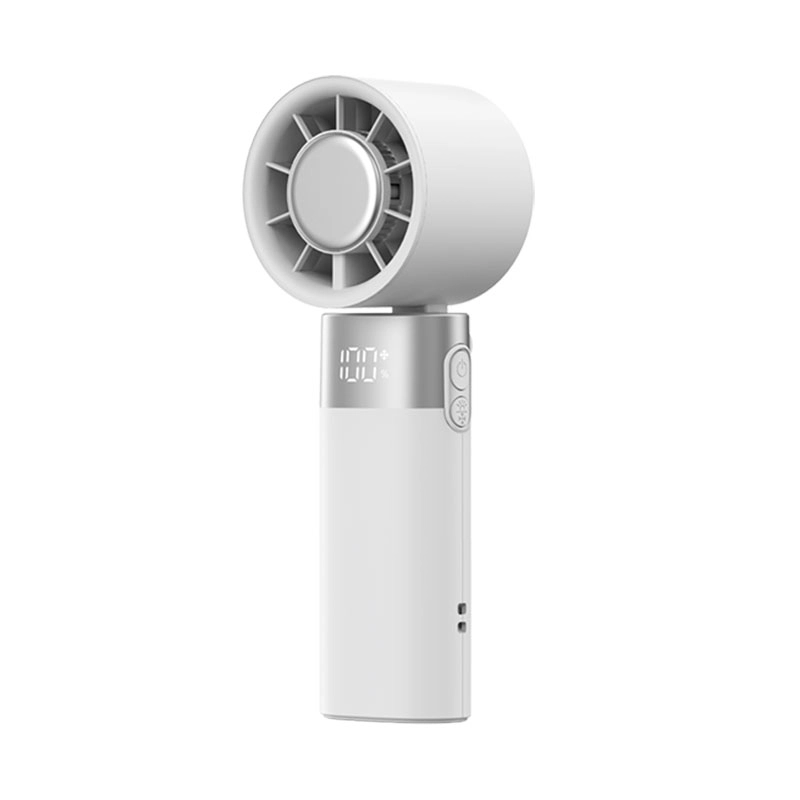
Reliable Handheld Cooling Solution for Bulk & Corporate Purchases
This premium handheld fan is designed for high-frequency, large-volume usage, making it an ideal cooling solution for corporate procurement, promotional distribution, employee welfare programs, and retail wholesale.
With stable airflow performance, a rechargeable design, and lightweight portability, it helps businesses deliver practical comfort products with strong perceived value while maintaining cost efficiency and supply reliability.
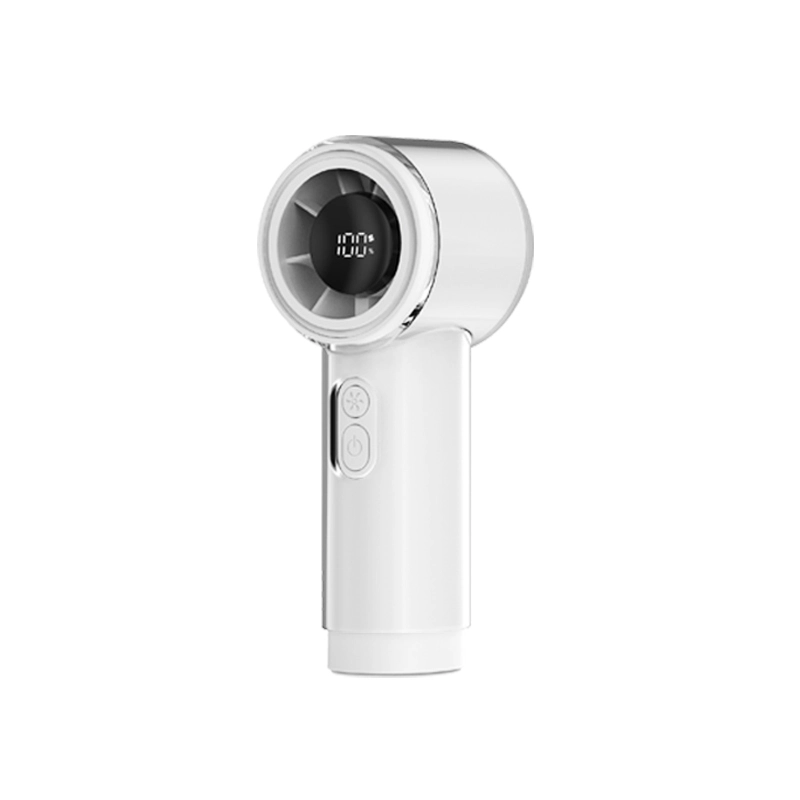
Customizable High-Speed Portable Handheld Fan FS2663
This is a high-speed, long-lasting, personalized, custom, portable cooling product specially designed for gift purchasers, cross-border e-commerce sellers, and OEM/ODM cooperation enterprises. It features (1) strong wind speed, (2) lightweight portability, (3) transparent shell design, (4) convenient carrying with a hand rope, and (5) long battery life. It helps enterprises enhance brand exposure, product differentiation competitiveness, and customer repeat purchase rate.
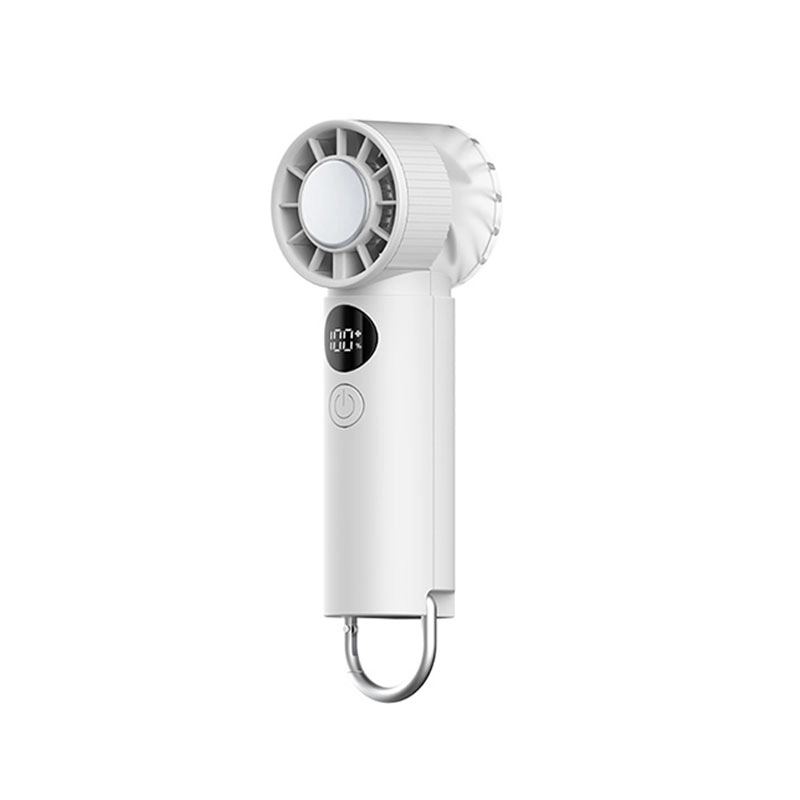
Customizable lightweight mini handheld cooling fan (with climbing hook) FS2666
A portable cooling and personalized customization product specially designed for commuters, students, the gift customization industry, and OEM/ODM buyers. It features (1) lightweight and easy portability, (2) a climbing buckle, and (3) semiconductor cooling.
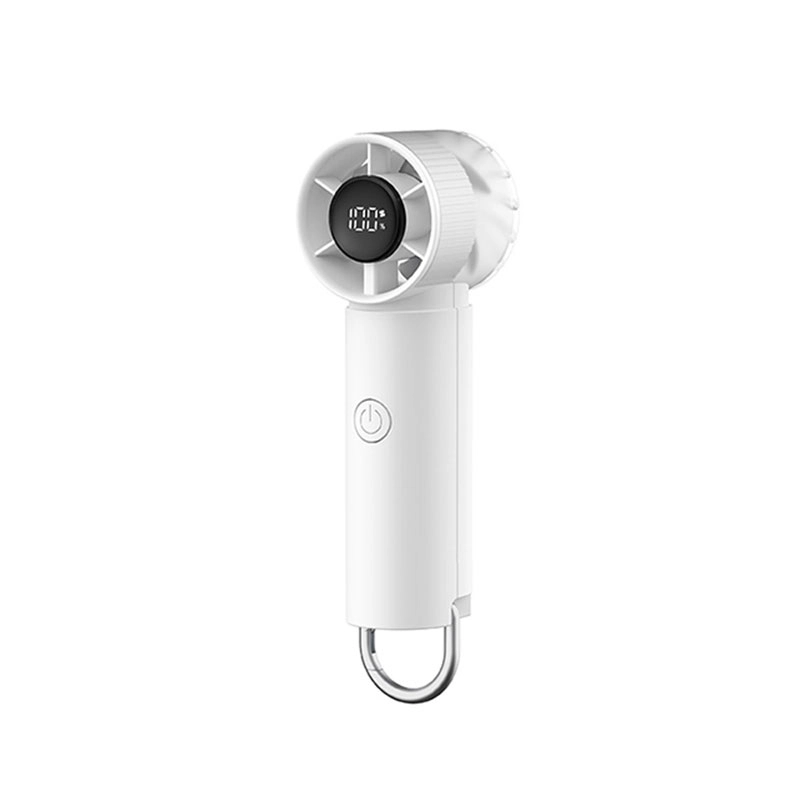
Customizable lightweight mini handheld cooling fan (with climbing hook) FS2667
This is a lightweight and portable + personalized customization product specially designed for commuters, students, the gift customization industry, and OEM/ODM buyers. It features (1) lightweight and easy portability, (2) a climbing buckle, and (3) a semi-transparent air duct design.
Start Your Custom Handheld Fans Manufacturing Project Today
If you have any comments or good suggestions, please leave us a message; later our professional staff will contact you as soon as possible.
Contact


4th Floor, Building 3, Jurong Industrial Park, No. 27-1-1, Fu'an Industrial Zone,Leliu Town (Pancun), Shunde District, Foshan City, Guangdong Province
 Scan QR Code
YouTube
Twitter
Facebook