






Are there eco-friendly rechargeable fan manufacturers? | Insights by RYW
- 1) Which rechargeable handheld fan manufacturers use recycled plastics or FSC-certified wood, and how do I verify those claims?
- 2) How can I compare real-world battery life and cycle-life data across eco-friendly rechargeable fans (not just manufacturer claims)?
- 3) Which manufacturers provide repairable or modular handheld fans and spare parts availability to reduce e-waste?
- 4) Are there rechargeable handheld fan manufacturers offering solar-assisted charging and what are realistic performance expectations?
- 5) How to assess supply-chain carbon footprint and factory-level sustainability for handheld fan OEMs?
- 6) What certifications and test reports should I request from eco-friendly rechargeable fan manufacturers to ensure compliance and safety?
- Conclusion: Why sourcing eco-friendly rechargeable handheld fans matters and how to proceed
As demand rises for sustainable, low-carbon personal cooling, procurement managers and product developers increasingly ask: Are there eco-friendly rechargeable fan manufacturers? The short answer: yes — but you must validate claims. Below are six specific, pain-point-oriented questions industry buyers and beginners rarely find fully answered online, with practical tests, standards, and sourcing checks you can use when evaluating handheld fan suppliers.
1) Which rechargeable handheld fan manufacturers use recycled plastics or FSC-certified wood, and how do I verify those claims?
Pain point: Suppliers claim recycled or eco materials without proof, leaving buyers exposed to greenwashing.
How to verify: ask manufacturers for batch-level certificates and third-party test reports. For plastics, request certified incoming-material documentation (PCR — post-consumer recycled content percentage) and material test reports from an accredited lab (e.g., SGS or Intertek) that identify polymer type and proportion of recycled content. For wooden components, request FSC (Forest Stewardship Council) chain-of-custody certificates and mill invoices showing FSC-certified timber numbers.
Practical checks on delivered samples: visual and tactile inspection may reveal quality differences, but insist on lab verification for composition. If the supplier claims bioplastic (PLA or PBAT blends), ask for compostability or biodegradability certification under EN 13432 or ASTM D6400 and note that many bioplastics are industrially compostable only and not suitable for standard recycling streams.
What to include in contracts: minimum recycled-content percentage by weight for external plastics; allowable suppliers list for raw materials; right-to-audit and acceptance testing protocol. Require supplier-provided Material Safety Data Sheets (MSDS) and RoHS/REACH declarations for restricted substances to ensure recycled feedstock does not introduce lead, cadmium, or other restricted substances.
2) How can I compare real-world battery life and cycle-life data across eco-friendly rechargeable fans (not just manufacturer claims)?
Pain point: Runtime hours and up to figures are often measured under ideal lab conditions and don’t reflect real-world use.
Key technical baseline: Most handheld rechargeable fans use lithium-ion cells (polymer or cylindrical). Typical cell voltages are nominally 3.6–3.7V. Common capacities for handheld fans range from ~2000 mAh to 5000 mAh (7.4–18.5 Wh). Typical motor power for handheld fans is in the 2–8 W band, so simple runtime math helps validate claims.
How to test claims: request the supplier’s detailed test report showing:
- Measured cell capacity (mAh) at 0.2C and 1C discharge rates
- Runtime measured at defined speeds (e.g., low/medium/high) with the fan’s actual power draw (watts) measured by a wattmeter
- Charge time measured with supplied charger under standard ambient conditions
- Cycle-life profile: capacity retention after 300, 500, and 1,000 full cycles (expressed as % of initial capacity)
Example calculation: a 3.7V x 3000 mAh pack = 11.1 Wh. If the fan consumes 4 W at medium speed, expected runtime ≈ 11.1 Wh / 4 W ≈ 2.8 hours. If the manufacturer lists 10 hours runtime, ask how the test was performed and at what speed.
Certification and safety tests to demand: IEC 62133 (battery cell and pack safety), UN 38.3 (transport testing) and vendor-supplied independent lab reports (SGS/UL/Intertek) to corroborate cell health and cycle-life claims. For long-term sustainability, prioritize cells with documented cycle-life of 500+ cycles if you expect multi-year service life; High Quality cells are often rated for 800–1,000 cycles under controlled conditions.
3) Which manufacturers provide repairable or modular handheld fans and spare parts availability to reduce e-waste?
Pain point: Many handheld fans are sealed, making battery replacement or motor repair impossible — increasing end-of-life waste.
What to ask suppliers: request an exploded parts list, spare-part SKUs and minimum order quantities for spare batteries, motors, and control boards. Determine whether the fan design allows user-level battery replacement (easily accessible battery compartment with standard screws) or requires factory-level service.
Design features that matter: modular motor assemblies, replaceable battery modules with manufacturer-supplied OEM cells, standardized screws (PH or Torx) instead of adhesive, and accessible control board connectors (rather than soldered wires). Also request a ten-year BOM (bill of materials) availability commitment or an end-of-life parts buyback clause to ensure spare parts can be sourced later.
Procurement clause suggestions: require the supplier to keep critical spare parts available for a minimum of 5–10 years or offer a take-back and refurbishment program. Ask for an average Mean Time To Repair (MTTR) and a service manual for authorized technicians. Prioritize suppliers that use common, non-proprietary battery sizes and international cell brands — these are easier to replace sustainably.
4) Are there rechargeable handheld fan manufacturers offering solar-assisted charging and what are realistic performance expectations?
Pain point: Marketing images show solar panels, but actual solar harvesting on small fans is often negligible in real use.
Reality check: Integrated solar cells on handheld fan housings have a small surface area (typically 10–30 cm²), limiting peak power. Typical small solar modules achieve ~10–20% conversion; a 20 cm² panel at peak sun (~1,000 W/m²) gives at best ~2–4 W under ideal orientation and full sun — often far less in real conditions (angle, shading, dust).
Practical expectations: solar-assisted charging can extend runtime marginally for emergency use or slow-trickle charging outdoors, but it is rarely sufficient to fully recharge a 10–18 Wh battery within a day of casual exposure. A realistic spec sheet item to request: maximum solar input power (mW/cm²), open-circuit voltage, and current at maximum power point (Impp) under standard test conditions (STC). Ask for measured recharge time from solar-only charging on a clear day in manufacturer tests.
Better alternatives: detachable higher-efficiency solar chargers (folding panels rated 10–20 W) paired with USB input offer practical off-grid recharge. If solar is a key sustainability requirement, require that the supplier provide a solar-charge performance report under defined conditions, or design the product with a removable battery that can be charged via a certified solar power bank.
5) How to assess supply-chain carbon footprint and factory-level sustainability for handheld fan OEMs?
Pain point: Buyers need to claim lower product carbon footprint but often lack supplier transparency and data granularity.
Step 1 — ask for supplier Scope 1 and Scope 2 emissions data if available, and primary-material transport distances (raw material origin to factory). Many manufacturers don’t have full life-cycle assessments (LCA), but you can request a simplified cradle-to-factory gate estimate showing major contributors: plastics, electronic components, batteries, and packaging.
Step 2 — request third-party audit results: ISO 14001 certification (environmental management), Sedex/SMETA audit reports, or BSCI factory social audits. For carbon-specific data, look for suppliers that have reported GHG inventories (GHG Protocol) or have verified emissions through third parties.
Step 3 — include sourcing and manufacturing controls in contracts: minimum recycled-content requirements, energy-efficiency targets for factories (e.g., percentage of renewable electricity used), and transport-optimization clauses (consolidated shipments, lower-emission carriers). For important volumes, commission an LCA from accredited LCA consultants to quantify CO2e per unit so you can compare alternate designs objectively.
6) What certifications and test reports should I request from eco-friendly rechargeable fan manufacturers to ensure compliance and safety?
Pain point: Buyers receive partial or non-applicable certificates; they need a concise checklist of must-have test reports and certifications.
Essential certifications and tests to request:
- Product safety: CE (EU market), FCC (where applicable), and local safety approvals per destination market
- Battery and transport safety: IEC 62133 (battery cell and pack safety), UN Manual of Tests and Criteria, subsection 38.3 (UN 38.3) for lithium battery transport
- Hazardous substances: RoHS declaration of conformity and REACH compliance for chemicals of very high concern (EU).
- Electromagnetic compatibility (EMC) reports for the region of sale (e.g., EMC directives in EU)
- Environmental/disposal: WEEE compliance evidence for EU, or local e-waste handling plans and take-back commitments
- Independent lab reports: battery capacity and cycle-life testing, motor efficiency tests, measured power consumption (watts) under defined speeds
Verification tips: insist on original lab reports with test conditions, lab accreditation (ISO/IEC 17025), and test dates. Cross-check report numbers against product labels and any marketing claims. For higher assurance, arrange for sample testing by a recognized lab in your market.
Finally, include warranty and post-sale support clauses that reflect the product’s expected lifecycle (e.g., battery pro-rated warranty, 1–3 years for mechanical/motor failures). A strong warranty plus documented spare parts availability signals a manufacturer serious about reducing product obsolescence and e-waste.
Conclusion: Why sourcing eco-friendly rechargeable handheld fans matters and how to proceed
Eco-friendly rechargeable handheld fans can reduce lifecycle emissions and e-waste when chosen carefully. Advantages include lower ongoing energy use (handheld fans typically draw 2–8 W), reduced single-use battery disposal, and improved brand differentiation for sustainable product lines. To realize these benefits, require documented recycled-material content, independent battery and cycle-life testing (IEC 62133, UN 38.3), modular/repairable design and spare-part commitments, verified solar-charging performance if claimed, and supply-chain transparency (ISO 14001, LCA summaries).
Use the checklists and test metrics above when qualifying vendors: request sample-level testing, factory audits, and contractual minimums for spare-part availability and recycled content. These practical steps turn marketing claims into verifiable sustainability outcomes and protect you from greenwashing.
If you’d like help qualifying suppliers, drafting technical specs, or obtaining third-party testing, contact us for a quote — visit www.rywlife.com or email adrian@rywlife.com.
Contacts
WhatsApp/Phone
You May Also Like
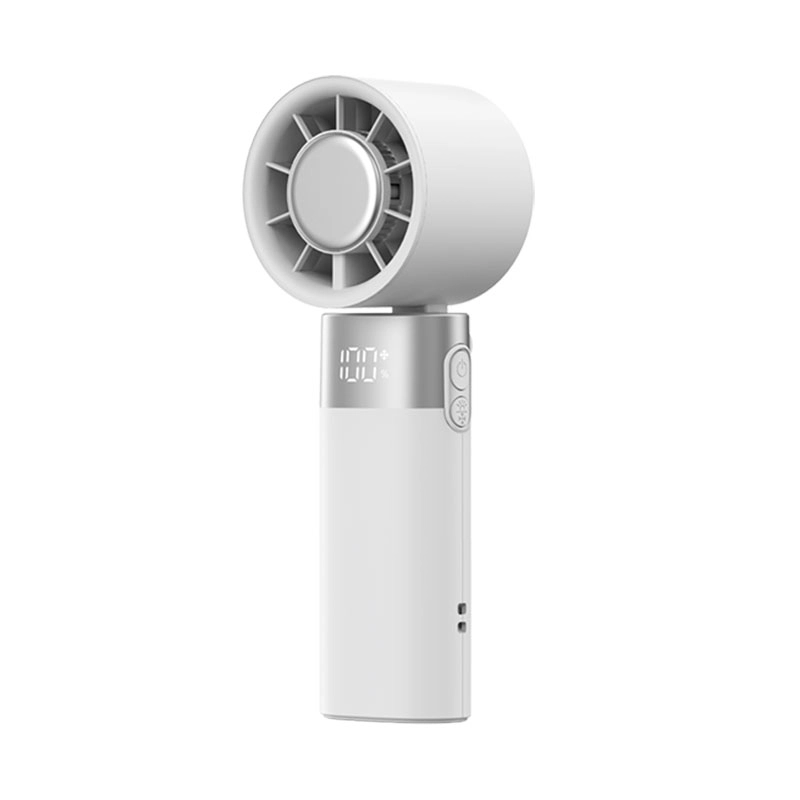
Reliable Handheld Cooling Solution for Bulk & Corporate Purchases
This premium handheld fan is designed for high-frequency, large-volume usage, making it an ideal cooling solution for corporate procurement, promotional distribution, employee welfare programs, and retail wholesale.
With stable airflow performance, a rechargeable design, and lightweight portability, it helps businesses deliver practical comfort products with strong perceived value while maintaining cost efficiency and supply reliability.
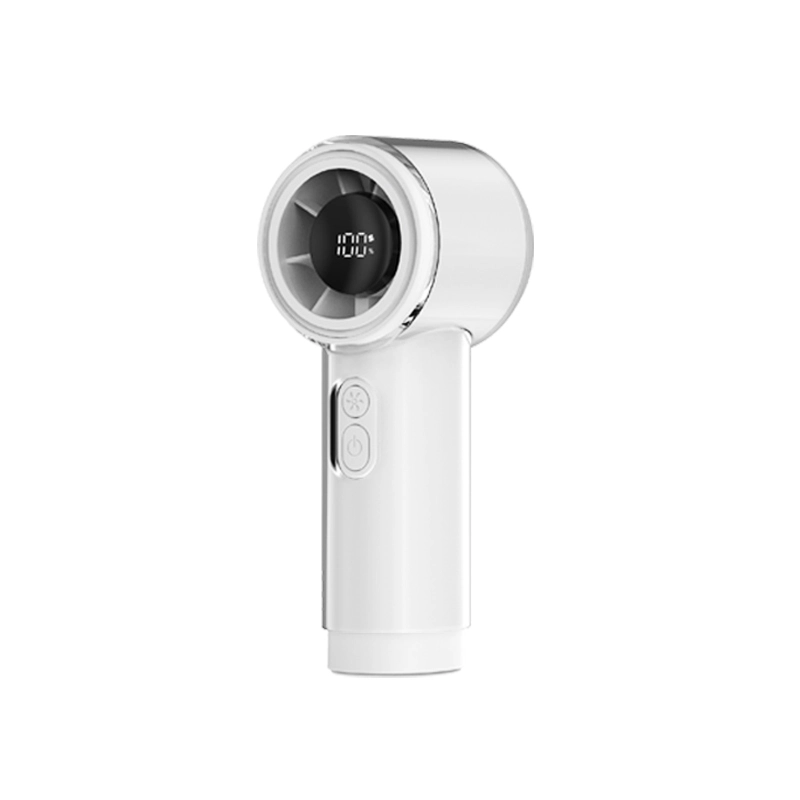
Customizable High-Speed Portable Handheld Fan FS2663
This is a high-speed, long-lasting, personalized, custom, portable cooling product specially designed for gift purchasers, cross-border e-commerce sellers, and OEM/ODM cooperation enterprises. It features (1) strong wind speed, (2) lightweight portability, (3) transparent shell design, (4) convenient carrying with a hand rope, and (5) long battery life. It helps enterprises enhance brand exposure, product differentiation competitiveness, and customer repeat purchase rate.
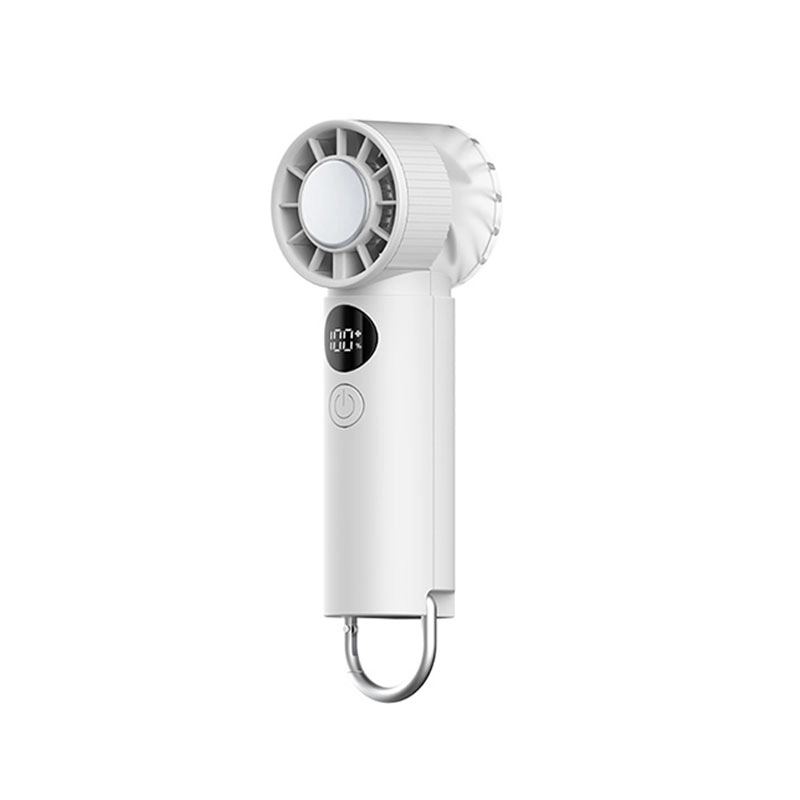
Customizable lightweight mini handheld cooling fan (with climbing hook) FS2666
A portable cooling and personalized customization product specially designed for commuters, students, the gift customization industry, and OEM/ODM buyers. It features (1) lightweight and easy portability, (2) a climbing buckle, and (3) semiconductor cooling.
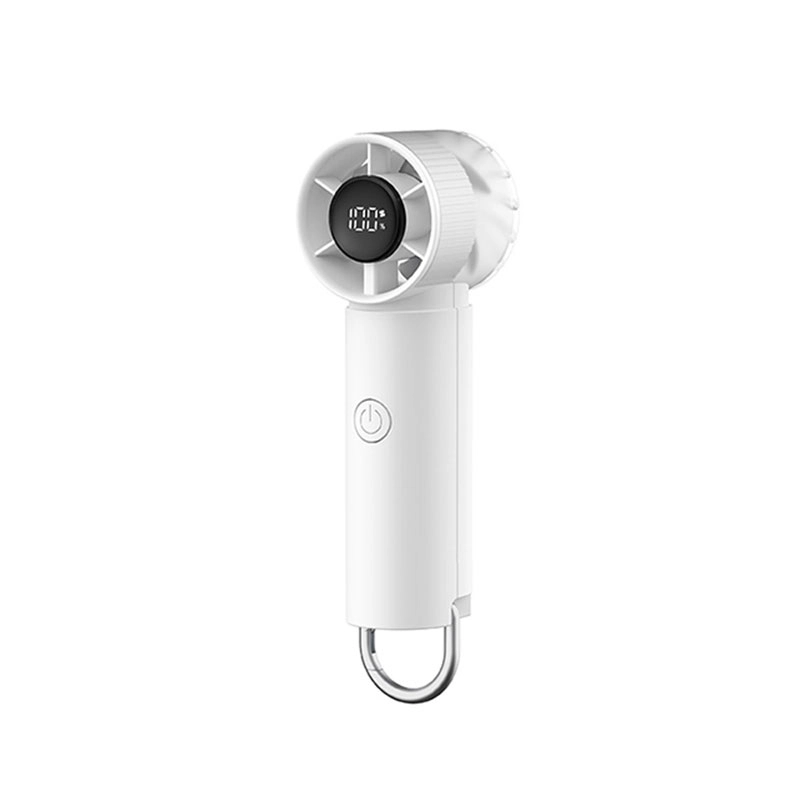
Customizable lightweight mini handheld cooling fan (with climbing hook) FS2667
This is a lightweight and portable + personalized customization product specially designed for commuters, students, the gift customization industry, and OEM/ODM buyers. It features (1) lightweight and easy portability, (2) a climbing buckle, and (3) a semi-transparent air duct design.
Start Your Custom Handheld Fans Manufacturing Project Today
If you have any comments or good suggestions, please leave us a message; later our professional staff will contact you as soon as possible.
Contact


4th Floor, Building 3, Jurong Industrial Park, No. 27-1-1, Fu'an Industrial Zone,Leliu Town (Pancun), Shunde District, Foshan City, Guangdong Province
 Scan QR Code
YouTube
Twitter
Facebook