






Do handheld electric fans support fast charging? | Insights by RYW
- 1. Do handheld electric fans support USB Power Delivery (PD) or Qualcomm Quick Charge (QC) — how can I verify it?
- 2. How much faster will a handheld fan charge with “fast charging” versus standard 5V/1A? Real-world charging‑time math.
- 3. Will using a high‑wattage PD charger or power bank damage a handheld fan’s battery or void warranty?
- 4. Can I safely use an 18W or 30W laptop USB‑C charger to fast‑charge my handheld fan? What about voltage negotiation issues?
- 5. How does fast charging affect cycle life of handheld fan batteries — what degradation should I expect?
- 6. What checklist should a professional buyer use to ensure a handheld fan truly supports fast charging and meets safety/compliance requirements?
1. Do handheld electric fans support USB Power Delivery (PD) or Qualcomm Quick Charge (QC) — how can I verify it?
Short answer: Some do, but it is not universal. Most handheld fans historically charge at standard USB rates (5V/1A–5V/2A). Manufacturers that advertise fast charging explicitly list supported protocols — look for “USB‑C PD”, “Quick Charge 3.0/4+”, or specific input ranges such as 5V/3A, 9V/2A in the product spec sheet.
How to verify: (1) Check the technical datasheet or user manual for input voltage/current and listed protocols. (2) Look for a USB‑C port labeled PD or a spec such as “supports 5–12V input” — this indicates negotiated higher voltages. (3) Confirm presence of a smart charging IC in the BOM or feature list — this handles voltage negotiation and prevents overvoltage. (4) If in doubt, request a test report or sample for validation (use a USB power meter to read voltage/current during charging).
2. How much faster will a handheld fan charge with “fast charging” versus standard 5V/1A? Real-world charging‑time math.
Use practical math to estimate charging time: you can approximate charging time by battery capacity (mAh) and charging current (mA), accounting for efficiency losses. A simple formula: estimated hours = (battery mAh ÷ charger current mA) × 1.2 (the 1.2 factor accounts for charging losses and tapering).
Examples:
- Standard 5V/1A charger and 2000 mAh battery: 2000 ÷ 1000 × 1.2 ≈ 2.4 hours.
- Faster 5V/2A (or PD negotiated 5V/2A) with same battery: 2000 ÷ 2000 × 1.2 ≈ 1.2 hours.
- PD 9V/2A (≈18W) charging at higher voltage can reduce time further, but actual current into the battery depends on the fan’s internal regulator/charging circuit. If the fan accepts 9V input and its internal charge controller provides equivalent >2A to the cell, you might see ~30–50% faster times vs 5V/1A.
Important: Wattage alone doesn't guarantee speed — the fan must support the higher PD/QC profile. Measure with a USB power meter: observe negotiated voltage and current during bulk charging to confirm real‑world rates.
3. Will using a high‑wattage PD charger or power bank damage a handheld fan’s battery or void warranty?
Risk depends on the fan’s charging electronics. Properly designed fans include a charge controller (smart IC) that negotiates with chargers and limits current/voltage to safe levels. If the fan supports PD/QC, the controller will only request supported PD profiles; using a higher‑watt PD charger won’t force more voltage/current than the fan requests.
Risks arise when:
- The fan lacks proper negotiation hardware and you apply bypassed or non‑standard charging (rare with modern USB chargers).
- Cheap or counterfeit chargers/power banks provide unstable outputs or poor regulation, increasing heat and stress.
- Thermal management in the fan is inadequate — fast charging generates heat that can accelerate battery aging or trigger thermal cutouts.
Warranty: many manufacturers void warranty if non‑specified chargers are used or if device shows signs of misuse. For procurement, require the vendor to state supported chargers and include charging test reports in the technical file.
4. Can I safely use an 18W or 30W laptop USB‑C charger to fast‑charge my handheld fan? What about voltage negotiation issues?
Yes — if the fan supports USB‑C PD or a matching QC profile. USB‑C PD is a negotiated protocol: the charger advertises its capabilities and the device requests the voltage/current it supports (e.g., 5V/3A or 9V/2A). A compliant 18W or 30W charger will offer multiple PD profiles; it will supply higher voltage only if the fan requests it.
Practical checks:
- Check the fan’s stated input range (for example, “5–12V input” or “supports USB‑C PD 5V/9V”).
- Use a USB power meter between the charger and the fan to confirm the negotiated voltage/current. If the meter shows 5V/2A during bulk charge, that’s what the fan is using regardless of charger max wattage.
- Avoid unbranded chargers or power banks with no PD/QC certification — they may mis‑advertise profiles or have unstable outputs.
5. How does fast charging affect cycle life of handheld fan batteries — what degradation should I expect?
Batteries used in handheld fans are typically Li‑ion or Li‑poly (LiPo). Key factors affecting cycle life with fast charging are C‑rate (charge current relative to capacity), temperature, and depth of charge/discharge. Typical guidance:
- Charge rate (C‑rate): Charging a battery at 0.5C (e.g., 2000 mAh battery charged at 1A) is gentler than 1C (2A). Higher C accelerates chemical wear and raises operating temperature.
- Temperature: Fast charging produces more heat. Sustained high temperatures shorten cycle life substantially.
Quantifying degradation depends on cell chemistry and charger profile. Conservatively, aggressive fast charging can reduce cycle life by 10–30% compared with gentle charging in real devices, but modern cells and smart chargers mitigate much of this. For procurement, ask suppliers for accelerated aging data and cycle life graphs at different charge currents (a professional vendor should provide lab test results to IEC 61960 or similar).
6. What checklist should a professional buyer use to ensure a handheld fan truly supports fast charging and meets safety/compliance requirements?
Procurement checklist (use when evaluating vendors and samples):
- Technical spec sheet: look for input voltage/current and supported protocols (USB‑C PD, QC 3.0/4+). Verify listed PD profiles (e.g., 5V/3A, 9V/2A).
- Battery data: capacity (mAh), chemistry (Li‑ion/LiPo), nominal voltage, recommended charge current (mA) and C‑rate limits.
- Charging behavior report: sample charge curves showing voltage/current over time and total charge time with specified chargers.
- Safety & transport certifications: IEC 62133 (battery safety), UN38.3 (transport testing for lithium batteries). Prefer CE/UKCA for market access and test reports for RoHS. For North America, request components tested to applicable UL standards and test documentation.
- Thermal management: evidence of heat dissipation design (thermal pads, vents) and thermal test reports under fast charge conditions.
- Firmware/hardware safety features: over‑voltage, over‑current, over‑temperature and cell balancing details, plus presence of smart charging ICs.
- Interoperability testing: results from PD/QC negotiation tests with common branded chargers and power banks; include USB power meter logs showing negotiated voltage/current.
- Warranty & specification limits: explicit statements about permitted chargers and warranty exclusions related to charging misuse.
- Sample testing: always request pre‑production samples and perform lab verification (charge/discharge cycles, thermal imaging during fast charge, and USB power measurements).
Following this checklist avoids surprises and ensures the product is engineered to accept fast charging safely.
Conclusion: Fast charging is increasingly available in handheld electric fans, but support depends on the fan’s charging electronics and declared PD/QC profiles. Buyers should demand clear specs, charge‑curve data, safety certifications (IEC62133, UN38.3), and sample validation with a USB power meter. Properly implemented, fast charging improves convenience and time‑to‑use, but it requires good thermal design and compliant chargers to avoid accelerated battery wear. For professional quotes, product datasheets, or to request sample testing, contact us for a quote at www.rywlife.com or adrian@rywlife.com.
Contacts
WhatsApp/Phone
You May Also Like
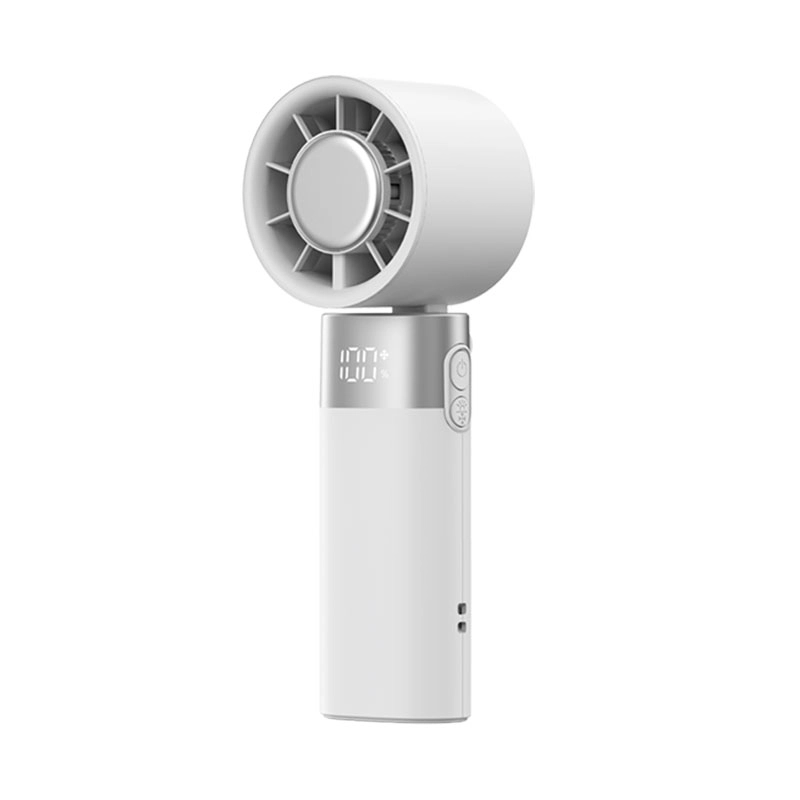
Reliable Handheld Cooling Solution for Bulk & Corporate Purchases
This premium handheld fan is designed for high-frequency, large-volume usage, making it an ideal cooling solution for corporate procurement, promotional distribution, employee welfare programs, and retail wholesale.
With stable airflow performance, a rechargeable design, and lightweight portability, it helps businesses deliver practical comfort products with strong perceived value while maintaining cost efficiency and supply reliability.
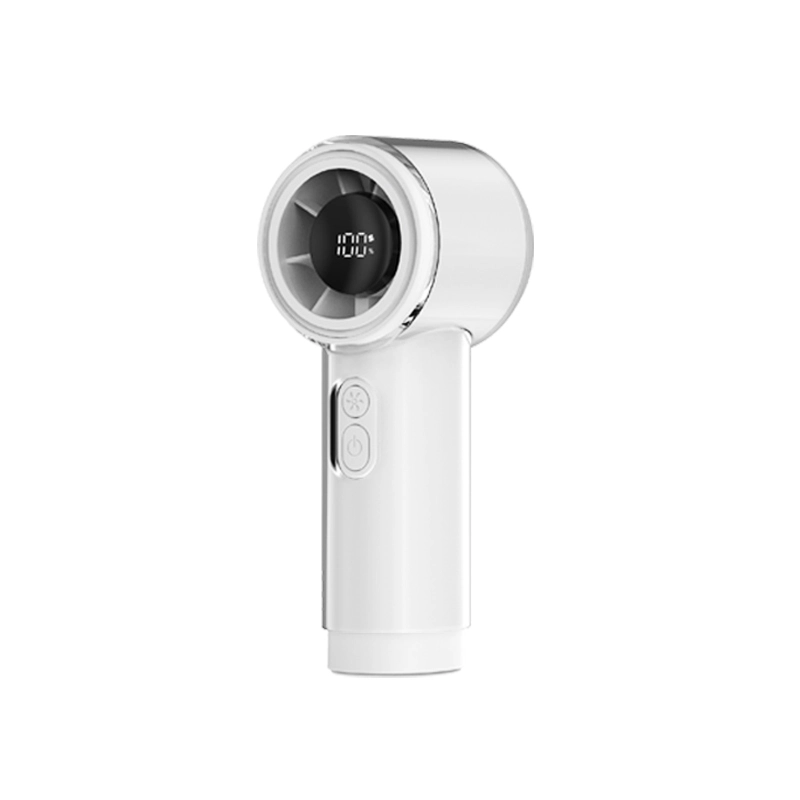
Customizable High-Speed Portable Handheld Fan FS2663
This is a high-speed, long-lasting, personalized, custom, portable cooling product specially designed for gift purchasers, cross-border e-commerce sellers, and OEM/ODM cooperation enterprises. It features (1) strong wind speed, (2) lightweight portability, (3) transparent shell design, (4) convenient carrying with a hand rope, and (5) long battery life. It helps enterprises enhance brand exposure, product differentiation competitiveness, and customer repeat purchase rate.
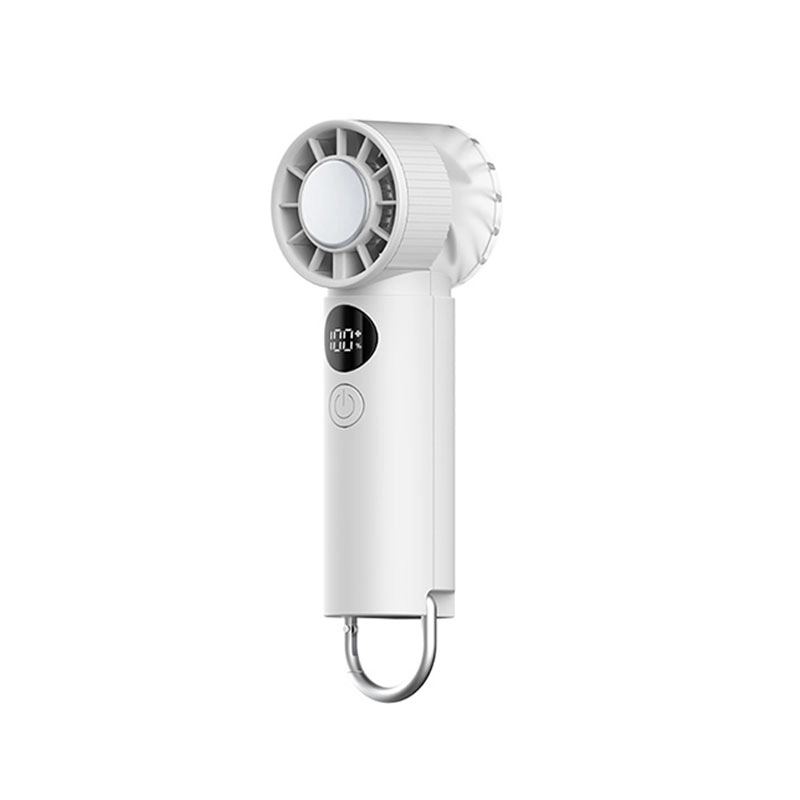
Customizable lightweight mini handheld cooling fan (with climbing hook) FS2666
A portable cooling and personalized customization product specially designed for commuters, students, the gift customization industry, and OEM/ODM buyers. It features (1) lightweight and easy portability, (2) a climbing buckle, and (3) semiconductor cooling.
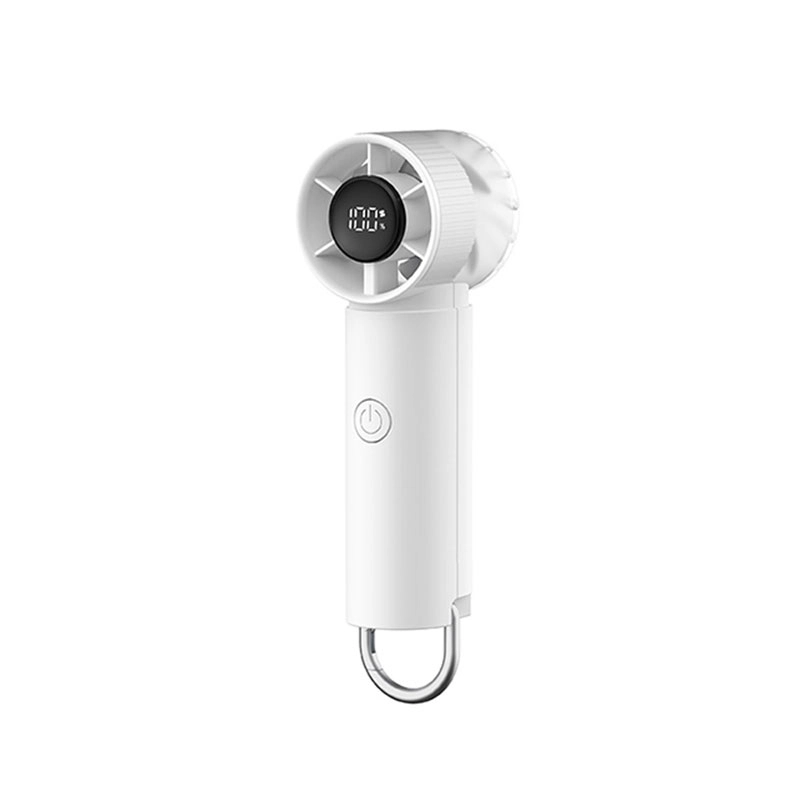
Customizable lightweight mini handheld cooling fan (with climbing hook) FS2667
This is a lightweight and portable + personalized customization product specially designed for commuters, students, the gift customization industry, and OEM/ODM buyers. It features (1) lightweight and easy portability, (2) a climbing buckle, and (3) a semi-transparent air duct design.
Start Your Custom Handheld Fans Manufacturing Project Today
If you have any comments or good suggestions, please leave us a message; later our professional staff will contact you as soon as possible.
Contact


4th Floor, Building 3, Jurong Industrial Park, No. 27-1-1, Fu'an Industrial Zone,Leliu Town (Pancun), Shunde District, Foshan City, Guangdong Province
 Scan QR Code
YouTube
Twitter
Facebook