






What customization options are available for rechargeable fans? | Insights by RYW
- 1. How do custom battery capacities and battery chemistry choices affect run time, weight and shipping for a portable rechargeable fan?
- 2. What are realistic lead-times, MOQs, and tooling costs when requesting a custom housing, color matching, or new injection-molded fan design?
- 3. Can I add smart features (Bluetooth/app control, OTA firmware updates, advanced fan speed modes) to a rechargeable fan, and what are the hardware/software constraints?
- 4. What safety certifications and battery transport tests are required when private-labeling rechargeable fans for EU/US retail?
- 5. How can I specify noise levels, motor type and fan blade design in a custom handheld fan to achieve quieter performance without sacrificing airflow?
- 6. What branding and packaging customization options (logo printing, engraving, eco-packaging) are feasible for low-volume orders under 1,000 units, and how will they affect per-unit cost?
Buying or private-labeling rechargeable fans requires more than choosing a color. Below are six specific, buyer-focused questions—each with actionable, industry-grounded answers—covering battery chemistry and runtime, tooling and MOQ, smart features, safety and transport certification, acoustic tuning, and branding/packaging for low-volume orders. Semantic keywords such as portable fan, battery capacity, USB-C charging, fan speed modes, quiet brushless motor, BMS, IP rating, custom logo, and MOQ are woven into the guidance below to help you specify a commercially viable product.
1. How do custom battery capacities and battery chemistry choices affect run time, weight and shipping for a portable rechargeable fan?
What matters: battery chemistry (Li-ion vs Li‑polymer), nominal voltage, cell configuration, and usable capacity after protection circuit overhead. Typical handheld fans use single-cell nominal voltages (3.6–3.7V) or small multi-cell packs (7.4V). Common capacities on the market range from ~2000mAh to 5000mAh for compact models; high-end or larger portable fans use 5000–10,000mAh packs.
How to estimate runtime: convert mAh to watt‑hours (Wh) and divide by average motor consumption. Example: a 2500mAh single-cell (3.7V) = 2.5Ah × 3.7V = 9.25Wh. If your motor and control electronics draw ~3W on medium speed, theoretical runtime ≈ 9.25Wh / 3W ≈ 3.1 hours. Real-world runtime is lower by ~10–25% due to conversion losses, BMS consumption, and inefficiencies.
Weight trade-offs: expect 2000–3000mAh single-cell packs to add ~40–80g to handheld units; higher capacity adds proportionally. If minimizing weight is a priority, select higher-efficiency motors (BLDC), optimize blade aerodynamics, and choose Li‑polymer pouch cells which often yield higher energy density per gram than cylindrical cells.
Shipping and regulatory impact: cells and packs must comply with UN 38.3 for air transport; many retailers also require IEC 62133 (battery safety) and manufacturer declarations. Cells with higher capacities (>100 Wh per battery) trigger different transport restrictions—handheld fans are almost always <100 Wh, but confirm the pack Wh when you scale up capacity.
Practical recommendation: specify required run time at target fan speed (e.g., 8 hours at low, 3 hours at high). From there, an engineer can size the battery and predict weight. Include BMS specs (overcharge, overdischarge, short-circuit protection) and request IEC 62133 and UN 38.3 test reports from suppliers.
2. What are realistic lead-times, MOQs, and tooling costs when requesting a custom housing, color matching, or new injection-molded fan design?
Lead-times: simple color changes or pad printing on an existing mold: 1–3 weeks plus production time. New injection-molded housings: design + mold manufacturing typically 4–8 weeks for the mold, then sample validation 1–2 weeks, and mass production runs 2–6 weeks depending on order size and factory queue.
Tooling and upfront costs: custom tooling for consumer-grade handheld fans commonly ranges from US$1,500 to US$10,000 depending on part complexity, cavity count, and mold steel grade. Complex multi-cavity or high-precision molds push costs to the upper end. Expect additional costs for prototype iterations and mold modifications.
MOQ expectations: for OEM/ODM handheld fans, MOQs commonly range from 300–1,000 units for existing tooling. For fully custom molds, many factories require 500–3,000 unit runs to amortize tooling and setup. If MOQ is a barrier, options include: using an existing mold and changing masterbatch color, applying decals/stickers, or choosing vinyl wraps to achieve branding at lower MOQ.
Cost drivers: color-matched finishes via masterbatch (in-mould color) add minimal per-unit cost but require mold revalidation; custom paint or two-tone finishes increase labor and per-unit price. Surface finishing (soft-touch coatings, matte, gloss) and post-mold treatments (laser etch) also add cost and lead time.
3. Can I add smart features (Bluetooth/app control, OTA firmware updates, advanced fan speed modes) to a rechargeable fan, and what are the hardware/software constraints?
Yes—but adding connectivity changes the BOM, power budget, certifications and development timeline. Hardware additions: MCU, Bluetooth Low Energy (BLE) module, flash memory for firmware, and possibly a charging IC that supports USB-C PD if fast-charging or power delivery is required. Expect the BOM to increase by roughly US$2–$8 per unit depending on module choice and volume.
Power constraints: BLE modules draw standby and active current—standby might be a few µA to hundreds of µA depending on design; advertising/connected use consumes more. If your target is 24–48 hours standby between charges, the firmware and BLE duty cycle must be engineered accordingly. Include sleep modes and efficient wake-up strategies.
Software and certification: app development, backend if required, and QA add non-recurring engineering (NRE) costs. Bluetooth devices typically must comply with regional radio regulations (FCC in the U.S., CE RED in EU) and may require Bluetooth SIG listing. OTA firmware updates introduce secure update processes and signed firmware to avoid tampering.
Manufacturing constraints: seek a design with modular electronics so an optional BLE board can be added without changing the mechanical housing. Also ensure EMC/EMI testing and thermal validation because added electronics may change heat dissipation characteristics.
4. What safety certifications and battery transport tests are required when private-labeling rechargeable fans for EU/US retail?
Minimum certifications for EU/US market entry typically include: CE (for EU, covering EMC and LVD where applicable), FCC Part 15 (for RF/EMC in US), and RoHS (restricted substances). For batteries specifically, IEC 62133 (safety requirements for portable sealed secondary cells) is widely required by retailers. For air transport and logistics, UN 38.3 test reports are required for lithium cells/packs.
Additional/market-specific standards: UL 2054 and UL 62133 (US/Canada), and CB scheme test reports can expedite entry into multiple markets. If adding wireless modules, ensure compliance with radio directives such as the EU Radio Equipment Regulation (RED) and FCC certification in the US. For IP-rated fans (water resistance), IEC 60529 IP ratings are used (e.g., IPX4 splash-proof).
What to ask suppliers for: request copies of test reports (IEC 62133, UN 38.3), declarations of conformity (CE), EMC reports, and a bill of materials showing recognized battery cell manufacturers and part numbers. Retailers and marketplaces often require original documentation; maintain supplier traceability and signing authority.
5. How can I specify noise levels, motor type and fan blade design in a custom handheld fan to achieve quieter performance without sacrificing airflow?
Specify measurable targets: set a dB(A) target at a fixed distance and speed (e.g., <35 dB(A) at 1 meter on low speed). Typical handheld fans operate in the 30–55 dB(A) range across speeds; quiet designs aim for <35 dB on low and <45 dB on high.
Motor choices: brushless DC (BLDC) motors are the preferred quiet solution—more efficient, longer-lasting, and easier to control via PWM for smooth fan speed modes. Brushed motors are cheaper but noisier and less durable.
Blade and shroud design: blade count, pitch, chord length and leading/trailing edge shaping directly influence perceived noise and airflow. More blades with carefully tuned pitch can move the same air at lower RPM, reducing tonal noise. A ducted or shrouded design reduces turbulence and improves perceived airflow. Computational Fluid Dynamics (CFD) simulation is commonly used for higher-end designs to balance static pressure and flow while minimizing vortices.
Control electronics: implement soft-start, microstepping (for motor commutation), and multiple fan speed modes (including an ECO mode). PWM frequency selection affects audible whine—use frequencies above human hearing or design for spread-spectrum control where appropriate.
Manufacturing tolerances: balance the rotor, ensure tight tolerances on bearings, and mount motors with vibration-damping materials to avoid structure-borne noise. Provide prototype runs and acoustic lab tests (SPL measurements) before approving mass production.
6. What branding and packaging customization options (logo printing, engraving, eco-packaging) are feasible for low-volume orders under 1,000 units, and how will they affect per-unit cost?
Branding options by volume:
- Pad printing or screen printing for logos: low-cost, suitable for volumes >100–200. Per-unit cost is small (often US$0.05–US$0.50) depending on print colors and area.
- UV digital printing: offers photographic quality for small runs; costs higher per unit but no tooling required—good for 50–1,000 units with rapid turnaround.
- Laser engraving: High Quality, durable marking; cost per unit ~US$0.20–$1 depending on area and material. Works well for metal plates or ABS housings.
- Custom stickers/decals: very low MOQ and cheap, but less High Quality and may raise EPA concerns if adhesive fails in heat/humidity.
Packaging and inserts: short-run custom printed boxes are feasible for 200–1,000 pcs using digital printing. Higher-quality offset-printed cartons require larger MOQs but lower per-unit pricing. Eco options (recycled cardboard, soy-based inks, minimal plastic inserts) are widely available and increasingly important for retail acceptance.
Impact on per-unit cost: expect simple branding changes (pad printing) to add negligible per-unit cost; laser engraving and digital print add moderate cost. Custom packaging typically adds US$0.50–$2.50 per unit for low runs depending on unit size and print complexity. If you need custom molded inserts, tooling or die-cut templates add NRE fees.
Logistics tip: for low volumes under 1,000 units, prioritize using existing mechanical tooling and select printing/packaging methods that don’t require mold changes. This keeps lead times and costs manageable while still delivering a branded customer experience.
—
Contact us for a quote and tailored OEM/ODM options: visit www.rywlife.com or email adrian@rywlife.com.
Closing summary: Customizing rechargeable fans lets you control runtime, weight, noise, connectivity, safety compliance and brand experience. Well-scoped customization (battery sizing, BLDC motor, BMS, IEC/UN testing, and practical MOQ-aware branding) gives market differentiation while keeping cost and lead time predictable. Work with manufacturers who provide clear test reports (UN 38.3, IEC 62133), EMC/radio documentation, and prototype acoustic/thermal validation to reduce launch risk and meet retail requirements.
Contacts
WhatsApp/Phone
You May Also Like
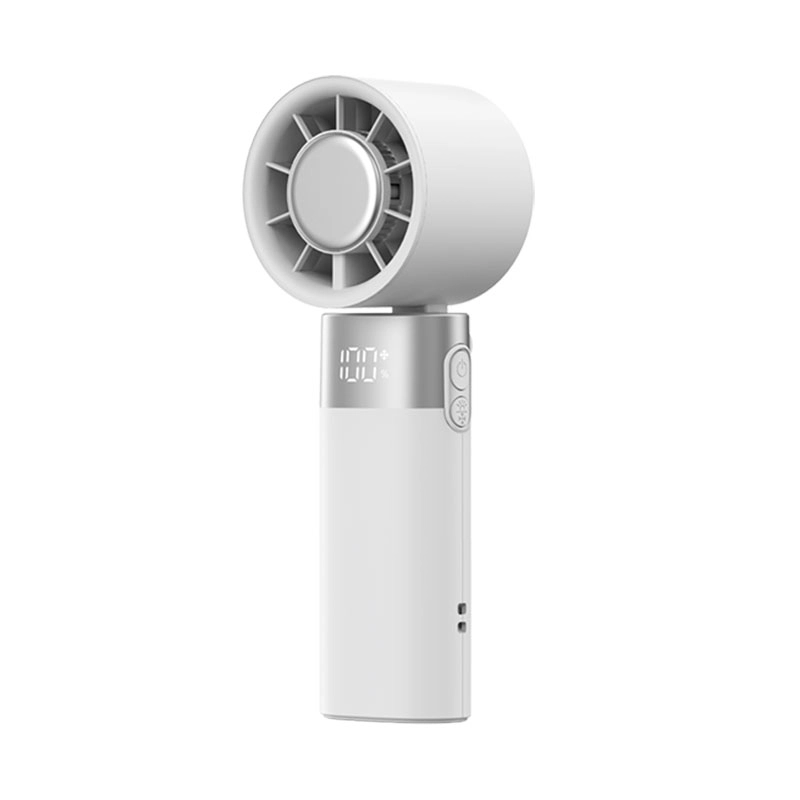
Reliable Handheld Cooling Solution for Bulk & Corporate Purchases
This premium handheld fan is designed for high-frequency, large-volume usage, making it an ideal cooling solution for corporate procurement, promotional distribution, employee welfare programs, and retail wholesale.
With stable airflow performance, a rechargeable design, and lightweight portability, it helps businesses deliver practical comfort products with strong perceived value while maintaining cost efficiency and supply reliability.
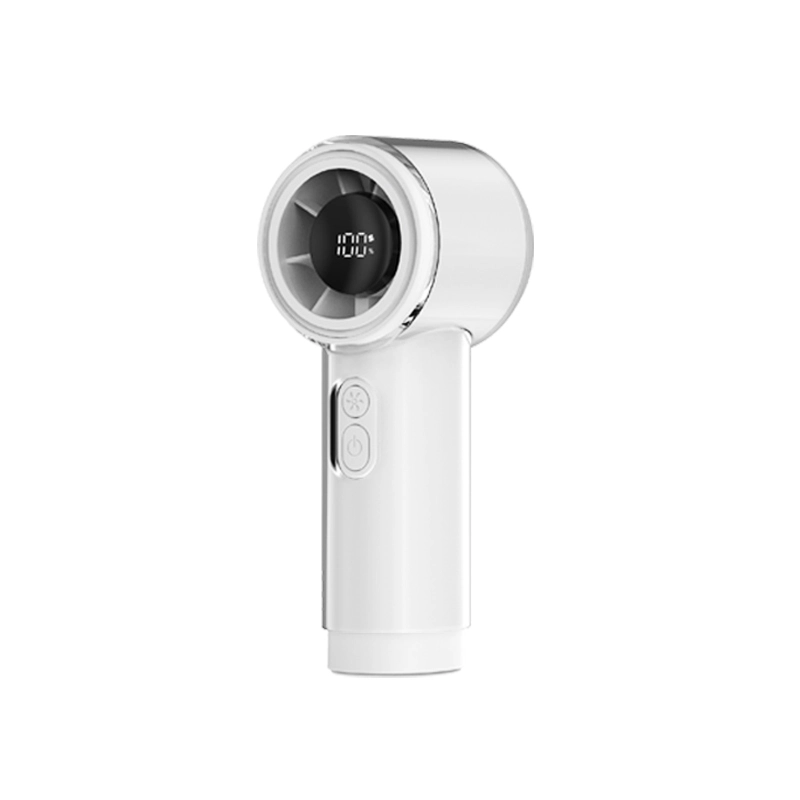
Customizable High-Speed Portable Handheld Fan FS2663
This is a high-speed, long-lasting, personalized, custom, portable cooling product specially designed for gift purchasers, cross-border e-commerce sellers, and OEM/ODM cooperation enterprises. It features (1) strong wind speed, (2) lightweight portability, (3) transparent shell design, (4) convenient carrying with a hand rope, and (5) long battery life. It helps enterprises enhance brand exposure, product differentiation competitiveness, and customer repeat purchase rate.
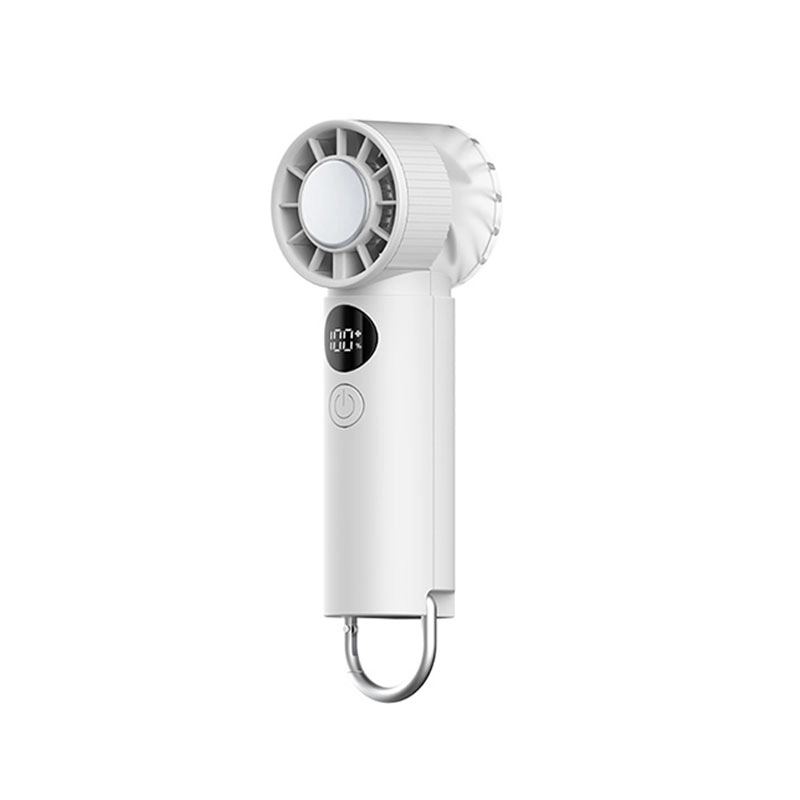
Customizable lightweight mini handheld cooling fan (with climbing hook) FS2666
A portable cooling and personalized customization product specially designed for commuters, students, the gift customization industry, and OEM/ODM buyers. It features (1) lightweight and easy portability, (2) a climbing buckle, and (3) semiconductor cooling.
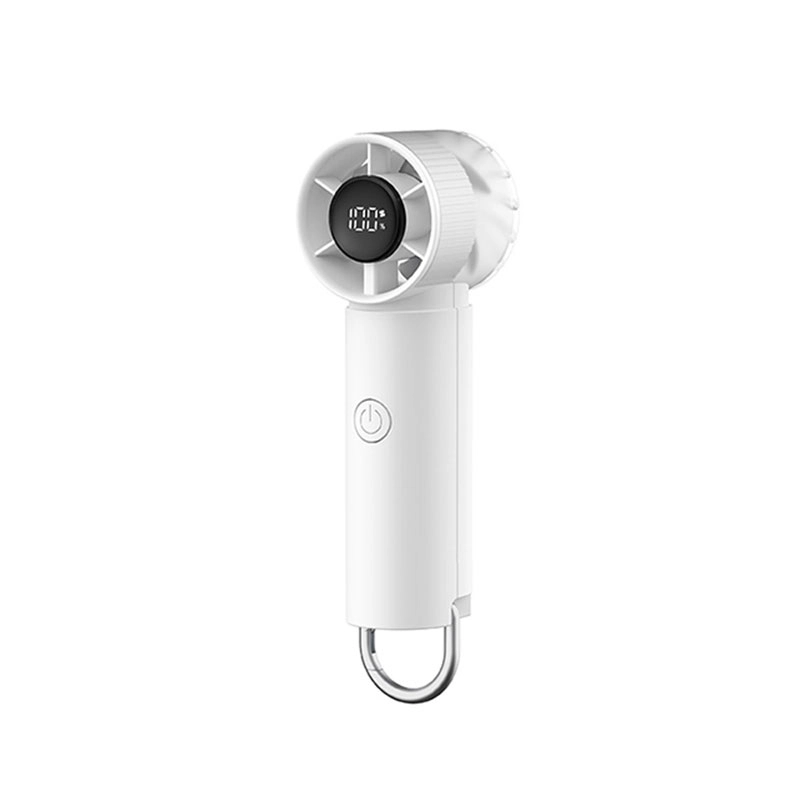
Customizable lightweight mini handheld cooling fan (with climbing hook) FS2667
This is a lightweight and portable + personalized customization product specially designed for commuters, students, the gift customization industry, and OEM/ODM buyers. It features (1) lightweight and easy portability, (2) a climbing buckle, and (3) a semi-transparent air duct design.
Start Your Custom Handheld Fans Manufacturing Project Today
If you have any comments or good suggestions, please leave us a message; later our professional staff will contact you as soon as possible.
Contact


4th Floor, Building 3, Jurong Industrial Park, No. 27-1-1, Fu'an Industrial Zone,Leliu Town (Pancun), Shunde District, Foshan City, Guangdong Province
 Scan QR Code
YouTube
Twitter
Facebook