






Can manufacturers produce custom-branded rechargeable fans? | Insights by RYW
- 1. Can a manufacturer print a full‑color logo on the housing and blades without causing imbalance or added warranty risk?
- 2. How do lithium battery transport regulations (UN38.3, IATA) impact international shipping for custom-branded rechargeable fans?
- 3. What realistic MOQs and tooling charges should buyers expect for private‑label rechargeable handheld fans?
- 4. Which certifications are mandatory or recommended for selling custom rechargeable fans in major markets, and who typically arranges testing?
- 5. How can I ensure advertised battery capacity and runtime are accurate for my custom USB‑C rechargeable fan?
- 6. What are realistic lead times, sample procedures, and quality control steps manufacturers use for OEM rechargeable fans to avoid delays?
1. Can a manufacturer print a full‑color logo on the housing and blades without causing imbalance or added warranty risk?
Yes — but it depends on the printing method, feature placement, and dynamic balancing. Common marking methods include pad printing, screen printing, full-color UV digital printing, laser engraving, and water transfer (hydrographic). Printing on the external housing is low-risk and inexpensive. Printing on rotating parts (fan blades) is higher risk because uneven ink deposits or adhesives change mass distribution and can create vibration at high RPM, which shortens motor life and may void balance-related warranty claims.
Recommended steps:
- Prefer housing or bezel branding whenever possible for lower cost and zero balance impact.
- If blade printing is required for visibility, require the factory to perform dynamic balancing after printing (additional process and cost). Dynamic balancing uses weight compensation or trimming to ensure low vibration at rated RPM.
- Request a pre-production sample with your exact printing process and run a vibration/RPM test report from the factory. Acceptable vibration thresholds should be defined (factory standard or AQL guideline).
- Specify if you want scratch- or solvent-resistant ink (UV-cured inks are common) and request adhesion test records.
How this affects warranty and QA:
- Branding executed at the factory as part of the OEM order is normally covered under the manufacturer’s standard warranty if no misuse is proven. However, confirm with your supplier in writing. If a third party modifies blades post-production, the factory may reject warranty claims.
Embedded considerations: full-color logo printing, OEM handheld fan, private label rechargeable fan, quality control AQL.
2. How do lithium battery transport regulations (UN38.3, IATA) impact international shipping for custom-branded rechargeable fans?
Lithium cell/device regulations are one of the most common and misunderstood pain points when private-labeling rechargeable fans. Key facts:
- UN38.3 is the baseline transport test series required to ship lithium batteries/battery-powered devices by air, sea, or ground. Carriers and customs typically require a UN38.3 report and proper Dangerous Goods documentation for air shipments.
- IEC/EN 62133 is the primary safety standard for rechargeable lithium batteries in portable electronics (battery safety, cell design, protection circuits). Many retailers and distributors require IEC 62133 test reports or certificates before placing orders.
- IATA Dangerous Goods Regulations (air transport) and ICAO Technical Instructions set packaging, labeling, state of charge limits, and documentation for air freight of lithium batteries. Some large carriers restrict or require special handling for fully assembled devices with lithium batteries.
What to require from your supplier:
- UN38.3 test report for the battery pack or device variant you will sell, and IEC 62133 test reports for battery safety.
- Clear shipping classification and SDS (safety data sheet) from the manufacturer.
- Confirmation of allowed transport modes (air, sea, courier) and any special packing/labeling requirements. Expect extra handling/fees for air shipments.
Practical tip: Ask manufacturers to provide recently dated UN38.3 and IEC 62133 reports from accredited labs (SGS, Intertek, TÜV). If you plan to rebrand and reship into multiple countries, plan time/cost for these certifications and for freight carriers’ hazardous goods handling.
Embedded considerations: lithium battery safety certification, UN38.3, IEC 62133, USB-C charging fan.
3. What realistic MOQs and tooling charges should buyers expect for private‑label rechargeable handheld fans?
MOQ and tooling vary widely by supplier, product platform, and customization depth.
- Low-touch custom branding (applying a logo to an existing SKU, color changes using stock molds) often has low MOQs (200–1,000 units) because no new tooling is required. Many factories offer “print only” options for promotional handheld fans.
- Medium customization (custom colors, custom packaging, a new small injection mold family) typically pushes MOQs higher (500–3,000 units) depending on the mold and cost structure.
- Full new-product development (new shell, new internal assembly, multiple cavities, custom electronics or motor design) usually requires new injection molds. MOQ for molded production is commonly 1,000+ units per SKU to amortize mold costs and setup time.
Tooling and cost drivers:
- Injection mold complexity and cavity count affect cost and lead time. Multi-cavity molds can reduce per-unit cost but increase initial tooling cost.
- Custom electronics (PCBA), battery packs with protection circuits, motor type (brushless is costlier), and certifications increase per-unit cost.
- Custom packaging (gift boxes, inserts, user manuals in multiple languages) also raises MOQs and total landed cost.
What to ask your manufacturer to minimize surprises:
- Get a detailed quote that separates unit price, tooling/mold cost, printing cost, packaging cost, shipping, and certificate fees.
- Ask for price breaks at different MOQs and a tooling amortization schedule.
- Request sample pricing (prototype vs. production sample) and clarify who owns the mold (often factory retains mold unless you pay for transfer ownership).
Embedded considerations: minimum order quantity, private label rechargeable fan, OEM handheld fan, custom packaging.
4. Which certifications are mandatory or recommended for selling custom rechargeable fans in major markets, and who typically arranges testing?
Mandatory and commonly required certifications depend on target markets and sales channels:
- European Union: CE declaration of conformity (product safety/EMC/low-voltage directives as applicable) and RoHS compliance for restricted substances. Battery safety (IEC 62133) and compliance with local WEEE rules for disposal are expected.
- United States: FCC Part 15/EMC testing if the device emits radio or significant electromagnetic interference. Safety approvals such as UL can be required by large retailers; IEC 62133 is also commonly demanded for batteries.
- International retail: Many distributors request third-party test reports from accredited labs (SGS, Intertek, TÜV) showing compliance with IEC 62133, UN38.3, CE, RoHS, and sometimes additional EMC testing.
Who arranges testing?
- Many OEM factories have in-house testing capabilities and relationships with labs. A common workflow is: factory performs initial tests and provides sample reports; buyer requests final third-party lab certification or independently contracts a lab to verify reports.
- For high-volume or retail-sensitive launches, buyers often mandate independent third-party testing (SGS/Intertek/TÜV) and keep lab reports on file for compliance audits.
Practical action items:
- Confirm specific regulatory requirements with the importer/retailer or a compliance consultant for each market.
- Require the supplier to provide copies of test reports and certificates for the exact battery model and PCBA revision you will ship.
- Budget time for certification updates if you change battery suppliers, protection circuits, or firmware (if the fan has smart features).
Embedded considerations: CE RoHS FCC, IEC 62133, UN38.3, SGS, Intertek, TÜV.
5. How can I ensure advertised battery capacity and runtime are accurate for my custom USB‑C rechargeable fan?
Advertised runtime is a common area of disputes because battery mAh alone doesn’t tell the whole story. Real-world runtime depends on battery capacity, motor current draw, speed settings, efficiency (brushless vs. brushed), and ancillary electronics (LEDs, Bluetooth).
How to calculate and verify:
- Calculate estimated runtime: runtime (hours) ≈ battery capacity (mAh) ÷ average current draw (mA). Example: a 2,000 mAh battery powering a motor drawing 500 mA on high yields ≈ 4 hours on high.
- Require the factory to provide current draw measurements per speed setting and measured runtime tests performed on production units under defined conditions (ambient temperature, charge state, fixed speed settings).
Testing protocol to require in supplier contract:
- State test conditions (25°C ambient, battery at full charge, defined speed settings), number of units tested, and acceptance criteria (average runtime and minimum runtime per AQL).
- Ask for discharge curves showing voltage vs. time and the cut-off voltage used by the device.
- If marketing claims use “up to X hours,” ensure X is based on a clearly defined low-speed test and that marketing copy includes that context.
Other practical tips:
- Prefer USB‑C charging with a known charge protocol; ensure the charging circuit supports standard charging current and protection (overcharge, short-circuit, thermal cut-off).
- Request battery cycle-life data (typical is several hundred cycles for consumer-grade lithium cells) if long-term claims are important.
Embedded considerations: USB-C charging fan, battery mAh, private label rechargeable fan, brushless motor.
6. What are realistic lead times, sample procedures, and quality control steps manufacturers use for OEM rechargeable fans to avoid delays?
Typical timelines (subject to supplier and seasonality):
- Off-the-shelf samples (existing SKU with logo print): 3–7 business days.
- Custom samples / new colorway or packaging: 7–14 business days for prototype; molded samples requiring new tooling: 1–3 weeks for sample mold and validation.
- Mass production: 20–45 days depending on factory backlog, complexity, and certifications required.
Quality control steps to require in contracts or purchase orders:
- Pre-Production Sample (PPS): approve materials, color (Pantone/PMS), fit and function before tooling or production starts.
- First Article Inspection (FAI): verify the first production units against agreed specs.
- In-Process Inspections / DUPRO: factory performs scheduled checks during production (dimensions, assembly, torque, soldering quality on PCBA, battery assembly). Ask to receive DUPRO reports.
- Final Random Inspection (FRI) by third-party inspector: typically AQL 2.5/4.0 for consumer electronics. Checks include function test (runtime, charging), visual inspection, packaging inspection, and sample destructive testing (battery checks) if required.
- Shipping test: random pallet checks and verification of shipping papers for battery declarations (UN38.3, SDS).
Risk mitigation:
- Include penalty clauses or hold-back payment terms for QC failures if working with new suppliers.
- Consider an independent third-party QC provider (Qima, SGS inspection services) to perform FRI and in-process checks.
- Schedule production outside known factory peak seasons (Chinese New Year, major holidays) or add buffer time.
Embedded considerations: lead time, quality control AQL, third-party inspection, UN38.3 documentation.
Concluding summary — advantages of working with experienced manufacturers for custom-branded rechargeable fans
Partnering with experienced OEM/ODM manufacturers accelerates time-to-market, ensures access to tested battery packs and safety certifications (UN38.3, IEC 62133), reduces per-unit cost through tooling and packaging expertise, and secures consistent full-color logo printing and quality control processes (PPS, FAI, DUPRO, FRI). Proper early engagement on battery specs, certification documents, MOQs, and QC protocols prevents costly delays and compliance issues when selling private-label rechargeable handheld fans globally.
For a tailored quote and to discuss MOQ, printing methods, battery certification, or lead times, contact us at www.rywlife.com or email adrian@rywlife.com.
Contacts
WhatsApp/Phone
You May Also Like
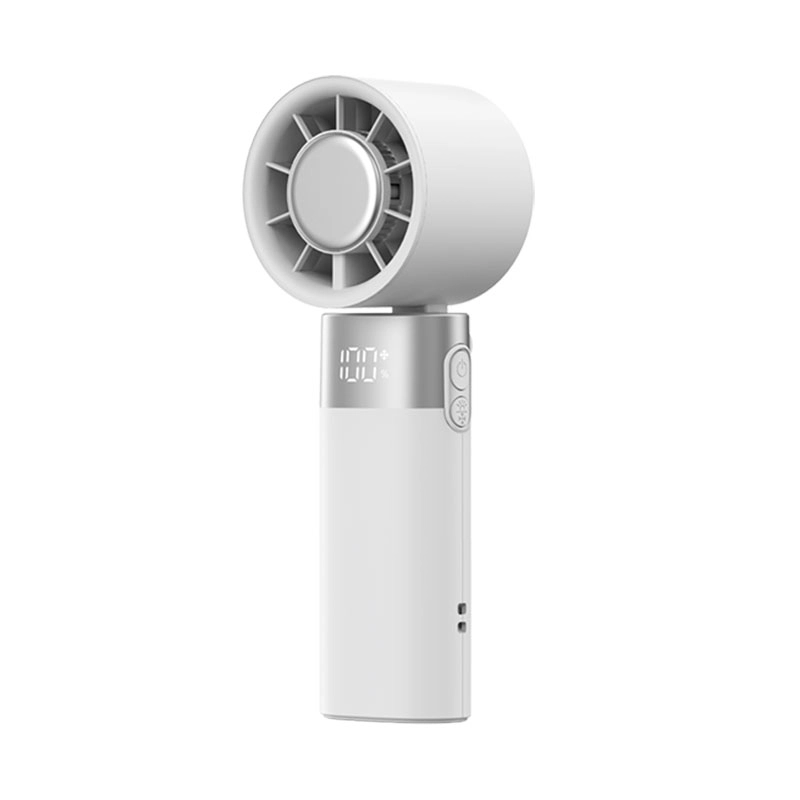
Reliable Handheld Cooling Solution for Bulk & Corporate Purchases
This premium handheld fan is designed for high-frequency, large-volume usage, making it an ideal cooling solution for corporate procurement, promotional distribution, employee welfare programs, and retail wholesale.
With stable airflow performance, a rechargeable design, and lightweight portability, it helps businesses deliver practical comfort products with strong perceived value while maintaining cost efficiency and supply reliability.
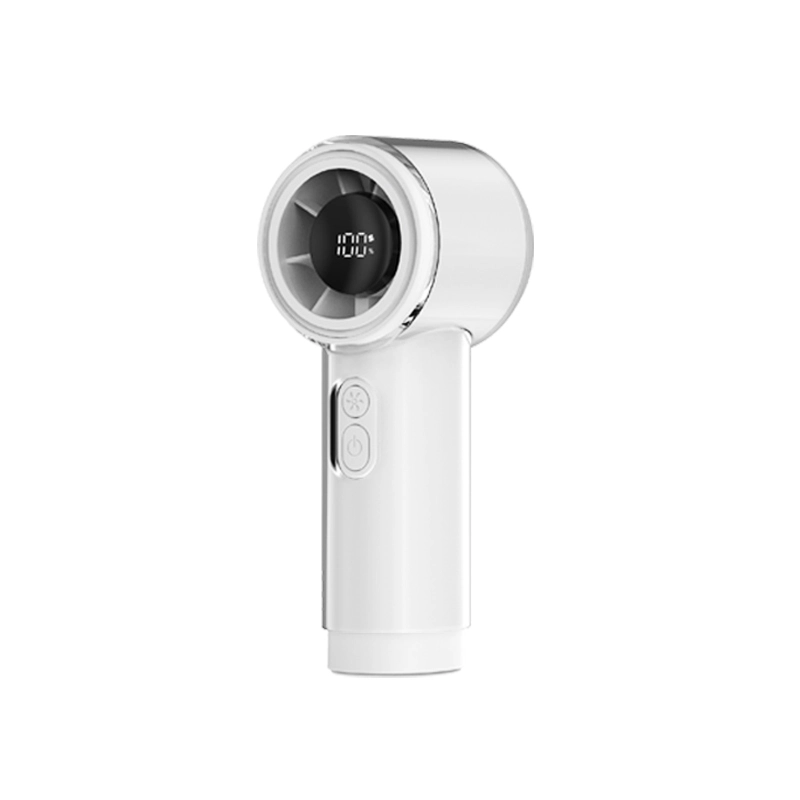
Customizable High-Speed Portable Handheld Fan FS2663
This is a high-speed, long-lasting, personalized, custom, portable cooling product specially designed for gift purchasers, cross-border e-commerce sellers, and OEM/ODM cooperation enterprises. It features (1) strong wind speed, (2) lightweight portability, (3) transparent shell design, (4) convenient carrying with a hand rope, and (5) long battery life. It helps enterprises enhance brand exposure, product differentiation competitiveness, and customer repeat purchase rate.
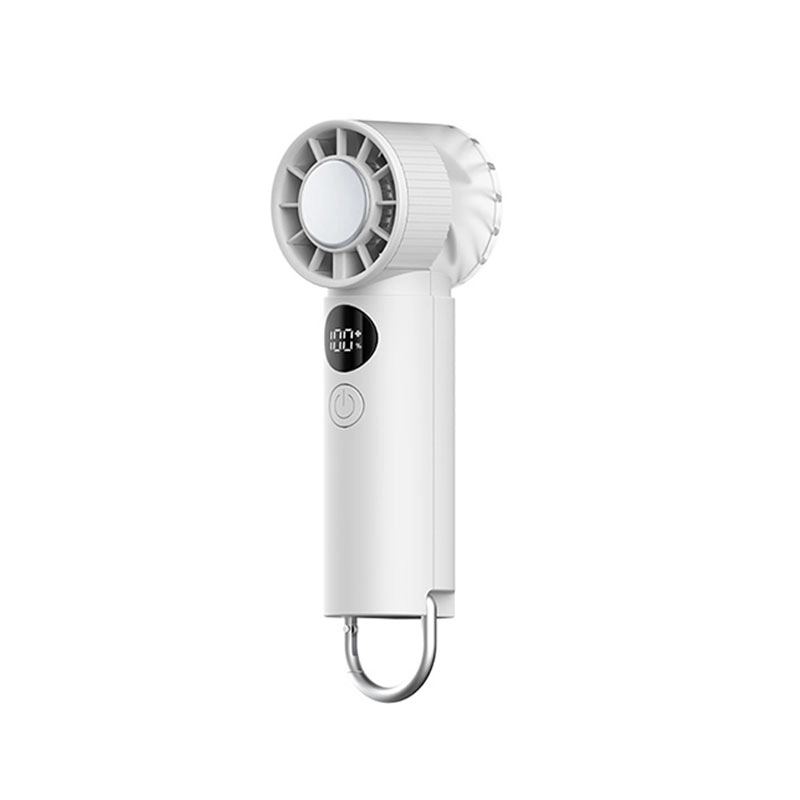
Customizable lightweight mini handheld cooling fan (with climbing hook) FS2666
A portable cooling and personalized customization product specially designed for commuters, students, the gift customization industry, and OEM/ODM buyers. It features (1) lightweight and easy portability, (2) a climbing buckle, and (3) semiconductor cooling.
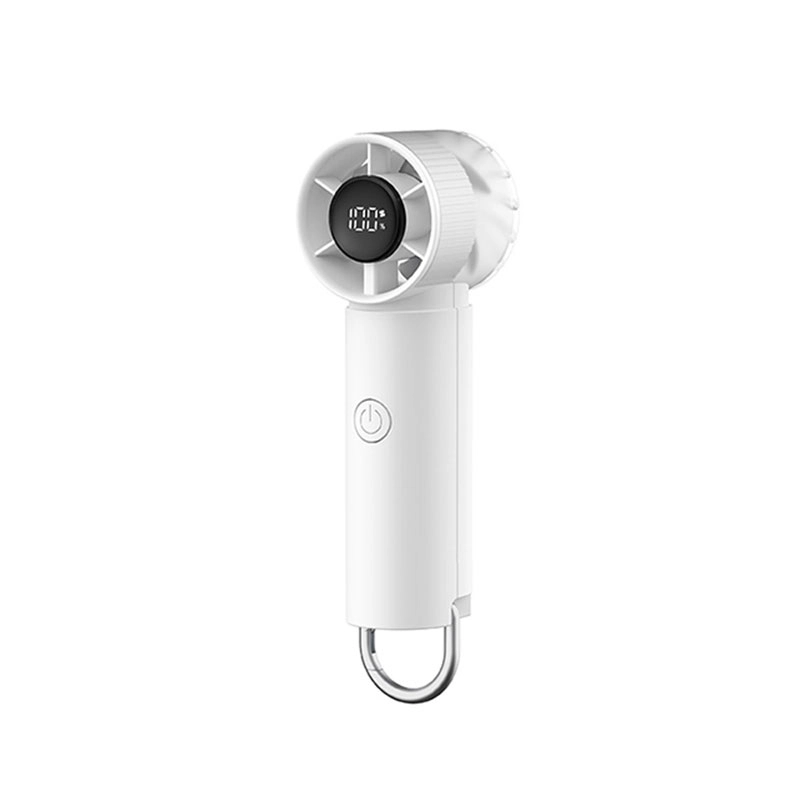
Customizable lightweight mini handheld cooling fan (with climbing hook) FS2667
This is a lightweight and portable + personalized customization product specially designed for commuters, students, the gift customization industry, and OEM/ODM buyers. It features (1) lightweight and easy portability, (2) a climbing buckle, and (3) a semi-transparent air duct design.
Start Your Custom Handheld Fans Manufacturing Project Today
If you have any comments or good suggestions, please leave us a message; later our professional staff will contact you as soon as possible.
Contact


4th Floor, Building 3, Jurong Industrial Park, No. 27-1-1, Fu'an Industrial Zone,Leliu Town (Pancun), Shunde District, Foshan City, Guangdong Province
 Scan QR Code
YouTube
Twitter
Facebook