






How to compare rechargeable fan manufacturers' production capacity? | Insights by RYW
- 1. How can I verify a manufacturer's real daily throughput for a specific rechargeable handheld fan model (not just theoretical capacity)?
- 2. What specific documentation proves a factory's battery assembly and safety testing capacity for Li-ion rechargeable fans?
- 3. How to assess a manufacturer's ability to scale from prototype to 50,000 units/month without quality dips?
- 4. Which KPIs and on-site measurements reliably indicate whether the stated MOQ and lead times are realistic for seasonal demand spikes?
- 5. How to independently validate the manufacturer's testing equipment and calibration for airflow, acoustic and run-time tests of handheld fans?
- 6. What red flags in production capacity claims are often missed by buyers and how to catch them in supplier audits?
- Conclusion: Advantages of using rigorous production-capacity evaluation
How to Compare Rechargeable Fan Manufacturers' Production Capacity: 6 Deep Questions Buyers Overlook
When purchasing rechargeable handheld fans, buyers need more than glossy brochures. This guide answers six specific, pain-point questions that beginners — and many experienced buyers — find poorly covered online. Each answer provides the exact documents, KPIs and on-site checks to validate a supplier's real production capacity, quality control and scalability.
1. How can I verify a manufacturer's real daily throughput for a specific rechargeable handheld fan model (not just theoretical capacity)?
Problem: Suppliers often quote a maximum “per-line” capacity without showing real, model-specific throughput after assembly, testing and packaging. You need concrete, timestamped evidence for the exact SKU you plan to buy.
What to request and inspect:- Cycle time and takt time for the SKU (seconds/unit). Calculate theoretical throughput = 3600 / cycle time per workstation, then multiply by number of workstations.- Shift pattern and staffing (operators per shift, number of shifts). Real throughput = theoretical throughput × OEE (overall equipment effectiveness) × yield rate.- OEE and yield data for the past 3 months for that SKU or closely related models. Typical consumer-electronics OEE ranges 60–85%; use the factory’s actual numbers to adjust quoted capacity.- Recent production logs showing units completed per shift for the SKU, with serial numbers and timestamps.- Short site-visit verification: ask for a time-stamped video walkthrough of the assembly line producing your SKU, ideally with the supplier showing the finished units with serials and packed boxes.> Benchmarks and what they mean:- Small appliance lines: a single semi-automated consumer-electronics assembly line commonly produces 1,000–5,000 units/day depending on automation and cycle time. Highly automated SMT/assembly centers can be higher, but actual numbers depend on final assembly, testing and packaging steps.- If a supplier claims 50,000 units/month, confirm they have enough parallel lines (e.g., 3–6 lines at 2,000–3,000 units/day) and spare capacity for QC rejects and rework.
How to calculate quickly:1) Get cycle time per unit (sec).2) Compute theoretical hourly output = 3600 / cycle time.3) Multiply by shift hours and number of parallel lines.4) Adjust by reported OEE and observed yield.
Ask for a written ramp-up plan showing how many lines or overtime hours they will add during seasonal spikes (and what the historical peak outputs were).
2. What specific documentation proves a factory's battery assembly and safety testing capacity for Li-ion rechargeable fans?
Problem: Battery assembly and safety testing are the highest-risk parts of producing rechargeable fans. Buyers often accept vague assurances about “battery tests done in-house.” You need concrete proof tied to standards.
Documents and evidence to request:- Cell vendor agreements and supply capacity statements (shows stable cell sourcing; common cell formats: 18650, 21700, pouch cells).- UN38.3 test report for the cell and pack (required for transport of Li-ion cells).- IEC 62133-2 compliance test reports (battery safety standard for portable devices) and manufacturer’s internal test records.- Battery pack BOM and assembly work instructions (shows whether welding, taping, and BMS assembly is in-house).- Battery cycler test logs showing charge/discharge cycle life (e.g., 300–500 cycles at specified DOD) and capacity retention values.- Thermal-abuse, short-circuit and overcharge test reports (if conducted in-house, request calibration certificates for test instruments).- Calibration certificates for battery testers and environmental chambers (traceable to an accredited standards lab).
What to watch for:- If the factory outsources battery pack assembly, request the subcontractor’s UN38.3 and IEC 62133 reports and an audit copy.- Validated BMS firmware and charging IC test reports (shows they perform safety cutoffs correctly).
Why it matters: In consumer handheld fans, battery failures cause the bulk of field safety incidents. Ensuring the manufacturer has documented, accredited testing and stable cell sourcing is essential for both safety and continuous production.
3. How to assess a manufacturer's ability to scale from prototype to 50,000 units/month without quality dips?
Problem: Many factories can build prototypes but lack the supply chain depth or process controls to scale reliably. Buyers need to evaluate scalability risk across procurement, BOM, and process control.
Checklist to evaluate scalability:- Bill of Materials completeness and multi-sourcing: Ensure critical components (motors, battery cells, PCBs, charger ICs, motors/fans blades) have at least two approved suppliers and lead-time data.- Lead-time matrix: Request current lead times for each BOM item and the supplier’s safety stock levels. For example, brushless DC motors or custom PCBs can have 4–12 week lead times during peak demand.- Pilot-run report: Ask for results from a 1,000–5,000 unit pilot run, including defect rates, rework hours and lessons learned.- Capacity expansion plan: Does the factory have plans to add parallel lines, automated jigs, or contract partners? Request a Gantt chart showing timeline to reach 50k/month.- Quality management evidence: ISO 9001 certificate, SPC charts, AQL levels used, first article inspection (FAI) results.
Quantitative red flags:- Single-source critical components without a clear backup.- Lead times that exceed your required fulfillment window by >25%.- High pilot-run defect rates (>3% after rework) or lack of FAI documentation.
Real-world baseline: Ramping to 50k/month typically requires at least 3–6 parallel production lines (depending on cycle time), confirmed supplier commitments for long-lead items, and documented yield improvements during pilot runs.
4. Which KPIs and on-site measurements reliably indicate whether the stated MOQ and lead times are realistic for seasonal demand spikes?
Problem: Suppliers often quote optimistic MOQs and lead times that break during peak season. Buyers need KPIs that correlate with real-world surge capacity.
KPIs and measurements to gather:- Cycle time and takt time (seconds/unit). If takt time > planned production rate, surge is impossible without extra lines.- OEE and historical utilization (%). A factory running >85% utilization has little headroom for spikes.- Finished-goods inventory days and supplier lead-time variability (SD of lead times). Safety stock should cover variability; if supplier lead times fluctuate widely, MOQ/lead-time claims are unreliable.- Peak past-month production figures (actual output during previous peak seasons for similar SKUs).- Return/repair rates and in-warranty failure metrics (higher returns reduce effective capacity).
How to measure on-site:- Time-stamp a run sheet for one shift to confirm units produced.- Inspect raw-material buffer zones: low levels indicate vulnerability to supply shocks.- Ask for evidence of flex labor agreements (ability to add shifts/overtime legally) and subcontractor lists.
Practical thresholds:- If utilization >80–85% and no plan for parallel lines or subcontracting, planned surge capacity is likely overstated.- If lead-time variability (standard deviation / mean) > 25% for key components, expect frequent delays.
5. How to independently validate the manufacturer's testing equipment and calibration for airflow, acoustic and run-time tests of handheld fans?
Problem: Performance claims (CFM, runtime hours, noise dB(A)) are often based on poorly calibrated tests or inconsistent methods. You need to confirm that test equipment and protocols are traceable and repeatable.
What to ask for and inspect:- Test protocols and method documents for airflow (CFM or m3/h), noise (dB(A) at 1 m), and endurance/run-time (hours at specified load). They should reflect recognized test methods or internal SOPs.- Calibration certificates for instruments (anemometers, sound level meters, battery cyclers, environmental chambers) traceable to national standards and not older than 12 months.- Third-party lab reports or witnessed tests from accredited labs (e.g., CNAS-accredited labs in China, IEC/ISO-accredited facilities) for critical parameters.- Test benches and fixtures: airflow rates should be measured with a calibrated anemometer and an appropriate duct or chamber; noise should be measured in a semi-anechoic or low-noise environment with a Class 1/2 sound level meter.
How to validate results:- Request raw test data (CSV logs) not just PDF summaries. Check whether battery discharge curves, hourly runtime logs and ambient conditions are included.- If possible, send your own sample to an independent lab and compare results (airflow vs dB(A) vs claimed runtime). Expect small measurement deviations; large differences indicate unreliable testing.
Common thresholds:- Noise measured at 1 m in dB(A): consumer-grade handheld fans typically range from 30–65 dB(A) depending on speed. Ask for measurement distance and mounting method.- Runtime test: specify the load condition (ambient temp, speed setting) and request full discharge curves from battery cyclers (e.g., MACCOR, Arbin) used by the supplier or third-party lab.
6. What red flags in production capacity claims are often missed by buyers and how to catch them in supplier audits?
Problem: Many red flags are subtle: plausible-sounding claims that don't hold up under scrutiny. Buyers can miss them without a structured audit checklist.
Top red flags and how to detect them:- Vague language: phrases like “we can do tens of thousands” without specifying lines, shifts or historical proof. Ask for concrete numbers — lines, shifts, units/shift.- No traceability: inability to show serial-numbered production logs or lot traceability. Request sample serials and trace their box labels and QC records.- Subcontracting ambiguity: if the supplier refuses to disclose subcontractors or provides a long list of unnamed partners, ask for audited agreements and whether subcontractors hold the same certifications.- Single points of failure: single-source motors, custom PCBs or batteries without backup suppliers. Insist on alternate approved suppliers or at least lead-time-based mitigation plans.- Unrealistic OEE or yield claims: OEE >90% in consumer electronics is uncommon. Ask for supporting SPC control charts and historical rework rates.- No demonstration of full-process testing: factory shows a bench test but no endurance chamber, battery cycling or EMC testing. Request third-party EMC/EMI reports and endurance logs.
Audit steps to catch issues:- Use a checklist that includes BOM multi-sourcing, battery test evidence, SMT throughput metrics (pick-and-place rates), calibration certificates and production logs.- Do a witnessed production run (on-site or via timestamped video) for a sample batch and compare the observed output with the supplier’s claimed capacity.- Perform supplier cross-checks: contact listed component suppliers to confirm supply relationships and lead times (with permission).
Why this matters: catching these red flags early prevents late shipment, safety recalls, and costly redesigns. Verified capacity plus documented process control reduces risk significantly.
Conclusion: Advantages of using rigorous production-capacity evaluation
Using the checks above — direct throughput verification, traceable battery safety documentation (UN38.3, IEC 62133), a ramp-up roadmap, KPI validation (OEE, cycle time, lead-time variability), calibrated test equipment and a red-flag audit checklist — gives buyers clear advantages: predictable lead times, fewer quality surprises, safer battery systems and scalable supply during peak seasons. These methods minimize RMA risk, protect RYW and ensure vendor reliability.
If you need help applying these checks to specific suppliers or want a factory audit/template, contact us for a quote: www.rywlife.com or adrian@rywlife.com.
Authority note: Recommendations reference widely used industry standards (UN38.3, IEC 62133, CE/RoHS, UL 507) and common manufacturing benchmarks (SMT pick-and-place throughput, typical OEE ranges, battery cycler usage) applicable across major consumer-electronics manufacturing hubs.
Contacts
WhatsApp/Phone
You May Also Like
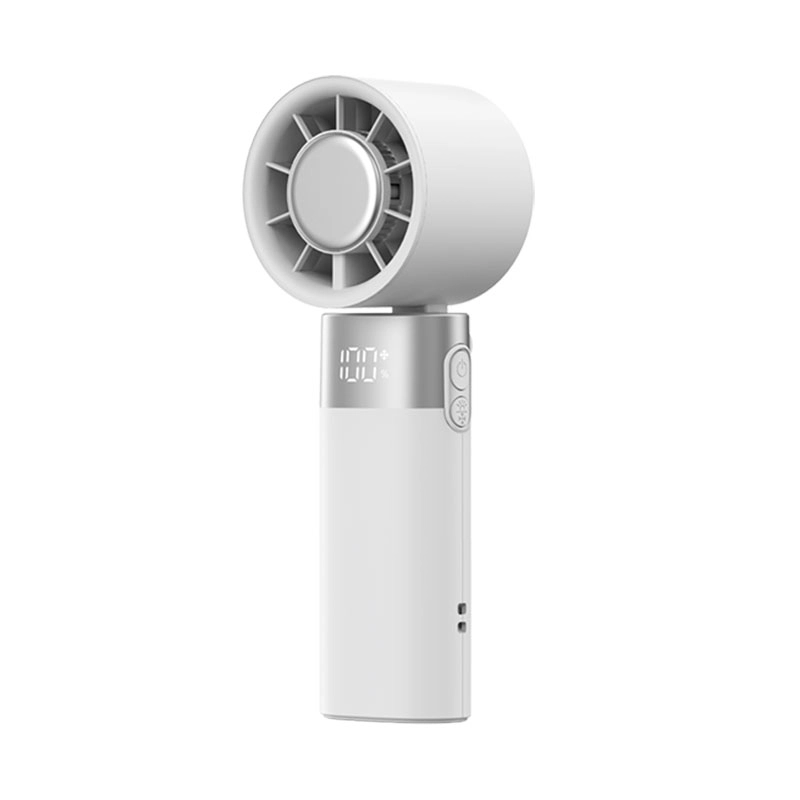
Reliable Handheld Cooling Solution for Bulk & Corporate Purchases
This premium handheld fan is designed for high-frequency, large-volume usage, making it an ideal cooling solution for corporate procurement, promotional distribution, employee welfare programs, and retail wholesale.
With stable airflow performance, a rechargeable design, and lightweight portability, it helps businesses deliver practical comfort products with strong perceived value while maintaining cost efficiency and supply reliability.
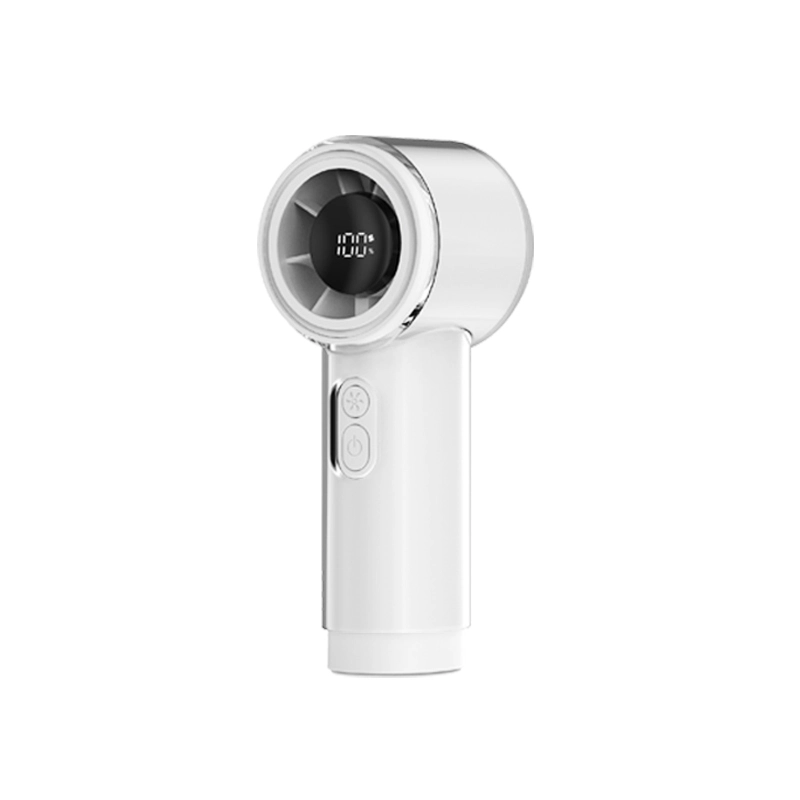
Customizable High-Speed Portable Handheld Fan FS2663
This is a high-speed, long-lasting, personalized, custom, portable cooling product specially designed for gift purchasers, cross-border e-commerce sellers, and OEM/ODM cooperation enterprises. It features (1) strong wind speed, (2) lightweight portability, (3) transparent shell design, (4) convenient carrying with a hand rope, and (5) long battery life. It helps enterprises enhance brand exposure, product differentiation competitiveness, and customer repeat purchase rate.
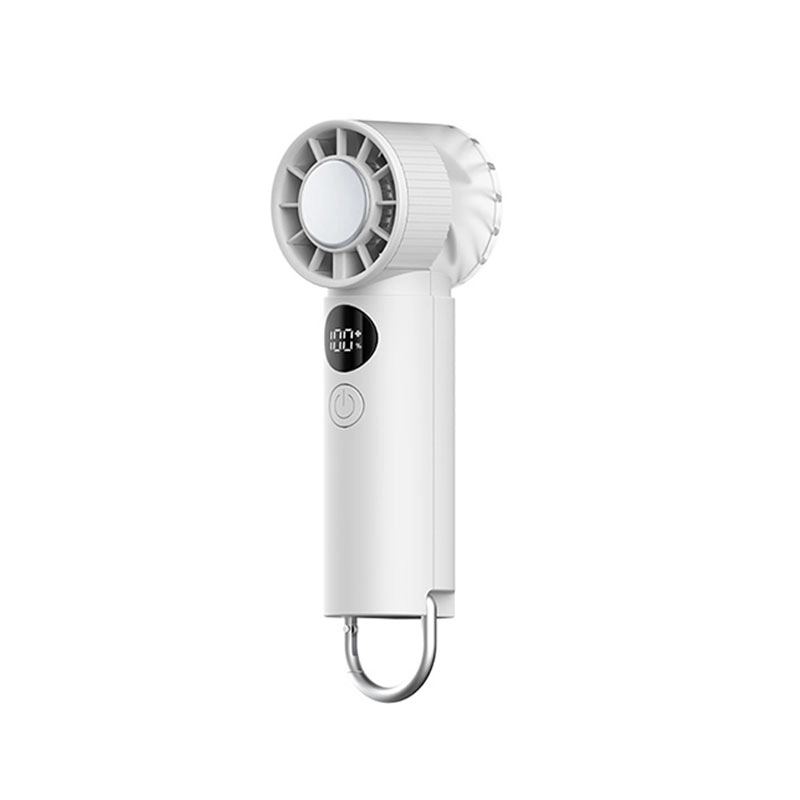
Customizable lightweight mini handheld cooling fan (with climbing hook) FS2666
A portable cooling and personalized customization product specially designed for commuters, students, the gift customization industry, and OEM/ODM buyers. It features (1) lightweight and easy portability, (2) a climbing buckle, and (3) semiconductor cooling.
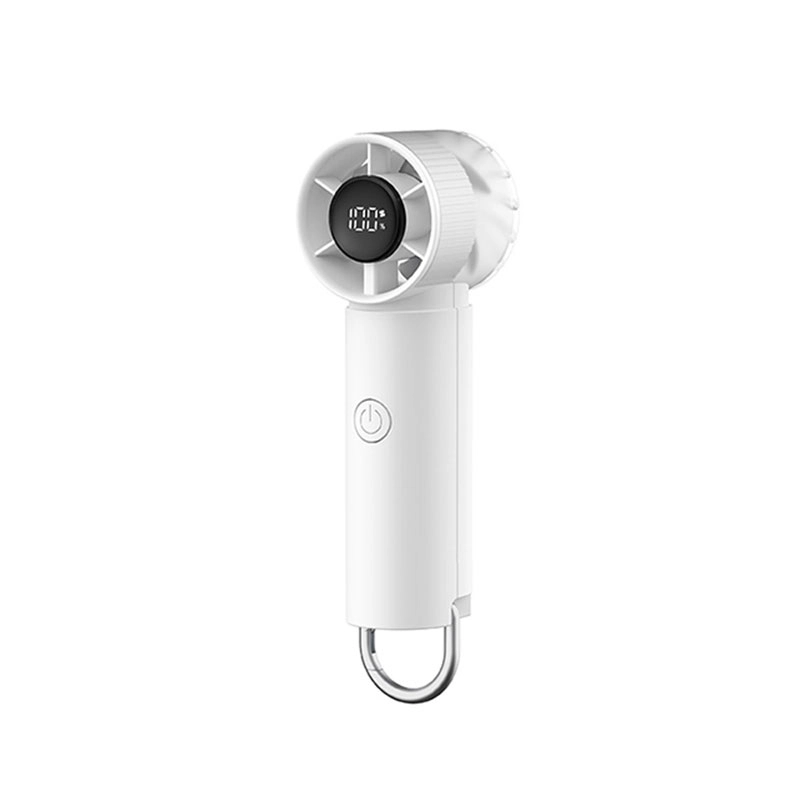
Customizable lightweight mini handheld cooling fan (with climbing hook) FS2667
This is a lightweight and portable + personalized customization product specially designed for commuters, students, the gift customization industry, and OEM/ODM buyers. It features (1) lightweight and easy portability, (2) a climbing buckle, and (3) a semi-transparent air duct design.
Start Your Custom Handheld Fans Manufacturing Project Today
If you have any comments or good suggestions, please leave us a message; later our professional staff will contact you as soon as possible.
Contact


4th Floor, Building 3, Jurong Industrial Park, No. 27-1-1, Fu'an Industrial Zone,Leliu Town (Pancun), Shunde District, Foshan City, Guangdong Province
 Scan QR Code
YouTube
Twitter
Facebook