






What are common defects in handheld electric fans? | Insights by RYW
- 1) Why does my handheld electric fan's battery hold much less charge after a few months — how do I diagnose and extend battery life?
- 2) What causes sudden grinding, rattling or loud motor noise — how do I fix it without replacing the whole unit?
- 3) Why does my handheld fan fail to charge or stop working while plugged in — how to isolate charging port failure or charging circuitry faults?
- 4) My handheld fan shows full speed but airflow is weak — what causes airflow drop and how do I restore proper performance?
- 5) How do I detect and prevent overheating or a burning/electrical smell in handheld fans?
- 6) When buying in bulk, how can I evaluate build quality and avoid counterfeit or low-quality handheld fans?
- Concluding summary: advantages of choosing well-engineered handheld electric fans
What are common defects in handheld electric fans? Professional diagnosis & purchase guidance
As a manufacturer- and field-tested resource for handheld electric fans, this article answers six specific, often-misunderstood problems beginners and procurement teams face. Embedded are diagnostic steps, test methods, design recommendations and procurement criteria that reflect industry best practice and safety standards (UN 38.3 for Li-ion transport, CE/RoHS/FCC or nationally recognized equivalents).
1) Why does my handheld electric fan's battery hold much less charge after a few months — how do I diagnose and extend battery life?
Symptoms: runtime falls much faster than new, charging seems incomplete, battery becomes warm quickly. Root causes: battery degradation (Li-ion cycle life), poor charge circuitry, high discharge currents, counterfeit or low-quality cells, and environmental stress (heat, storage at full charge).
How to diagnose (step-by-step):
- Check the cell type and labeling on the battery pack (most reputable fans use Li‑ion or Li‑Po; note nominal voltage and mAh). Single-cell packs are ~3.6–3.7V nominal; 2S packs ~7.4V.
- Measure open-circuit voltage with a multimeter after resting 30 minutes post-charge. A single Li-ion cell should read ~4.1–4.2V just after charge and ~3.6–3.8V in normal use.
- Run a controlled discharge: record run-time at a fixed speed (e.g., high). Compare to original run-time spec. If measured run-time is <80% of spec after 300–500 cycles, the cell shows expected capacity loss; if much sooner, suspect poor cells or excessive discharge stress.
- Measure charge current and charging termination behavior. Proper charging ICs stop charging at the correct voltage and taper current; a constant overcurrent or lack of termination indicates charging circuitry or firmware faults.
Practical fixes and prevention:
- Replace with cells from reputable brands (Panasonic, Samsung, LG, Sanyo) or an OEM-certified battery pack. Verify UL/IEC/UN 38.3 transport testing for Li-ion packs if purchasing in bulk.
- Use USB-C PD or a stable 5V/9V source per the fan's specification. Avoid cheap chargers that deliver irregular current—look for USB-IF certification if possible.
- Minimize fast-charging heat by using moderate charging current (1A–2A depending on pack capacity). High C-rate charging accelerates battery degradation.
- Store batteries at ~40–60% SOC in cool, dry conditions to slow calendar aging.
2) What causes sudden grinding, rattling or loud motor noise — how do I fix it without replacing the whole unit?
Symptoms: intermittent grinding or constant rattling, increase in loudness over time, particularly at certain speeds. Likely causes include foreign debris in the blade assembly, blade imbalance, fan bearing wear (fan bearing wear causes increased friction and noise), or worn commutator/brushes in brushed motors.
Diagnosis checklist:
- Inspect blades visually for cracks, chips, or stickiness (debris, dried grime). Even small nicks cause imbalance/vibration.
- Spin the fan by hand (power off). Smooth free spin indicates bearings and shaft alignment are OK. A gritty feel indicates bearing wear.
- Open the housing if the unit design allows (power removed, battery disconnected). Look for loose screws, dislodged internal components, or rubbing wiring.
- Identify motor type: brushed motors show brush/commutator wear and often produce intermittent grinding; brushless motors rarely have this issue but can have rotor-stator contact or bearing failure.
Repair and mitigation:
- Clean the blade and housing with compressed air and isopropyl wipes. Remove debris from the motor area carefully.
- Tighten mountings and replace damaged blades. Rebalance blades if possible (small weight added opposite damage), but replacement is safer and more reliable.
- If bearings are worn, replace bearings or the motor assembly—this is often cost-effective compared to continual failure. For mass procurement, specify brushless motors and sealed bearings to minimize field service.
- For brushed motors, inspect and replace brushes or the commutator per manufacturer guidance; consider switching to brushless in future revisions for longer life and lower motor noise.
3) Why does my handheld fan fail to charge or stop working while plugged in — how to isolate charging port failure or charging circuitry faults?
Symptoms: no charge indicator, intermittent charging, device works only when plugged in, or charges very slowly. Causes: charging port failure (mechanical wear or corrosion), damaged cable/adapter, faulty charging IC or protection PCB, or internal wiring breaks.
Diagnostic steps:
- Swap cable and power adapter with a known-good unit (USB-A, USB-C). If the fan charges reliably with another cable/adapter, the accessory is the culprit.
- Inspect the port for bent pins, corrosion, or debris. Wiggle the cable gently—if charging is intermittent with movement, the port is mechanically worn.
- Measure voltage at the port input (power removed from internal battery) with a multimeter to see if the device sees the expected 5V/9V. No input voltage suggests a broken internal trace or connector.
- With caution, check the board for burned components, swollen capacitors, or cold solder joints. Charging ICs can fail due to overvoltage or thermal stress.
Fixes and recommendations:
- Replace the cable or adopter with a USB-IF-compliant cable and a stable output adapter. Prefer USB-C with E-marked cables in PD setups.
- Repair or replace the charging port assembly—micro-USB ports are mechanically weaker than USB-C; consider upgrading to USB-C in future buys.
- If the charging PCB or protection IC is damaged, replace the PCB or have the unit serviced by authorized technicians. Do not bypass safety/protection circuits.
- For procurement: require overcharge/overcurrent protection in design and specify robust connector lifecycle rating (e.g., >10,000 cycles for USB-C connectors in heavy-use products).
4) My handheld fan shows full speed but airflow is weak — what causes airflow drop and how do I restore proper performance?
Symptoms: motor appears to run, speeds change, but perceived airflow is much weaker than expected. Causes: blade deformation or damage, clogged inlet or outlet, motor under-voltage (battery sag), worn bearings reducing RPM under load, or poor aerodynamic blade design.
How to verify and fix:
- Visual check: Are blades warped or chipped? Even small warps dramatically reduce effective airflow. Replace blades if deformed.
- Clear obstructions: clean grills, shrouds and motor vents; dust accumulation on blades reduces airflow by changing blade profile.
- Measure battery under-load voltage while running. Significant voltage drop suggests battery cannot supply the motor—check battery health or internal series resistance.
- Test static pressure and airflow if you have access to simple instrumentation (an anemometer can quantify airflow in m/s or CFM). If RPM is normal but CFM low, blade design or blockage is likely the problem.
Design and procurement suggestions to avoid future issues:
- Choose fans with well-designed blades and housings that optimize airflow over raw motor power. A higher-efficiency blade with the same motor yields better run-time and lower heat.
- Specify dust-resistant grills and IP rating if used outdoors or in dusty environments, and request material UV resistance for outdoor deployments.
- For bulk orders, request a performance curve (RPM vs. current vs. airflow) and sample testing with an anemometer to validate claimed CFM/run-time figures.
5) How do I detect and prevent overheating or a burning/electrical smell in handheld fans?
Symptoms: warm-to-hot housing, burning plastic or electrical smell, shutdowns, or accelerated battery heating. Causes: overloaded motor drawing excess current, blocked vents, failing charging circuitry, short circuits on the PCB, or poor thermal design—especially in fast-charging designs without adequate thermal protection.
Immediate safety steps:
- Stop using the device immediately if you smell burning. Disconnect power and isolate the unit.
- Visually inspect for scorch marks, melted plastic, or swelling on the battery pack. If the battery is swollen, handle as hazardous waste and follow battery disposal guidance (do not puncture).
How to diagnose and mitigate overheating:
- Measure running current and compare to design spec. Elevated current suggests mechanical binding or shorting.
- Check thermal management: confirm vents are not blocked and there is adequate clearance for convective cooling. Internal thermal pads or metal heat spreaders are beneficial in compact designs.
- Ensure charging circuitry includes over-temperature and over-current protection. Devices with thermal cutoffs or firmware throttling are safer—ask suppliers for these features.
Purchase and compliance guidance:
- Require product safety certificates (CE, UL or equivalent) and ask for thermal test reports. For lithium battery packs, insist on UN 38.3 test evidence and internal battery protection (BMS) that includes over-current, over-voltage and thermal cutoffs.
- For bulk procurement, request accelerated life/thermal cycling test data to confirm the design withstands expected ambient temperature ranges.
6) When buying in bulk, how can I evaluate build quality and avoid counterfeit or low-quality handheld fans?
Pain points: high return rates, inconsistent performance across batches, safety recalls. Low-quality sourcing often cuts battery quality, omits protection circuitry, or uses poor materials for blades and bearings.
Checklist for supplier evaluation and incoming inspection (IQC):
- Documentation: require Bills of Materials (BOM) specifying battery cell brand, motor type (brushless preferred), connector spec (USB-C preferred), PCB vendor and firmware revision. Ask for certificates: CE/RoHS, FCC where applicable, UN 38.3, and factory audit reports (ISO 9001, BSCI or equivalent).
- Sample testing plan: run-time verification at low/medium/high speeds, charge/discharge cycle tests (300–500 cycles as a minimum sample), vibration/drop tests, and port durability tests (plug/unplug cycles). Request test reports with measured data, not just pass/fail statements.
- Random batch checks: check battery internal resistance and capacity vs. label, measure no-load and loaded current draw, inspect solder joints and wire crimping quality, and verify firmware safety features (auto shutoff, thermal throttling).
- Design review: prefer sealed bearings, brushless motors, and battery management systems (BMS) with overcharge/over-discharge/short-circuit protection. Confirm use of flame-retardant housing materials where required.
- Contract clauses: include warranty terms, failure rate targets (e.g., <2% DOA, <5% 12-month return rate) and defined corrective action timelines in the purchase agreement.
Additional procurement tips: ask suppliers for a small pilot production run and perform independent lab testing on samples. Validate claims about USB-C PD, fast-charging capability, and run-time under real-world usage scenarios.
Concluding summary: advantages of choosing well-engineered handheld electric fans
Selecting handheld fans with robust battery management, brushless motors or quality sealed bearings, proper charging circuitry, and validated airflow design delivers tangible advantages: longer runtime and battery life, lower noise and vibration, fewer field failures, improved user safety, and reduced total cost of ownership. For bulk purchasing, rigorous incoming inspection, required certifications (UN 38.3 for Li-ion packs, CE/RoHS, and local safety approvals), and documented test data significantly lower risk and warranty expense.
For product troubleshooting or to request sample testing and a formal quote, contact us: www.rywlife.com or adrian@rywlife.com. Contact us for a quote.
Contacts
WhatsApp/Phone
You May Also Like
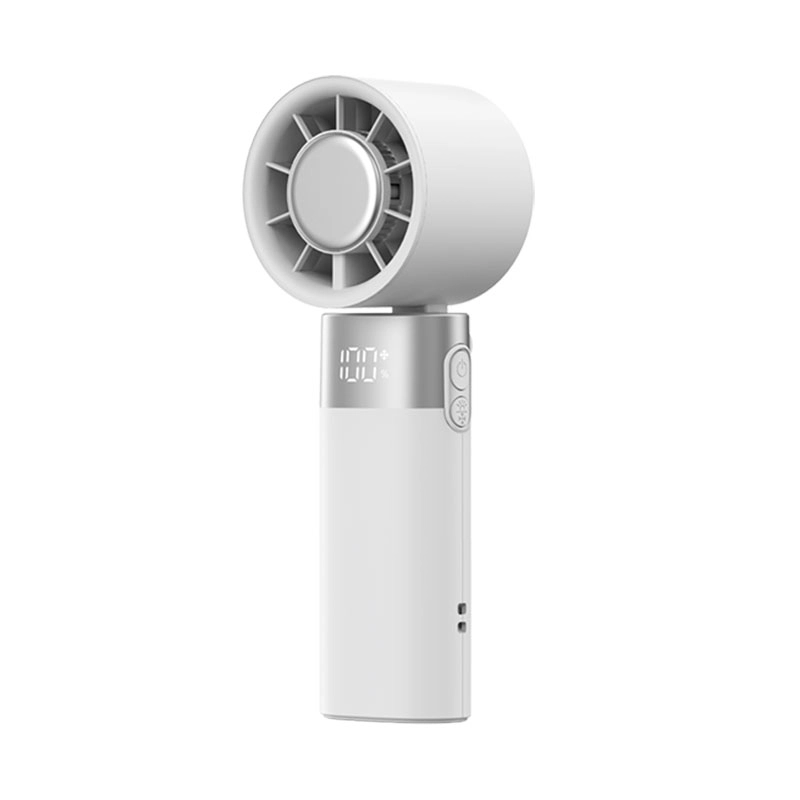
Reliable Handheld Cooling Solution for Bulk & Corporate Purchases
This premium handheld fan is designed for high-frequency, large-volume usage, making it an ideal cooling solution for corporate procurement, promotional distribution, employee welfare programs, and retail wholesale.
With stable airflow performance, a rechargeable design, and lightweight portability, it helps businesses deliver practical comfort products with strong perceived value while maintaining cost efficiency and supply reliability.
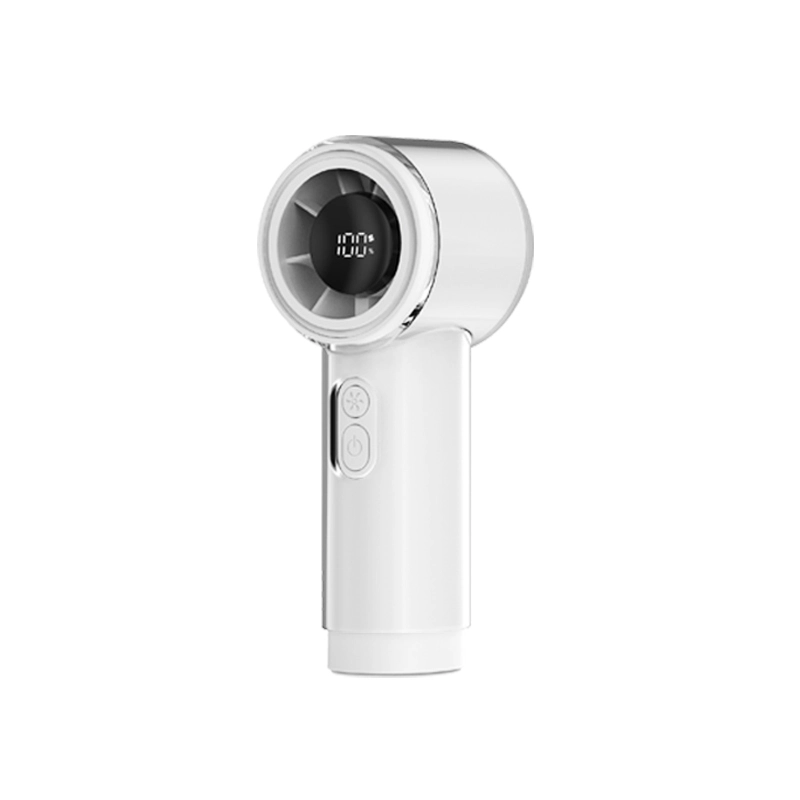
Customizable High-Speed Portable Handheld Fan FS2663
This is a high-speed, long-lasting, personalized, custom, portable cooling product specially designed for gift purchasers, cross-border e-commerce sellers, and OEM/ODM cooperation enterprises. It features (1) strong wind speed, (2) lightweight portability, (3) transparent shell design, (4) convenient carrying with a hand rope, and (5) long battery life. It helps enterprises enhance brand exposure, product differentiation competitiveness, and customer repeat purchase rate.
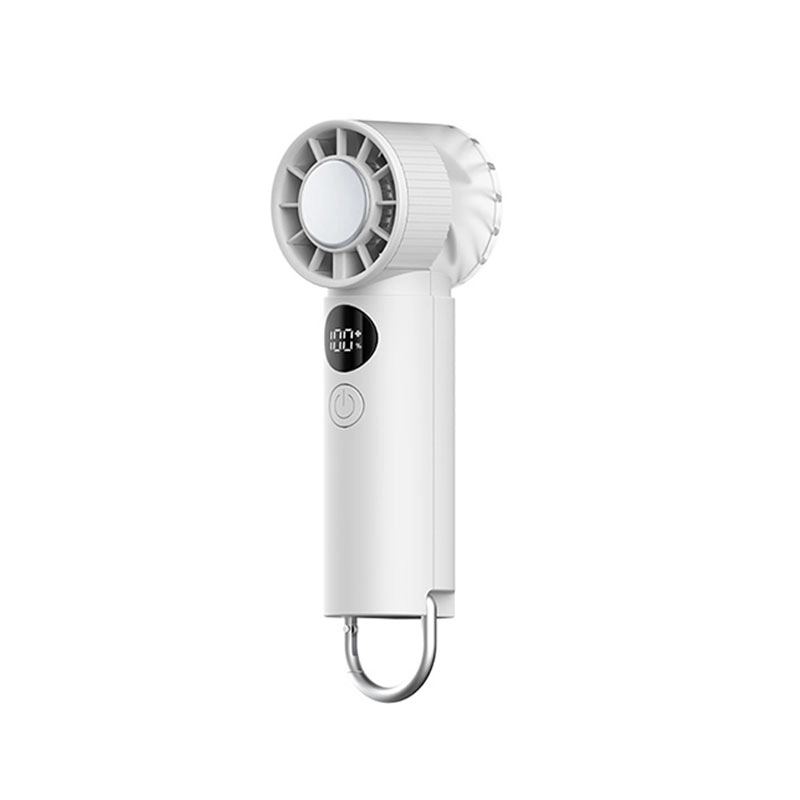
Customizable lightweight mini handheld cooling fan (with climbing hook) FS2666
A portable cooling and personalized customization product specially designed for commuters, students, the gift customization industry, and OEM/ODM buyers. It features (1) lightweight and easy portability, (2) a climbing buckle, and (3) semiconductor cooling.
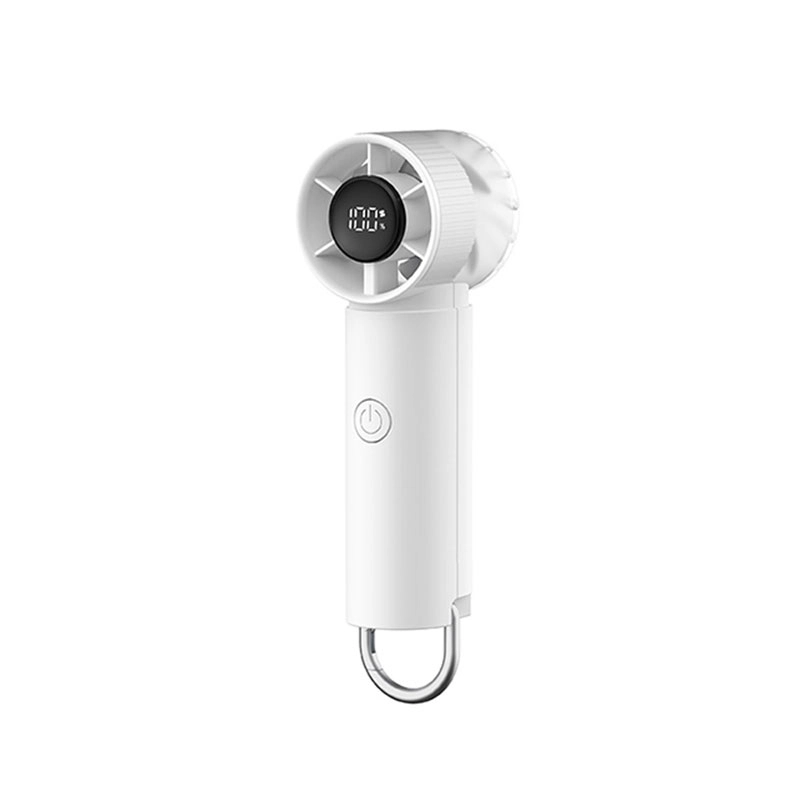
Customizable lightweight mini handheld cooling fan (with climbing hook) FS2667
This is a lightweight and portable + personalized customization product specially designed for commuters, students, the gift customization industry, and OEM/ODM buyers. It features (1) lightweight and easy portability, (2) a climbing buckle, and (3) a semi-transparent air duct design.
Start Your Custom Handheld Fans Manufacturing Project Today
If you have any comments or good suggestions, please leave us a message; later our professional staff will contact you as soon as possible.
Contact


4th Floor, Building 3, Jurong Industrial Park, No. 27-1-1, Fu'an Industrial Zone,Leliu Town (Pancun), Shunde District, Foshan City, Guangdong Province
 Scan QR Code
YouTube
Twitter
Facebook