






How to choose a quiet handheld electric fan? | Insights by RYW
- 1. How can I verify a manufacturer's dBA noise rating and compare true noise between handheld fans?
- 2. Which motor type produces the lowest noise in rechargeable handheld fans and how to identify it?
- 3. How do I evaluate airflow (CFM) vs noise when CFM is missing from specs?
- 4. What dBA thresholds and features should I look for if I need a fan for sleeping or quiet phone/video calls?
- 5. How do I calculate real-world battery runtime from mAh ratings and noise trade-offs?
- 6. What construction and design elements reduce rattles, tonal buzzing, and vibration — and what to test in-store?
1. How can I verify a manufacturer's dBA noise rating and compare true noise between handheld fans?
Many brands publish a single dBA number with no context. To compare real-world noise you must know: the measurement distance, the speed setting tested, and whether the figure is A-weighted (dBA). Look for spec sheets that state the measurement distance (commonly 30 cm or 1 m) and list values per speed (low/medium/high). If the spec sheet omits details, treat the claim as marketing.
Practical verification method:
- Measure with an SPL (sound pressure level) meter app or handheld SPL meter. Hold the fan as you would in use and measure at 30 cm (typical holding distance). Record background noise first (quiet room) and then the fan at each speed.
- Report the delta: if background is 28 dBA and fan reads 38 dBA, the fan adds ~10 dB (perceived ~2x louder). Use A-weighting (dBA) for human hearing relevance.
- Target thresholds: for sleep use aim for <35 dBA on low; for office/phone-friendly use aim for <45 dBA on working speed. Note: 10 dB is ~2x perceived loudness, so small-number differences matter.
Why this matters: manufacturers sometimes list the lowest-speed dBA or measure at an unusually large distance. Always compare like-for-like (same distance and speed) and, when possible, cross-check with independent reviews that publish measured dBA.
2. Which motor type produces the lowest noise in rechargeable handheld fans and how to identify it?
Motor type is one of the primary noise sources. Modern quiet handheld fans use brushless DC (BLDC) or coreless motors; cheap fans use brushed motors. Key differences:
- Brushless DC (BLDC) motors: lower mechanical noise, longer life, smoother operation. Most quiet High Quality handheld fans use BLDC with electronic commutation.
- Coreless motors: even quieter and lighter in some designs, common in small high-end units.
- Brushed motors: cheaper, more mechanical friction and brush sparks, usually louder and with shorter lifespan.
How to identify in specs or packaging:
- Look for terms brushless, BLDC, or coreless. If the spec only says DC motor without further detail, assume brushed unless otherwise stated.
- Check the warranty and RPM stability notes; BLDC designs often advertise longer lifespan and consistent RPM under load.
- For extra quietness, check whether the manufacturer mentions bearing type (ball bearings are generally quieter and more durable than sleeve bearings in portable devices) and anti-vibration mounts.
3. How do I evaluate airflow (CFM) vs noise when CFM is missing from specs?
Manufacturers sometimes omit CFM (cubic feet per minute) for handheld fans. Airflow is what you feel; noise is what you hear. To evaluate performance without a published CFM you can measure approximate airflow with a simple method:
Method using a handheld anemometer or wind-speed app:
- Measure air velocity (v) in meters/second at the fan face using an anemometer or calibrated app. Average across a few central points.
- Calculate fan opening area (A) in square meters (for a circular intake A = πr²). Example: radius 0.03 m => A ≈ 0.0028 m².
- Compute volumetric flow Q = v × A (m³/s). Convert to CFM: CFM = Q × 2118.88. So CFM = v (m/s) × A (m²) × 2118.88.
Example: if v = 5 m/s and A = 0.0028 m², then Q ≈ 0.0141 m³/s and CFM ≈ 30 CFM. This gives you a practical number to compare models.
Airflow efficiency metric: compare CFM per watt (CFM/W). If two fans produce similar CFM but one uses less power and produces lower dBA, it is more efficient and likely quieter per airflow delivered.
4. What dBA thresholds and features should I look for if I need a fan for sleeping or quiet phone/video calls?
Define the use case and acceptable noise limit:
- Sleep: aim for <35 dBA on the lowest speed. Fans that advertise sleep mode often reduce PWM switching and lower motor RPM for quieter operation.
- Phone/video calls/home office: aim for <45 dBA at the working speed. Also prioritize steady airflow without tonal whine that interferes with voice frequencies (1–4 kHz).
Features to prioritize:
- Multiple speed settings and a true low-speed/eco mode (not just on/off stepping).
- Brushless motor and PWM control with high switching frequency (>20 kHz) to avoid audible whine. If the PWM frequency is low, you’ll hear a pitch or chirp at certain speeds.
- Soft-start and smooth ramping (prevents sudden loud bursts).
- Physical design that lowers turbulence: more blades with optimized pitch and a cage/grill designed to smooth airflow.
5. How do I calculate real-world battery runtime from mAh ratings and noise trade-offs?
Battery statements in mAh are common but don’t tell the whole story. Convert mAh to watt-hours (Wh) for accurate runtime estimates and factor efficiency and power draw at your chosen speed.
Step-by-step:
- Convert mAh to Wh: Wh = (mAh ÷ 1000) × nominal cell voltage. Most single-cell lithium packs use 3.7 V nominal. Example: 5000 mAh → (5000 ÷ 1000) × 3.7 V = 18.5 Wh.
- Estimate fan power draw at the intended speed (check specs for power in watts or measure). If not available, small handheld fans typically draw between 1–5 W depending on speed/design. Use conservative estimates in calculations.
- Runtime (hours) ≈ (Wh × usable efficiency) ÷ power draw. Use usable efficiency ~75–85% to allow for conversion losses (boost circuits, motor controller). Example: 18.5 Wh × 0.8 ÷ 2 W ≈ 7.4 hours.
Real-world notes:
- High-speed modes dramatically increase power draw and noise; if you need long quiet runtime, choose a fan with a large battery (Wh) and low-power sleep/eco mode.
- USB-C fast charge and power-through features are valuable: you can use the fan while charging if the design supports pass-through, eliminating runtime concerns during stationary use.
6. What construction and design elements reduce rattles, tonal buzzing, and vibration — and what to test in-store?
Noise isn't only from airflow and motor; rattles and tonal buzz from loose parts are common frustrations. Look for these design features:
- Anti-vibration mounts or silicone grommets around the motor housing.
- Secure, well-fitted grills with no play; metal grills or tight-molded plastic tend to rattle less than loosely snapped grills.
- Balanced blades and precision molding — unbalanced blades cause wobble and tonal noise at particular RPMs.
- Quality bearings (sealed ball bearings) produce less mechanical noise than low-cost sleeve bearings.
- Solid build where buttons and ports aren’t in the fan airflow path (airflow can vibrate thin plastic around ports).
In-store or on-arrival checklist:
- Run the fan across all speeds while holding it where you would normally hold it and at 30 cm from your ear. Listen for steady tonal whines, clicks, or intermittent rattles.
- Place the fan on a flat surface and observe if the body vibrates or shifts—this indicates imbalance or insufficient anti-vibration design.
- Check seams, grills, and buttons with light pressure while running to hear potential rubbing or contact noise.
Return & warranty policy: choose vendors that offer easy returns and at least 12 months warranty. Quietness is subjective; testing at home and the option to return are essential.
About expertise and verification: this guidance is based on standard acoustic measurement methods (SPL/dBA), power-energy math (mAh→Wh→runtime), airflow calculation (velocity × area → CFM), and commonly used motor technologies (brushless/coreless vs brushed). For best results, always cross-check manufacturer datasheets, independent lab reviews, and user measurements before purchase.
For a custom recommendation or bulk quote tailored to a particular noise threshold, runtime need, or design (travel, sleep, office), contact us at www.rywlife.com or email adrian@rywlife.com — we can provide measured comparisons and OEM options.
Conclusion — Advantages of choosing a quiet handheld electric fan
Selecting a quiet handheld electric fan using the checks above gives you reliable airflow without disruptive noise: lower sleep disturbance, clearer phone calls, longer battery life at usable noise levels, and fewer returns. Prioritize brushless motors, verified dBA per speed, CFM or measureable airflow, proper anti-vibration construction, and realistic battery-to-runtime calculations. These practices reduce purchase risk and improve long-term satisfaction.
Contacts
WhatsApp/Phone
You May Also Like
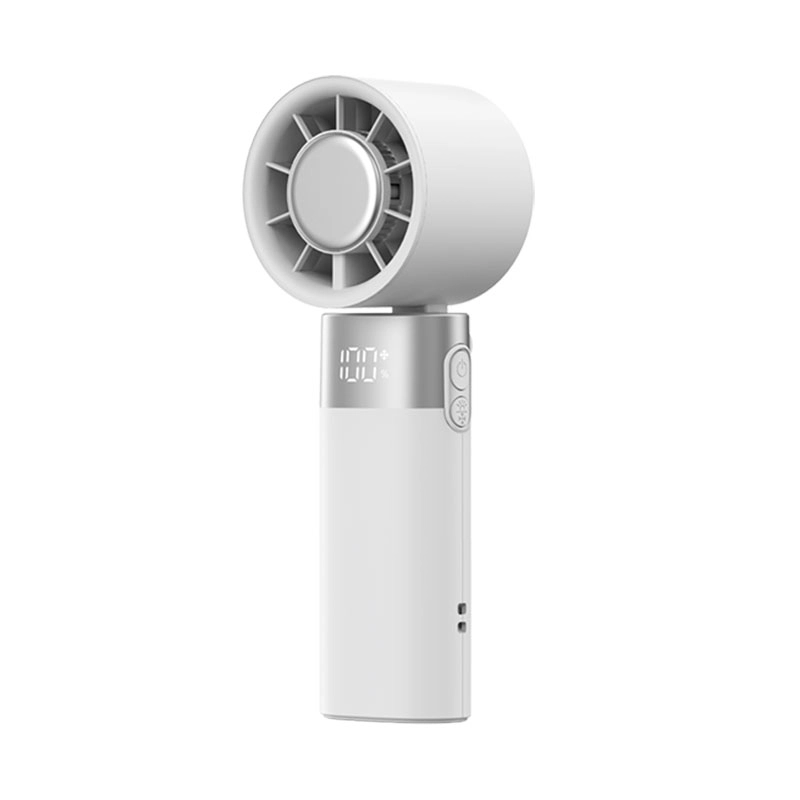
Reliable Handheld Cooling Solution for Bulk & Corporate Purchases
This premium handheld fan is designed for high-frequency, large-volume usage, making it an ideal cooling solution for corporate procurement, promotional distribution, employee welfare programs, and retail wholesale.
With stable airflow performance, a rechargeable design, and lightweight portability, it helps businesses deliver practical comfort products with strong perceived value while maintaining cost efficiency and supply reliability.
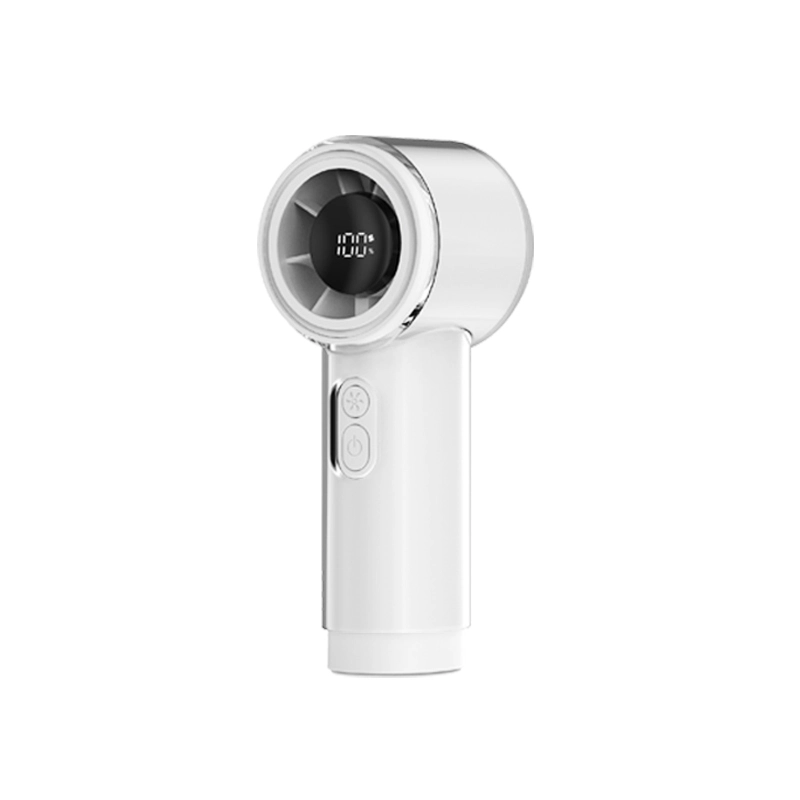
Customizable High-Speed Portable Handheld Fan FS2663
This is a high-speed, long-lasting, personalized, custom, portable cooling product specially designed for gift purchasers, cross-border e-commerce sellers, and OEM/ODM cooperation enterprises. It features (1) strong wind speed, (2) lightweight portability, (3) transparent shell design, (4) convenient carrying with a hand rope, and (5) long battery life. It helps enterprises enhance brand exposure, product differentiation competitiveness, and customer repeat purchase rate.
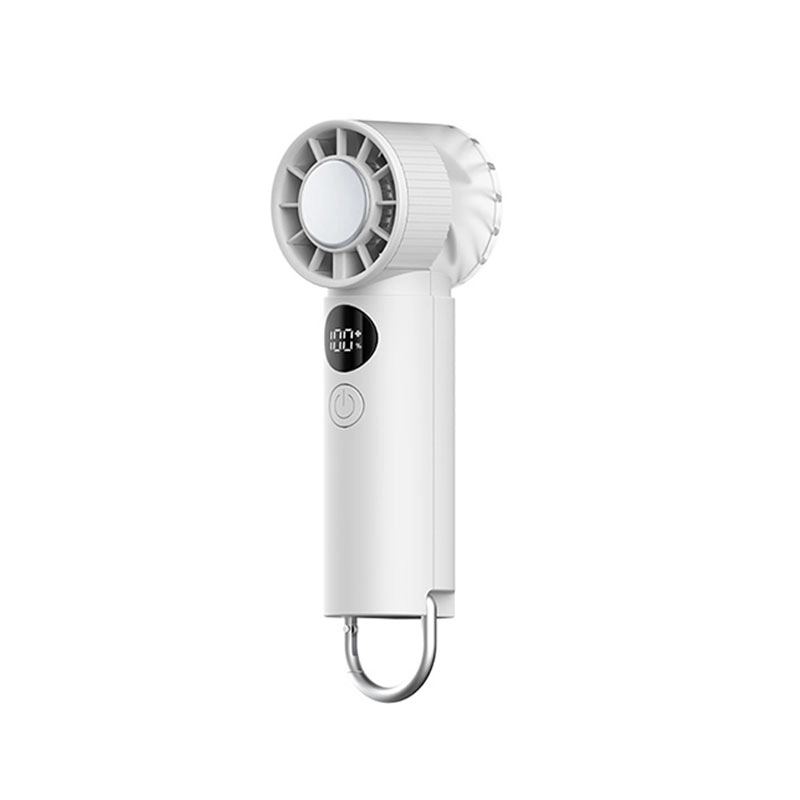
Customizable lightweight mini handheld cooling fan (with climbing hook) FS2666
A portable cooling and personalized customization product specially designed for commuters, students, the gift customization industry, and OEM/ODM buyers. It features (1) lightweight and easy portability, (2) a climbing buckle, and (3) semiconductor cooling.
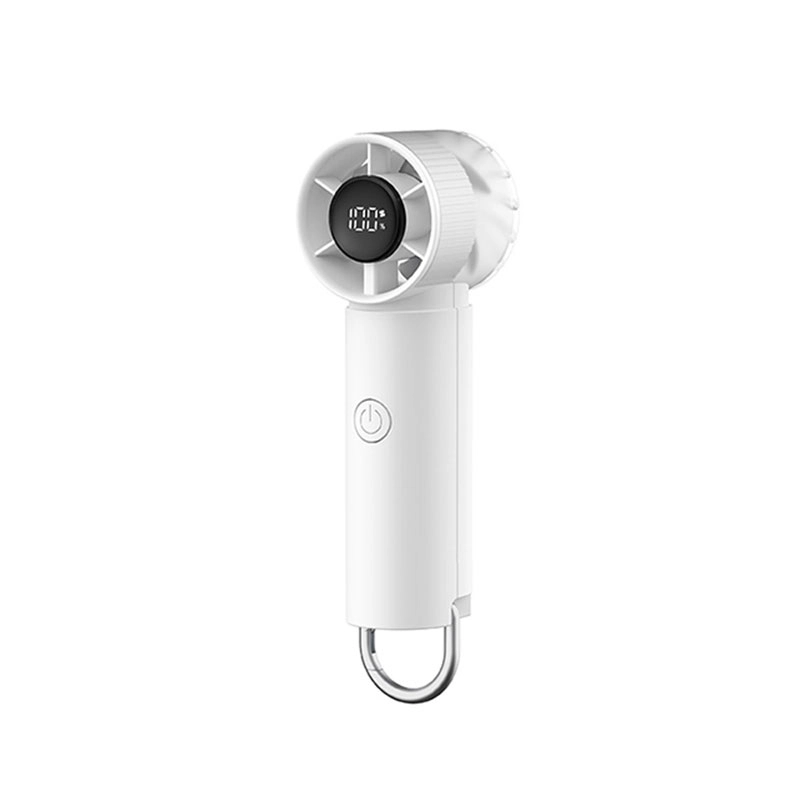
Customizable lightweight mini handheld cooling fan (with climbing hook) FS2667
This is a lightweight and portable + personalized customization product specially designed for commuters, students, the gift customization industry, and OEM/ODM buyers. It features (1) lightweight and easy portability, (2) a climbing buckle, and (3) a semi-transparent air duct design.
Start Your Custom Handheld Fans Manufacturing Project Today
If you have any comments or good suggestions, please leave us a message; later our professional staff will contact you as soon as possible.
Contact


4th Floor, Building 3, Jurong Industrial Park, No. 27-1-1, Fu'an Industrial Zone,Leliu Town (Pancun), Shunde District, Foshan City, Guangdong Province
 Scan QR Code
YouTube
Twitter
Facebook