






What charging times do manufacturers advertise for rechargeable fans? | Insights by RYW
- 1) What charging times do manufacturers typically advertise for rechargeable handheld fans with USB-C vs. micro-USB charging?
- 2) If a fan advertises 3 hours to full charge, how long will it actually take with a 5V/1A charger vs. a 5V/2A charger?
- 3) Do manufacturers’ charging times mean to 80% (fast charge) or to 100% and do spec sheets make this clear?
- 4) How does battery capacity (mAh) correlate to advertised charging times across mainstream handheld fan models?
- 5) How much do environmental and user variables (temperature, cable quality, adapter voltage drops) extend advertised charging times?
- 6) Are manufacturer-advertised charging times still reliable after 1–2 years of use — how does battery aging affect advertised charge time?
- Concluding summary: advantages of choosing rechargeable handheld fans with transparent charging specs
What charging times do manufacturers advertise for rechargeable fans?
When shopping for a rechargeable handheld fan, advertised charging times are one of the first specs shoppers notice. Yet those numbers often lack context. Below are six targeted, beginner-focused questions — each with in-depth, actionable answers based on manufacturer spec sheets, common charging protocols (USB-A/USB-C PD, QC), and battery physics — to help you evaluate real-world charge behavior and choose the right model.
1) What charging times do manufacturers typically advertise for rechargeable handheld fans with USB-C vs. micro-USB charging?
Manufacturers most commonly advertise full-charge times in ranges tied to battery capacity and the charging interface. Across mainstream models in 2024–2026 spec sheets, the advertised ranges are:
- USB-A (standard 5V/1A) models: commonly 2–4.5 hours for 1,200–3,000 mAh batteries.
- USB-A/USB-C with 5V/2A support: commonly 1.2–3 hours for 1,200–4,000 mAh batteries.
- USB-C Power Delivery (PD) or Quick Charge-enabled fans: advertised full-charge times sometimes 0.75–2 hours, or “fast: 0–80% in 30–90 minutes” when PD is used; however many handheld fans are capped by the fan’s internal charge-management IC and won’t take full PD wattage.
Why the spread? Most handheld fans use lithium-ion cells between ~1,200 and 4,000 mAh. Manufacturers state charging time assuming use of the included charger (or a stated input like 5V/2A). If the product lists USB-C PD or Quick Charge, expect shorter advertised times but verify the spec sheet: some brands advertise fast-charge capability but only up to 5–9V at limited amperage, so real-world charging may be closer to the 2A range.
2) If a fan advertises 3 hours to full charge, how long will it actually take with a 5V/1A charger vs. a 5V/2A charger?
Use this practical rule-of-thumb based on battery capacity and charging current: theoretical charging time (hours) ≈ battery capacity (mAh) / charging current (mA). Real-world charging uses a CC-CV (constant current–constant voltage) profile with 80–90% efficiency, so add ~10–25% overhead and additional CV-phase time to reach 100%.
Examples:
- 2,000 mAh fan with 5V/1A (1,000 mA) charger: theoretical 2.0 h → add 15% overhead = ~2.3 h (≈138 minutes). Manufacturers often round to 2.5–3 hours in specs.
- 2,000 mAh fan with 5V/2A (2,000 mA) charger: theoretical 1.0 h → add 15% overhead = ~1.15 h (≈69 minutes). If the fan’s charging IC limits input to 1A, expect the slower result despite the higher-rated adapter.
- 3,000 mAh fan with 2A adapter: theoretical 1.5 h → real-world ≈1.7–2.0 h; with 1A adapter → ≈3.5–4.0 h.
Key takeaway: the advertised 3 hours usually assumes a specific charger. Check the specification’s stated input (e.g., 5V⎓1A or 5V⎓2A). If you use a weaker charger, expect proportionally longer times; if the fan’s internal charge limiter is lower than your adapter, you won’t gain speed by using a higher-current adapter.
3) Do manufacturers’ charging times mean to 80% (fast charge) or to 100% and do spec sheets make this clear?
Manufacturers are inconsistent. Some quote time-to-full (100%), others emphasize fast-charge windows (e.g., 0–80% in 45 minutes). Many marketing pages omit whether the figure is 80% or 100%.
Practical points:
- Because of CC-CV behavior, reaching ~80% uses most of the delivered current and is significantly faster than the last 20%, so firms often advertise the shorter 0–80% number if they support fast charging.
- If a spec lists only a short time (e.g., 60 minutes), contact or read the manual: it may mean 0–80% under a PD adapter, not a 100% charge time.
- Independent lab testing typically reports both 0–80% and 0–100% times. When available, prefer those benchmarks over sole manufacturer claims.
Action for buyers: when a quick top-up matters (commuting, events), prioritize advertised 0–80% times and presence of USB-C PD or Quick Charge. If you need full-day runtime, consider the 0–100% time and the stated runtime at your target speed setting.
4) How does battery capacity (mAh) correlate to advertised charging times across mainstream handheld fan models?
Correlation is straightforward when the charger input is constant. Example cluster data from product spec sheets (industry sampling):
- ~1,200 mAh cells: advertised 1.0–2.5 hours (with 1A–2A inputs).
- ~2,000–2,600 mAh cells: advertised 1.5–3.5 hours (common range for compact handheld fans).
- ~3,500–4,000 mAh cells (larger “power-bank” style fans): advertised 2–4.5 hours, often with USB-C PD support to shorten time.
Use the formula with efficiency to estimate: Expected charge time ≈ (Capacity_mAh / Charger_mA) × (1 / efficiency). If efficiency ≈ 0.85 (typical), then a 3,000 mAh fan on a 1,000 mA supply ≈ (3,000/1,000)/0.85 ≈ 3.5 hours. Manufacturers’ advertised times usually reflect optimized conditions (room temperature, new battery, supplied cable/charger).
Don’t forget runtime trade-offs: large mAh buys longer runtime per charge but increases physical size. If the manufacturer advertises both runtime and charging time, cross-check: a 4,000 mAh battery claiming 20 hours runtime on low and 2 hours full-charge with PD is plausible; a claim of 20 hours low plus 30 minutes full-charge likely overstates charging capability.
5) How much do environmental and user variables (temperature, cable quality, adapter voltage drops) extend advertised charging times?
Real-world factors routinely add 10–40% to advertised charge times depending on severity:
- Temperature: Charging a lithium-ion cell below ~10°C slows chemical reaction rates and protection circuits reduce current — expect 20–40% longer times in cold conditions. Above ~40°C charging may be limited for safety.
- Voltage drop and poor cables: Thin cables or long runs increase voltage drop; a nominal USB-C 5V/2A feed can be effectively reduced, adding 10–25% time.
- Adapter quality: Low-quality adapters may not sustain rated current under load; use a reputable adapter matching the fan's stated input. Using the included charger yields the best chance of matching manufacturer numbers.
- Simultaneous use while charging: Running the fan while charging reduces available current to the battery and can add substantial charging time depending on operating speed (high-speed draw of 3–10W will prolong charge noticeably).
Practical checklist to approach advertised times: use the supplied cable/adapter or a certified USB-C PD adapter that matches the listed input, avoid charging in extreme cold, and avoid running the fan at max while charging unless specified by the manual.
6) Are manufacturer-advertised charging times still reliable after 1–2 years of use — how does battery aging affect advertised charge time?
Battery aging is measurable and predictable. Typical lithium-ion cells used in handheld fans follow these patterns:
- Cycle life: Many consumer Li-ion cells retain ~80% capacity after 300–500 full charge-discharge cycles. That translates to ~6–18 months of moderate daily use in many use cases.
- Impact on charging time: If capacity drops from 3,000 mAh to 2,400 mAh (80% remaining), time-to-full at a fixed charger current actually decreases in direct proportion — e.g., a 3,000 mAh device that needed 3.5 hours at purchase might need ~2.8–3.2 hours now. However, manufacturers’ advertised time refers to new-battery behavior; aging shifts the runtime per charge down even if full-charge time shortens slightly.
- Increased internal resistance: Aging increases internal resistance, which can lengthen the CV phase and reduce effective charging current, sometimes increasing total time despite lower capacity. In practice, expect ±10–30% variation depending on condition.
For a buyer: assume advertised charging times apply to new products. For refurbished or second-hand items, request a battery health statement or expect shorter runtime and possible increases in the time needed to reach a stable full charge due to higher internal resistance.
Concluding summary: advantages of choosing rechargeable handheld fans with transparent charging specs
Choosing a rechargeable handheld fan whose manufacturer provides clear charging specs (stated input current/voltage, 0–80% and 0–100% times, and battery mAh) gives several advantages:
- Predictable downtime: know how long a top-up takes between uses (commute, event, shift).
- Match to your charger ecosystem: ensure your USB-C PD or 2A adapter will deliver the advertised benefit.
- Optimized runtime trade-off: balance mAh vs. weight for your use case (travel, long shifts, intermittent use).
- Lower lifetime costs: transparent specs allow better maintenance and replacement decisions as batteries age.
When evaluating models, prioritize clear manufacturer input specs (e.g., 5V⎓2A or 9V⎓1.5A), published 0–80% and 0–100% numbers, and independent lab test results if available. That ensures advertised charging times are meaningful in your daily workflow.
For specification-matching quotes and bulk or OEM inquiries, contact us for a quote at adrian@rywlife.com or visit www.rywlife.com.
Contacts
WhatsApp/Phone
You May Also Like
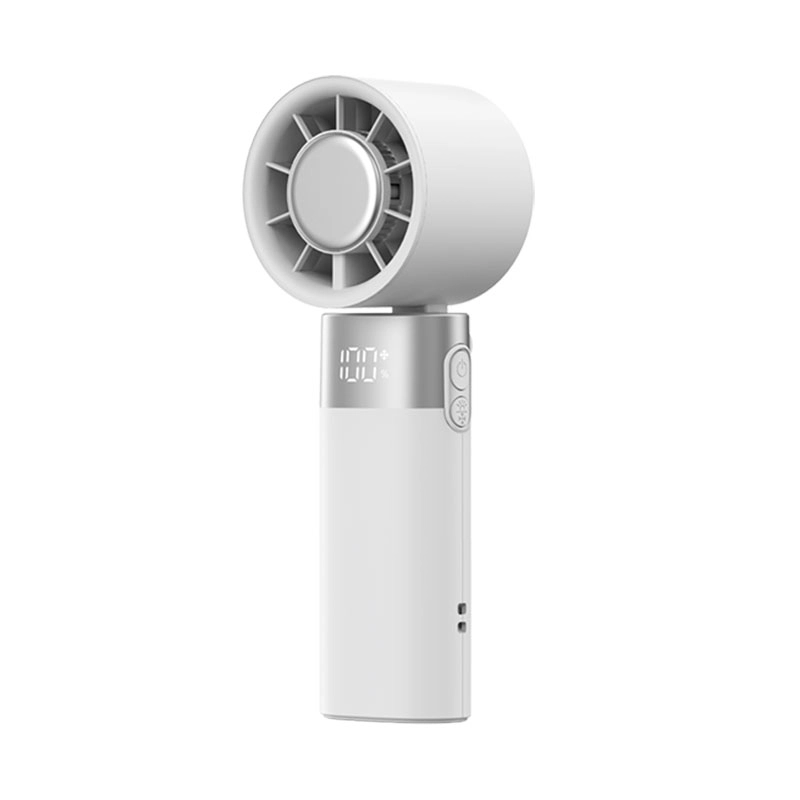
Reliable Handheld Cooling Solution for Bulk & Corporate Purchases
This premium handheld fan is designed for high-frequency, large-volume usage, making it an ideal cooling solution for corporate procurement, promotional distribution, employee welfare programs, and retail wholesale.
With stable airflow performance, a rechargeable design, and lightweight portability, it helps businesses deliver practical comfort products with strong perceived value while maintaining cost efficiency and supply reliability.
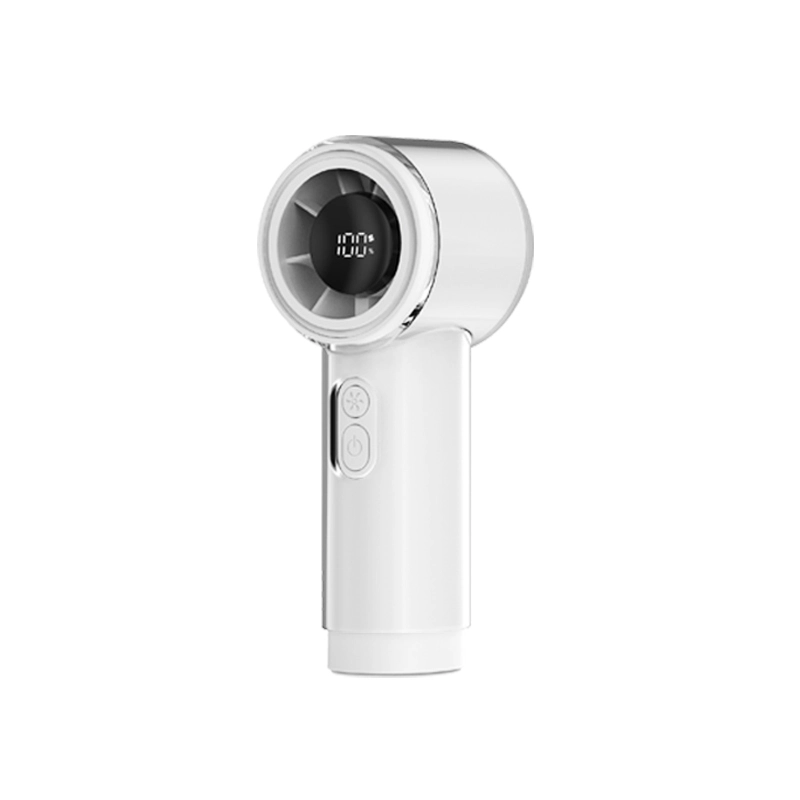
Customizable High-Speed Portable Handheld Fan FS2663
This is a high-speed, long-lasting, personalized, custom, portable cooling product specially designed for gift purchasers, cross-border e-commerce sellers, and OEM/ODM cooperation enterprises. It features (1) strong wind speed, (2) lightweight portability, (3) transparent shell design, (4) convenient carrying with a hand rope, and (5) long battery life. It helps enterprises enhance brand exposure, product differentiation competitiveness, and customer repeat purchase rate.
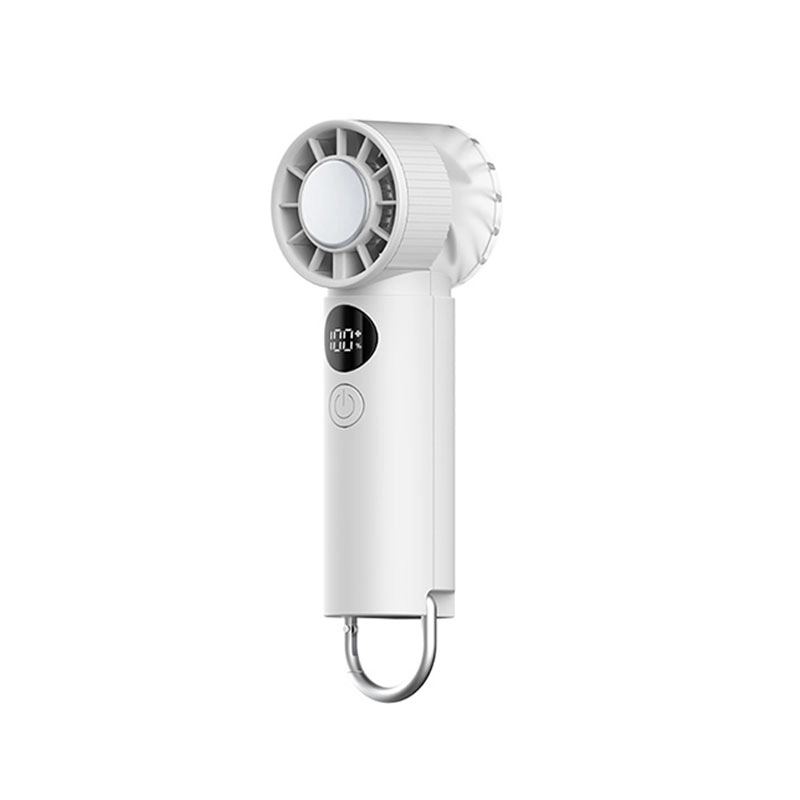
Customizable lightweight mini handheld cooling fan (with climbing hook) FS2666
A portable cooling and personalized customization product specially designed for commuters, students, the gift customization industry, and OEM/ODM buyers. It features (1) lightweight and easy portability, (2) a climbing buckle, and (3) semiconductor cooling.
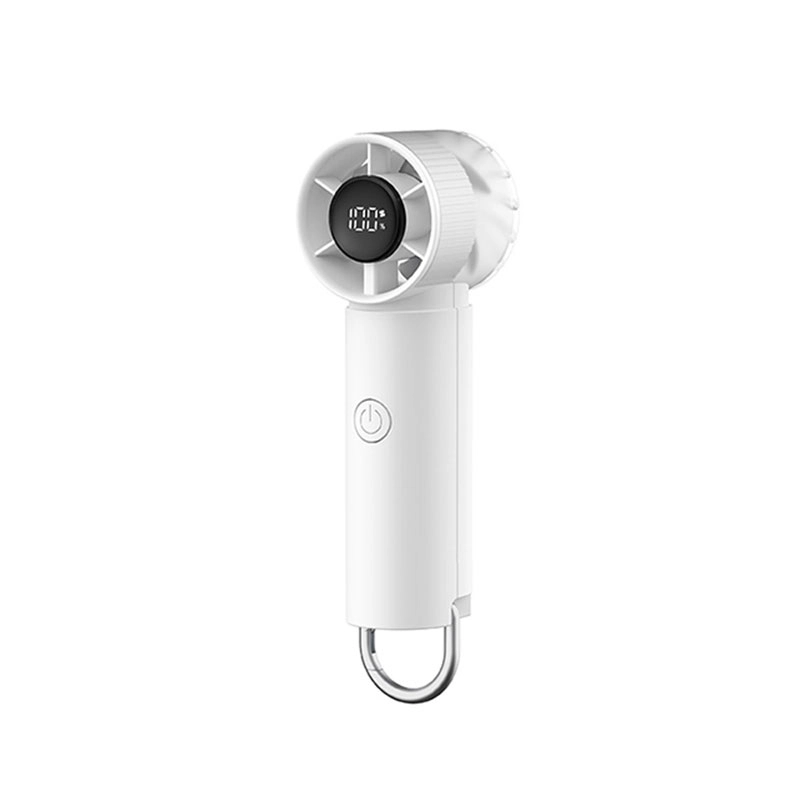
Customizable lightweight mini handheld cooling fan (with climbing hook) FS2667
This is a lightweight and portable + personalized customization product specially designed for commuters, students, the gift customization industry, and OEM/ODM buyers. It features (1) lightweight and easy portability, (2) a climbing buckle, and (3) a semi-transparent air duct design.
Start Your Custom Handheld Fans Manufacturing Project Today
If you have any comments or good suggestions, please leave us a message; later our professional staff will contact you as soon as possible.
Contact


4th Floor, Building 3, Jurong Industrial Park, No. 27-1-1, Fu'an Industrial Zone,Leliu Town (Pancun), Shunde District, Foshan City, Guangdong Province
 Scan QR Code
YouTube
Twitter
Facebook