






How to calculate shipping costs for bulk rechargeable fans? | Insights by RYW
- 1) How do I calculate dimensional (volumetric) weight for cartons of rechargeable handheld fans across air, courier and sea, and convert that into per‑unit shipping cost?
- 2) How do lithium battery rules (UN38.3, watt‑hour limits) change shipping options and add hidden costs for bulk rechargeable fans?
- 3) What packaging, cartonization and palletization strategy minimizes per‑unit shipping cost for bulk rechargeable fans when choosing between LCL and FCL?
- 4) How do I compute landed cost per fan (product + freight + duty + VAT + local delivery + battery certification fees) when importing to the US or EU?
- 5) How do Incoterms (FOB, CIF, DDP) change which party pays shipping, duties and how I should calculate shipping costs when sourcing rechargeable fans from China?
- 6) How do I evaluate and negotiate freight quotes to lower shipping costs for recurring orders of rechargeable fans, including handling peak‑season and fuel surcharges?
1) How do I calculate dimensional (volumetric) weight for cartons of rechargeable handheld fans across air, courier and sea, and convert that into per‑unit shipping cost?
Dimensional (DIM) weight is a primary driver of freight cost when a shipment is light but bulky. Carriers bill by the greater of actual gross weight and dimensional weight. Use the carrier’s dimensional divisor (it varies). Typical rules you’ll encounter:
- Express couriers (FedEx/UPS/ DHL domestic international rules): DIM in inches: L × W × H (in) ÷ 139 = billed weight in lb.
- Air freight (some IATA carriers): common dimensional divisors are 5000–6000 cm³ per kg (L × W × H in cm ÷ 5000 = kg) — carriers differ, always confirm.
- Ocean freight: carriers generally price by cubic meter (CBM) or container (FCL/FCL). For LCL, you’ll be charged actual CBM; volumetric rules may be applied by consol houses on small shipments.
Example (practical): you pack 20 rechargeable fans per carton. Carton external dims: 50 cm × 30 cm × 40 cm = 60,000 cm³.
DIM weight (using 5000 divisor): 60,000 ÷ 5000 = 12 kg per carton. If the carton’s gross scale weight is 8 kg, carrier will charge for 12 kg.
Per-unit freight (air or courier) = (billed weight × freight rate per kg + handling surcharges) ÷ units per carton. So if freight rate = $6/kg: (12 kg × $6) ÷ 20 units = $3.60 per fan (freight only).
For sea-LCL or FCL, compute CBM per carton: 0.5 × 0.3 × 0.4 = 0.06 m³ per carton. If you ship in a 20' container (~33 m³ usable), you can load ≈ 33 ÷ 0.06 = 550 cartons × 20 units = 11,000 units (theoretical). Sea per‑unit then = (container cost ÷ total units).
Key takeaways: always check the carrier dimensional divisor, measure external carton dims after packing and palletizing, and run both DIM and gross weight calculations to know which will bill.
2) How do lithium battery rules (UN38.3, watt‑hour limits) change shipping options and add hidden costs for bulk rechargeable fans?
Rechargeable handheld fans nearly always include lithium‑ion batteries. Batteries trigger dangerous goods (DG) regulations that affect transport method, documentation and surcharges.
- Classification: batteries inside equipment (installed) are usually UN3481 (“lithium-ion batteries packed with equipment”); loose batteries are UN3480. Classification determines labeling, documentation, and carrier acceptance.
- Watt‑hour (Wh) rating matters: carriers and IATA/IMDG set limits and special provisions by Wh per cell/battery. Many passenger aircraft restrictions apply to higher Wh—this can force shipment by cargo aircraft only or by sea, increasing cost or transit time.
- UN38.3 testing and documentation are mandatory for international shipments. Absence or incorrect paperwork can cause rejections, fines, or return-to-origin charges—add substantial unexpected cost.
Cost impacts and surcharges:
- Dangerous goods handling fees (DG surcharge) from couriers and freight forwarders add per‑shipment or per‑piece fees (typically $10–$100+ depending on carrier and route).
- Airlines may require special packing, overpack, or state-of-charge limits (e.g., <30% charge) imposed by shipper, increasing packaging cost.
- Some freight forwarders charge higher insurance or refuse to handle certain DG cargo; sea/RO-RO or ground options might be necessary.
Actionable steps: verify battery Wh per unit, obtain UN38.3 test reports and manufacturer declarations, classify as UN3481 vs UN3480, ask the forwarder for DG surcharge quotes and whether air carriage is permitted. Factor these amounts into per-unit landed cost early in RFQ comparisons.
3) What packaging, cartonization and palletization strategy minimizes per‑unit shipping cost for bulk rechargeable fans when choosing between LCL and FCL?
Optimizing packaging is one of the highest‑leverage levers to reduce per‑unit freight:
- Right‑size cartons: use external carton dims that tightly fit products and protective foam. Unused void increases DIM weight or CBM and raises costs.
- Maximize units per carton while meeting weight limits (shipping cartons over ~25–30 kg risk handling issues). For handheld fans, many suppliers use 10–30 units per carton depending on size.
- Palletize efficiently: choose pallet configuration (e.g., 120×100 cm EU pallet or 48×40 in US pallet) to minimize wasted floor space. Use interlocking stacking to stabilize and increase pallet height up to the carrier limit (commonly 1.8–2.0 m stacked height).
- Choose containerization: FCL (full container load) is typically cheaper per unit when your cubic volume approaches a container capacity. Standard usable volumes (typical): 20' ≈ 33 m³, 40' ≈ 67 m³, 40' HC ≈ 76 m³.
Example (practical): if a carton = 0.06 m³ and contains 20 fans, then a 40' container (67 m³) can hold ≈ 1,116 cartons ≈ 22,320 fans (theoretical). If a 40' FCL freight cost to destination is $3,000 (example), freight per unit = $3,000 ÷ 22,320 ≈ $0.134 per fan. By contrast, an LCL shipment priced at $600 CBM for a small 2 CBM shipment = $1,200 for freight (same route example) but you pay higher per‑CBM rates and consolidation fees, raising per‑unit cost significantly for small volumes.
Rule of thumb: when your total CBM > ~8–10 m³ on common Asia→US/EU lanes, evaluate FCL vs LCL. Negotiate pallet‑based FCL rates and request floor plan proposals from forwarders to compare per‑unit outcomes.
4) How do I compute landed cost per fan (product + freight + duty + VAT + local delivery + battery certification fees) when importing to the US or EU?
Accurate landed cost = product unit price + international freight + insurance (CIF) + import duty + customs brokerage + VAT/sales tax + domestic delivery + compliance/certification costs (battery testing, labeling). Calculate with this formula:
Landed cost per unit = (FOB unit cost × units) + international freight + insurance + customs duty + customs brokerage + taxes + local trucking + compliance fees all ÷ units.
Steps and details:
- Determine the correct HS/HTS code for your fan — many electric fans fall under HS chapter 8414 (check national tariff schedules). Duty rates vary by country and specific sub; consult the official customs tariff database or your customs broker.
- Insurance: typically 0.3–0.5% of CIF value unless specific coverage required.
- Customs duty: lookup HTS rate for the destination (percentage of CIF). Example: if duty = 2.5% and CIF value = $10,000, duty = $250.
- VAT: computed on CIF + duty in many jurisdictions (EU VAT charged on inclusive value). Example: 20% VAT on CIF + duty.
- Customs brokerage and handling: typical flat fees $25–$150 per shipment + terminal handling charges (THC) and local delivery.
- Battery compliance/certification: include UN38.3 report costs (one‑time or per‑batch testing), additional labeling/packaging, and possible DG handling surcharges.
Concrete mini‑example (illustrative): FOB factory unit price = $4.00; order 10,000 units; FOB total = $40,000. Sea FCL freight to port = $3,000; insurance = $150; CIF = $43,150. Customs duty (2%) = $863; VAT (20% on CIF + duty) = $8,194. Customs brokerage + THC + local trucking = $800. Compliance & DG fees spread across units = $1,000. Landed cost per unit ≈ ($43,150 + $863 + $8,194 + $800 + $1,000) ÷ 10,000 ≈ $5.53. This shows freight and taxes can add >20–40% to the FOB unit cost—adjust numbers to your real duty/VAT rates.
Work with a customs broker to lock HTS classification and exact duty rates before finalizing purchase price.
5) How do Incoterms (FOB, CIF, DDP) change which party pays shipping, duties and how I should calculate shipping costs when sourcing rechargeable fans from China?
Incoterms determine risk transfer and who pays what. Key buyer/supplier cost implications:
- FOB (Free On Board) — seller delivers goods on board vessel at origin port; buyer pays international freight, insurance, import duty and local delivery. Use FOB when you want control over forwarder and freight negotiation.
- CIF (Cost, Insurance, Freight) — seller pays freight and insurance to destination port; buyer handles import clearance, duties and inland delivery. Use CIF for simpler sourcing but still verify insurance coverage limits.
- DDP (Delivered Duty Paid) — seller assumes maximum responsibility (shipping, duties, taxes, customs). Buyer receives goods with minimal hassle; price will include seller’s margin for these services. Good for buyers who want predictable landed cost, but verify seller’s import competence.
How to calculate under each term:
- Under FOB, buyer must obtain freight quotes (FCL/LCL), calculate container utilization, insurance and DG handling. Add those freight and compliance costs to landed cost formula.
- Under CIF, ensure seller provides breakdown of freight and insurance to validate their quote. Buyer still needs to budget customs duty/VAT and local delivery.
- Under DDP, request a full landed cost quote including duties and VAT; ensure seller uses an experienced customs broker in your country to avoid surprises. Validate that DDP price includes any potential anti‑dumping duties or additional inspections.
Tip: ask suppliers to provide both FOB and DDP quotes to compare true landed cost vs control and services you want the vendor to provide.
6) How do I evaluate and negotiate freight quotes to lower shipping costs for recurring orders of rechargeable fans, including handling peak‑season and fuel surcharges?
Negotiation is more effective when you understand common surcharges and leverage volume or predictability.
- Get itemized quotes: base freight, BAF/Fuel Surcharge, Peak Season Surcharge (PSS), General Rate Increase (GRI) history, Terminal Handling Charges (THC), Origin/Destination charges, Documentation, and Dangerous Goods handling fees.
- Compare forwarders: obtain 3 quotes (NVOCC, global carrier direct, and local forwarder). Use your expected annual volume to request contract rates — carriers often offer lower per‑CBM if you commit to quarterly volumes.
- Consolidation helps: if you can allow a few extra days, consolidated weekly sailings reduce LCL High Qualitys. For express, consolidated courier pallets via economy services lower per‑unit cost.
- Plan around seasonality: book early before peak season (typically July–October for Asia→US/EU shipments) to avoid PSS and capacity shortages. Flexible ETAs let forwarders place cargo on lower‑cost sailings.
- Use local pickup/delivery optimizations: deliver to port hubs with lower terminal charges or accept slightly longer transit to save on port congestion surcharges.
- Audit freight invoices: regularly reconcile actual billed weights/CBM vs quoted. DIM mis‑measurement and incorrect pallet counts are common invoice variances you can recover.
Negotiation example: if a forwarder adds a $100 DG surcharge per shipment, propose to re‑pack to reduce declared battery Wh per piece (if feasible and compliant), or request the surcharge be split across multiple shipments in a contract to lower per‑shipment fee.
Concluding summary — advantages of accurate shipping calculations and compliant handling for bulk rechargeable handheld fans
Calculating shipping costs correctly (accounting for DIM weight, container utilization, DG rules for lithium batteries, Incoterms and landed‑cost components) delivers clear advantages: lower per‑unit freight, fewer last‑minute compliance fines or rejections, tighter margin forecasting, and improved supplier/forwarder negotiation power. Proper packaging and palletization reduce DIM and CBM waste; correct battery classification and UN38.3 documentation avoid costly transport restrictions. For recurring orders, contract rates, consolidation and audited invoicing compound savings.
If you’d like a precise freight and landed‑cost quote for your bulk rechargeable fans (including battery compliance handling and packaging optimization), contact us for a tailored quote at www.rywlife.com or adrian@rywlife.com.
Contacts
WhatsApp/Phone
You May Also Like

Reliable Handheld Cooling Solution for Bulk & Corporate Purchases
This premium handheld fan is designed for high-frequency, large-volume usage, making it an ideal cooling solution for corporate procurement, promotional distribution, employee welfare programs, and retail wholesale.
With stable airflow performance, a rechargeable design, and lightweight portability, it helps businesses deliver practical comfort products with strong perceived value while maintaining cost efficiency and supply reliability.

Customizable High-Speed Portable Handheld Fan FS2663
This is a high-speed, long-lasting, personalized, custom, portable cooling product specially designed for gift purchasers, cross-border e-commerce sellers, and OEM/ODM cooperation enterprises. It features (1) strong wind speed, (2) lightweight portability, (3) transparent shell design, (4) convenient carrying with a hand rope, and (5) long battery life. It helps enterprises enhance brand exposure, product differentiation competitiveness, and customer repeat purchase rate.
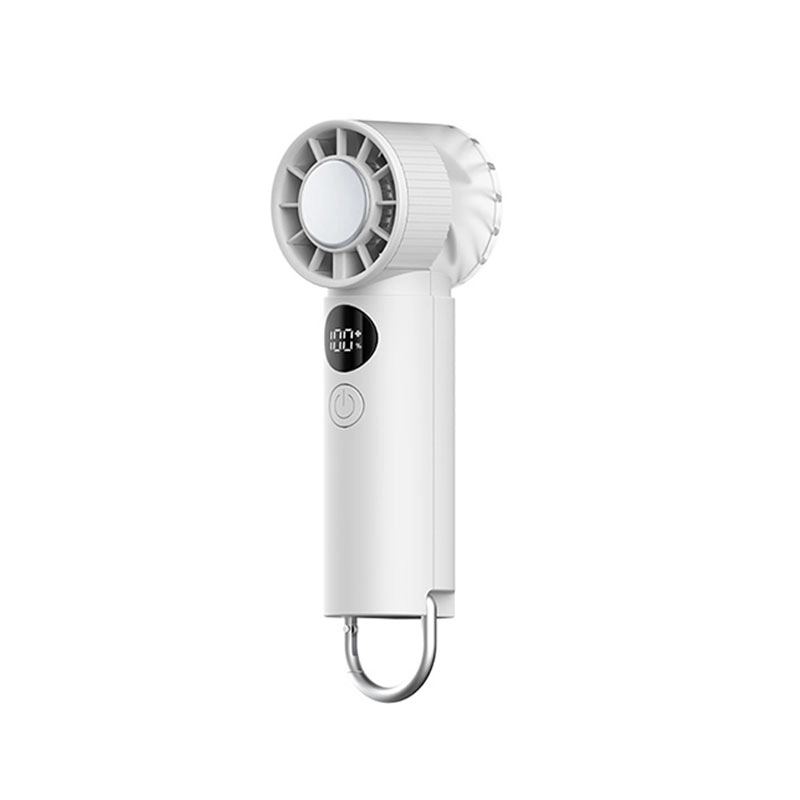
Customizable lightweight mini handheld cooling fan (with climbing hook) FS2666
A portable cooling and personalized customization product specially designed for commuters, students, the gift customization industry, and OEM/ODM buyers. It features (1) lightweight and easy portability, (2) a climbing buckle, and (3) semiconductor cooling.
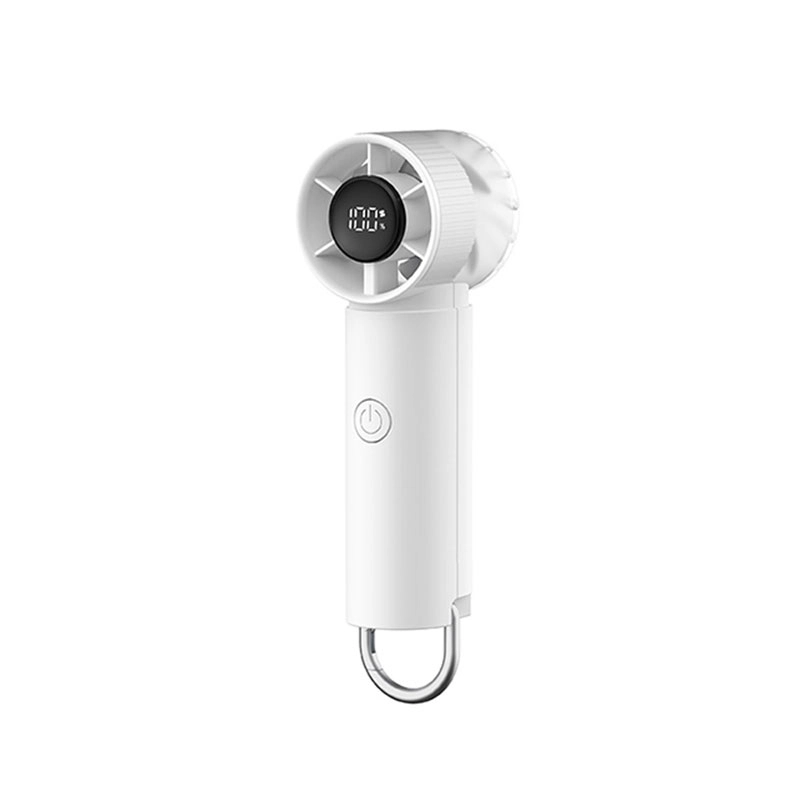
Customizable lightweight mini handheld cooling fan (with climbing hook) FS2667
This is a lightweight and portable + personalized customization product specially designed for commuters, students, the gift customization industry, and OEM/ODM buyers. It features (1) lightweight and easy portability, (2) a climbing buckle, and (3) a semi-transparent air duct design.
Start Your Custom Handheld Fans Manufacturing Project Today
If you have any comments or good suggestions, please leave us a message; later our professional staff will contact you as soon as possible.
Contact


4th Floor, Building 3, Jurong Industrial Park, No. 27-1-1, Fu'an Industrial Zone,Leliu Town (Pancun), Shunde District, Foshan City, Guangdong Province
 Scan QR Code
YouTube
Twitter
Facebook