






How to calculate shipping cost for bulk fans? | Insights by RYW
- 1) How do I calculate landed cost per handheld fan including sea freight, duties, and local handling when ordering 5,000 battery-operated fans from China?
- 2) How to convert carton dimensions and unit counts into accurate CBM and FCL container utilization for handheld fans to avoid paying for unused volume?
- 3) When is dimensional weight applied for air freight of bulk handheld fans and how to compute whether DIM or actual weight controls the air freight price?
- 4) What are typical hidden surcharges for international shipments of handheld fans (BAF, THC, AMS/ISF, peak season) and how do I estimate them into the quote?
- 5) How to calculate shipping cost differences between FOB and CIF incoterms for handheld fans and who pays what in each scenario?
- 6) How to estimate customs duty and VAT for handheld fans — what HS codes should I check and how to compute landed duties?
- Conclusion: Advantages of accurate shipping cost calculation and using a professional freight partner
Buying handheld fans in bulk requires accurate shipping cost calculation to protect margins and avoid surprise fees. Below are six common, specific beginner questions (long-tail, pain-point oriented) and in-depth answers you can use immediately when planning shipments of handheld fans. This covers bulk shipping calculation, dimensional weight, container load planning, FOB vs CIF, hidden surcharges, and customs duty estimates. Always confirm rates with your freight forwarder and local customs.
1) How do I calculate landed cost per handheld fan including sea freight, duties, and local handling when ordering 5,000 battery-operated fans from China?
Why this matters: Procurement teams must know true landed cost (unit cost + all import-related fees) to set pricing and margins. Omitting charges like terminal handling, VAT, or insurance underestimates cost per unit.
Step-by-step formula:
- Landed cost per unit = (EXW unit price × qty + international freight + insurance + import duty + import VAT + inland transport + local charges + customs clearance fees + packaging/pallet costs) / qty
How to calculate each line item:
- EXW unit price × qty: the invoice product value.
- International freight: use sea freight for bulk—either FCL (full container) or LCL (less than container load). For FCL, use the flat container price; for LCL, freight is charged per CBM.
- Insurance: typically 0.3–0.5% of CIF (Cost, Insurance & Freight) value for standard marine insurance—confirm your insurer’s rate.
- Import duty: duty rate = (HS-code duty %) × customs value (often CIF). Duty rates vary by product and destination—check national tariff schedules or use a customs broker.
- Import VAT/GST: applied on (CIF + duty) in many jurisdictions—check the local VAT rate.
- Inland transport, customs clearance & local charges: include terminal handling charges (THC), documentation fees, customs broker fee, port storage, and last-mile trucking.
- Packing/pallet costs: include crates, pallets, shrinkwrap; palletizing improves container utilization but adds cost.
Example (illustrative only):
- Order: 5,000 fans, EXW unit price = $2.50, total EXW = $12,500
- Assume FCL ocean freight (one 40ft HQ) = $2,000; insurance 0.4% of CIF; duty 3%; VAT 10%; inland & local charges = $1,200.
- Approx CIF = EXW + freight + (minimal export fees) ≈ $14,500. Insurance ≈ $58. Duty ≈ 0.03 × 14,500 = $435. VAT ≈ 0.10 × (14,500 + 435) = $1,493. Local fees $1,200.
- Sum extra costs ≈ $2,000 + $58 + $435 + $1,493 + $1,200 = $5,186.
- Landed total ≈ $12,500 + $5,186 = $17,686; landed cost per unit ≈ $3.54.
Key tips: always get a written pro-forma or freight quote from a freight forwarder (freight forwarders combine ocean/air freight, local handling and customs clearance). Use this method to calculate break-even pricing and ensure margins are covered.
2) How to convert carton dimensions and unit counts into accurate CBM and FCL container utilization for handheld fans to avoid paying for unused volume?
Why this matters: Handheld fans are low-volume/lightweight items; inaccurate CBM calculation can cause you to choose LCL when FCL would be cheaper per unit—or vice versa.
Steps to compute CBM and estimate container load:
- Measure a single retail carton: length (L) × width (W) × height (H) in meters. CBM per carton = L × W × H (in m³).
- Units per carton: note how many fans per carton.
- CBM per unit = carton CBM / units per carton.
- Total CBM for order = CBM per carton × number of cartons.
- Compare total CBM to container usable volume. Typical usable internal volumes: 20ft ≈ 33 m³; 40ft ≈ 67 m³; 40ft high-cube ≈ 76 m³. (Use the exact internal dimensions from your carrier for precision.)
- Account for palletizing inefficiencies: pallet footprint and stacking height may reduce usable CBM—apply a 5–10% contingency if palletized.
Container pallet capacity (typical):
- 20ft: ~10–11 standard pallets (1.2m × 1.0m)
- 40ft: ~20–22 standard pallets
- 40ft HQ: slightly more due to extra height
Example (illustrative):
- Carton = 0.45 × 0.35 × 0.25 m = 0.0394 m³; units per carton = 10; CBM per unit = 0.00394 m³.
- Order 5,000 units → total CBM = 5,000 × 0.00394 = 19.7 m³ → fits in a 20ft (33 m³) comfortably.
- Because volume is well under container capacity, choose FCL and optimize pallet loading to minimize wasted volume and reduce per-unit freight cost.
Optimization tips: consolidate cartons into stable pallet stacks sized to container internal width; use slip-sheets to pack more efficiently; work with your freight forwarder to create a loading plan (stowage plan) to maximize container utilization. This reduces per-unit freight and avoids unnecessary LCL surcharges.
3) When is dimensional weight applied for air freight of bulk handheld fans and how to compute whether DIM or actual weight controls the air freight price?
Why this matters: Air freight charges by the greater of actual gross weight or dimensional (DIM) weight. Lightweight but bulky fans can be charged by DIM weight, increasing cost significantly.
Standard DIM weight formulas:
- International air (metric): DIM weight (kg) = (L × W × H in cm) / 6000 (i.e., 6,000 cm³ per kg).
- Imperial (inches): DIM weight (lbs) = (L × W × H in inches) / 166 (some carriers use 139 during peak season; verify with the carrier).
Procedure:
- Calculate DIM weight per carton and compare with actual gross weight per carton. Whichever is higher governs the chargeable weight.
- Chargeable weight total = sum of chargeable weights of all cartons.
- Air freight rate is quoted per kg (or per lb). Multiply rate × chargeable weight, then add fuel surcharges, security, and handling.
Example (illustrative):
- Carton dims: 60 × 40 × 30 cm = 72,000 cm³ → DIM kg = 72,000 / 6,000 = 12 kg.
- Actual gross weight of carton = 6 kg. Chargeable weight = 12 kg (DIM controls).
- If air rate is $4.00/kg → freight = 12 × $4 = $48 per carton (before surcharges). If you had 100 cartons, chargeable weight is 1,200 kg.
Tip: For handheld fans that are light but boxed in large cartons, reduce carton void space and use smaller inner packaging or vacuum packaging to avoid DIM penalties. For large bulk orders, sea freight (CBM-based) is usually more economical.
4) What are typical hidden surcharges for international shipments of handheld fans (BAF, THC, AMS/ISF, peak season) and how do I estimate them into the quote?
Why this matters: Freight quotes that exclude surcharges understate cost. Buyers must budget for predictable surcharges and seasonal adjustments.
Common surcharges and how they apply:
- BAF/CAF (Bunker/ Currency Adjustment Factor): fluctuates with fuel costs and currency; usually a % added to base ocean freight.
- THC (Terminal Handling Charge): charged at origin and destination for loading/unloading.
- Documentation fees: Bill of Lading fee, export documentation, AMS/ENS filing fees.
- Security & port fees: ISPS, ISF (U.S. Importer Security Filing) fees, AMS filing—small fixed amounts but mandatory.
- Peak season surcharge (PSS): carriers add when space is tight during peak shipping months.
- Detention & demurrage: charges for late return of containers or excessive dwell time at the port/terminal—can be large and should be avoided.
How to estimate: request a full freight pro-forma that lists base freight and all applicable surcharges. If you must estimate yourself, add a contingency of 10–20% to base ocean freight to cover typical surcharges and currency fluctuation—then refine when you receive a detailed quote from your forwarder.
Example categories to include per shipment:
- Base ocean freight (FCL) or freight per CBM (LCL)
- Origin THC + Destination THC
- BAF/CAF (variable %, included on invoice)
- Documentation & customs broker fees (fixed)
- Import security filings and port fees (fixed)
- Inland trucking to your warehouse
Key operational advice: plan container return schedules, avoid peak season delays, and negotiate with the freight forwarder for a door-to-door quote that includes all predictable surcharges—this converts hidden fees into line-item costs you can evaluate.
5) How to calculate shipping cost differences between FOB and CIF incoterms for handheld fans and who pays what in each scenario?
Why this matters: Incoterms determine which party pays for which part of the transport chain. Misunderstanding incoterms can shift substantial cost responsibility unexpectedly.
Short definitions:
- FOB (Free On Board): Seller is responsible for delivering goods to the named port and loading them onto the vessel; buyer pays international freight, insurance, import duty, and local destination costs.
- CIF (Cost, Insurance & Freight): Seller pays cost to bring goods to destination port and insurance; buyer pays import duty, import VAT, and inland delivery from destination port.
How to calculate differences:
- Get two quotes or line items: (A) seller’s FOB price + buyer’s ocean freight & insurance & local costs; (B) seller’s CIF price (seller includes ocean freight and insurance) + buyer’s local costs. Compare total buyer cost for both scenarios.
- Example (illustrative): If FOB unit price is $2.00 and seller quotes FOB, and ocean freight per unit is $0.40 when consolidated, then buyer pays $2.40 + local costs. If CIF quoted unit price is $2.45 (seller included freight & insurance margin), buyer pays $2.45 + local costs. Choose the lower total buyer cost and the incoterm that minimizes logistics complexity for your team.
Practical considerations: buyers with strong freight-negotiation capabilities or volume consolidation options often prefer FOB to control and reduce freight costs. Buyers that prefer single-point responsibility and fewer logistics interactions may prefer CIF, despite a possible small High Quality.
6) How to estimate customs duty and VAT for handheld fans — what HS codes should I check and how to compute landed duties?
Why this matters: Customs duties and VAT can materially change landed cost. Incorrect HS code classification delays clearance and risks penalties.
Steps to estimate duties and VAT:
- Identify the correct HS code for the product. Electric handheld fans typically fall under HS chapter 8414 (electric fans and parts) — confirm with your supplier and local customs authority. Non-electric decorative or paper fans may fall under different tariff lines.
- Check the destination country's tariff schedule for the exact sub duty rate. Use official tariff lookup tools from customs authorities or a customs broker to obtain the accurate %.
- Customs value is generally the CIF value for imports (invoice value + freight + insurance). Duty = CIF × duty%.
- VAT or GST is usually applied on (CIF + duty). VAT = (CIF + duty) × VAT%.
Practical example (illustrative):
- CIF value = $14,500, duty rate = 3% → duty = $435.
- VAT rate = 10% → VAT = 0.10 × (14,500 + 435) = $1,493.5.
Key compliance tips: work with a licensed customs broker to confirm HS classification, submit accurate commercial invoices (with product descriptions, unit value, and country of origin), and ensure required testing/certifications (CE, FCC, battery safety/UN transport rules for battery-operated fans) are in place to avoid inspections and penalties.
Final operational checklist before you place a bulk order:
- Ask the supplier for carton dimensions, gross & net weight per carton, units per carton, and palletization plan.
- Request FOB and CIF price breakdowns and a sample freight quote (FCL and LCL) from a freight forwarder.
- Confirm HS code, duty rate, and whether the product requires any special permits or safety certifications.
- Estimate insurance, port charges, inland freight, customs broker fees and apply a 10–20% surcharge contingency for fees and seasonal fluctuations.
- Calculate landed cost per unit using the formula in Q1 and verify margins before committing.
Conclusion: Advantages of accurate shipping cost calculation and using a professional freight partner
Accurate bulk shipping calculation reduces surprise costs, secures correct pricing, and improves inventory planning. By calculating DIM weight, CBM, container utilization, surcharges, and duties up front, you protect margins and speed clearance. Working with an experienced freight forwarder or logistics partner (who can provide full door-to-door quotes and advise on palletization, insurance, and HS classification) converts opaque shipping variables into predictable costs—saving time and money for procurement and supply chain teams.
For an accurate, line-item shipping quote for handheld fans (FCL/LCL/air), container planning, or customs clearance assistance, contact us for a tailored quote: www.rywlife.com or email adrian@rywlife.com.
Contacts
WhatsApp/Phone
You May Also Like

Reliable Handheld Cooling Solution for Bulk & Corporate Purchases
This premium handheld fan is designed for high-frequency, large-volume usage, making it an ideal cooling solution for corporate procurement, promotional distribution, employee welfare programs, and retail wholesale.
With stable airflow performance, a rechargeable design, and lightweight portability, it helps businesses deliver practical comfort products with strong perceived value while maintaining cost efficiency and supply reliability.

Customizable High-Speed Portable Handheld Fan FS2663
This is a high-speed, long-lasting, personalized, custom, portable cooling product specially designed for gift purchasers, cross-border e-commerce sellers, and OEM/ODM cooperation enterprises. It features (1) strong wind speed, (2) lightweight portability, (3) transparent shell design, (4) convenient carrying with a hand rope, and (5) long battery life. It helps enterprises enhance brand exposure, product differentiation competitiveness, and customer repeat purchase rate.
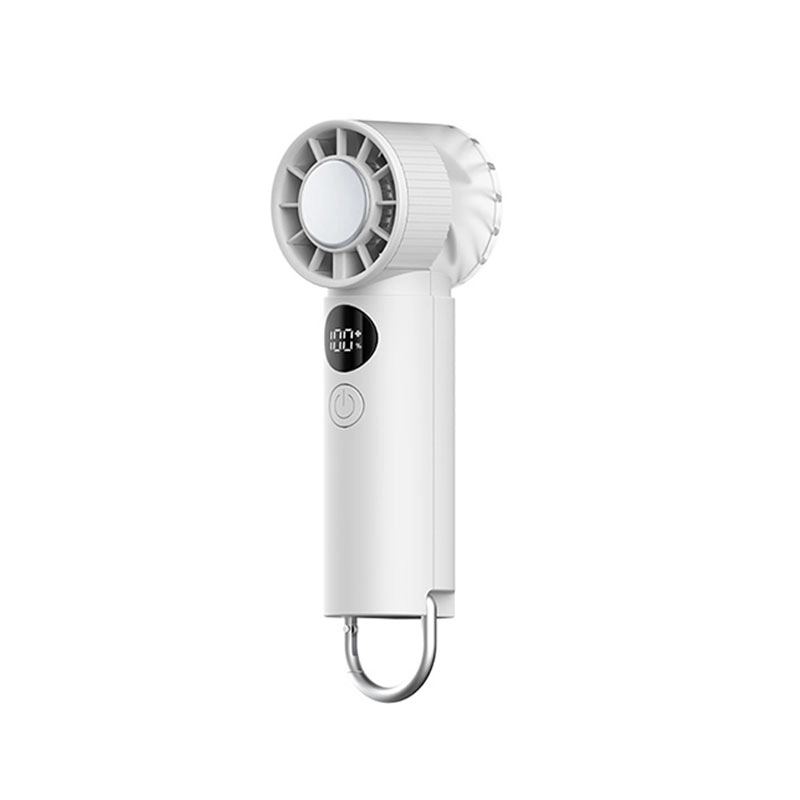
Customizable lightweight mini handheld cooling fan (with climbing hook) FS2666
A portable cooling and personalized customization product specially designed for commuters, students, the gift customization industry, and OEM/ODM buyers. It features (1) lightweight and easy portability, (2) a climbing buckle, and (3) semiconductor cooling.
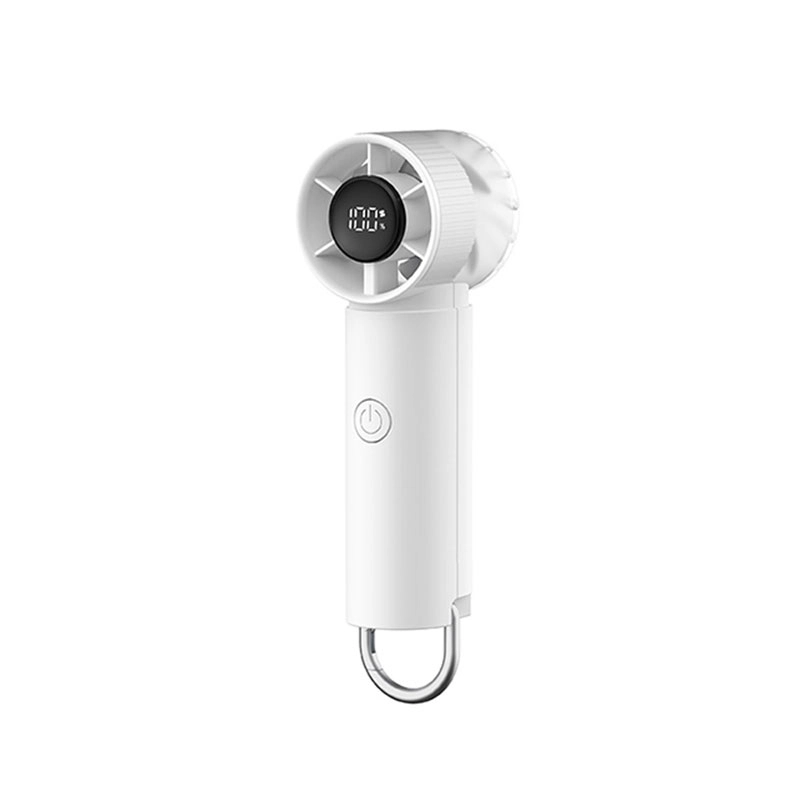
Customizable lightweight mini handheld cooling fan (with climbing hook) FS2667
This is a lightweight and portable + personalized customization product specially designed for commuters, students, the gift customization industry, and OEM/ODM buyers. It features (1) lightweight and easy portability, (2) a climbing buckle, and (3) a semi-transparent air duct design.
Start Your Custom Handheld Fans Manufacturing Project Today
If you have any comments or good suggestions, please leave us a message; later our professional staff will contact you as soon as possible.
Contact


4th Floor, Building 3, Jurong Industrial Park, No. 27-1-1, Fu'an Industrial Zone,Leliu Town (Pancun), Shunde District, Foshan City, Guangdong Province
 Scan QR Code
YouTube
Twitter
Facebook