






OEM/ODM usb powered fan Manufacturers and Suppliers
- Why RYW Leads in Portable Cooling Innovation
- Design philosophy and the origin of the Ice‑Cooling Fan
- Manufacturing footprint and R&D capabilities
- Certifications and quality assurance
- Technical Considerations When Sourcing a USB Powered Fan
- Power and charging: USB standards and implications
- Performance metrics: airflow, noise and runtime
- Materials and safety: batteries, motors and plastics
- OEM/ODM Process at RYW: From Concept to Market
- Prototype and tooling: timelines, samples and costs
- Customization options: branding, features and packaging
- Quality control and compliance testing
- Commercial Considerations: Pricing, MOQ, Lead Times & Logistics
- Pricing drivers and cost breakdown
- MOQ, lead times and scaling production
- After‑sales support and warranty
- Conclusion
- Frequently Asked Questions (FAQ)
- Q1: What minimum documentation should I request from a usb powered fan supplier?
- Q2: How do I estimate battery runtime for a handheld fan?
- Q3: What USB port should a usb powered fan support?
- Q4: How long does it take to develop a custom usb powered fan?
- Q5: Can the manufacturer handle retail compliance for multiple regions?
This guide explains how to source, evaluate, and partner with OEM/ODM usb powered fan manufacturers and suppliers. It highlights practical technical benchmarks (USB power profiles, battery runtime calculations), quality and certification expectations, prototyping and customization steps, and commercial terms—helping buyers quickly assess suppliers and reduce time-to-market.
Why RYW Leads in Portable Cooling Innovation
Design philosophy and the origin of the Ice‑Cooling Fan
RYW Technology Co., Ltd. was founded in 2018 by a team of visionary designers and is the originator of the Ice‑Cooling Fan. Guided by the philosophy “Refined in Heart, Simple in Form,” RYW focuses on ergonomic, user‑centric handheld fans and portable cooling solutions. The company integrates industrial design, R&D, manufacturing, and sales to deliver products that balance aesthetics, performance and user safety.
Manufacturing footprint and R&D capabilities
RYW operates a modern 4,000 m² facility with three automated production lines and an in‑house R&D team of 30+ engineers. This setup supports rapid prototyping, injection molding, PCB assembly and final assembly up to medium volume production—well suited for e‑commerce brands and retail chains that need agile OEM/ODM partners.
Certifications and quality assurance
RYW maintains ISO9001 quality management practices and holds major global safety approvals (CE, CB, UKCA, PSE, KC, UL, FCC, CCC). Buyers should verify certificates during supplier selection; authoritative references for standards include ISO’s quality management overview: ISO 9001 and the EU CE marking guidance: CE marking. For electrical safety and radio compliance, the UL and FCC websites are essential references: UL, FCC.
Technical Considerations When Sourcing a USB Powered Fan
Power and charging: USB standards and implications
Understanding USB power profiles is foundational for a usb powered fan. Traditional USB 2.0 ports supply 5V at up to 500mA (≈2.5W), while USB 3.0 increases available current to 900mA (≈4.5W). USB Power Delivery (USB‑PD) and USB‑C enable higher voltages and currents for fast charging up to 100W—but handheld fans typically operate at 5V–12V and draw from 1W to 10W depending on motor size and features. See the USB overview for technical reference: USB (Wikipedia).
Performance metrics: airflow, noise and runtime
When comparing usb powered fan designs, prioritize measurable metrics:
- Airflow (CFM or m³/h): indicates cooling capacity.
- Power draw (W) and current (A): determines required USB power.
- Noise (dB): important for indoor and office use.
- Battery capacity (mAh) and runtime: critical for portable models.
Example comparison table of representative mini/portable fan types:
| Fan Type | Typical Power (W) | Typical Battery (mAh) | Estimated Runtime (hrs)* | Use Case |
|---|---|---|---|---|
| Personal handheld fan | 2–4 W | 2000–4000 mAh | 4–10 hrs | Walking, outdoors |
| Desk USB fan | 3–6 W | Optional (USB powered) | Continuous when plugged in | Office, study |
| High‑output portable fan | 6–12 W | 5000–10000 mAh | 3–8 hrs | Outdoors, camping |
*Estimated runtime assumes average operating power and nominal battery capacity; real runtime varies by speed setting and battery health.
Materials and safety: batteries, motors and plastics
Key safety and reliability considerations:
- Battery chemistry: most compact fans use Li‑ion or Li‑poly batteries; require proper protection circuits and certified suppliers.
- Motor choice: brushless DC motors (BLDC) provide higher efficiency and longer lifetime vs. brushed motors.
- Housing materials: flame‑retardant ABS/PC blends improve safety and durability.
Compliance testing for batteries and electrical safety often references IEC/UN/UL standards—confirm that your OEM/ODM partner includes required testing and documentation for target markets.
OEM/ODM Process at RYW: From Concept to Market
Prototype and tooling: timelines, samples and costs
Typical R&D and tooling timeline for a usb powered fan (indicative):
- Concept & industrial design: 1–3 weeks
- Engineering 3D models & electronics: 2–4 weeks
- Prototype (3D print + PCB prototype): 2–4 weeks
- Injection tooling: 3–6 weeks depending on complexity
- Sample validation & DVT: 1–3 weeks
Costs vary by complexity—simple cosmetic changes and logo printing are low cost, while bespoke mechanical design and custom injection molds increase upfront investment. RYW emphasizes rapid prototyping to shorten the validation cycle.
Customization options: branding, features and packaging
Common OEM/ODM customizations include:
- Branding: logo, colorways, label or full custom housing.
- Feature sets: multiple speed levels, oscillation, LED indicators, USB‑C PD support, power bank passthrough.
- Accessories & packaging: bespoke gift boxes, user manuals, retail blister cards or bulk packaging optimized for e‑commerce.
RYW works with partners to align design choices to retail positioning and price targets while maintaining compliance and manufacturability.
Quality control and compliance testing
Quality control milestones that responsible manufacturers follow:
- Incoming material inspections (IQC)
- In‑process inspections (IPQC)
- Final inspection (FQC) and full functionality testing
- Electromagnetic compatibility (EMC) and safety tests for target markets
For global markets, expect the OEM/ODM partner to support CE/UKCA for Europe/UK, UL for North America where required, PSE for Japan, and KC for Korea. RYW’s certification portfolio supports these market entries.
Commercial Considerations: Pricing, MOQ, Lead Times & Logistics
Pricing drivers and cost breakdown
Primary factors that determine unit cost:
- Bill of Materials (BOM): battery, motor, PCB, casing, fasteners.
- Tooling amortization: higher for custom molds.
- Certification and testing costs: one‑time and periodic retests.
- Order quantity and complexity: higher volumes lower unit costs.
Simple cost structure example (illustrative):
| Cost Element | Share of Unit Cost (typical) |
|---|---|
| BOM (battery, motor, PCB) | 50%–65% |
| Labor & assembly | 10%–20% |
| Packaging & accessories | 5%–10% |
| Tooling amortization | 5%–15% |
| Testing & certification | 2%–5% |
MOQ, lead times and scaling production
Minimum order quantities depend on the level of customization. Typical MOQs:
- White‑label models / minor customization: 500–2,000 pcs
- Fully custom models with new tooling: 2,000–10,000 pcs
Lead times: small production runs 3–6 weeks after tooling and approvals; larger runs and new molds can extend to 8–12 weeks. RYW’s three production lines and inventory planning help shorten typical lead times for repeat orders.
After‑sales support and warranty
Robust OEM/ODM partners provide warranty terms, spare parts availability and a returns process. Ensure your supplier offers clear RMA policies, local language documentation and the ability to supply replacement parts for 12–24 months post‑delivery.
Conclusion
Selecting the right OEM/ODM usb powered fan manufacturer requires balancing technical performance, certification coverage, design flexibility and commercial terms. RYW Technology offers integrated design, R&D and manufacturing capabilities with global certifications and a proven OEM/ODM process to move concepts into compliant, marketable products. Prioritize suppliers who can demonstrate transparent testing, realistic timelines, and clear cost drivers.
Frequently Asked Questions (FAQ)
Q1: What minimum documentation should I request from a usb powered fan supplier?
Ask for: ISO9001 certificate, product safety test reports (e.g., IEC/UL for battery/electrical safety), EMC/EMI reports if applicable, and sample test records. Also request details for materials and battery specs.
Q2: How do I estimate battery runtime for a handheld fan?
Estimate runtime = Battery capacity (Wh) / Average device power (W). Convert battery capacity from mAh to Wh: (mAh × Voltage) / 1000 = Wh. Example: 3000 mAh @ 3.7V → 11.1 Wh. If fan draws 3W average, runtime ≈ 11.1 / 3 ≈ 3.7 hours.
Q3: What USB port should a usb powered fan support?
Supporting USB‑C with PD passthrough is increasingly recommended for modern devices, but ensure backward compatibility with 5V USB ports. Match fan current draw to typical port capabilities (USB 2.0 vs USB 3.0 vs PD).
Q4: How long does it take to develop a custom usb powered fan?
From initial design to production samples typically 8–16 weeks depending on complexity (prototype, tooling, electronic validations). RYW’s rapid prototyping capability often shortens early iterations.
Q5: Can the manufacturer handle retail compliance for multiple regions?
Yes—trusted OEM/ODM partners should support CE/UKCA, UL/CSA, PSE, KC, CCC and FCC documentation. Verify the supplier provides up‑to‑date test reports and can assist with local registration where required.
Ready to start your usb powered fan project? Contact us to discuss OEM/ODM options and request samples: adrian@rywlife.com.
Top 10 portable fan Manufacturers and Supplier Brands
Top 10 Rechargeable Fan Manufacturers and Supplier Brands
Tips for buy best portable fan from China
Top best hand held fan Manufacturers and Suppliers
About Products
Can you do ODM project?
Can l order samples for testing?
About Customization
Can we do our logo on the machine?
What is the MOQ for custom logo?
About Logistics
Do you offer freight forwar ding support?
You May Also Like
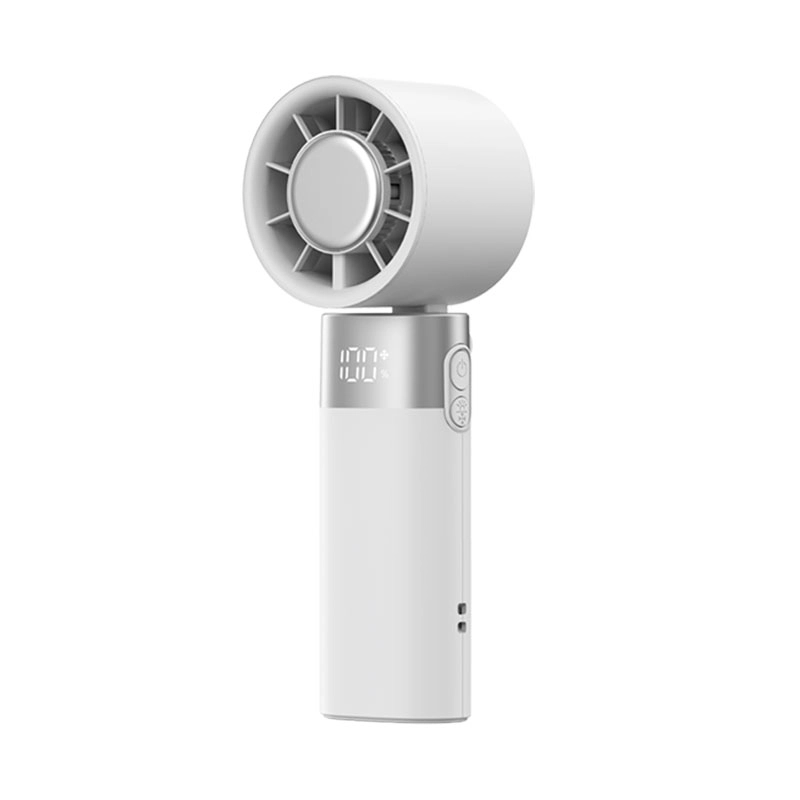
Reliable Handheld Cooling Solution for Bulk & Corporate Purchases
This premium handheld fan is designed for high-frequency, large-volume usage, making it an ideal cooling solution for corporate procurement, promotional distribution, employee welfare programs, and retail wholesale.
With stable airflow performance, a rechargeable design, and lightweight portability, it helps businesses deliver practical comfort products with strong perceived value while maintaining cost efficiency and supply reliability.
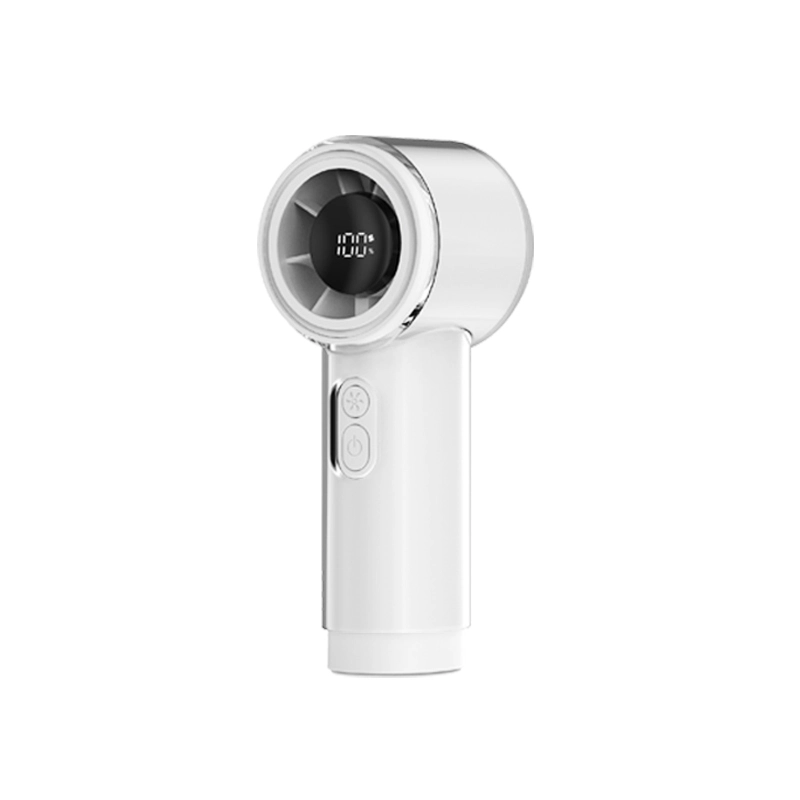
Customizable High-Speed Portable Handheld Fan FS2663
This is a high-speed, long-lasting, personalized, custom, portable cooling product specially designed for gift purchasers, cross-border e-commerce sellers, and OEM/ODM cooperation enterprises. It features (1) strong wind speed, (2) lightweight portability, (3) transparent shell design, (4) convenient carrying with a hand rope, and (5) long battery life. It helps enterprises enhance brand exposure, product differentiation competitiveness, and customer repeat purchase rate.
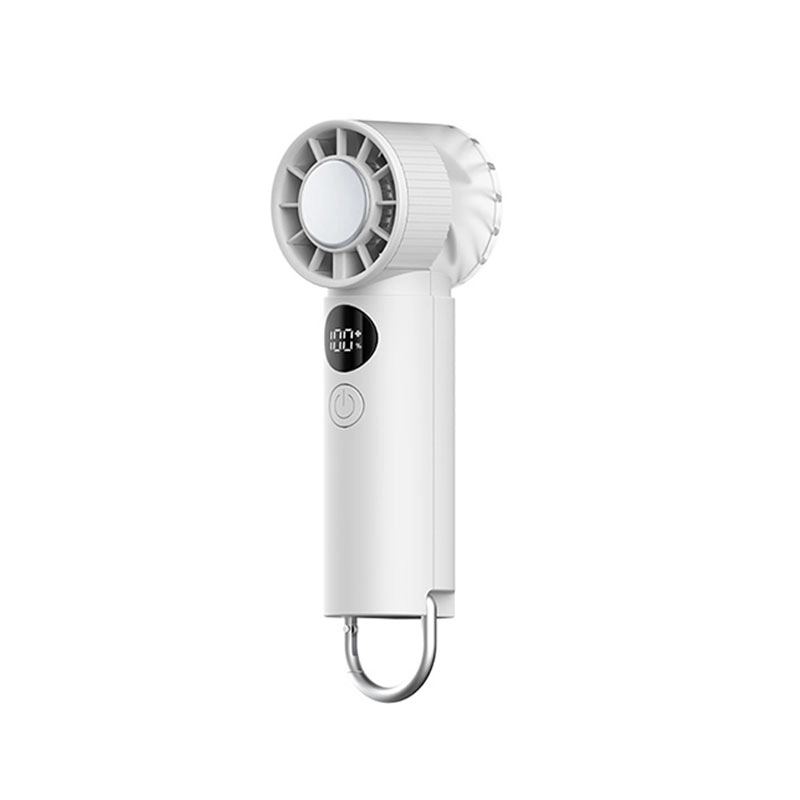
Customizable lightweight mini handheld cooling fan (with climbing hook) FS2666
A portable cooling and personalized customization product specially designed for commuters, students, the gift customization industry, and OEM/ODM buyers. It features (1) lightweight and easy portability, (2) a climbing buckle, and (3) semiconductor cooling.
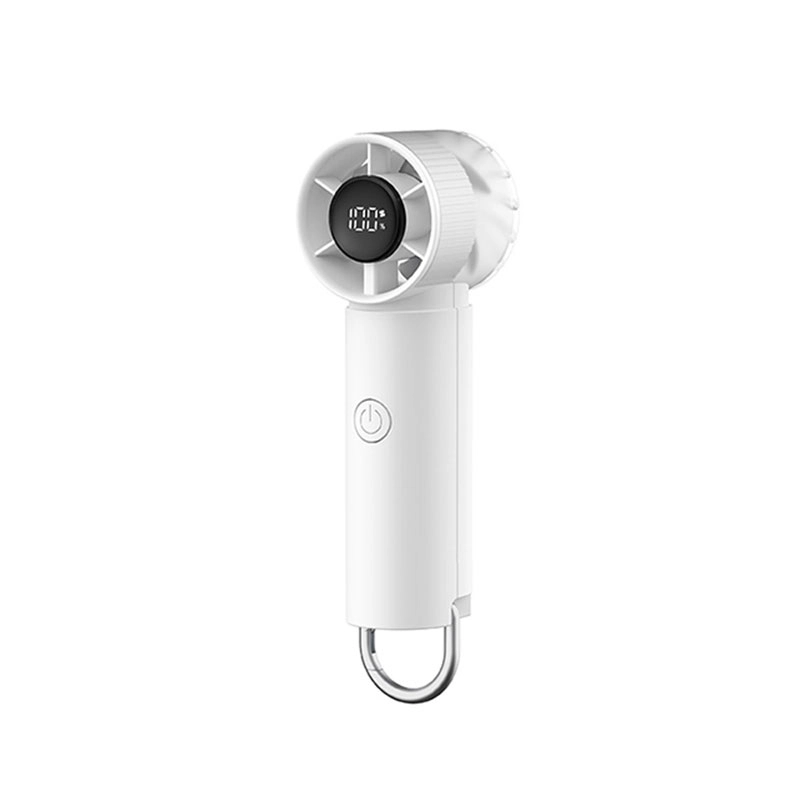
Customizable lightweight mini handheld cooling fan (with climbing hook) FS2667
This is a lightweight and portable + personalized customization product specially designed for commuters, students, the gift customization industry, and OEM/ODM buyers. It features (1) lightweight and easy portability, (2) a climbing buckle, and (3) a semi-transparent air duct design.
Get a Quote for Handheld Fan Solution
If you have any comments or good suggestions, please leave us a message; later our professional staff will contact you as soon as possible.
Contact


4th Floor, Building 3, Jurong Industrial Park, No. 27-1-1, Fu'an Industrial Zone,Leliu Town (Pancun), Shunde District, Foshan City, Guangdong Province
 Scan QR Code
YouTube
Twitter
Facebook