






Everything You Need to Know About hand held electric fan cost
- Understanding the Total Cost of Personal Cooling Solutions
- What “cost” really includes
- Why costs vary by region, scale and technology
- How Much Does a Hand Held Electric Fan Cost?
- Retail price ranges and what they mean
- Factors that move the price up or down
- Manufacturing, OEM/ODM and Bulk Pricing Explained
- Typical bill-of-materials and production cost breakdown
- MOQ, tooling, certifications and lead times
- Buying Guide: Choose the Right Fan for Your Budget
- Use-case driven recommendations
- Where to buy, warranties and certifications to insist on
- Cost-Saving Strategies for Brands and Resellers
- Design for cost without sacrificing quality
- Negotiate packaging, logistics and payment terms
- Why Certifications and Partners Matter (RYW Example)
- Certifications reduce market friction
- Choosing a manufacturing partner
- Conclusion
- Frequently Asked Questions (FAQ)
- Q: How much does it cost to prototype a handheld fan?
- Q: What certification costs should I expect for selling in the US and EU?
- Q: Can I lower per-unit cost with a smaller MOQ?
- Q: Are batteries expensive to source for handheld fans?
- Q: Where can I learn more about the technical background of fans?
This article provides a clear, actionable overview of hand held electric fan cost for consumers, e-commerce sellers, and OEM/ODM partners seeking to buy or manufacture portable fans across North America, Europe and Asia. It covers retail price bands, realistic manufacturing cost breakdowns, certification and logistics impacts, and step-by-step guidance on how to budget and negotiate costs. The content is written to serve searchers comparing prices, planning new products, or optimizing supply-chain economics for personal cooling solutions.
Understanding the Total Cost of Personal Cooling Solutions
What “cost” really includes
When people search for 'hand held electric fan cost', they may mean different things: the retail shelf price, the per-unit manufacturing cost (COGS), the landed cost after shipping and tariffs, or the total program cost including tooling, certification and marketing. To make purchasing or sourcing decisions you must consider:
- Retail price (what an end customer pays)
- Manufacturing cost (materials, labor, assembly)
- Development and tooling (prototyping, molds, firmware)
- Certifications and testing (safety and regional compliance)
- Logistics (freight, packaging, customs duties)
- After-sales (warranty, support)
Why costs vary by region, scale and technology
Costs depend on production location, order volume, component selection (motor type, battery chemistry), industrial design complexity, and required compliance marks (CE, UL, FCC etc.). For example, small-batch production in Europe or North America can carry significantly higher labor and overhead compared to high-volume production in Asia. Conversely, closer proximity to end markets reduces freight and customs complexity.
How Much Does a Hand Held Electric Fan Cost?
Retail price ranges and what they mean
Typical retail prices for consumer handheld electric fans in late 2024 fall roughly into three bands:
| Segment | Typical Retail Price (USD) | Key Characteristics |
|---|---|---|
| Budget | $8 – $25 | Basic plastic body, small brushless or brushed motor, 1200–3000 mAh battery, 2–8 hours runtime |
| Mid-range | $25 – $60 | Improved materials, quieter brushless motor, 2000–5000 mAh battery, multi-speed, better ergonomics |
| High Quality / Smart | $60 – $150+ | High-efficiency motors, large-capacity batteries, integrated misting/cooling features, app connectivity, branded design |
These retail prices include marketing margin, platform fees (if sold on marketplaces), shipping to consumers, and retailer markup.
Factors that move the price up or down
Key cost drivers include:
- Battery capacity and chemistry: larger mAh and higher-quality cells raise COGS but improve runtime.
- Motor quality: brushless DC motors cost more but are quieter and more efficient.
- Design and materials: metal accents, silicone grips, and High Quality plastics increase cost.
- Certifications: UL/ETL testing for North America, CE/UKCA for Europe, PSE for Japan, KC for Korea, and others add testing and documentation costs.
- Packaging and accessories: protective cases, car adapters, or extra blades increase retail appeal and cost.
Manufacturing, OEM/ODM and Bulk Pricing Explained
Typical bill-of-materials and production cost breakdown
Below is a representative example of a mid-range handheld electric fan's per-unit cost at a 10,000-unit order quantity. Actual costs vary by supplier, contract terms, and commodity prices.
| Item | Estimated Cost per Unit (USD) | Notes |
|---|---|---|
| Plastics & enclosure | $1.80 | Injection molded ABS/PC parts |
| Motor (brushless) | $2.50 | Small BLDC motor optimized for quiet operation |
| Battery (Li-ion 2500–4000 mAh) | $2.20 | Protected cell with PCM/BMS |
| PCB, MCU, charging IC | $1.50 | Basic control board and USB-C charging |
| Assembly & test | $1.00 | Labor, QA, simple testing jigs |
| Packaging & manual | $0.80 | Retail box, inserts |
| Overhead, warranty reserve | $0.70 | Factory overhead, small warranty provision |
| Estimated COGS | $10.50 |
With a COGS near $10–12 for a well-optimized mid-range unit, a typical wholesale price (30–50% margin) might be $15–20, and the retail price (after distributor and retailer margins, and platform fees) reaches the $30–50 band seen above.
MOQ, tooling, certifications and lead times
Non-recurring expenses strongly affect small orders:
- Tooling (injection molds): $1,500–$15,000 per mold depending on complexity and cavities.
- Certification testing: a basic safety and EMC test campaign for CE and FCC or UL can cost $3,000–$12,000 depending on the number of tests and iterative fixes.
- Prototyping & NPI: 4–12 weeks for prototypes and validation; mass production lead-time usually 6–12 weeks after pre-production approval.
For brands seeking lower unit pricing, increasing order sizes from 1,000 to 10,000+ units materially reduces per-unit tooling and testing amortization. This is where OEM/ODM partners like RYW Technology add value with in-house tooling, rapid prototyping and experienced certification management.
Buying Guide: Choose the Right Fan for Your Budget
Use-case driven recommendations
Match fan features and expected price to the primary use-case:
- Casual outdoor/commuter use (budget): Seek $10–25 fans with 1500–2500 mAh batteries, simple on/off and low weight.
- All-day office or travel (mid-range): Invest $25–60 for quieter brushless motors, 3000–5000 mAh batteries, multiple speeds and longer runtime.
- High Quality lifestyle or branded merchandise (High Quality): Choose $60+ units with advanced features—misting, air multiplier designs, app control and longer warranties.
Where to buy, warranties and certifications to insist on
When buying or sourcing handheld fans, prioritize these points to avoid downstream cost and risk:
- Certifications by target market: CE/UKCA for Europe, FCC for radio features in the US, UL/ETL for electrical safety in the US, PSE for Japan, and KC for Korea. These are not optional if you sell in regulated markets.
- Battery safety: insist on overcharge/over-discharge protection and UN38.3 transport certification for lithium batteries when shipping by air.
- Warranty & repair policy: a 12-month warranty is common for consumer electronics; ensure your supplier has spare parts support.
- Factory audits and quality systems: ISO 9001 certification is a baseline for consistent manufacturing processes; see ISO’s official page for more detail: ISO 9001 Quality Management.
Cost-Saving Strategies for Brands and Resellers
Design for cost without sacrificing quality
Simple, deliberate design choices lower cost: reduce part count, use shared components across SKUs, choose standard battery sizes and connectors, and plan for efficient assembly. Moving from custom machined parts to injection molded parts amortized over higher volume will reduce the per-unit cost significantly.
Negotiate packaging, logistics and payment terms
Shipping, duties and platform fees add to landed cost. Consider consolidated shipments, sea freight for large volumes (cheaper per unit than air freight), and working with suppliers that can provide FOB or DDP pricing to make landed cost forecasting simpler. Longer payment terms (e.g., 30–60 days) help cashflow for smaller brands.
Why Certifications and Partners Matter (RYW Example)
Certifications reduce market friction
Regulatory and safety certifications are an investment but they reduce market friction, lower recall risk and increase consumer trust. For example, CE marking demonstrates conformity with European standards for health, safety and environmental protection — information available from the European Commission: CE Marking (European Commission). Likewise, a recognized safety mark like UL is frequently required by large US retailers. See UL for more on safety standards: UL.
Choosing a manufacturing partner
RYW Technology Co., Ltd. (founded 2018) is an example of a vertically integrated partner: product design, in-house R&D of over 30 engineers, a 4,000 m² facility with three production lines, ISO9001 certification and a suite of global marks (CE, CB, UKCA, PSE, KC, UL, FCC, CCC). Working with an experienced OEM/ODM like RYW shortens development cycles, reduces rework during certification, and helps realize cost targets through design optimization and volume discounts.
Conclusion
Understanding hand held electric fan cost requires distinguishing between retail price, COGS, and total program cost that includes tooling, certification, and logistics. Typical retail ranges are $8–$25 (budget), $25–$60 (mid-range) and $60+ (High Quality). A well-optimized mid-range unit can have a manufacturing cost near $10–12 at scale, but non-recurring costs like tooling and testing push up per-unit cost for smaller orders. For brands and resellers, working with an experienced OEM/ODM partner that manages certification and NPI—such as RYW Technology—can reduce surprises and lower total landed cost.
Frequently Asked Questions (FAQ)
Q: How much does it cost to prototype a handheld fan?
A: Prototyping (3D printing, PCBs, initial firmware) commonly costs $1,500–$7,000 depending on complexity. Multiple iterations add cost. Rapid prototyping and in-house R&D shorten cycles and reduce iteration cost.
Q: What certification costs should I expect for selling in the US and EU?
A: Certification tests (safety, EMC, battery safety) for both US and EU can range $3,000–$12,000, plus any engineering fixes. For full market coverage (UL/ETL, FCC, CE/UKCA, and battery transport tests) budget toward the higher end, especially if your product includes wireless features.
Q: Can I lower per-unit cost with a smaller MOQ?
A: Smaller MOQ increases per-unit cost since tooling and setup are amortized over fewer units. For many designs, MOQ of 1,000–5,000 can be workable, but moving to 10,000+ brings significant per-unit savings. Consider co-packing or group buys to achieve economies of scale.
Q: Are batteries expensive to source for handheld fans?
A: Battery cell costs depend on capacity and market fluctuations. For common consumer sizes (2,000–4,000 mAh), cells and basic protection circuits typically account for $1.50–$3.00 per unit in a mid-volume order. Ensure UN38.3 and local transportation compliance when shipping finished goods.
Q: Where can I learn more about the technical background of fans?
A: General technical background on fans can be useful when selecting motors and airflow specs; see an overview on fans: Fan (machine) — Wikipedia.
If you want help estimating costs for a specific spec, requesting a quote, or designing an OEM/ODM program, contact our team at adrian@rywlife.com for a fast, practical consultation.
OEM/ODM best portable fans Manufacturers and Suppliers
Everything You Need to Know About mini portable usb fan
Top portable hand held fans Manufacturers and Suppliers
Top 10 mini fan Manufacturers and Supplier Brands
About Logistics
What payment methods do you accept?
About Products
How to order?
Can l order samples for testing?
About Cooperation
3.How long does it take from inquiry to delivery
About Company
What's the difference between RYW products and others?
You May Also Like
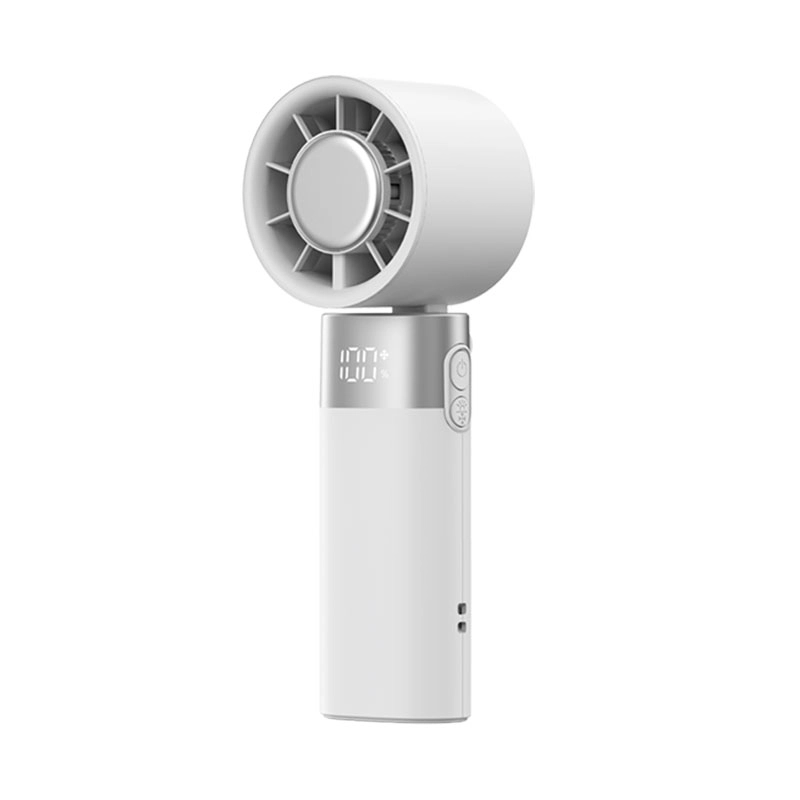
Reliable Handheld Cooling Solution for Bulk & Corporate Purchases
This premium handheld fan is designed for high-frequency, large-volume usage, making it an ideal cooling solution for corporate procurement, promotional distribution, employee welfare programs, and retail wholesale.
With stable airflow performance, a rechargeable design, and lightweight portability, it helps businesses deliver practical comfort products with strong perceived value while maintaining cost efficiency and supply reliability.
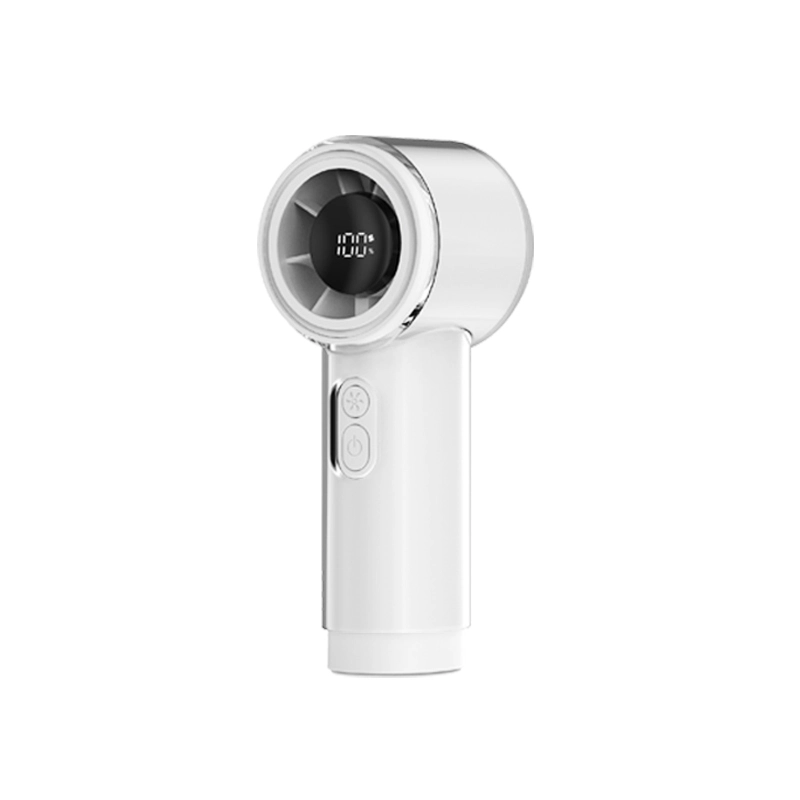
Customizable High-Speed Portable Handheld Fan FS2663
This is a high-speed, long-lasting, personalized, custom, portable cooling product specially designed for gift purchasers, cross-border e-commerce sellers, and OEM/ODM cooperation enterprises. It features (1) strong wind speed, (2) lightweight portability, (3) transparent shell design, (4) convenient carrying with a hand rope, and (5) long battery life. It helps enterprises enhance brand exposure, product differentiation competitiveness, and customer repeat purchase rate.
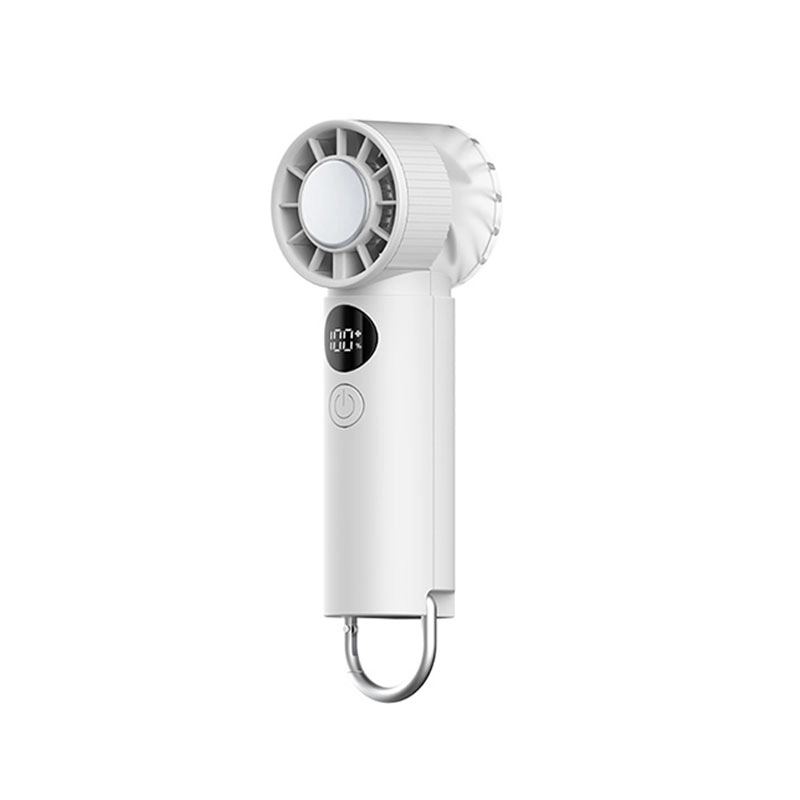
Customizable lightweight mini handheld cooling fan (with climbing hook) FS2666
A portable cooling and personalized customization product specially designed for commuters, students, the gift customization industry, and OEM/ODM buyers. It features (1) lightweight and easy portability, (2) a climbing buckle, and (3) semiconductor cooling.
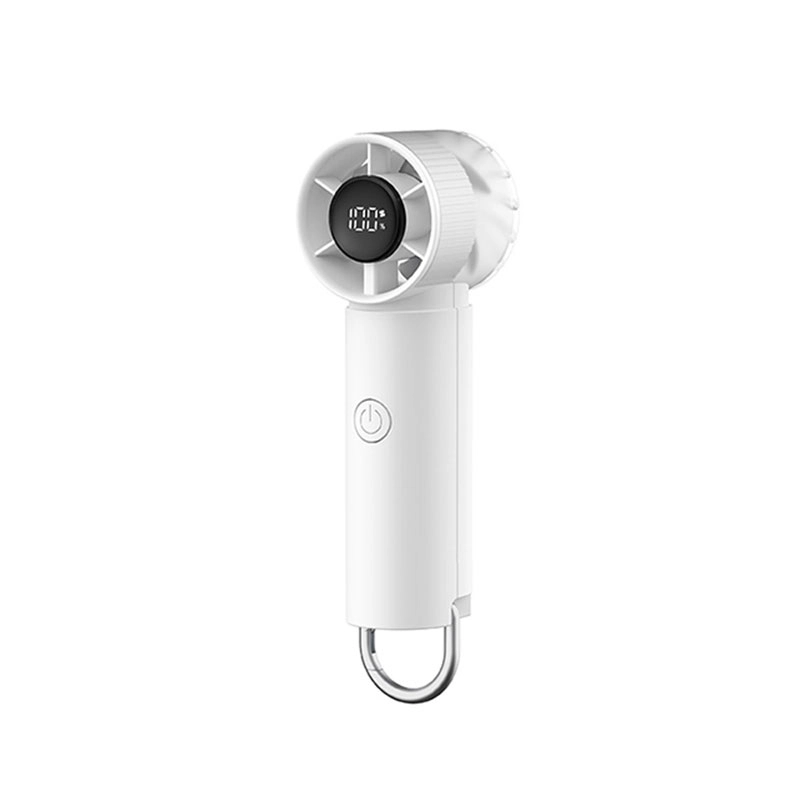
Customizable lightweight mini handheld cooling fan (with climbing hook) FS2667
This is a lightweight and portable + personalized customization product specially designed for commuters, students, the gift customization industry, and OEM/ODM buyers. It features (1) lightweight and easy portability, (2) a climbing buckle, and (3) a semi-transparent air duct design.
Get a Quote for Handheld Fan Solution
If you have any comments or good suggestions, please leave us a message; later our professional staff will contact you as soon as possible.
Contact


4th Floor, Building 3, Jurong Industrial Park, No. 27-1-1, Fu'an Industrial Zone,Leliu Town (Pancun), Shunde District, Foshan City, Guangdong Province
 Scan QR Code
YouTube
Twitter
Facebook