





Custom OEM Handheld Battery Fans: Design & Minimum Order
- Understanding user needs for portable cooling
- Who buys custom mini fans and why
- Key user-experience criteria I test
- Semantic product positioning
- Design considerations: from battery to branding
- Battery chemistry, capacity and safety
- Motor, noise and airflow trade-offs
- Materials, ergonomics, and personalization
- Compliance, testing, and certifications you must plan for
- International certification requirements
- EMC and wireless testing
- Quality control and reliability validation
- Minimum order quantities (MOQ), lead times and cost modeling
- Typical MOQs and why they vary
- Sample cost/lead-time comparison
- How I calculate landed cost and MOQ impact
- Prototyping, pilot runs and scaling to mass production
- Rapid prototyping best practices
- Pilot production and production validation testing (PVT)
- Scaling and supply-chain resilience
- Why partner with RYW Technology for your custom mini fans
- Company profile and core advantages
- Manufacturing capability and R&D strength
- Quality, certifications and global compliance
- Practical checklist: from design brief to first shipment
- Essential items in your design brief
- Milestones I recommend tracking
- Common pitfalls and how I avoid them
- Frequently Asked Questions (FAQ)
- What is the typical MOQ for custom mini fans?
- How long does it take to develop an OEM handheld fan from concept to first shipment?
- Which certifications are mandatory for battery-powered handheld fans?
- Can RYW help with both OEM and ODM projects?
- How do I balance cost vs. performance when choosing battery and motor?
- Do you provide sample testing and certification support?
I work with brands globally to design and manufacture custom mini fans and battery-powered handheld fans that balance ergonomics, performance, safety, and cost. In this article I walk through the product definition, engineering trade-offs, regulatory requirements, minimum order considerations, and real-world timelines—so you can make decisions that reduce risk, speed up time-to-market, and deliver a product your customers will actually use.
Understanding user needs for portable cooling
Who buys custom mini fans and why
From my experience, customer segments for handheld battery fans include commuters, outdoor enthusiasts, office workers, and promotional buyers. Each group prioritizes different attributes: run-time for commuters, weight and compactness for travelers, noise level for office use, and brandability for promotional products. Identifying the target segment early is the highest-leverage decision in the design process.
Key user-experience criteria I test
When I define requirements I focus on a small set of measurable metrics: airflow (CFM or m3/h), run time at usable fan speed, charging time, weight, noise (dBA), and perceived comfort (subjective but testable). Those metrics determine motor selection, battery capacity, and housing materials. I recommend creating simple user tasks and acceptance criteria—for example: “device must provide comfortable airflow for 60 minutes at medium speed while staying under 50 dBA when measured at 1 m.”
Semantic product positioning
When positioning a custom mini fan in marketplaces or search results, emphasize terms that buyers use: custom mini fans, portable cooling, handheld fans, battery-powered fan, mini USB fan, and personalized promotional fans. Aligning copy and specifications with those phrases improves discoverability and conversion.
Design considerations: from battery to branding
Battery chemistry, capacity and safety
Most high-performance handheld fans use lithium-ion polymer (LiPo) or lithium-ion (Li-ion) cells because of their energy density. I always verify that battery selection complies with shipping and safety standards, notably UN 38.3 test requirements for transporting lithium batteries. For detailed guidance on the UN test series and dangerous goods, see the UNECE transport pages (UNECE Transport).
Typical battery sizing examples I use in design trade-offs:
| Use Case | Battery (mAh) | Estimated Run Time (medium) | Typical Charge Method |
|---|---|---|---|
| Commuter / portable | 2,000–3,000 mAh | 4–8 hours | USB-C fast charging |
| High-Airflow personal cooler | 3,500–5,000 mAh | 6–12 hours (low to medium) | USB-C PD or QC |
| Promotional / low-cost | 800–1,500 mAh | 2–5 hours | Micro-USB / USB-A |
Motor, noise and airflow trade-offs
I select brushless DC (BLDC) motors for longevity and efficiency when the product needs a High Quality feel and longer run time. Brushed motors can reduce cost but may shorten lifespan and increase noise. Airflow is often reported in CFM (cubic feet per minute) or m3/h; I recommend using consistent units across documentation. In tests, a well-optimized mini fan with a compact BLDC motor can achieve 10–30 CFM while staying under 55 dBA at medium speed.
Materials, ergonomics, and personalization
ABS and PC+ABS blends are popular for housings because they balance cost and toughness. For a High Quality feel I specify soft-touch coatings or silicone grips. For brand customization (logo, color, packaging), I assess surface area for printing, mold complexity for color matching, and secondary processes like laser engraving. Personalization options often include color, logo printing, custom packaging inserts, and pre-programmed startup speeds.
Compliance, testing, and certifications you must plan for
International certification requirements
Depending on target markets you will typically need CE (EU), FCC (US for RF components like Bluetooth), PSE (Japan), KC (Korea), UKCA (UK), UL (safety recognition common in North America), and CCC (China). For battery-powered products, UN 38.3 and often IEC 62133 battery safety testing are required for safe market entry. See ISO’s overview of quality management references (ISO 9001) and UL’s resources on product safety (UL).
EMC and wireless testing
If your custom mini fans include wireless features (e.g., Bluetooth for app-controlled speed), you must plan for electromagnetic compatibility (EMC) testing and radio approvals—FCC in the U.S., CE (RED) in EU, and others as applicable. Skipping this step can block customs clearance or lead to costly redesigns.
Quality control and reliability validation
I recommend a testing matrix that includes lifecycle testing (fan motor cycles), drop tests (IEC 60068 methods), battery abuse and thermal tests (per IEC 62133), and environmental tests (humidity, salt spray if needed). For traceability and factory process control, lean on suppliers with ISO9001-certified operations; more about ISO certification is available at the ISO site (ISO 9001).
Minimum order quantities (MOQ), lead times and cost modeling
Typical MOQs and why they vary
MOQ depends on tooling complexity, component sourcing, and assembly methods. For injection-molded handheld fans the MOQ often ranges from 1,000 to 5,000 units because of mold costs. For simpler promotional mini USB fans, suppliers sometimes accept MOQs as low as 300–500, using shared molds or simpler secondary customization. I always ask suppliers for a break-even MOQ analysis to understand how much unit cost changes with volume.
Sample cost/lead-time comparison
Below I provide a representative table that I use during early supplier discussions. These are indicative ranges; exact figures depend on design specifics and supplier location.
| Item | Small Run (500–1,000) | Medium Run (2,000–5,000) | Large Run (10,000+) |
|---|---|---|---|
| Estimated unit cost | $6–$12 | $4–$8 | $2.5–$5 |
| MOQ | 300–1,000 | 2,000–5,000 | 10,000+ |
| Typical lead time (after DFM & tooling) | 4–8 weeks | 6–10 weeks | 8–14 weeks |
How I calculate landed cost and MOQ impact
When I build a landed cost model I include unit manufacturing cost, tooling amortization, shipping, import duties, packaging, in-country testing, and inventory carrying cost. Tooling amortization alone can shift the break-even MOQ considerably. I typically model three scenarios—low, expected, and high demand—to help partners choose between investing in unique tooling versus using shared molds or white-label options.
Prototyping, pilot runs and scaling to mass production
Rapid prototyping best practices
I use a phased approach: concept validation with 3D-printed housings, electronic proof-of-concept with off-the-shelf MCUs and motors, and pre-production samples with final tooling. Rapid prototyping shortens feedback cycles and helps catch ergonomic or thermal issues before expensive tooling is cut.
Pilot production and production validation testing (PVT)
Pilot runs (often 300–1,000 units) validate assembly procedures, test yields, labeling, packaging, and logistics. PVT should include factory audits, first-article inspection (FAI), and a sample of units for certification labs. I insist on PVT because it surfaces real-world problems that bench testing doesn’t reveal.
Scaling and supply-chain resilience
Scaling effectively requires qualifying secondary suppliers for critical components (batteries, motors, PCBs) and building safety stock for long-lead parts. I document alternate BOMs and maintain a change-control board so the first deviation doesn't trigger a supply-chain crisis.
Why partner with RYW Technology for your custom mini fans
Company profile and core advantages
RYW Technology Co., Ltd. was founded in 2018 by a team of visionary designers. As the originator of the Ice-Cooling Fan, we integrate product design, R&D, manufacturing, and sales to redefine personal comfort. Guided by our philosophy, Refined in Heart, Simple in Form, we create ergonomic products that harmonize the relationship between people and technology, ensuring every device delivers a superior, intuitive user experience.
Manufacturing capability and R&D strength
Our manufacturing capability is built on a 4,000 m² modern facility equipped with three advanced production lines. Backed by an in-house R&D team of over 30 experts, we specialize in professional OEM and ODM services, offering rapid prototyping and agile development. We help global partners—from e-commerce sellers to major retail brands—transform concepts into market-leading handheld fans and portable cooling solutions.
Quality, certifications and global compliance
We are committed to the highest safety and quality standards. RYW is ISO9001-certified and holds a comprehensive suite of global certifications, including CE, CB, UKCA, PSE, KC, UL, FCC, and CCC. With a focus on reliability and compliance, we serve clients across North America, Europe, and Asia, empowering brands to deliver safe, innovative products to the world. For enquiries and collaboration, contact me directly at adrian@rywlife.com.
Practical checklist: from design brief to first shipment
Essential items in your design brief
- Target user and primary use cases
- Key metrics: run time, weight, noise, airflow
- Branding and packaging requirements
- Target certifications and markets
- Planned volumes and desired lead times
Milestones I recommend tracking
- Concept approval and acceptance criteria
- Prototype and ergonomic validation
- Pre-certification testing (battery, EMC, safety)
- Pilot production and PVT sign-off
- Mass production readiness and shipment
Common pitfalls and how I avoid them
The most common pitfalls I see are underestimating battery testing time, ignoring EMC for wireless features, and committing to unique tooling too early. I de-risk projects by running parallel paths—mechanical validation while starting pre-certification tests on a prototype BOM—and by insisting on early alignment on MOQ and tooling amortization.
Frequently Asked Questions (FAQ)
What is the typical MOQ for custom mini fans?
Typical MOQ for an injection-molded custom handheld fan is 1,000–5,000 units, but lower MOQs (300–1,000) are possible for promotional fans using shared molds or by accepting higher per-unit costs. Exact MOQ depends on tooling, PCB quantities, and battery sourcing.
How long does it take to develop an OEM handheld fan from concept to first shipment?
For a standard project with existing designs and no novel certifications, expect 3–5 months to prototype and pilot production, and 6–12 months to full mass production depending on certification timelines and tooling lead times.
Which certifications are mandatory for battery-powered handheld fans?
Commonly required certifications include IEC 62133 (battery safety), UN 38.3 (transport), CE (EU), FCC (US for RF), PSE (Japan), KC (Korea), UKCA (UK), and UL for North American markets. The set depends on the markets you plan to sell into.
Can RYW help with both OEM and ODM projects?
Yes. RYW provides full OEM and ODM services—from concept ideation and rapid prototyping to tooling and mass production. With in-house R&D and production lines, we can accelerate development and ensure consistency across runs.
How do I balance cost vs. performance when choosing battery and motor?
Decide on the product’s primary promise: if long run time is key, invest in higher-capacity Li-ion cells and efficient BLDC motors. If cost is king, accept shorter run time and use lower-cost cells and brushed motors. I always model three scenarios to show the cost/performance trade-offs before finalizing the BOM.
Do you provide sample testing and certification support?
Yes—RYW assists with pre-certification testing, liaises with accredited labs, and helps prepare documentation for certifications such as CE, FCC, UL, and battery tests. Early engagement reduces the risk of rework and speeds approvals.
If you’re ready to discuss a new custom mini fan or need help estimating MOQs, costs, or timelines, contact me at adrian@rywlife.com. View our handheld fans and product solutions, and let’s plan a prototype-to-production roadmap tailored to your market and brand.
Top best mini fan portable Manufacturers and Suppliers
Everything You Need to Know About rechargeable hand fan wholesale
Everything You Need to Know About hand held electric fan cost
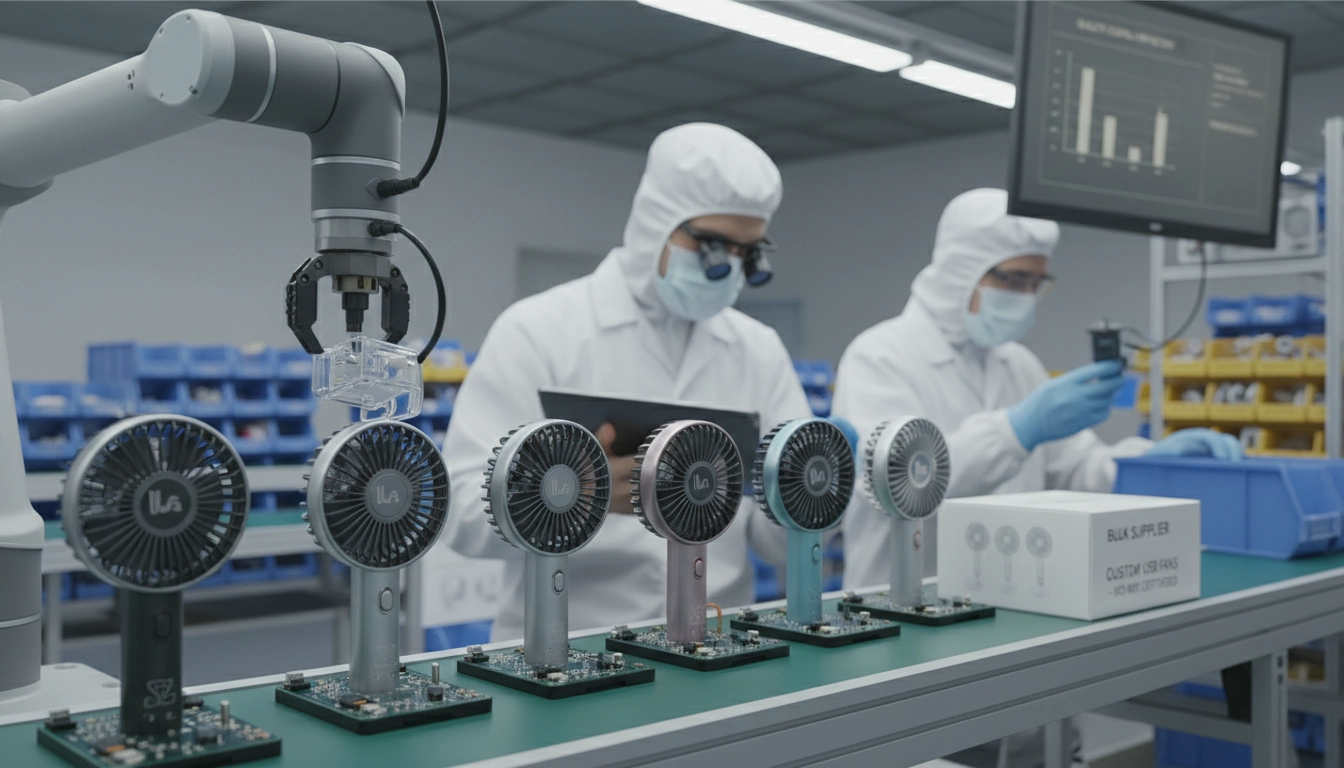
USB Handheld Fan Bulk Buying Checklist: Quality Control, Lead Times, and 2026 Pricing
About Customization
Can you provide customized packaging and labels?
Yes, the MOQ is 1,000
About Company
What is RYW main product for factory?
About Products
Can l order samples for testing?
How long is the quarantee?
About Logistics
What payment methods do you accept?
You May Also Like
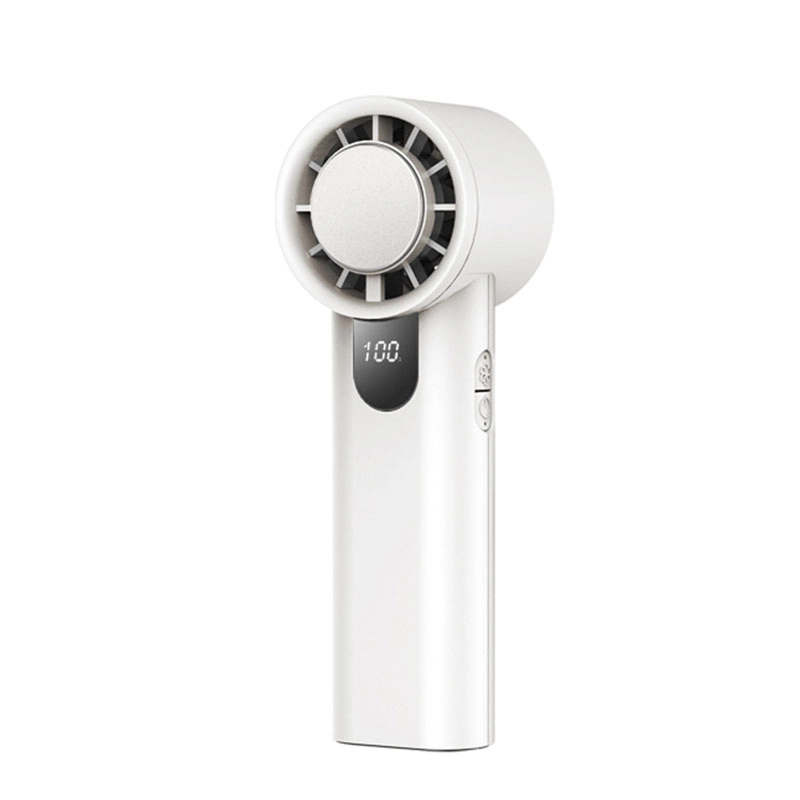
Customizable high-speed handheld fan
Experience powerful breeze on the go with RYW’s Customizable High-Speed Handheld Fan. This hand held electric fan offers personalized designs and compact size, perfect as custom mini fans for travel or events. Stay cool anytime with style and convenience.
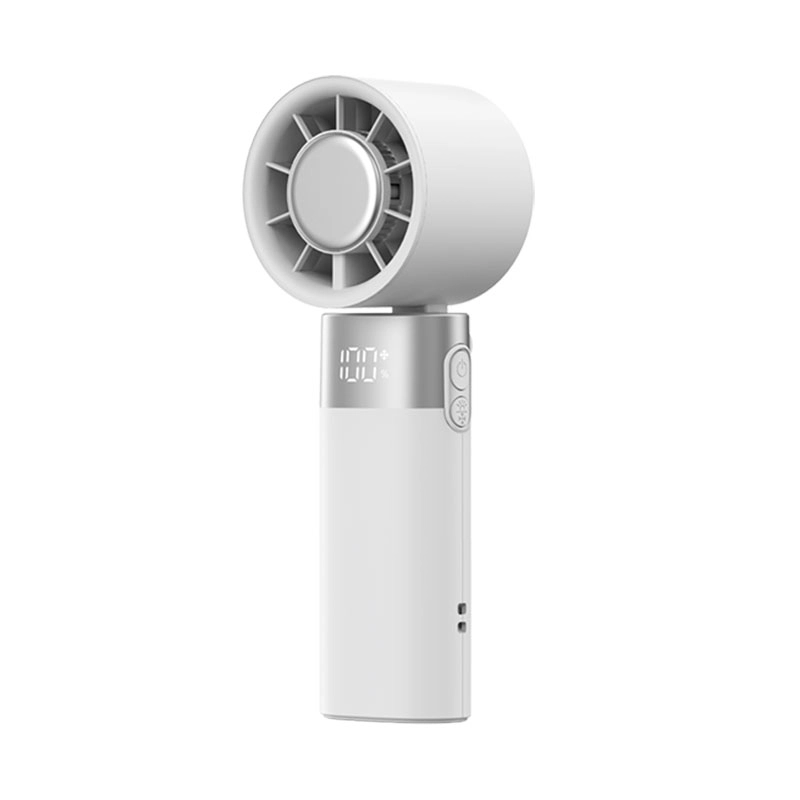
Reliable Handheld Cooling Solution for Bulk & Corporate Purchases
This premium handheld fan is designed for high-frequency, large-volume usage, making it an ideal cooling solution for corporate procurement, promotional distribution, employee welfare programs, and retail wholesale.
With stable airflow performance, a rechargeable design, and lightweight portability, it helps businesses deliver practical comfort products with strong perceived value while maintaining cost efficiency and supply reliability.
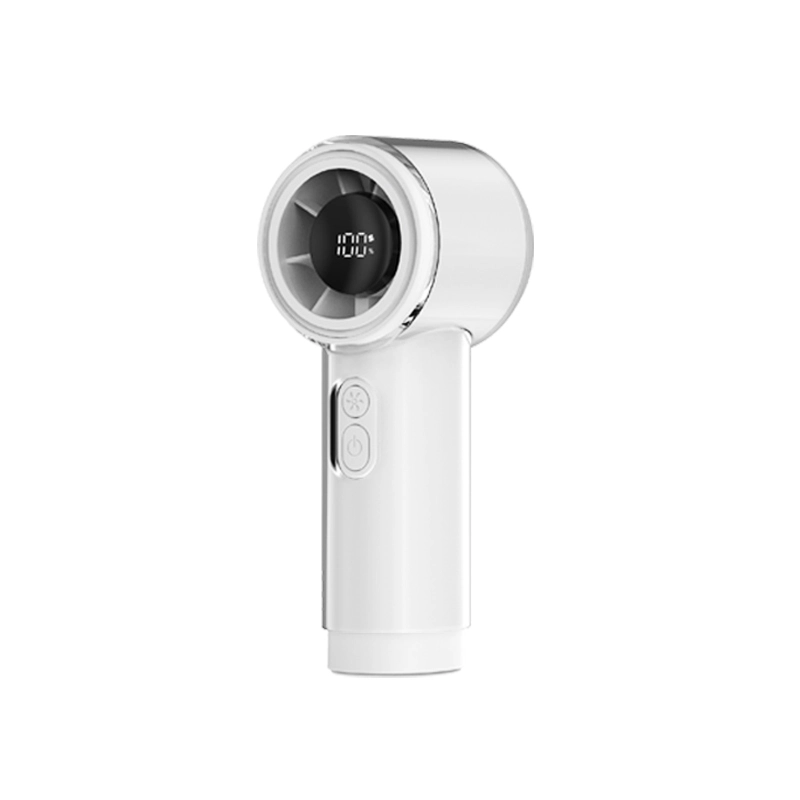
Customizable High-Speed Portable Handheld Fan FS2663
This is a high-speed, long-lasting, personalized, custom, portable cooling product specially designed for gift purchasers, cross-border e-commerce sellers, and OEM/ODM cooperation enterprises. It features (1) strong wind speed, (2) lightweight portability, (3) transparent shell design, (4) convenient carrying with a hand rope, and (5) long battery life. It helps enterprises enhance brand exposure, product differentiation competitiveness, and customer repeat purchase rate.
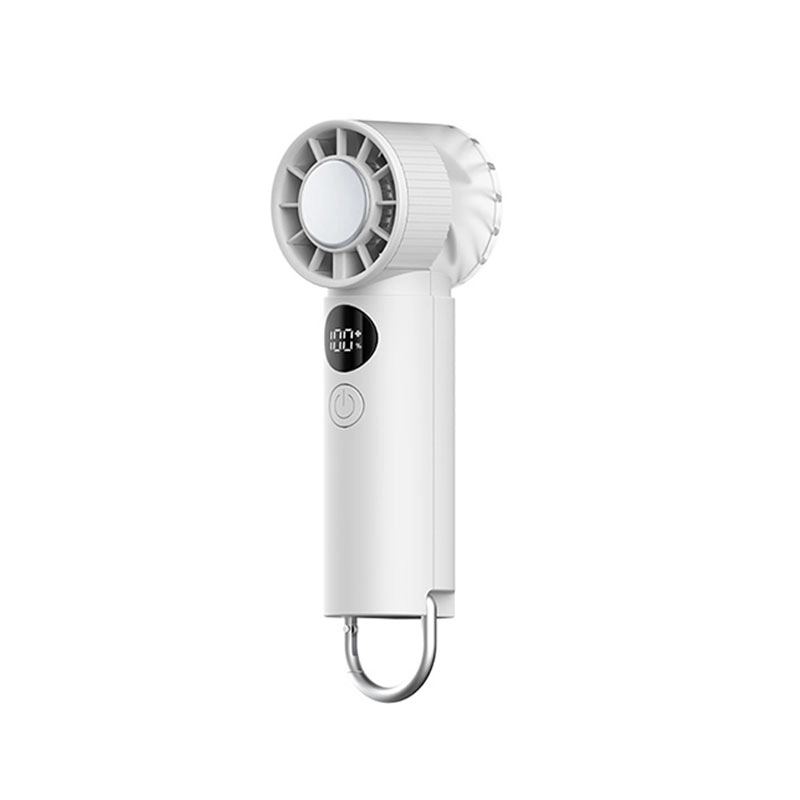
Customizable lightweight mini handheld cooling fan (with climbing hook) FS2666
A portable cooling and personalized customization product specially designed for commuters, students, the gift customization industry, and OEM/ODM buyers. It features (1) lightweight and easy portability, (2) a climbing buckle, and (3) semiconductor cooling.
Get a Quote for Handheld Fan Solution
If you have any comments or good suggestions, please leave us a message; later our professional staff will contact you as soon as possible.
Contact


4th Floor, Building 3, Jurong Industrial Park, No. 27-1-1, Fu'an Industrial Zone,Leliu Town (Pancun), Shunde District, Foshan City, Guangdong Province
 Scan QR Code
YouTube
Twitter
Facebook