





Custom Mini Fans with Branding: Logo Printing and Design Tips
- Understanding Product Types and Use Cases
- Portable handheld fans vs. desktop mini fans
- Target audience and campaign goals
- Material choices and their branding implications
- Logo Printing Methods and When to Use Each
- Pad printing: the economical choice for small logos
- Screen printing and multi-color applications
- UV printing and detailed full-color logos
- Artwork Preparation, Color Management, and File Specifications
- Vector art, bleed, and safe zones
- Color systems and Pantone matching
- Font, contrast, and legibility on small surfaces
- Durability, Compliance, and Quality Assurance
- Wear testing and accelerated aging
- Safety standards and certifications
- Quality checks and pre-shipment inspection
- Printing methods comparison
- Choosing an OEM/ODM Partner: What I Inspect
- Production capability and lead times
- Prototyping and iterative development
- Supply chain transparency and certifications
- RYW Technology: OEM Expertise and Why It Matters
- Company profile and core strengths
- Manufacturing capability and R&D
- Quality, safety, and global compliance
- Costing, MOQ, and Timeline Expectations
- Typical MOQ and price drivers
- Production timeline (typical)
- Frequently Asked Questions (FAQ)
- 1. What is the best printing method for logos on curved fan housings?
- 2. How durable are printed logos on handheld fans?
- 3. Can you match my brand Pantone color on plastic parts?
- 4. What safety certifications should I request for battery-powered mini fans?
- 5. How do I minimize cost while keeping good branding quality?
- 6. Do you provide packaging design for branded fans?
- Next Steps and Contact
I work with brands worldwide to develop custom mini fans that combine practical cooling performance with distinctive branding. Whether you are sourcing promotional handheld fans for events in North America, retail-ready portable fans for Europe, or private-label dropshipping across Asia, this guide helps you choose the right materials, logo printing technique, artwork preparation, and compliance checks so RYWed mini fans arrive on time, look professional, and pass global safety standards.
Understanding Product Types and Use Cases
Portable handheld fans vs. desktop mini fans
Not all small fans are the same. Portable handheld fans are optimized for ergonomics and battery-powered operation; desktop mini fans tend to prioritize continuous runtime and higher airflow at low noise. For branding purposes, handheld fans often offer better tactile engagement and more visible logo placement because users carry them. When I recommend custom mini fans, I select form factors that maximize visible branding area without compromising comfort or safety.
Target audience and campaign goals
Defining use cases clarifies design decisions. If the goal is mass giveaways at outdoor festivals, prioritize low cost, high-contrast printing, and durable plastic. For corporate gifts or retail, choose higher-quality housings, refined finishing, and High Quality printing such as UV or full-color dye-sublimation. I always map campaign goals to minimum order quantities and acceptable price points before settling on materials or print methods.
Material choices and their branding implications
Common materials are ABS, PP, and soft-touch TPE for grips. ABS promotes crisp pad-printing results and strong color fidelity; soft-touch finishes reduce contrast for printed logos and often require UV or engraved metal badges to retain High Quality feel. When discussing custom mini fans, I advise clients to request physical samples of both unbranded and printed prototypes to evaluate adhesion and tactile perception.
Logo Printing Methods and When to Use Each
Pad printing: the economical choice for small logos
Pad printing excels on curved or irregular surfaces common in handheld fans. It is cost-effective for single-color or two-color logos at medium volumes. Durability depends on ink and curing; proper surface preparation (cleaning and corona treatment on certain plastics) increases adhesion. For more technical detail, see the pad printing overview on Wikipedia: https://en.wikipedia.org/wiki/Pad_printing.
Screen printing and multi-color applications
Screen printing gives vibrant colors and is suitable for flat surfaces or slightly curved panels. It scales well at higher volumes and supports spot colors. I recommend screen printing for simple, bold logos on promotional custom mini fans destined for outdoor campaigns.
UV printing and detailed full-color logos
UV digital printing produces high-detail, photographic-quality results and adheres well to many plastics without pre-treatment. It's ideal for full-color artwork, gradients, and photographic images on fan housings. For best longevity, select UV inks formulated for plastics and request accelerated weathering reports from your supplier.
Artwork Preparation, Color Management, and File Specifications
Vector art, bleed, and safe zones
Supply vector artwork (AI, EPS, or PDF) whenever possible. Vectors ensure sharp edges at any scale. Define bleeds and safe zones based on the printable area your supplier provides. For small logos on a mini fan, keep critical text at least 2–3 mm inside the safe edge to avoid clipping during production.
Color systems and Pantone matching
Use Pantone spot colors for brand consistency across print methods when possible. If printing digitally, convert to the correct CMYK or RGB profiles and request color proofing. I advise ordering color-matched physical proofs because screen and pad printing reproduce colors differently than UV or sublimation.
Font, contrast, and legibility on small surfaces
Small surfaces magnify legibility challenges. Choose bold weights for logotypes and avoid thin strokes or intricate details that will fill in during printing. Test scaled versions of your logo before approving tooling or bulk runs.
Durability, Compliance, and Quality Assurance
Wear testing and accelerated aging
Logos on frequently handled items need durability validation. I recommend rub tests (e.g., 1,000 cycles) and accelerated UV exposure testing to identify fading or peeling. Many reputable suppliers provide test reports; request them as part of the technical package for your custom mini fans.
Safety standards and certifications
Electrical components in battery-powered mini fans must comply with regional safety standards. ISO 9001 demonstrates quality management systems—see ISO's page for details: https://www.iso.org/iso-9001-quality-management.. For market access, verify CE marking requirements for EU sales: https://ec.europa.eu/growth/single-market/ce-marking_en, and check UL listings for North America: https://www.ul.com. Consumer safety authorities like the U.S. Consumer Product Safety Commission provide guidance on portable electrical devices: https://www.cpsc.gov.
Quality checks and pre-shipment inspection
Insist on first article inspection (FAI), in-line quality checks, and full carton inspection before shipment. I typically require a quality checklist that includes logo positioning, color matching, battery safety tests, and packaging verification. For reputable OEM partners, request certification copies and recent audit reports as part of vendor qualification.
Printing methods comparison
| Method | Best for | Color Options | Durability | Relative Cost |
|---|---|---|---|---|
| Pad printing | Small, curved logos | Spot colors | Good with proper curing | Low |
| Screen printing | Bold, flat artwork | Spot colors, multi-color | Very good | Medium |
| UV digital | Photographic, full-color | Full RGB/CMYK | Good to very good | Medium to High |
| Dye-sublimation | Fabric straps or polyester parts | Full-color photographic | Excellent on suitable substrates | Medium |
Choosing an OEM/ODM Partner: What I Inspect
Production capability and lead times
When selecting an OEM, I examine factory layout, production lines, and lead times for tooling and mass production. A 4,000 m² modern facility with dedicated production lines reduces bottlenecks and shortens turnaround. Ask for a production plan that shows cycle times and capacity per line.
Prototyping and iterative development
Rapid prototyping shortens time-to-market. An in-house R&D team capable of quick iterations and small-batch prototyping helps validate design, ergonomics, and print quality before full tooling. Ensure your partner can produce printed prototypes using the intended method so you evaluate the final look early.
Supply chain transparency and certifications
Verify supplier certifications (ISO9001, CE, UL, FCC, etc.) and ask about material traceability. Transparent suppliers provide test reports, material data sheets, and third-party inspection results. For electrical safety, insist on battery documentation and cell manufacturer traceability.
RYW Technology: OEM Expertise and Why It Matters
Company profile and core strengths
RYW Technology Co., Ltd. was founded in 2018 by a team of visionary designers. As the originator of the Ice-Cooling Fan, we integrate product design, R&D, manufacturing, and sales to redefine personal comfort. Guided by our philosophy, 'Refined in Heart, Simple in Form,' we create ergonomic products that harmonize the relationship between people and technology, ensuring every device delivers a superior, intuitive user experience.
Manufacturing capability and R&D
Our manufacturing capability is built on a 4,000 m² modern facility equipped with three advanced production lines. Backed by an in-house R&D team of over 30 experts, we specialize in professional OEM and ODM services, offering rapid prototyping and agile development. We help global partners—from e-commerce sellers to major retail brands—transform concepts into market-leading handheld fans and portable cooling solutions.
Quality, safety, and global compliance
We are committed to the highest safety and quality standards. RYW is ISO9001-certified and holds a comprehensive suite of global certifications, including CE, CB, UKCA, PSE, KC, UL, FCC, and CCC. With a focus on reliability and compliance, we serve clients across North America, Europe, and Asia, empowering brands to deliver safe, innovative products to the world. For inquiries, contact us at adrian@rywlife.com.
Costing, MOQ, and Timeline Expectations
Typical MOQ and price drivers
Prices depend on fan complexity, print method, and materials. Simple pad-printed promotional custom mini fans often have lower tooling costs and MOQs as low as a few hundred, while full-color UV-printed or custom-shaped High Quality fans usually require larger MOQs and higher per-unit costs. Design complexity, custom molds, and certification costs are key price drivers.
Production timeline (typical)
Estimated timeline from artwork approval to shipment:
- Prototype: 7–14 days
- Tooling and pre-production samples: 14–30 days
- Mass production: 14–35 days depending on volume
Always build buffer time for certification testing and pre-shipment inspection.
Frequently Asked Questions (FAQ)
1. What is the best printing method for logos on curved fan housings?
Pad printing is typically the best for curved surfaces due to its ability to transfer ink onto irregular shapes. For photographic quality, UV printing may be used on flatter panels or removable badges.
2. How durable are printed logos on handheld fans?
Durability depends on the method and inks used. With proper curing and surface preparation, pad and screen prints can withstand thousands of handling cycles. Ask your supplier for rub tests and accelerated UV exposure reports to verify longevity.
3. Can you match my brand Pantone color on plastic parts?
Yes, spot color matching is possible with screen or pad printing. For digital methods, request physical proofing since color reproduction varies by method and substrate. Pantone matching for plastics may require pigment adjustments at mold or material level.
4. What safety certifications should I request for battery-powered mini fans?
Request test reports for cell safety, overcharge/overdischarge protection, and compliance with regional standards such as CE (EU), UL (North America), PSE (Japan), and KC (Korea). Also ensure ISO9001 quality management coverage for manufacturing processes.
5. How do I minimize cost while keeping good branding quality?
To balance cost and quality: choose simpler artwork, limit spot colors, select pad or screen printing, and consolidate orders to achieve economies of scale. Work with an OEM who offers rapid prototyping so you can validate choices before committing to large runs.
6. Do you provide packaging design for branded fans?
Many OEM partners, including RYW, offer packaging design services. Packaging influences perceived value—consider custom retail boxes or eco-friendly sleeves if your fans will be sold in stores or given as High Quality corporate gifts.
Next Steps and Contact
If you are ready to develop custom mini fans with professional branding, I recommend starting with a short briefing: intended market, target audience, preferred materials, logo files, and estimated order quantities. For OEM/ODM support, rapid prototyping, and compliance-backed manufacturing, contact RYW Technology at adrian@rywlife.com to request a quote or arrange sample development.
Explore our handheld fans and custom branding services to ensure your promotional campaign or retail product stands out with durable, well-executed logo printing and reliable global compliance.
Top hand Fan Manufacturers and Suppliers
![The 15 Best Portable Fan Wholesale Suppliers of 2026 [Expert Comparison & Review] - RYW](https://static.gooecloud.com/upload/img/ai-image/the-15-best-portable-fan-wholesale-suppliers-of-2026-expert-comparison-review.png?x-oss-process=image/format,webp/quality,Q_100 "The-15-Best-Portable-Fan-Wholesale-Suppliers-of-2026-[Expert-Comparison-&-Review] - RYW")
The 15 Best Portable Fan Wholesale Suppliers of 2026 [Expert Comparison & Review]
Everything You Need to Know About best portable fans for cooling
OEM/ODM small portable air conditioner fan Manufacturers and Suppliers
About Products
How long is the quarantee?
About Logistics
What payment methods do you accept?
Can you ship to my country?
About Company
What's the difference between RYW products and others?
About Customization
What is the MOQ for custom logo?
You May Also Like
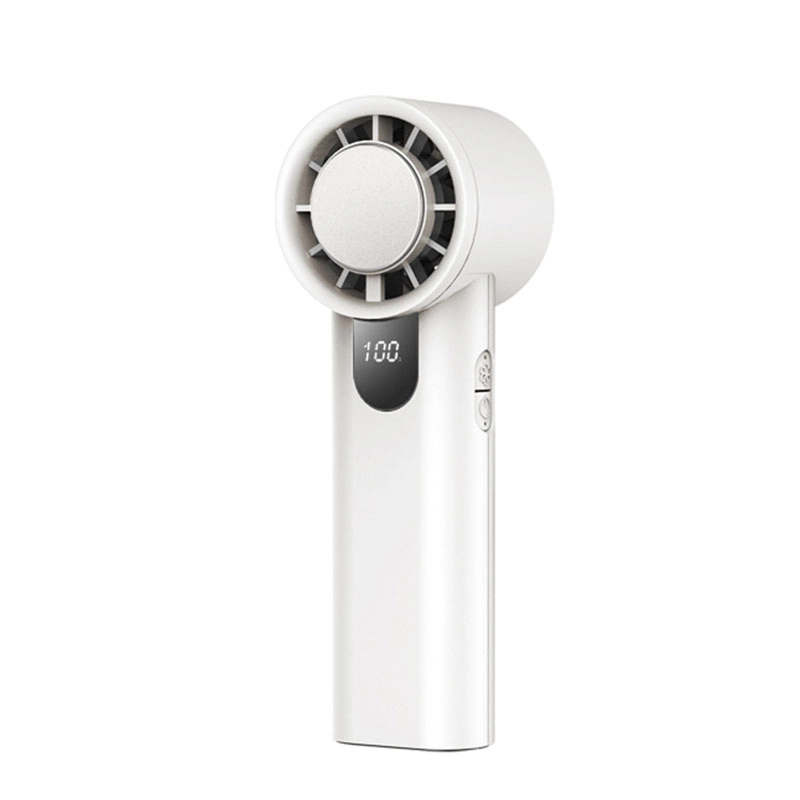
Customizable high-speed handheld fan
Experience powerful breeze on the go with RYW’s Customizable High-Speed Handheld Fan. This hand held electric fan offers personalized designs and compact size, perfect as custom mini fans for travel or events. Stay cool anytime with style and convenience.
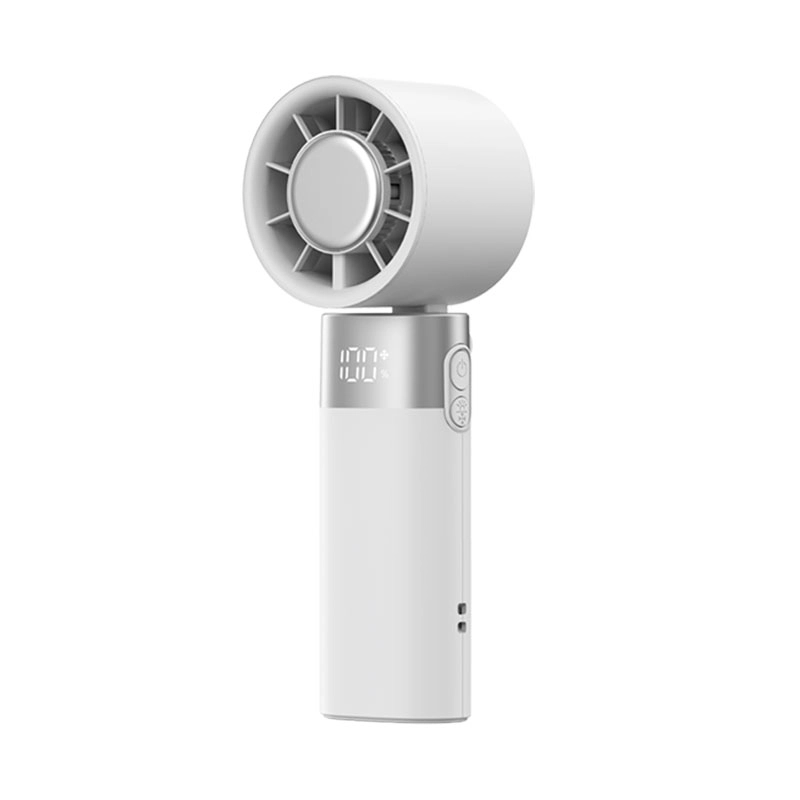
Reliable Handheld Cooling Solution for Bulk & Corporate Purchases
This premium handheld fan is designed for high-frequency, large-volume usage, making it an ideal cooling solution for corporate procurement, promotional distribution, employee welfare programs, and retail wholesale.
With stable airflow performance, a rechargeable design, and lightweight portability, it helps businesses deliver practical comfort products with strong perceived value while maintaining cost efficiency and supply reliability.
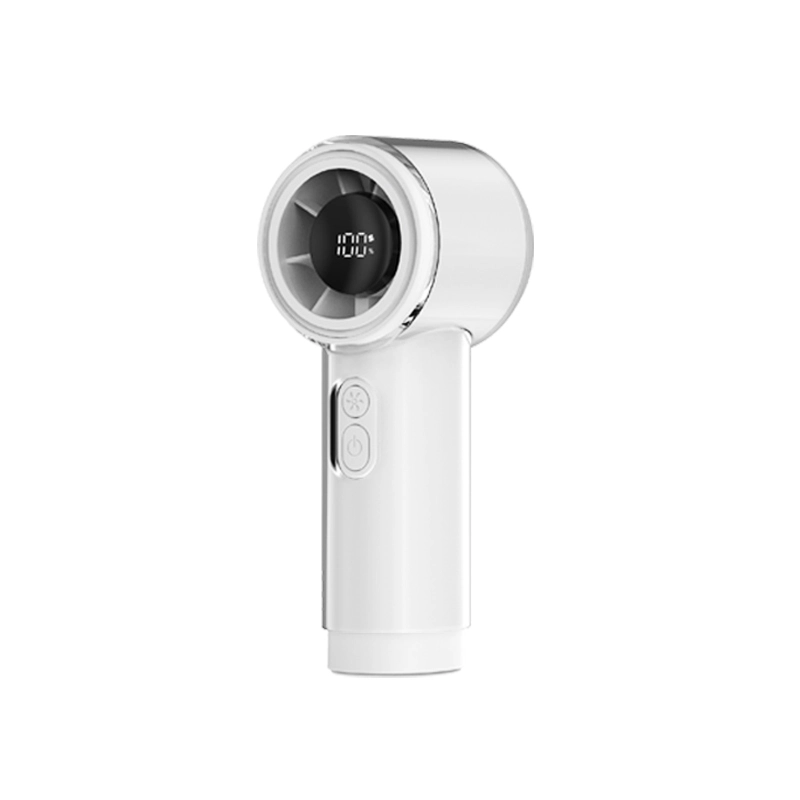
Customizable High-Speed Portable Handheld Fan FS2663
This is a high-speed, long-lasting, personalized, custom, portable cooling product specially designed for gift purchasers, cross-border e-commerce sellers, and OEM/ODM cooperation enterprises. It features (1) strong wind speed, (2) lightweight portability, (3) transparent shell design, (4) convenient carrying with a hand rope, and (5) long battery life. It helps enterprises enhance brand exposure, product differentiation competitiveness, and customer repeat purchase rate.
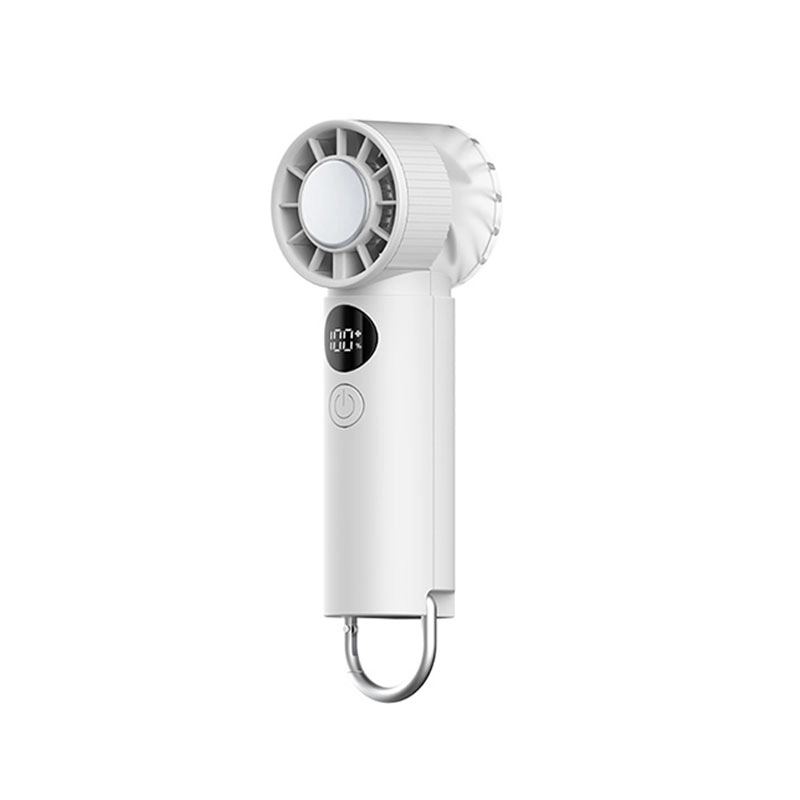
Customizable lightweight mini handheld cooling fan (with climbing hook) FS2666
A portable cooling and personalized customization product specially designed for commuters, students, the gift customization industry, and OEM/ODM buyers. It features (1) lightweight and easy portability, (2) a climbing buckle, and (3) semiconductor cooling.
Get a Quote for Handheld Fan Solution
If you have any comments or good suggestions, please leave us a message; later our professional staff will contact you as soon as possible.
Contact


4th Floor, Building 3, Jurong Industrial Park, No. 27-1-1, Fu'an Industrial Zone,Leliu Town (Pancun), Shunde District, Foshan City, Guangdong Province
 Scan QR Code
YouTube
Twitter
Facebook