





Cost Breakdown: Manufacturing Price of Handheld Battery Fans
- Understanding Buyer Intent and Market Drivers for Custom Mini Fans
- Why buyers request custom mini fans
- Demand patterns and seasonality
- Key user expectations that affect cost
- Detailed Cost Breakdown: Where Your Money Goes
- Battery cell costs and trends
- How certifications add to cost
- Manufacturing Process, Quality Assurance, and Compliance
- Typical production flow for custom mini fans
- Testing and safety: what I insist on
- Case: Cost vs. quality trade-offs
- Strategies to Reduce Cost Without Sacrificing Safety or UX
- Design and sourcing levers
- Manufacturing and logistics optimizations
- Example sensitivity table: how features affect BOM
- Partnering with a Manufacturer: Why RYW Technology Stands Out
- Frequently Asked Questions (FAQ)
- 1. How much does it cost to manufacture a custom mini fan per unit?
- 2. What certifications are required to sell handheld battery fans in major markets?
- 3. How do battery choices affect cost and compliance?
- 4. Can I reduce per-unit cost by increasing MOQ?
- 5. What are the biggest risks that increase total cost unexpectedly?
- 6. How long does it take from design to first shipment?
In this article I analyze the true manufacturing cost of handheld battery fans—especially custom mini fans—based on my years advising brands, managing OEM projects, and overseeing production. I present a transparent cost breakdown, point to verifiable standards and industry references, and provide practical levers brands can use to optimize price without sacrificing safety or user experience. Whether you are an e-commerce seller, retail buyer, or product manager evaluating supplier quotes, this guide helps you understand where money goes and how to make smarter decisions.
Understanding Buyer Intent and Market Drivers for Custom Mini Fans
Why buyers request custom mini fans
Buyers typically request custom mini fans for differentiation, branding, and feature-set control. A private-label seller may want unique colors, logos, or battery capacity to stand out on marketplaces; a retail chain needs CE/UL-compliant designs for shelf-ready models; corporate buyers require bulk customization for promotional giveaways. Understanding this intent helps prioritize which cost elements—tooling, electronics, battery capacity, certification—matter most to your project.
Demand patterns and seasonality
Handheld and portable cooling solutions have pronounced seasonality, with peak demand in late spring and summer. Inventory planning affects per-unit cost: higher MOQs and off-season tooling can lower unit BOM and amortized tooling costs. Market sizing and seasonality trends are discussed broadly in sources like the overview of fans as mechanical devices (Wikipedia: Fan (machine)), which helps explain demand cycles and application contexts.
Key user expectations that affect cost
End users look for battery life, noise level, cooling performance, portability, and perceived build quality. Upgrading any of these—bigger cells, brushless motors, metal housings—impacts the bill of materials (BOM) significantly. As designers, we balance user expectations against unit economics to produce viable price points for retail and wholesale channels.
Detailed Cost Breakdown: Where Your Money Goes
Below I present a typical cost breakdown for a mid-tier custom mini fan manufactured at a China-based factory with a moderate MOQ (e.g., 5,000 units). These figures are illustrative ranges based on industry experience and verified cost drivers; always request a detailed supplier BOM and tooling amortization schedule for precise quotes.
| Cost Item | Typical Range (USD/unit) | Notes |
|---|---|---|
| Bill of Materials (BOM: motor, PCB, battery cells, plastics) | $2.50 – $5.00 | Motor type and battery chemistry are the biggest BOM levers |
| Tooling amortization | $0.20 – $1.00 | Depends on mold complexity and MOQ |
| Labor & assembly | $0.30 – $1.20 | Manual vs. automated assembly affects this significantly |
| Quality testing & inspection | $0.08 – $0.40 | Includes functional tests and random QC sampling |
| Certification & compliance amortization | $0.10 – $0.60 | CE/UKCA/UL/FTC costs spread over units; battery certifications add cost |
| Packaging | $0.10 – $0.50 | Retail-ready packaging increases cost |
| Logistics & duty (FOB basis) | $0.15 – $0.70 | Depends on freight mode, fuel, tariffs |
| Factory overhead & profit | $0.30 – $1.20 | Includes factory margin and overhead |
| Example Total Manufacturing Cost (FOB) | $3.93 – $11.60 | Lower end for basic designs; upper end for High Quality custom features |
These ranges align with typical electronics and small appliance manufacturing economics where the BOM is the dominant cost. Industry resources on electronics manufacturing and BOM management, such as IPC (IPC), provide best practices for component sourcing and cost control.
Battery cell costs and trends
Battery cell cost is a major variable when your custom mini fan uses lithium-ion cells versus NiMH or replaceable AA cells. For context, lithium-ion battery pack price trends have fallen over the past decade—analyses by industry trackers like BloombergNEF document pack-price declines that directly affect portable product economics (see BloombergNEF battery price trends).
How certifications add to cost
Certifications—CE/UKCA for Europe/UK, FCC for radio elements, UL for North America, PSE/KC for Japan/Korea, and IEC/IEC 62133 for battery safety—require laboratory testing and sometimes design iterations. Certification test fees and consultancy are often amortized across the first production run and can add $0.10–$0.60 per unit depending on scope and volumes. For ISO9001 quality management context see ISO 9001.
Manufacturing Process, Quality Assurance, and Compliance
Typical production flow for custom mini fans
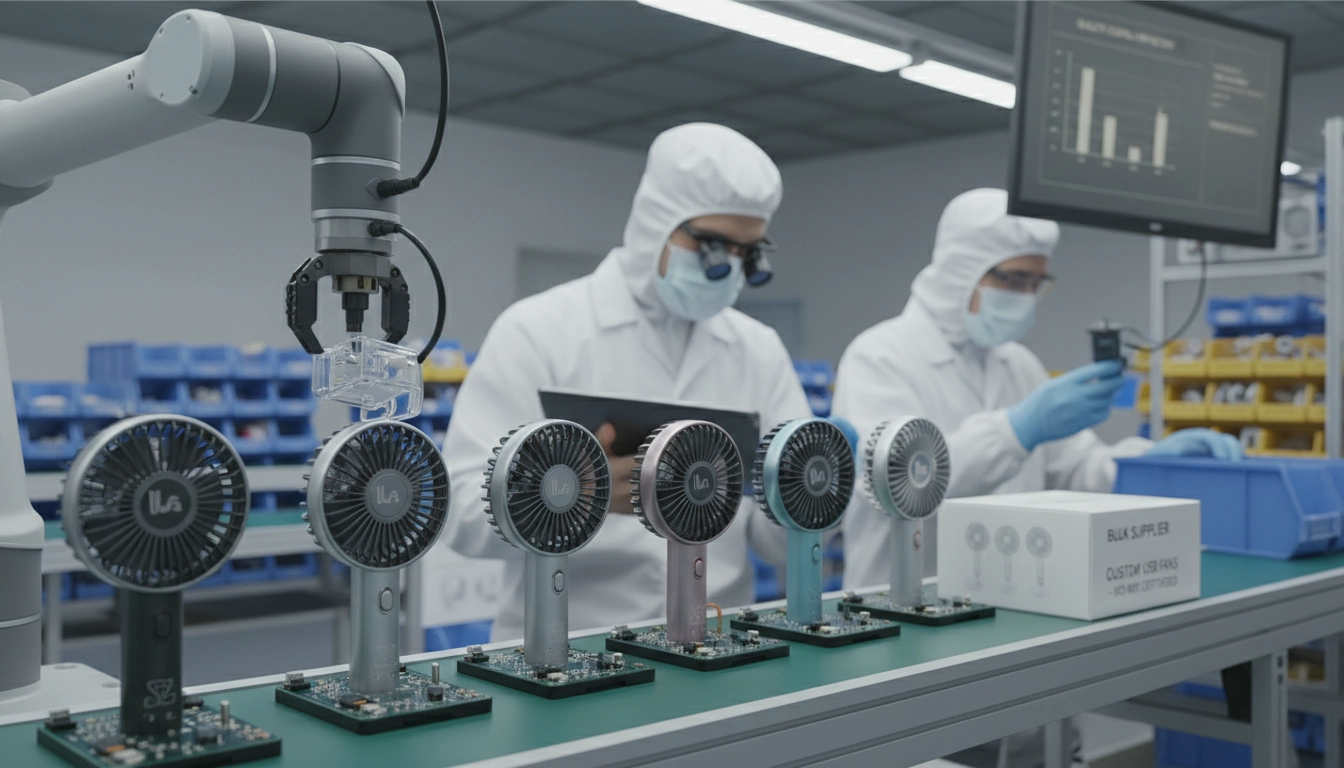
Production flows from design freeze to prototyping, pilot builds, low-volume certifications, and mass production. Key stages include:
- DFM review and prototype iterations
- Mold making and pilot runs
- PCB assembly (SMT), motor procurement, battery integration
- Assembly and functional testing (runtime, airflow, noise)
- Cert testing and final inspection
Each stage introduces potential rework if design-for-manufacture (DFM) is insufficient, so up-front engineering investment reduces downstream cost risk.
Testing and safety: what I insist on
I recommend functional life-cycle testing, drop and vibration tests, battery abuse tests per IEC 62133, and electromagnetic compatibility tests where applicable. Official standards organizations such as the IEC and testing bodies like UL are primary references for these activities. Proper testing reduces product failure rates in-market and costly recalls.
Case: Cost vs. quality trade-offs
A brushless DC motor might raise BOM by $0.80–$2.00 but yields longer life and better perceived quality. Conversely, swapping to cheaper cells saves $0.50–$1.50 but risks safety and returns. My approach: map total lifetime cost—including returns, chargebacks, and reputational risk—and prefer investments that lower total cost of ownership for the brand.
Strategies to Reduce Cost Without Sacrificing Safety or UX
Design and sourcing levers
Key levers include:
- Design for commonality: reuse motors, PCBs, and enclosures across SKUs
- Optimize battery capacity for the target use case—don't overspecify
- Consolidate suppliers to negotiate volume discounts
- Invest in robust DFM to avoid expensive tooling iterations
Manufacturing and logistics optimizations
Options I routinely deploy with partners include consolidating shipments to reduce freight per unit, shifting non-critical assembly steps to lower-cost cells within the same factory, and negotiating fixed-rate tooling amortizations across multi-SKU programs.
Example sensitivity table: how features affect BOM
| Feature Change | Estimated BOM Impact (USD/unit) | Business Impact |
|---|---|---|
| Upgrade to brushless motor | +$0.80 – $2.00 | Lower noise, higher life |
| Larger Li-ion cell (higher mAh) | +$0.50 – $1.50 | Longer runtime, heavier weight |
| Retail-ready inner packaging | +$0.15 – $0.40 | Better shelf appeal, higher shipping volume |
Partnering with a Manufacturer: Why RYW Technology Stands Out
When selecting a partner for custom mini fans, you need an experienced manufacturer that handles design, prototyping, testing, and compliance efficiently. RYW Technology Co., Ltd. was founded in 2018 by a team of visionary designers. As the originator of the Ice-Cooling Fan, we integrate product design, R&D, manufacturing, and sales to redefine personal comfort. Guided by our philosophy, Refined in Heart, Simple in Form, we create ergonomic products that harmonize the relationship between people and technology, ensuring every device delivers a superior, intuitive user experience.
Our manufacturing capability is built on a 4,000 m² modern facility equipped with three advanced production lines. Backed by an in-house R&D team of over 30 experts, we specialize in professional OEM and ODM services, offering rapid prototyping and agile development. We help global partners—from e-commerce sellers to major retail brands—transform concepts into market-leading handheld fans and portable cooling solutions.
We are committed to the highest safety and quality standards. RYW is ISO9001-certified and holds a comprehensive suite of global certifications, including CE, CB, UKCA, PSE, KC, UL, FCC, and CCC. With a focus on reliability and compliance, we serve clients across North America, Europe, and Asia, empowering brands to deliver safe, innovative products to the world.
Why partner with RYW:
- Integrated design-to-manufacture capability reduces iteration time and cost
- In-house R&D and prototyping accelerate time-to-market
- Robust certification track record simplifies global distribution
- Competitive production scale and quality processes lower per-unit COGS
For inquiries about OEM/ODM custom mini fans, product specifications, quotes, and lead times, contact our product team at adrian@rywlife.com. Explore more about our handheld fans and portable cooling solutions—RYW focuses on combining design, technology, and safety to produce market-ready products quickly.
Frequently Asked Questions (FAQ)
1. How much does it cost to manufacture a custom mini fan per unit?
Manufacturing cost typically ranges from about $3.90 to $11.60 per unit on a FOB basis for MOQs around 5,000 units. The wide range reflects BOM choices (motor and battery), tooling amortization, testing/certification scope, and packaging. For an accurate quote, provide the bill-of-materials, desired certifications, and target MOQ.
2. What certifications are required to sell handheld battery fans in major markets?
Common certifications include CE/UKCA for Europe and UK, FCC for radio modules in the U.S., UL for certain U.S. safety approvals, PSE for Japan, KC for Korea, and CCC for China. Battery safety typically references IEC 62133 standards. Official standards and certification guidance are available from organizations such as the IEC and ISO.
3. How do battery choices affect cost and compliance?
Lithium-ion cells offer higher energy density but require stricter safety testing and shipping regulations; this increases both BOM and logistics complexity. Alkaline or NiMH options may be cheaper from a compliance perspective but reduce runtime and perceived value. Evaluate runtime needs versus safety and logistics costs when selecting cells.
4. Can I reduce per-unit cost by increasing MOQ?
Yes. Higher MOQ spreads tooling, certification, and setup costs across more units and often yields lower component prices from suppliers. However, beware of inventory carrying costs and market demand—order quantities should balance unit economics and commercial risk.
5. What are the biggest risks that increase total cost unexpectedly?
Design changes after tooling, failed certification tests requiring redesign, poor supplier quality leading to rework, and shipping/duty fluctuations are common risk factors. Proper DFM, rigorous pre-shipment inspection, and certified supplier selection mitigate these risks.
6. How long does it take from design to first shipment?
A typical timeline for a custom mini fan: concept and DFM (2–4 weeks), prototyping and sample testing (3–6 weeks), tooling (4–8 weeks), pre-production and certification testing (4–8 weeks), and mass production (2–4 weeks). Timelines shorten with experienced OEM/ODM partners and parallelized engineering and certification work.
If you want a precise cost model and a tailored quote for your custom mini fans, contact RYW's team at adrian@rywlife.com. We provide rapid prototyping, detailed BOM cost breakdowns, and certification roadmaps to get your product to market efficiently.
Sources: Fan technology and context—Wikipedia. Battery price trends—BloombergNEF. Electronics and manufacturing best practices—IPC. ISO 9001 quality management—ISO. Testing and certification resources—UL, IEC.
Ready to proceed? Reach out via email: adrian@rywlife.com — tell us your desired features, target markets, and MOQ and we'll return a detailed cost model and prototype plan.
Top 10 Handheld Battery Fans for Wholesale Suppliers
Battery Types & Safety Standards for Handheld Fans
USB Handheld Fan Bulk Buying Checklist: Quality Control, Lead Times, and 2026 Pricing
Everything You Need to Know About best portable hand fans
About Customization
What is the MOQ for custom logo?
Can you provide customized packaging and labels?
Yes, the MOQ is 1,000
About Cooperation
Can I arrange a visit to the factory?
3.How long does it take from inquiry to delivery
About Products
How to order?
You May Also Like
Customizable high-speed handheld fan
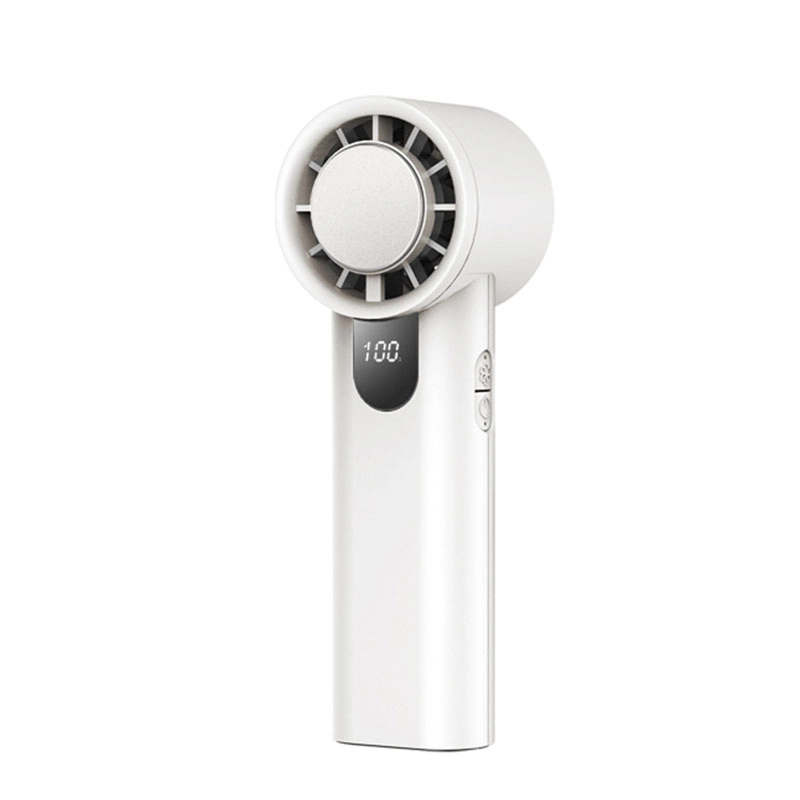
Experience powerful breeze on the go with RYW’s Customizable High-Speed Handheld Fan. This hand held electric fan offers personalized designs and compact size, perfect as custom mini fans for travel or events. Stay cool anytime with style and convenience.
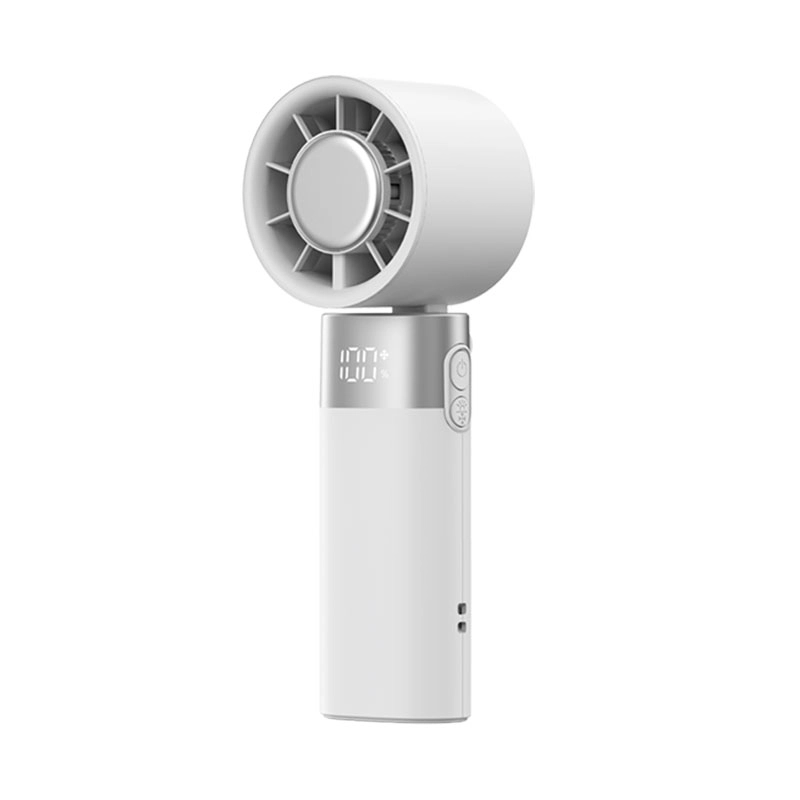
Reliable Handheld Cooling Solution for Bulk & Corporate Purchases
This premium handheld fan is designed for high-frequency, large-volume usage, making it an ideal cooling solution for corporate procurement, promotional distribution, employee welfare programs, and retail wholesale.
With stable airflow performance, a rechargeable design, and lightweight portability, it helps businesses deliver practical comfort products with strong perceived value while maintaining cost efficiency and supply reliability.
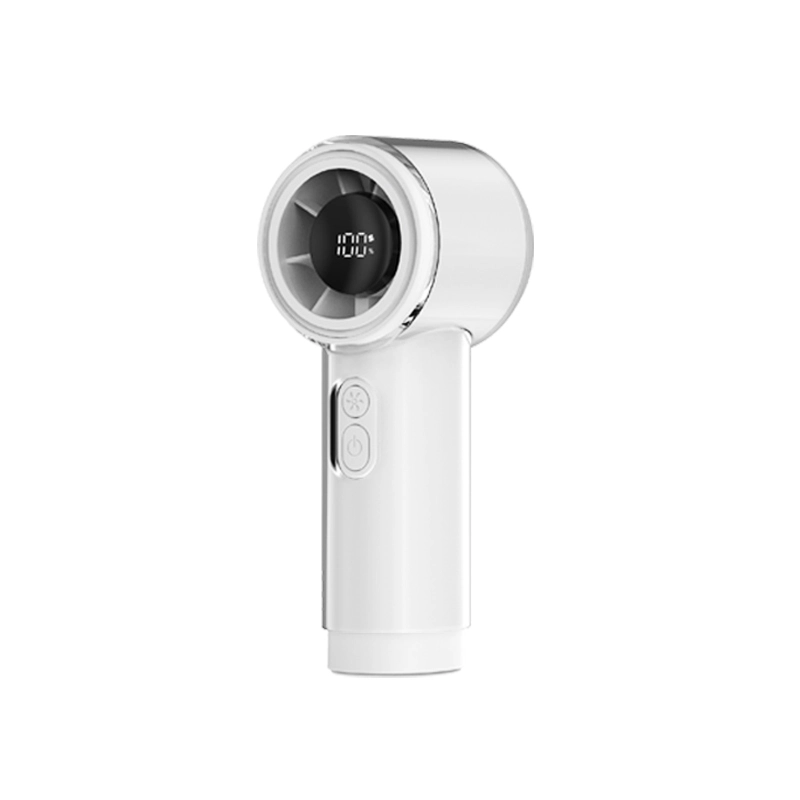
Customizable High-Speed Portable Handheld Fan FS2663
This is a high-speed, long-lasting, personalized, custom, portable cooling product specially designed for gift purchasers, cross-border e-commerce sellers, and OEM/ODM cooperation enterprises. It features (1) strong wind speed, (2) lightweight portability, (3) transparent shell design, (4) convenient carrying with a hand rope, and (5) long battery life. It helps enterprises enhance brand exposure, product differentiation competitiveness, and customer repeat purchase rate.
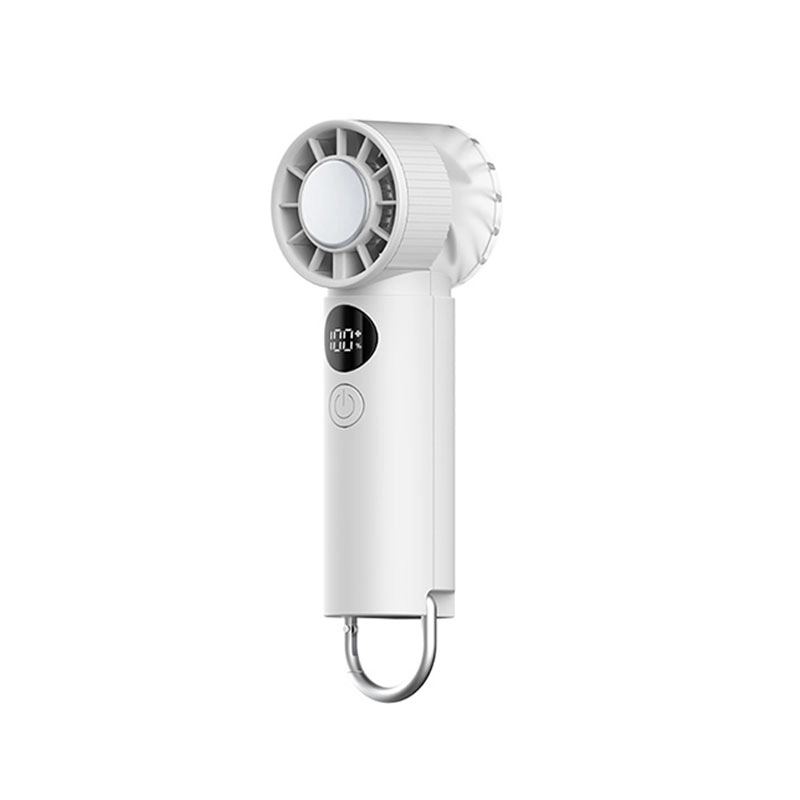
Customizable lightweight mini handheld cooling fan (with climbing hook) FS2666
A portable cooling and personalized customization product specially designed for commuters, students, the gift customization industry, and OEM/ODM buyers. It features (1) lightweight and easy portability, (2) a climbing buckle, and (3) semiconductor cooling.
Get a Quote for Handheld Fan Solution
If you have any comments or good suggestions, please leave us a message; later our professional staff will contact you as soon as possible.
Contact


4th Floor, Building 3, Jurong Industrial Park, No. 27-1-1, Fu'an Industrial Zone,Leliu Town (Pancun), Shunde District, Foshan City, Guangdong Province
 Scan QR Code
YouTube
Twitter
Facebook