





How to Choose a Reliable Handheld Battery Fan Manufacturer
- Why supplier selection matters
- Product safety and regulatory compliance
- Brand reputation and user experience
- Supply chain resilience and lead times
- Technical and manufacturing capabilities to evaluate
- Design, prototyping and engineering support
- Production lines, capacity and flexibility
- Quality control and testing protocols
- Commercial and logistical considerations
- Minimum order quantities (MOQ) and pricing structure
- Lead times, inventory and seasonal planning
- After-sales support, warranties, and returns
- How to vet and pick the right manufacturing partner
- Factory audits, third-party inspections and sample verification
- Certifications, traceability and document checks
- References, case studies and long-term partnerships
- About RYW Technology: capabilities and why I recommend them
- Checklist: Questions to ask every prospective manufacturer
- Frequently Asked Questions (FAQ)
- 1. What is a reasonable MOQ for custom mini fans?
- 2. How long does it take to develop a new handheld battery fan from concept to mass production?
- 3. Which certifications should I prioritize for global sales?
- 4. How can I verify a manufacturer's certification and test reports?
- 5. What common quality issues should I watch for with handheld fans?
- 6. Can I request custom branding and packaging for small orders?
- 7. What are realistic defect rate expectations?
I have worked with dozens of suppliers and brands in the handheld cooling category and helped clients bring hundreds of custom mini fans to market. Choosing the right handheld battery fan manufacturer determines not only product quality and compliance, but also time-to-market, cost predictability, and brand reputation. In this guide I share a practical, experience-driven framework to evaluate manufacturers, test prototypes, verify certifications, and structure commercial agreements so your next portable cooling product launches reliably and compliantly. I reference industry standards and authoritative sources where relevant so you can verify claims independently.
Why supplier selection matters
Product safety and regulatory compliance
Battery-powered handheld fans combine motors, lithium batteries, plastics and electronics. Each element carries regulatory obligations: battery cells often require compliance to IEC 62133, electrical components may need UL or CB evaluation, and finished consumer products typically require CE marking for the EU and FCC considerations for wireless components in the U.S. I always verify certificates directly with issuing bodies and request test reports that reference the specific model and laboratory. For background on ISO quality standards see the ISO 9001 overview at https://www.iso.org/iso-9001-quality-management.. For CE marking guidance see the European Commission page at https://ec.europa.eu/growth/single-market/ce-marking_en.
Brand reputation and user experience
Custom mini fans are often marketed on ergonomics, battery life, noise level and cooling performance per watt. A poorly executed design can damage RYW fast. I recommend insisting on user-focused design verification: real-world battery discharge curves, noise SPL measurements at 1 meter, and wind speed mapping across fan angles. These objective metrics, when documented, help you market features accurately and avoid returns due to misrepresentation.
Supply chain resilience and lead times
Manufacturing capacity, raw material sourcing (e.g., battery cells), and proximity to logistics hubs affect lead times and cost. I look for suppliers who disclose alternate sourcing strategies for critical components and provide realistic lead-time SLAs. Public market research like Grand View Research's analysis of portable cooling device trends can help set expectations for industry lead times and demand seasonality: Grand View Research.
Technical and manufacturing capabilities to evaluate
Design, prototyping and engineering support
Ask about in-house industrial design and electrical engineering. A manufacturer that offers DFM (design for manufacturing), rapid prototyping, and iterative tooling support reduces rework. As someone who has managed OEM and ODM projects, I value partners that provide 3D printed prototypes, quick PCB iterations, and controlled design validation protocols so you can test custom mini fans in weeks rather than months.
Production lines, capacity and flexibility
Evaluate actual factory capacity: number of assembly lines, shift patterns, and ability to scale. Below I provide a practical comparison table showing capabilities to request during audits. When factories claim high volume, I ask for verifiable metrics such as average monthly output, peak capacity, and recent order references.
| Capability | Typical Small Workshop | Large Contract Manufacturer | RYW Technology (example) |
|---|---|---|---|
| Facility size | Under 1,000 m² | 10,000+ m² | 4,000 m² modern facility |
| Production lines | 1–2 manual lines | Multiple automated lines | Three advanced production lines |
| R&D team | None or 1–2 | Large in-house R&D | In-house R&D team of 30+ experts |
| OEM/ODM services | Limited | Full-service | Professional OEM & ODM, rapid prototyping |
| Typical MOQ | Low (but variable) | High | Flexible, supports e-commerce sellers to retail brands |
| Certifications | Often none | CE/UL/FCC common | ISO9001, CE, CB, UKCA, PSE, KC, UL, FCC, CCC |
Data in this table comes from manufacturer disclosures and typical industry segmentation. Use it as a template to request equivalent evidence from potential partners.
Quality control and testing protocols
Ask for documented QC checkpoints: incoming materials, in-process inspection, electrical safety tests, final functional tests, and aging/burn-in procedures. Verify that battery safety testing aligns with IEC 62133 standards (battery safety) — see IEC — and that electromagnetic compatibility testing has been performed by accredited labs. For electrical safety and certification information consider resources like UL (https://www.ul.com/) and the U.S. FCC (https://www.fcc.gov/).
Commercial and logistical considerations
Minimum order quantities (MOQ) and pricing structure
MOQ impacts unit economics for custom mini fans. Negotiable MOQs are common when a factory has in-house tooling or modular molds. I recommend requesting a detailed cost breakdown (BOM, injection mold amortization, testing costs, packaging) so you can see where volume drives savings. Beware of quotes that omit tooling amortization or testing fees — these often surface as surprises after order placement.
Lead times, inventory and seasonal planning
Understand lead times for prototypes, pilot runs, and bulk production. Ask the manufacturer for a Gantt-style timeline that includes component procurement (especially batteries and ICs), mold lead time, and pre-shipment testing. If you sell seasonally (e.g., summer portable fans), build buffer inventory and consider staggered shipments. Factory resilience is also measured by how they manage component shortages — ask for alternative supplier lists for critical parts.
After-sales support, warranties, and returns
Negotiate warranty terms, RMA processes, and defect rate thresholds. Typical acceptable defect rates vary by channel: under 1% for retail, under 2–3% for large e-commerce batches can be realistic depending on complexity. Include repair/replacement logistics (who pays return freight, where repairs occur) in your contract to avoid disputes later.
How to vet and pick the right manufacturing partner
Factory audits, third-party inspections and sample verification
I always recommend a three-step verification before awarding a large contract: (1) request and test pre-production samples, (2) perform a factory audit (onsite or via third-party audit firms), and (3) use independent product testing labs for safety and performance certification. For remote audits, live video walkthroughs with a detailed checklist are a good substitute; third-party inspection agencies like SGS or Intertek can perform pre-shipment inspections.
Certifications, traceability and document checks
Ask to see original copies of certificates, test reports with lab stamps, and traceability records that match component batch numbers to finished units. Certificates should reference specific models and test standards — a generic certificate is a red flag. For ISO9001 verification, cross-check the certificate number with the issuing body's database at ISO.
References, case studies and long-term partnerships
Request client references, case studies, and examples of past custom mini fans they have produced. Long-term partnerships with recognizable retailers or brands are a strong indicator of consistent quality. I also evaluate contract terms: exclusivity clauses, IP ownership for custom designs, and non-compete boundaries.
About RYW Technology: capabilities and why I recommend them
RYW Technology Co., Ltd. was founded in 2018 by a team of visionary designers. As the originator of the Ice-Cooling Fan, we integrate product design, R&D, manufacturing, and sales to redefine personal comfort. Guided by our philosophy, Refined in Heart, Simple in Form, we create ergonomic products that harmonize the relationship between people and technology, ensuring every device delivers a superior, intuitive user experience.
Our manufacturing capability is built on a 4,000 m² modern facility equipped with three advanced production lines. Backed by an in-house R&D team of over 30 experts, we specialize in professional OEM and ODM services, offering rapid prototyping and agile development. We help global partners—from e-commerce sellers to major retail brands—transform concepts into market-leading handheld fans and portable cooling solutions.
We are committed to the highest safety and quality standards. RYW is ISO9001-certified and holds a comprehensive suite of global certifications, including CE, CB, UKCA, PSE, KC, UL, FCC, and CCC. With a focus on reliability and compliance, we serve clients across North America, Europe, and Asia, empowering brands to deliver safe, innovative products to the world.
In my experience reviewing factories, RYW combines the advantages of a specialized R&D team, clear certification coverage, and production flexibility for both small and large runs. That balance reduces development risk and accelerates market entry for custom mini fans and handheld fans.
Checklist: Questions to ask every prospective manufacturer
- Can you provide original test reports and certificates for the specific model? (ISO9001, CE/UKCA, UL, FCC, IEC 62133 where applicable)
- What is your typical lead time for prototypes, pilot runs, and mass production?
- What are your MOQ and price breaks at different volumes? Please provide a BOM-level cost breakdown.
- What QC checkpoints and burn-in/testing procedures do you perform before shipment?
- Can you provide references from brands or retailers with similar products?
- How do you handle component shortages and supply-chain disruptions?
- What warranty and RMA processes do you support, and who covers return shipping?
Frequently Asked Questions (FAQ)
1. What is a reasonable MOQ for custom mini fans?
MOQ varies widely. Small workshops may accept a few hundred units, while established OEMs commonly set MOQs of 1,000–5,000 units depending on tooling and customization. If you need lower quantities, negotiate shared tooling costs or phased production runs. RYW, for example, supports both e-commerce sellers needing lower initial volumes and larger retail partners.
2. How long does it take to develop a new handheld battery fan from concept to mass production?
Typical timelines: 4–8 weeks for initial prototyping (depending on complexity), 6–12 weeks for tooling and pilot runs, then 4–8 weeks for mass production and testing. Total development can range from 3 to 6 months. Rapid prototyping and experienced R&D teams can shorten this substantially.
3. Which certifications should I prioritize for global sales?
At minimum: ISO9001 for quality management, CE/UKCA for the European market, FCC for certain U.S. electronic emissions, and UL for electrical safety where required. Battery safety should follow IEC 62133 and related national regulations. Always verify certificates against issuing bodies' records; do not rely solely on scanned PDFs.
4. How can I verify a manufacturer's certification and test reports?
Ask for the original certificate numbers, lab names, and test report dates. Cross-check with the certification body's online directory (for ISO) or contact accredited labs directly. For CE and EMC testing, confirm the test standard numbers and test lab accreditation.
5. What common quality issues should I watch for with handheld fans?
Common issues include battery underperformance, excessive noise, inconsistent assembly (loose screws, poor adhesive application), uneven airflow, and inadequate thermal management. Use objective tests (SPL meters, anemometers, battery discharge logs) and require photos/videos of QC stations during production.
6. Can I request custom branding and packaging for small orders?
Yes, many manufacturers offer custom printing and packaging for modest volumes, though minimums and costs vary. Ask for mock-ups and a packaging spec sheet that details dielines, materials, and lead times.
7. What are realistic defect rate expectations?
Target defect rates depend on complexity: under 1% is typical for retail-ready consumer electronics when QC is robust. For early production runs or highly customized designs, slightly higher rates may occur; align on acceptable thresholds in your purchase agreement.
If you want help vetting suppliers, reviewing test reports, or managing an OEM/ODM project for custom mini fans, contact me or reach out directly to RYW Technology for product and manufacturing inquiries. Email: adrian@rywlife.com.
Ready to proceed? Request samples, ask for a factory tour, or send your concept files and I can help evaluate feasibility and estimate costs. For direct manufacturing capabilities and a portfolio of handheld fans, contact RYW Technology at adrian@rywlife.com.
Handheld Battery Fan Certification: CE, RoHS, FCC Explained
Tips for buy best usb fan from China
Tips for buy best rechargeable fan from China
Top best hand held fan Manufacturers and Suppliers
About Customization
Can we do our logo on the machine?
About Cooperation
3.How long does it take from inquiry to delivery
How should I start working with you?
About Products
Can l order samples for testing?
How long is the quarantee?
You May Also Like
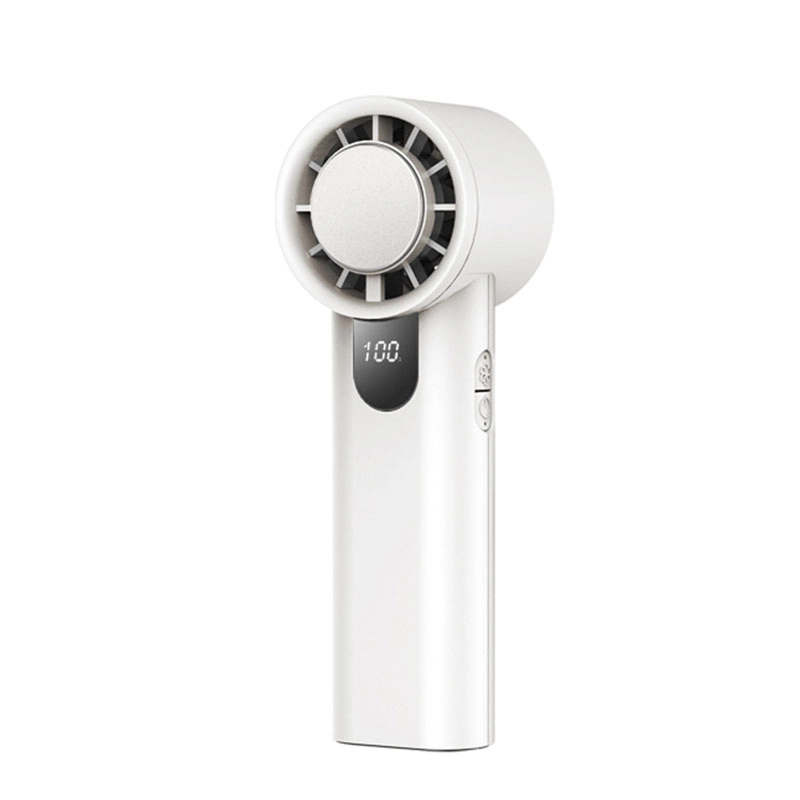
Customizable high-speed handheld fan
Experience powerful breeze on the go with RYW’s Customizable High-Speed Handheld Fan. This hand held electric fan offers personalized designs and compact size, perfect as custom mini fans for travel or events. Stay cool anytime with style and convenience.
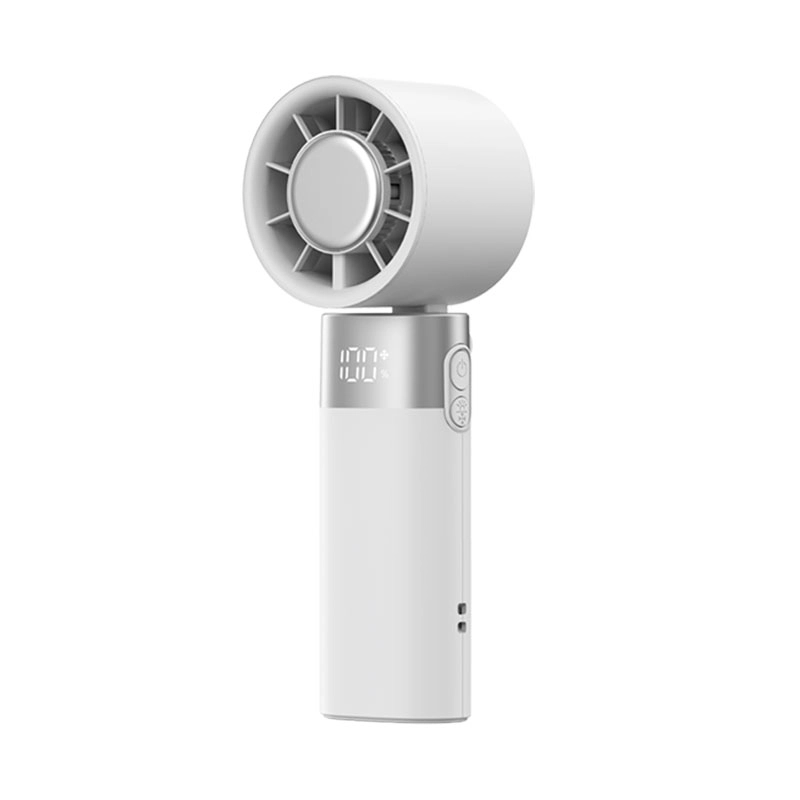
Reliable Handheld Cooling Solution for Bulk & Corporate Purchases
This premium handheld fan is designed for high-frequency, large-volume usage, making it an ideal cooling solution for corporate procurement, promotional distribution, employee welfare programs, and retail wholesale.
With stable airflow performance, a rechargeable design, and lightweight portability, it helps businesses deliver practical comfort products with strong perceived value while maintaining cost efficiency and supply reliability.
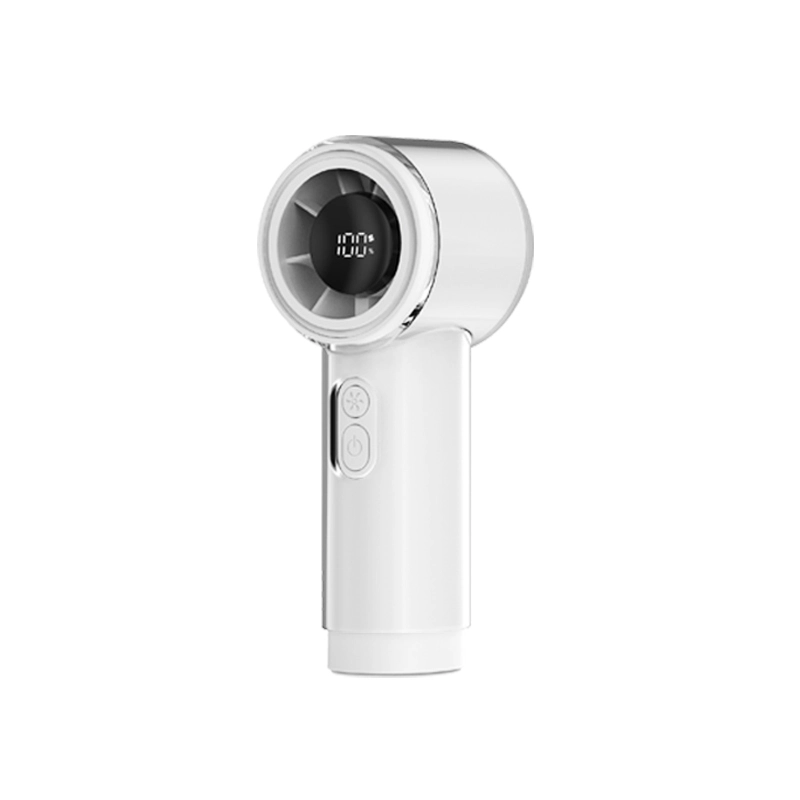
Customizable High-Speed Portable Handheld Fan FS2663
This is a high-speed, long-lasting, personalized, custom, portable cooling product specially designed for gift purchasers, cross-border e-commerce sellers, and OEM/ODM cooperation enterprises. It features (1) strong wind speed, (2) lightweight portability, (3) transparent shell design, (4) convenient carrying with a hand rope, and (5) long battery life. It helps enterprises enhance brand exposure, product differentiation competitiveness, and customer repeat purchase rate.
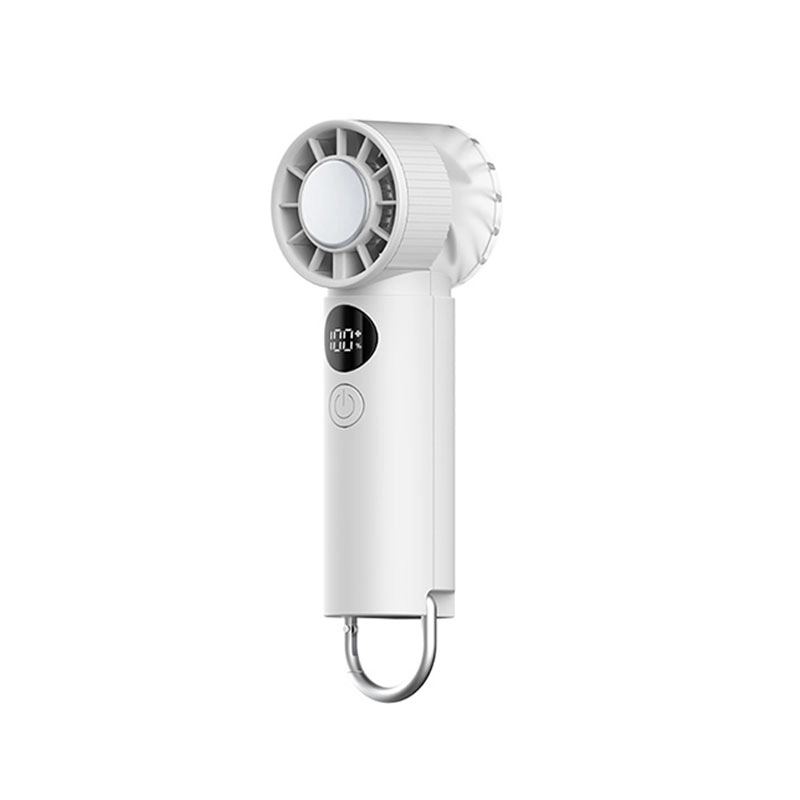
Customizable lightweight mini handheld cooling fan (with climbing hook) FS2666
A portable cooling and personalized customization product specially designed for commuters, students, the gift customization industry, and OEM/ODM buyers. It features (1) lightweight and easy portability, (2) a climbing buckle, and (3) semiconductor cooling.
Get a Quote for Handheld Fan Solution
If you have any comments or good suggestions, please leave us a message; later our professional staff will contact you as soon as possible.
Contact


4th Floor, Building 3, Jurong Industrial Park, No. 27-1-1, Fu'an Industrial Zone,Leliu Town (Pancun), Shunde District, Foshan City, Guangdong Province
 Scan QR Code
YouTube
Twitter
Facebook