






Tips for buy best rechargeable fan from China
- Understanding personal cooling and why rechargeable fans matter
- What defines a rechargeable fan?
- Key benefits for end users and sellers
- Industry context and safety references
- How to evaluate product specifications
- Battery capacity, runtime and charging
- Motor type and efficiency
- Airflow, noise and user experience
- How to source the best rechargeable fan from China
- Finding and vetting suppliers
- Sampling, prototyping and testing
- MOQ, pricing and lead times
- Quality, compliance and logistics
- Essential certifications and declarations
- Pre-shipment inspection and quality control
- Shipping lithium batteries and logistics tips
- Commercial and after-sales considerations
- Warranty, spare parts and repairability
- Branding, packaging and compliance for marketplaces
- Common pitfalls and how to avoid them
- Supplier negotiation checklist (quick reference)
- Conclusion
- Frequently Asked Questions (FAQ)
- How long should a rechargeable fan run on a single charge?
- What certifications are essential when importing fans?
- Are USB-C and PD fast charging important for fans?
- How do I reduce the risk of counterfeit or low-quality batteries?
When searching for the best rechargeable fan from China, buyers are looking for reliable suppliers who deliver compliant, efficient portable cooling solutions with predictable runtimes, safe lithium batteries, consistent build quality, and clear certification. This guide explains how to evaluate product specs (battery capacity, motor type, airflow), supplier capabilities, quality and safety certifications, sample and mass-production workflows, and shipping/after-sales considerations to minimize risk and get market-ready handheld fans quickly.
Understanding personal cooling and why rechargeable fans matter
What defines a rechargeable fan?
A rechargeable fan is a portable electric fan powered by an internal rechargeable battery (typically lithium-ion or lithium-polymer). These fans are designed for personal cooling and often feature USB charging (including USB-C), multiple speed settings, oscillation or foldable designs, and integration with portable power banks. As personal cooling demand grows for outdoor, travel, and desk use, rechargeable fans have become an essential accessory for consumers and a popular SKU for retailers.
Key benefits for end users and sellers
Rechargeable fans offer mobility, energy efficiency, and lower operating costs compared with single-use or disposable fans. For sellers, they are lightweight, consumer-friendly products with good margin potential—especially when differentiated by features like long runtime, fast charging, noise reduction, and safe battery systems.
Industry context and safety references
Electric fans are a mature technology; background on motor and fan basics can be found on the Electric fan (Wikipedia) page. For battery safety and testing standards common in consumer electronics, see the IEC 62133 summary. For quality management and manufacturer credibility, ISO 9001 remains the benchmark: ISO 9001. CE marking rules for electronics sold in the EU are summarized by the European Commission: CE marking overview.
How to evaluate product specifications
Battery capacity, runtime and charging
Battery capacity (mAh or Wh) is one of the most important specs. Typical rechargeable handheld fans use batteries from 2,000 mAh up to 10,000 mAh. Runtime depends on motor power and speed setting. A practical way to estimate runtime is using watt-hours (Wh): Wh = (mAh × Voltage)/1000. Example: a 3,000 mAh, 3.7 V battery ≈ 11.1 Wh. If the fan draws 4 W at medium speed, estimated runtime = 11.1 Wh / 4 W ≈ 2.8 hours. Bear in mind manufacturers' runtime claims often list the lowest power setting; verify real-world performance with samples.
Motor type and efficiency
Brushless DC (BLDC) motors are preferred for portable fans due to higher efficiency, longer life, and quieter operation compared with brushed motors. BLDC fans typically consume less power for the same airflow, translating to longer run times—an increasingly important differentiator for consumers who demand all-day operation or multi-day standby.
Airflow, noise and user experience
Airflow is often quoted in CFM (cubic feet per minute) or m³/h (cubic meters per hour). For handheld fans, expect ranges roughly between 10–50 CFM depending on blade size and motor. Noise levels (dB) are essential: <60 dB can be intrusive; many High Quality fans aim for <40–50 dB at mid settings. Look for product data showing both airflow and dB at each speed to balance cooling and comfort.
| Battery (mAh) | Expected Runtime (medium) | Typical Weight | Typical Use Case |
|---|---|---|---|
| 2,000–3,000 mAh | 2–4 hours | 120–220 g | Short outdoor use, commuting |
| 4,000–6,000 mAh | 4–8 hours | 200–350 g | All-day desk use, travel |
| 8,000–10,000 mAh+ | 8–20+ hours | 300–600 g | High-end models, multi-day trips |
How to source the best rechargeable fan from China
Finding and vetting suppliers
Start with supplier directories but prioritize manufacturers with demonstrable R&D and production capacities. Key signals: factory photos, production line counts, R&D team size, certifications, and existing client references. RYW Technology Co., Ltd., for example, was founded in 2018 and operates a 4,000 m² facility with three production lines and an in-house R&D team of over 30—a profile that indicates OEM/ODM capability and fast prototyping capacity.
Sampling, prototyping and testing
Never skip samples. Request a working sample with the final battery chemistry, motor, charger and firmware (if any). Use samples to validate runtime at different speeds, charging time (measure using a USB power meter), noise levels, and mechanical durability. For battery safety, test charge/discharge cycles and ask for third-party battery test reports in line with IEC 62133 and transportation standard UN 38.3 when shipping batteries by air.
MOQ, pricing and lead times
MOQ varies widely: some factories offer low MOQs (hundreds) for basic models, while custom OEM designs often require thousands. Typical lead times: 2–6 weeks for samples, 4–12 weeks for mass production depending on tooling and order size. Factor in extra time for certification testing and pre-shipment inspections.
Quality, compliance and logistics
Essential certifications and declarations
Regulatory compliance is non-negotiable for cross-border sales. Essential certificates and marks include CE/UKCA for EU/UK markets, FCC for US radio/interference rules if the product has wireless functions, and safety certificates relevant to batteries and electrical safety (e.g., IEC 62133 for battery safety—see IEC 62133). Many reputable manufacturers list a suite of global approvals such as CE, CB, UKCA, PSE, KC, UL, FCC, and CCC to ease market entry. RYW’s compliance suite includes ISO9001 plus multiple international certifications which can speed approvals for resellers.
Pre-shipment inspection and quality control
Arrange third-party inspections (AQL checks) during production. Typical checks: component verification (battery model and supplier), assembly quality, labeling and packaging, firmware functionality, runtime and charging verification, and drop or abuse tests. Insist on sample retention from initial production batches to compare with pre-production samples.
Shipping lithium batteries and logistics tips
Shipping lithium batteries is regulated. For air freight, batteries often require compliance with UN 38.3 test reports and correct packaging/declared paperwork. Sea and ground shipping have different constraints but always coordinate with a logistics partner familiar with electronics and battery shipments. For e-commerce sellers, consider DDP (Delivered Duty Paid) or use experienced freight forwarders to avoid customs delays.
Commercial and after-sales considerations
Warranty, spare parts and repairability
Clarify warranty terms (typical consumer electronics warranties range from 12–24 months). Ask about spare parts availability (blades, chargers, batteries) and options for extended warranties or replacement battery packs, which can improve consumer trust and reduce returns.
Branding, packaging and compliance for marketplaces
Design packaging for marketplace requirements—clear labeling, user manuals in target languages, safety warnings, and battery info. Amazon, for example, has specific rules for batteries and labeling; ensure packaging meets retailer policies. For EU/UK, include CE/UKCA marks and Declaration of Conformity documentation when required.
Common pitfalls and how to avoid them
Common mistakes include accepting unverified battery suppliers, overlooking EMC testing for wireless or charging circuits, and inadequate labeling for transport. Avoid these by mandating third-party battery and EMC test reports, conducting full-sample checks, and confirming that manufacturer maintain records of production batches for traceability.
Supplier negotiation checklist (quick reference)
| Item | What to request | Why it matters |
|---|---|---|
| Factory profile | Photos, production lines, R&D team size | Shows OEM/ODM capacity and reliability |
| Certifications | ISO9001, CE, UL, FCC, IEC 62133, UN 38.3 | Market access and safety assurance |
| Samples | Functional units with final battery & charger | Validates runtime, charge time, noise |
| Testing reports | Battery test, EMC/EMI, drop tests | Prevents compliance and safety issues |
| After-sales | Warranty terms, spare parts lead time | Reduces returns, supports customers |
Conclusion
Buying the best rechargeable fan from China requires technical due diligence, careful supplier vetting, and verification of safety and compliance documentation. Focus on battery specs and real-world runtimes, prefer BLDC motors for efficiency, confirm actual noise and airflow figures, and insist on third-party test reports for batteries and EMC. Work with manufacturers who provide clear production capacity, certifications and sample workflows—companies like RYW Technology Co., Ltd. offer integrated design-to-manufacture services and a global compliance portfolio to streamline OEM/ODM projects. Following the guidance in this article helps you reduce risk, accelerate time-to-market, and deliver a reliable portable cooling product to your customers.
Frequently Asked Questions (FAQ)
How long should a rechargeable fan run on a single charge?
Runtime varies by battery size, motor efficiency and speed setting. Expect 2–4 hours for 2,000–3,000 mAh units, 4–8 hours for 4,000–6,000 mAh, and 8–20+ hours for 8,000–10,000 mAh models depending on usage. Use the Wh-based calculation described above to estimate realistic runtimes.
What certifications are essential when importing fans?
Essential certifications include CE/UKCA for Europe/UK, FCC for US radio interference if applicable, and safety/battery standards like IEC 62133 and UN 38.3 for battery transport. Additional marks like UL, CB, PSE and KC are region-specific but can facilitate market entry.
Are USB-C and PD fast charging important for fans?
USB-C with Power Delivery (PD) enables faster charging and convenience because many users already own PD chargers. Fast charging is a strong selling point, but verify battery thermal management and charging IC specifications to ensure safety.
How do I reduce the risk of counterfeit or low-quality batteries?
Require battery supplier details, third-party test reports (IEC 62133, UN 38.3), and bench tests on samples. If possible, audit or verify battery suppliers and ask for traceable batch documentation. Insist that manufacturers use reputable battery cells from recognized brands such as Samsung SDI, LG Chem or other top-tier suppliers when appropriate.
For help sourcing compliant, market-ready rechargeable fans or to discuss OEM/ODM options, contact RYW at adrian@rywlife.com.
Top 10 Rechargeable Fan Manufacturers and Supplier Brands
Top hand held electric fan Manufacturers and Suppliers
Tips for buy best handheld fan from China
Top best hand held fan Manufacturers and Suppliers
About Cooperation
Can I arrange a visit to the factory?
How should I start working with you?
About Logistics
Do you offer freight forwar ding support?
Can you ship to my country?
About Company
What's the difference between RYW products and others?
You May Also Like
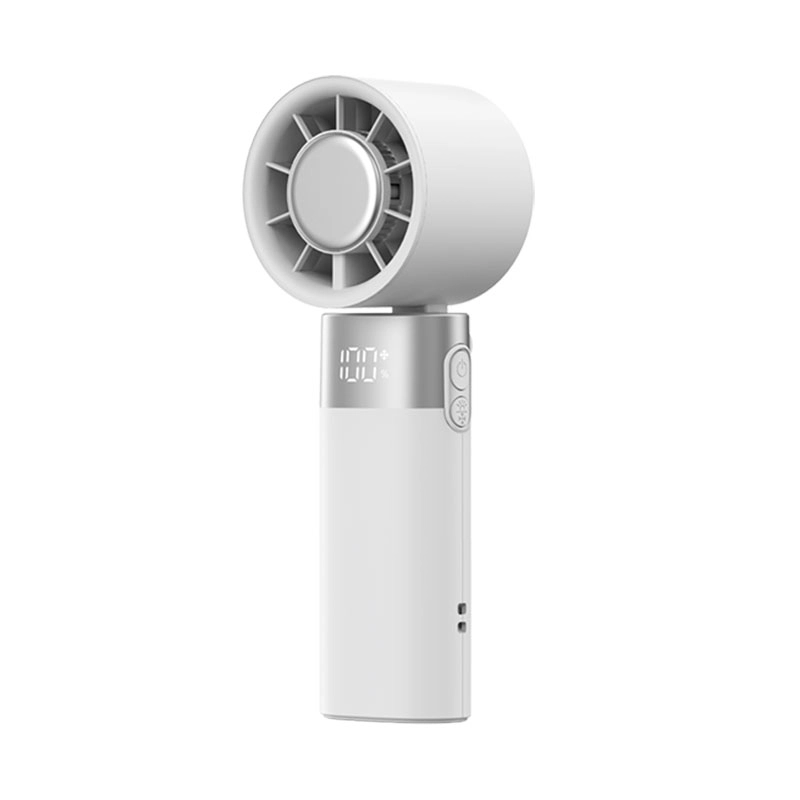
Reliable Handheld Cooling Solution for Bulk & Corporate Purchases
This premium handheld fan is designed for high-frequency, large-volume usage, making it an ideal cooling solution for corporate procurement, promotional distribution, employee welfare programs, and retail wholesale.
With stable airflow performance, a rechargeable design, and lightweight portability, it helps businesses deliver practical comfort products with strong perceived value while maintaining cost efficiency and supply reliability.
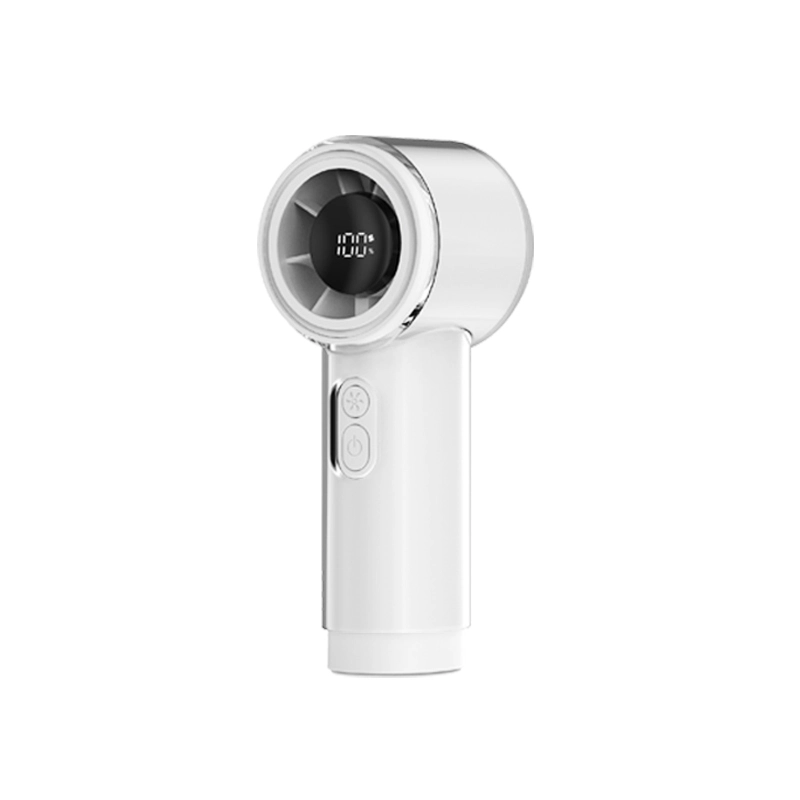
Customizable High-Speed Portable Handheld Fan FS2663
This is a high-speed, long-lasting, personalized, custom, portable cooling product specially designed for gift purchasers, cross-border e-commerce sellers, and OEM/ODM cooperation enterprises. It features (1) strong wind speed, (2) lightweight portability, (3) transparent shell design, (4) convenient carrying with a hand rope, and (5) long battery life. It helps enterprises enhance brand exposure, product differentiation competitiveness, and customer repeat purchase rate.
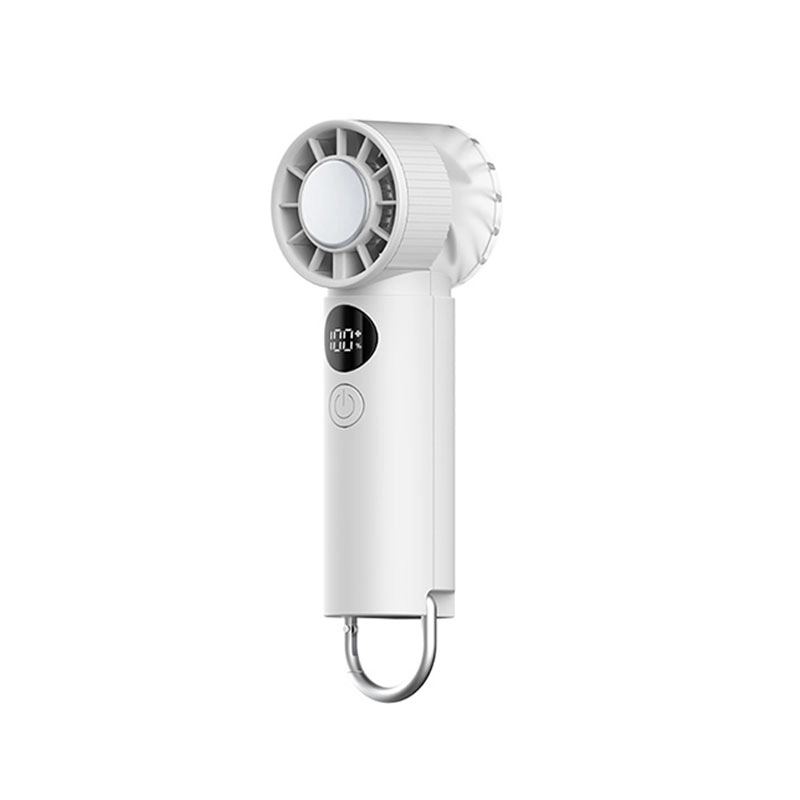
Customizable lightweight mini handheld cooling fan (with climbing hook) FS2666
A portable cooling and personalized customization product specially designed for commuters, students, the gift customization industry, and OEM/ODM buyers. It features (1) lightweight and easy portability, (2) a climbing buckle, and (3) semiconductor cooling.
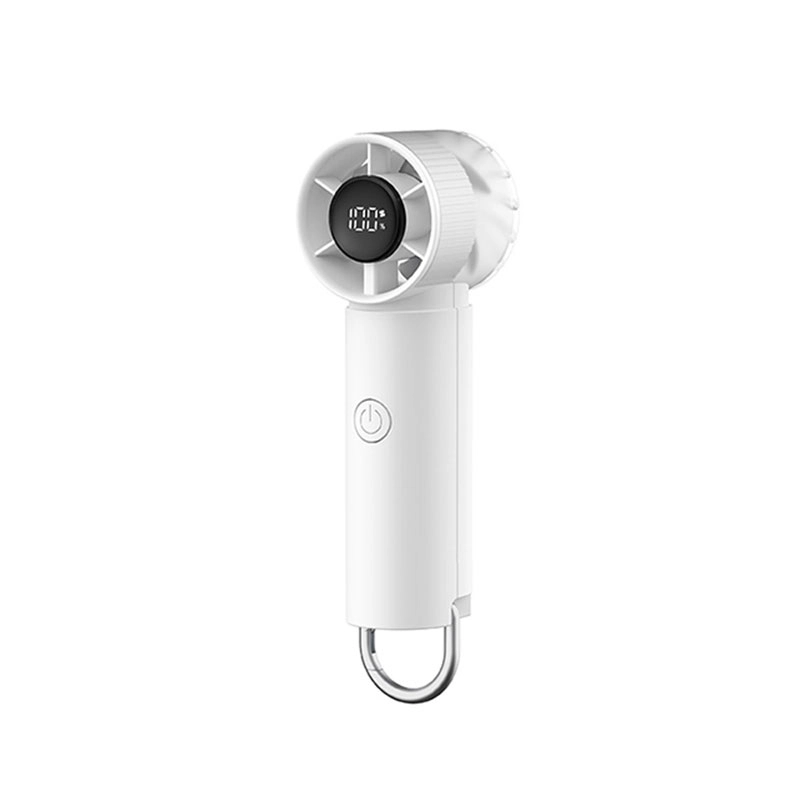
Customizable lightweight mini handheld cooling fan (with climbing hook) FS2667
This is a lightweight and portable + personalized customization product specially designed for commuters, students, the gift customization industry, and OEM/ODM buyers. It features (1) lightweight and easy portability, (2) a climbing buckle, and (3) a semi-transparent air duct design.
Get a Quote for Handheld Fan Solution
If you have any comments or good suggestions, please leave us a message; later our professional staff will contact you as soon as possible.
Contact


4th Floor, Building 3, Jurong Industrial Park, No. 27-1-1, Fu'an Industrial Zone,Leliu Town (Pancun), Shunde District, Foshan City, Guangdong Province
 Scan QR Code
YouTube
Twitter
Facebook