






Tips for buy best small portable fan from China
- Why small portable fans matter for today’s consumers
- Who is buying small portable fans and why it matters
- Key performance dimensions buyers should prioritize
- How to evaluate technical specifications (practical checks)
- Airflow vs. power: reading the real performance
- Battery capacity, runtime calculation, and real-world expectations
- Noise, materials, and ergonomics: non-electrical specs that matter
- Sourcing strategy: supplier capabilities, OEM/ODM, and quality control
- How to assess a Chinese supplier’s manufacturing and R&D capability
- Certifications and compliance to check before ordering
- Practical QC checks and pre-shipment testing
- Comparisons, logistics, and cost drivers
- Feature vs. cost comparison: what adds value
- Sample comparison table: representative categories
- Shipping, tariffs, and logistics tips
- Design, branding, and post-sales support
- Design differentiation — beyond color and logo
- Warranty, spare parts, and support expectations
- Minimum order quantity (MOQ) and scaling production
- Checklist for placing your first order (practical step-by-step)
- Pre-order checklist
- Production and shipping checklist
- Post-arrival and market launch checklist
- Conclusion
- Frequently Asked Questions (FAQ)
- Q: What is the best small portable fan for long battery life?
- Q: How do I ensure the fan meets safety standards in my market?
- Q: Are USB-powered fans safe to ship by air?
- Q: What’s the difference between brushed and brushless motors for small fans?
This guide helps global buyers and e-commerce sellers identify, evaluate, and purchase the best small portable fan from China by covering product specifications (size, power draw, airflow, battery life), safety and compliance (CE, UL, ISO9001), OEM/ODM capabilities, quality control steps, realistic performance benchmarks, and logistics considerations. It includes practical checklists, a comparison table, and manufacturer-aligned advice for fast, compliant sourcing.
Why small portable fans matter for today’s consumers
Small portable fans are no longer commodity trinkets — they’re personal cooling tools used for commuting, outdoor activities, desk work, and emergency cooling during heat waves. Consumers expect compact devices that deliver meaningful airflow, long battery life, quiet operation, and safe, certified electronics. For buyers sourcing the best small portable fan from China, understanding these buyer expectations and aligning them with manufacturing capabilities and regulatory requirements is essential.
Who is buying small portable fans and why it matters
Urban commuters, remote workers, parents with strollers, and event attendees seek portable cooling. The rise of remote work and outdoor leisure has increased demand for reliable, rechargeable fans that balance performance with size. For resellers and brands, this creates opportunities for product differentiation through ergonomics, battery life, and design.
Key performance dimensions buyers should prioritize
When choosing the best small portable fan, evaluate: airflow (measured in cubic feet per minute — CFM), power consumption (watts), battery capacity and runtime (mAh), noise (dB), build quality, and certifications. Each dimension impacts user satisfaction and compliance in target markets.
How to evaluate technical specifications (practical checks)
Airflow vs. power: reading the real performance
Airflow describes how much air the fan moves; CFM is the industry-standard unit for desktop and portable fans. Small USB/handheld fans typically provide between 5–30 CFM depending on blade design and speed settings. Power draw for these fans usually ranges from 1.5W to 7W on low-to-high settings. A fan with efficient motor and blade design can deliver higher CFM with lower wattage — indicating better design and component quality.
Battery capacity, runtime calculation, and real-world expectations
Battery life is often a primary buying criterion. Use this simple runtime estimate: runtime (hours) ≈ battery capacity (mAh) / (current draw (mA)). For USB-powered fans, convert power to current: current (A) = power (W) / voltage (V). Example: a fan consuming 5W at 5V draws 1A (1000mA). With a 5,000mAh battery, expected runtime at that speed ≈ 5,000mAh / 1,000mA = ~5 hours.
Manufacturers might quote “up to X hours” at the lowest speed; expect about 60–80% of that runtime on medium usage. Request real-world runtime logs from the supplier and test units with the same battery chemistry and capacity for validation.
Noise, materials, and ergonomics: non-electrical specs that matter
Noise levels for small fans typically range from 30 dB (very quiet) to 60 dB (noticeable). For desk use, aim for products under 45 dB at typical speeds. Material choices (ABS, PC plastics, silicone grips) affect durability and feel. Ergonomic features like handle shape, tilt adjustment, and weight distribution directly influence user satisfaction.
Sourcing strategy: supplier capabilities, OEM/ODM, and quality control
How to assess a Chinese supplier’s manufacturing and R&D capability
Key signals of a reliable supplier: an in-house R&D team, multiple production lines, 3rd-party certifications, and experience with OEM/ODM. For example, RYW Technology Co., Ltd. operates a 4,000 m² facility with three production lines and an R&D team of 30+ experts, and offers rapid prototyping and agile development — capabilities that support both private-label and custom designs.
Certifications and compliance to check before ordering
For global sales, confirm the supplier can provide market-appropriate safety and EMC certifications: CE/UKCA for Europe, UL/ETL for North America, PSE/KC for Japan/Korea, and FCC when products include wireless components. Also verify factory-level quality management like ISO 9001. You can learn about ISO 9001 here: ISO 9001 overview. For CE marking guidance: EU CE marking. For UL: UL official site.
Practical QC checks and pre-shipment testing
Implement a staged quality plan: prototype testing, initial production sample approval (IS), and final random inspection (AQL). Test items should include: airflow and power draw verification, battery and charge-cycle tests, drop and durability tests, and EMC/safety pre-tests. Insist on third-party lab reports for safety-critical items like batteries. For fan fundamentals, see general engineering principles at Wikipedia: Fan (machine).
Comparisons, logistics, and cost drivers
Feature vs. cost comparison: what adds value
Features that justify higher prices: long-life lithium polymer batteries with high cycle counts, brushless DC motors (lower noise, longer life), multi-speed and oscillation modes, High Quality materials, and integrated LED indicators or fast charging. OEM customization (brand logo, color, packaging) also raises per-unit cost but improves marketability.
Sample comparison table: representative categories
| Category | Typical Power (W) | Typical Battery (mAh) | Typical Runtime (hrs) | Typical Noise (dB) | Value Drivers |
|---|---|---|---|---|---|
| Budget mini fan | 1.5–3 | 1,000–2,000 | 2–6 (low speed) | 40–60 | Low cost, basic USB power |
| Mid-range portable fan | 3–5 | 2,500–5,000 | 4–10 | 35–50 | Better motor, longer battery, quieter |
| High Quality handheld fan | 4–7 | 5,000–10,000 | 6–15 | 30–45 | Brushless motor, high-efficiency blades, certifications |
Shipping, tariffs, and logistics tips
When importing from China, consider incoterms (EXW, FOB, DDP), harmonized tariff codes for small fans, and expected lead times. Air freight is faster but costlier; sea freight reduces cost per unit for large orders. Account for extra time for third-party certification testing and customs clearance. Work with freight forwarders experienced in electronics and battery shipping — lithium batteries have special documentation and packaging requirements.
Design, branding, and post-sales support
Design differentiation — beyond color and logo
Differentiate through functional design: multi-angle grips, detachable stands, quiet brushless motors, modular battery packs, or combined features (fan + powerbank, fan + misting). Test user scenarios to ensure features add real value instead of complexity.
Warranty, spare parts, and support expectations
Provide clear warranty terms and accessible spare parts for motors, cables, and batteries. A 12-month warranty is standard for small electronics; High Quality brands may offer 18–24 months. Ensure suppliers can supply replacement parts and support after sale.
Minimum order quantity (MOQ) and scaling production
MOQs vary: many Chinese suppliers accept small MOQ for stock models but require higher MOQ for custom tooling or color matching. Discuss staged scaling: small pilot run for market validation, then scale to larger batches once product-market fit is proven.
Checklist for placing your first order (practical step-by-step)
Pre-order checklist
- Confirm technical specs: power, CFM, battery, runtime, noise.
- Verify certifications: CE/UKCA, UL/FCC, PSE/KC as required.
- Request samples and independent lab test reports.
- Agree on packaging, labeling, and branding elements.
Production and shipping checklist
- Sign-off on pre-production sample (PPS) and production sample.
- Arrange third-party inspection (AQL) before shipment.
- Confirm shipping terms, lead times, and battery shipping documentation.
Post-arrival and market launch checklist
- Perform random QA on received units (function, battery, charge cycles).
- Upload correct product specifications and safety information for marketplaces.
- Train customer service on troubleshooting, returns, and warranty claims.
Conclusion
Finding the best small portable fan from China requires balancing performance (airflow, battery life, noise) with safety and compliance (CE, UL, ISO) and supplier capability (R&D, production lines, QC processes). Use quantitative checks — runtime calculations, CFM and wattage verification, and AQL inspections — to avoid surprises. Prefer suppliers who provide thorough testing data and flexible OEM/ODM support. Companies like RYW Technology, with certified manufacturing, in-house R&D, and full OEM/ODM services, can accelerate time-to-market while maintaining compliance.
For authoritative background on relevant standards and fan technology, see ISO 9001: ISO 9001, CE marking guidance: EU CE marking, UL safety guidance: UL, and basic fan engineering: Wikipedia: Fan (machine).
RYW Technology Co., Ltd. was founded in 2018 by a team of visionary designers. As the originator of the Ice-Cooling Fan, we integrate product design, R&D, manufacturing, and sales to redefine personal comfort. Guided by our philosophy, Refined in Heart, Simple in Form, we create ergonomic products that harmonize the relationship between people and technology, ensuring every device delivers a superior, intuitive user experience. Our facility includes a 4,000 m² modern factory, three production lines, and a 30+ person R&D team. We are ISO9001-certified and hold CE, CB, UKCA, PSE, KC, UL, FCC, and CCC certifications. Contact us at adrian@rywlife.com for OEM/ODM inquiries or sample requests.
Frequently Asked Questions (FAQ)
Q: What is the best small portable fan for long battery life?
A: Prioritize fans with higher-capacity li-ion or li-poly batteries (5,000mAh+) and efficient brushless motors. Check vendor runtime estimates and request real-world battery discharge curves or test reports. Expect 6–15 hours at lower speeds for High Quality models.
Q: How do I ensure the fan meets safety standards in my market?
A: Require suppliers to provide copies of certification reports relevant to your market (e.g., CE/UKCA test reports, UL files, FCC ID for wireless). Verify certificate numbers with the issuing bodies and include clauses in your purchase agreement requiring up-to-date compliance documentation.
Q: Are USB-powered fans safe to ship by air?
A: USB-powered fans without lithium batteries are usually safe for standard shipping. Products with lithium-ion batteries must meet IATA lithium battery shipping rules, including proper packaging, labeling, and documentation. Work with a logistics partner familiar with battery transport.
Q: What’s the difference between brushed and brushless motors for small fans?
A: Brushless DC (BLDC) motors offer higher efficiency, longer lifespan, and lower noise but cost more. Brushed motors are cheaper but can be noisier and wear out faster. For a High Quality “best small portable fan,” BLDC is usually preferable.
Ready to source the best small portable fan with reliable OEM/ODM support? Contact RYW at adrian@rywlife.com to discuss samples, certifications, and pricing.
Top ventilateur portatif rechargeable Manufacturers and Suppliers
Top 10 Rechargeable Fan Manufacturers and Supplier Brands
Top 10 portable fan Manufacturers and Supplier Brands
Top mini Handheld Fan Manufacturers and Suppliers
About Products
Can l order samples for testing?
About Cooperation
Can I arrange a visit to the factory?
About Logistics
What payment methods do you accept?
About Customization
Can you provide customized packaging and labels?
Yes, the MOQ is 1,000
How long is the production time?
You May Also Like
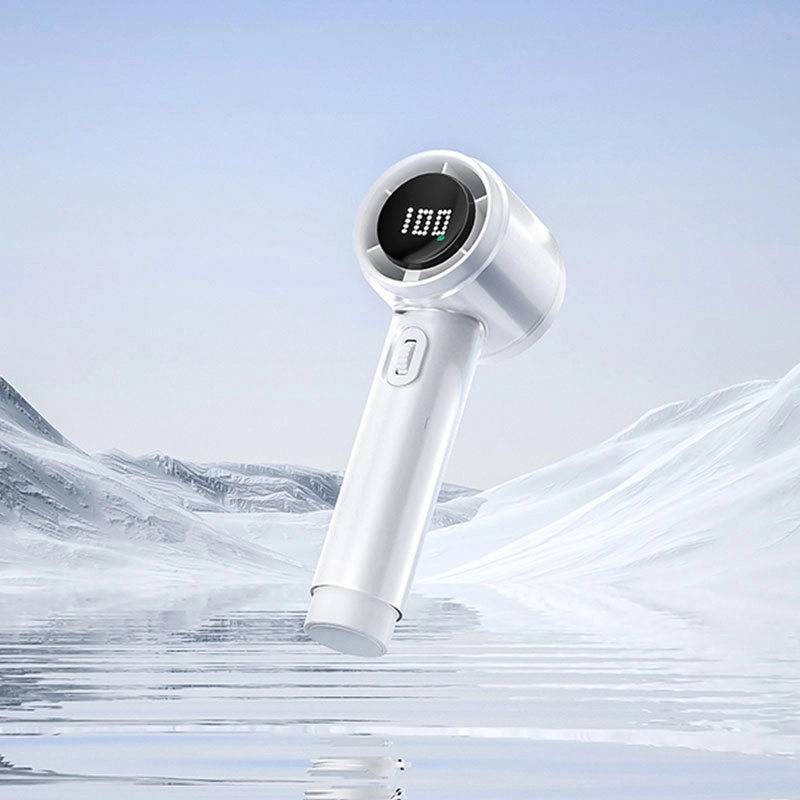
Customizable High-Speed Portable Handheld Fan
A high-speed, long-lasting, personalized, custom portable cooling product specially designed for gift buyers, cross-border e-commerce sellers, and OEM/ODM cooperation enterprises. It features (1) strong wind speed, (2) interactive expressions, (3) transparent shell design, (4) convenient carrying with a hand rope, and (5) long battery life.
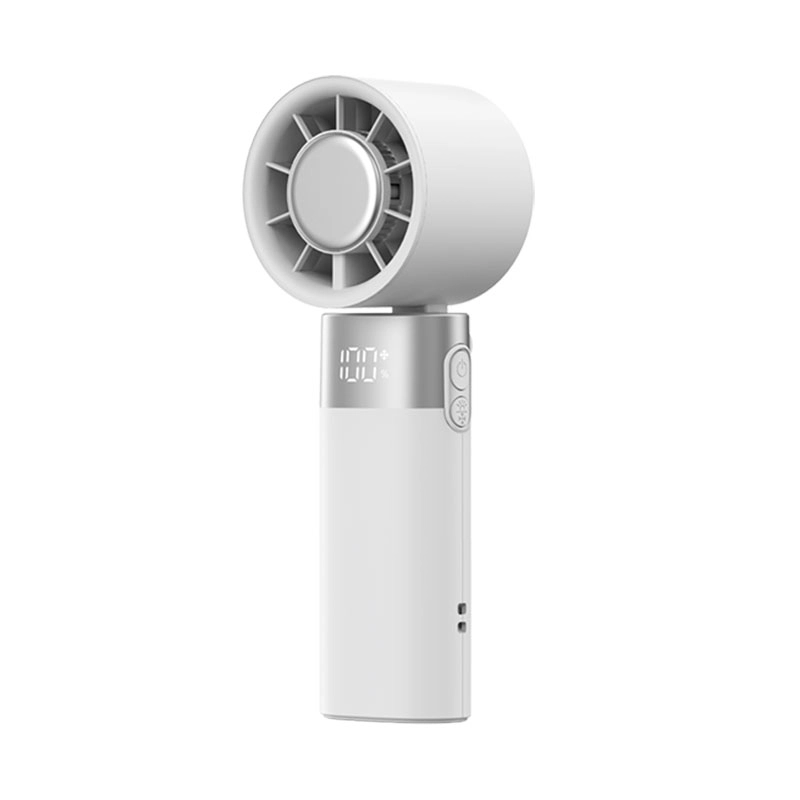
Reliable Handheld Cooling Solution for Bulk & Corporate Purchases
This premium handheld fan is designed for high-frequency, large-volume usage, making it an ideal cooling solution for corporate procurement, promotional distribution, employee welfare programs, and retail wholesale.
With stable airflow performance, a rechargeable design, and lightweight portability, it helps businesses deliver practical comfort products with strong perceived value while maintaining cost efficiency and supply reliability.
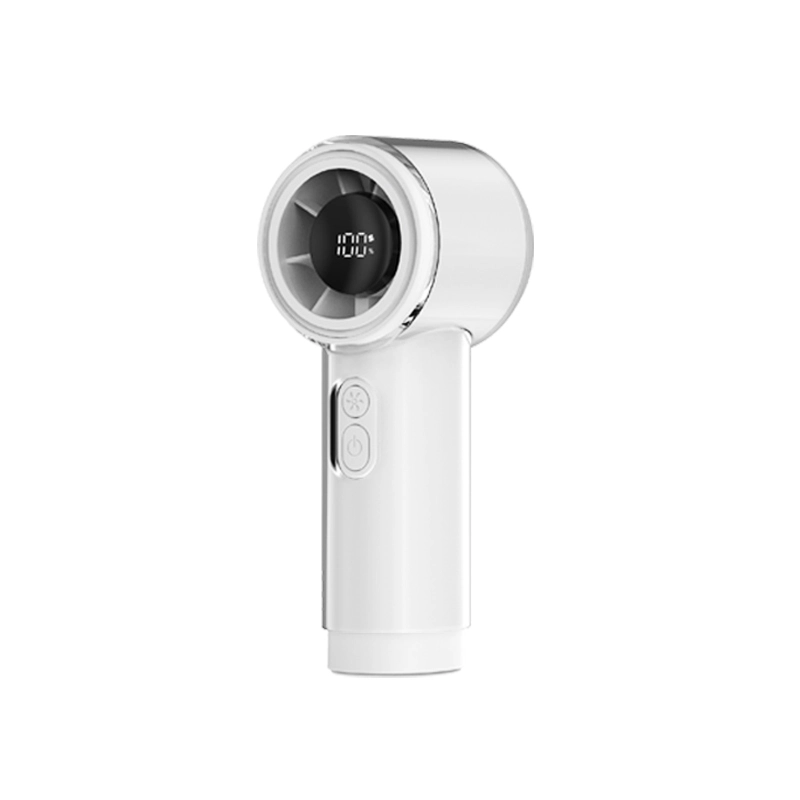
Customizable High-Speed Portable Handheld Fan FS2663
This is a high-speed, long-lasting, personalized, custom, portable cooling product specially designed for gift purchasers, cross-border e-commerce sellers, and OEM/ODM cooperation enterprises. It features (1) strong wind speed, (2) lightweight portability, (3) transparent shell design, (4) convenient carrying with a hand rope, and (5) long battery life. It helps enterprises enhance brand exposure, product differentiation competitiveness, and customer repeat purchase rate.
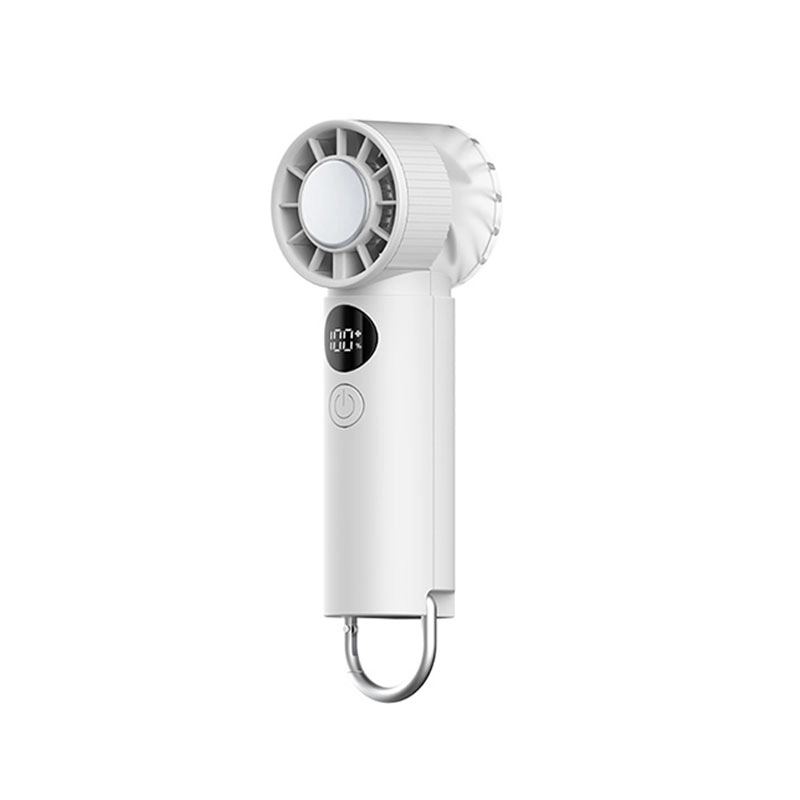
Customizable lightweight mini handheld cooling fan (with climbing hook) FS2666
A portable cooling and personalized customization product specially designed for commuters, students, the gift customization industry, and OEM/ODM buyers. It features (1) lightweight and easy portability, (2) a climbing buckle, and (3) semiconductor cooling.
Get a Quote for Handheld Fan Solution
If you have any comments or good suggestions, please leave us a message; later our professional staff will contact you as soon as possible.
Contact


4th Floor, Building 3, Jurong Industrial Park, No. 27-1-1, Fu'an Industrial Zone,Leliu Town (Pancun), Shunde District, Foshan City, Guangdong Province
 Scan QR Code
YouTube
Twitter
Facebook