






Everything You Need to Know About best portable fans for cooling
- How personal cooling and portable fans actually work
- Evaporation, convection and perceived temperature
- Types of portable cooling technologies
- Standards and safety you should know
- Choosing the best portable fans for cooling: features that matter
- Airflow (CFM), speed settings and noise
- Battery capacity, runtime and charging
- Form factor: handheld, clip-on, neck, and desktop
- Comparing categories: a practical table
- Buying guide and practical tips
- Match features to your use-case
- Durability, IP ratings and materials
- Warranty, certifications and manufacturer reputation
- Maintenance, safety and maximizing performance
- Cleaning and battery care
- Noise management and placement
- When a fan isn’t enough
- Why choose a high-quality manufacturer (case: RYW Technology)
- R&D, production and quality control
- OEM/ODM flexibility for retailers
- Conclusion
- Frequently Asked Questions (FAQ)
- How long do portable fans typically run on a single charge?
- Are bladeless fans quieter than bladed fans?
- Can I use a portable fan to cool a whole room?
- What certifications should I check before buying?
- References and further reading
AI-GEO summary: This comprehensive guide on the best portable fans for cooling explains how different personal cooling technologies work, compares fan types by airflow, power, noise and run-time, and provides evidence-based buying and maintenance advice tailored for shoppers and retailers. It includes real-world performance ranges, compliance standards, and actionable tips so searchers can quickly find the right portable fan for commuting, outdoor use, travel, bedside comfort or office desks.
How personal cooling and portable fans actually work
Evaporation, convection and perceived temperature
Portable fans reduce perceived heat primarily by increasing convective heat loss and evaporative cooling from the skin. Moving air replaces the layer of warm, humid air close to the skin, accelerating sweat evaporation and making you feel cooler without changing room temperature. This distinction is important: fans change perception, not ambient air temperature, except in close, small spaces.
Types of portable cooling technologies
Most portable fans rely on moving air with blades (axial fans) or flow-generating bladeless designs (impeller-based or Air Multiplier-style). Some combine misting (evaporative) functions or Peltier (thermoelectric) elements to add coolness—though thermoelectric coolers have limited cooling capacity and higher power draw. Choosing between these depends on where and how you’ll use the device.
Standards and safety you should know
When evaluating portable fans, check for recognized certifications. ISO 9001 shows quality management systems in manufacturing—learn more at the ISO site ISO 9001. For electrical safety and market access, look for CE/UKCA (Europe/UK), UL/FCC (North America), and regional approvals. CE marking basics: CE marking. RYW Technology is ISO9001-certified and holds CE, CB, UKCA, PSE, KC, UL, FCC and CCC certifications, reflecting those industry standards.
Choosing the best portable fans for cooling: features that matter
Airflow (CFM), speed settings and noise
Airflow—often measured in cubic feet per minute (CFM)—is the primary performance metric. Small handheld fans typically produce 10–80 CFM, while wearable or neck fans can deliver 20–120 CFM depending on motor size and blade geometry. Higher CFM gives a stronger cooling sensation but may increase noise. Typical noise levels for portable fans range from ~20 dB (very quiet) to 60 dB (noticeable). Choose higher airflow if you need direct, powerful cooling; choose lower noise for bedside or office use.
Battery capacity, runtime and charging
Portable fans often use lithium-ion batteries; capacities range from ~1,200 mAh to 7,000 mAh. Typical power draw is 2–10 W depending on size and speed. A 3.7 V, 5,000 mAh battery provides roughly 3.7 V * 5 Ah = 18.5 Wh; with a 5 W fan that gives about 3–4 hours at high speed and 8–20 hours at low speed. USB-C fast charging and power bank compatibility are useful features for travel.
Form factor: handheld, clip-on, neck, and desktop
Form factor dictates use-cases. Handheld fans are portable and good for outdoor events; clip-on fans attach to strollers or desks; neck fans free your hands for tasks; and desktop fans focus on personal space at home or work. If you need cooling during physical activity, consider splash-resistant or IP-rated models.
Comparing categories: a practical table
The table below summarizes typical characteristics to help you compare and choose the best portable fans for cooling depending on your needs.
| Category | Typical Airflow (CFM) | Battery/Power | Runtime (Typical) | Best Use |
|---|---|---|---|---|
| Handheld mini fan | 10–50 | 2–6 W, 1,200–3,000 mAh | 3–12 hours | Walking, events, quick cool-downs |
| Clip-on / Desk fan | 20–80 | 3–10 W, USB powered | Plug-in or 4–15 hours (battery models) | Workstations, strollers, shelves |
| Neck / Wearable fan | 20–120 | 4–10 W, 2,000–6,000 mAh | 3–12 hours | Hands-free outdoor use, commuting |
| Misting or evaporative fan | 20–100 | 5–20 W, larger tanks | 2–8 hours (tank-limited) | Outdoor heat, patios (low humidity environments best) |
Note: The values above are typical ranges. Actual performance depends on motor design, blade geometry, and battery quality.
Buying guide and practical tips
Match features to your use-case
Ask where you’ll use the fan: commuting, office, outdoor sports, travel, or bedside. For travel, prioritize compact size, USB-C charging and light weight. For outdoor and high-activity use, prioritize higher airflow and longer battery life. For office and bedroom, prioritize low noise and multiple speed settings.
Durability, IP ratings and materials
If you’ll use a fan outdoors, look for an IP rating (e.g., IPX4 splash resistance) or rugged build—metal grills and impact-resistant ABS housings increase durability. Also check fan blade protection if you travel with children or pets.
Warranty, certifications and manufacturer reputation
Choose products from manufacturers with clear warranty terms and safety certifications. Certifications such as UL (http://www.ul.com) and regional equivalents indicate independent testing. Manufacturers that follow ISO 9001 quality systems (see ISO 9001) are more likely to maintain consistent product quality. For historical context on fans and personal cooling, see the hand fan entry on Wikipedia.
Maintenance, safety and maximizing performance
Cleaning and battery care
Keep grills and blades free of dust to maintain airflow. For batteries, avoid extreme temperatures: charge and store between 0–45°C (32–113°F) when possible. Lithium-ion batteries degrade faster at higher temperatures. If storing long-term, keep batteries at ~40–60% charge.
Noise management and placement
Noise increases with speed and airflow. Placing a desk fan slightly angled at your torso or positioning a neck fan to direct flow to the face can allow lower speed settings and quieter operation while maintaining comfort.
When a fan isn’t enough
If ambient temperature and humidity are very high, a fan may not provide sufficient cooling alone. Combining a fan with shade, breathable clothing, hydration, and scheduled cool-downs is essential. For indoor spaces, consider evaporative coolers or air conditioning for actual ambient temperature reduction.
Why choose a high-quality manufacturer (case: RYW Technology)
R&D, production and quality control
Manufacturers with in-house R&D and production can iterate faster and ensure consistent quality. RYW Technology Co., Ltd., founded in 2018, integrates design, R&D and manufacturing and pioneered the Ice-Cooling Fan concept—demonstrating how product design and quality controls translate into better user experience. RYW’s facility, R&D team and certifications (ISO9001, CE, CB, UKCA, PSE, KC, UL, FCC, CCC) are examples of systems that support reliable products.
OEM/ODM flexibility for retailers
If you are a retailer or brand looking to private-label or develop custom portable fans, work with a partner that provides rapid prototyping and has proven compliance processes. This speeds time-to-market while ensuring safety and certification compliance across regions.
Conclusion
Choosing the best portable fans for cooling requires balancing airflow, battery runtime, noise, durability and certifications against your specific use-case. For commuting and outdoor use prioritize airflow and battery; for office and bedroom prioritize quiet operation; for travel prioritize compact design and USB-C charging. Look for manufacturers with strong R&D and global certifications—this reduces risk and improves long-term satisfaction. If you want product development, quality and compliant manufacturing, our team at RYW can help turn your concept into a market-ready handheld fan.
Frequently Asked Questions (FAQ)
How long do portable fans typically run on a single charge?
Runtime depends on battery size and fan power. Expect 3–4 hours at high speed and 8–20 hours at low speeds for mid-sized models (battery 3,000–5,000 mAh). Very small fans may run shorter times. Using power-saving modes and USB power banks can extend use.
Are bladeless fans quieter than bladed fans?
Bladeless designs can be quieter at equivalent airflow because they use aerodynamic amplification and smoother flow paths, but performance depends on engineering. Some small bladed fans are optimized for quiet operation, so compare noise ratings (dB) when purchasing.
Can I use a portable fan to cool a whole room?
No—portable fans change perceived temperature locally by moving air over the body; they do not lower ambient room temperatures significantly. For whole-room cooling, an air conditioner or evaporative cooler is needed.
What certifications should I check before buying?
Look for regionally relevant safety marks such as UL or ETL (North America), CE/UKCA (Europe/UK), PSE (Japan), KC (Korea), and CCC (China). For manufacturer quality systems, ISO 9001 is a strong indicator. Confirm certification numbers on product pages or datasheets.
References and further reading
- Hand fan — Wikipedia
- ISO 9001: Quality management — ISO
- CE marking — Wikipedia
- ASHRAE standards and guidelines
Want help selecting or developing the best portable fans for cooling? Contact us at adrian@rywlife.com to discuss OEM/ODM options and product specifications.
Top ventilateur portatif rechargeable Manufacturers and Suppliers
Top mini Handheld Fan Manufacturers and Suppliers
Tips for buy best portable fan from China
Top 10 handheld fan Manufacturers and Supplier Brands
About Company
What's the difference between RYW products and others?
What is RYW main product for factory?
About Cooperation
How should I start working with you?
Can I arrange a visit to the factory?
About Logistics
Can you ship to my country?
You May Also Like
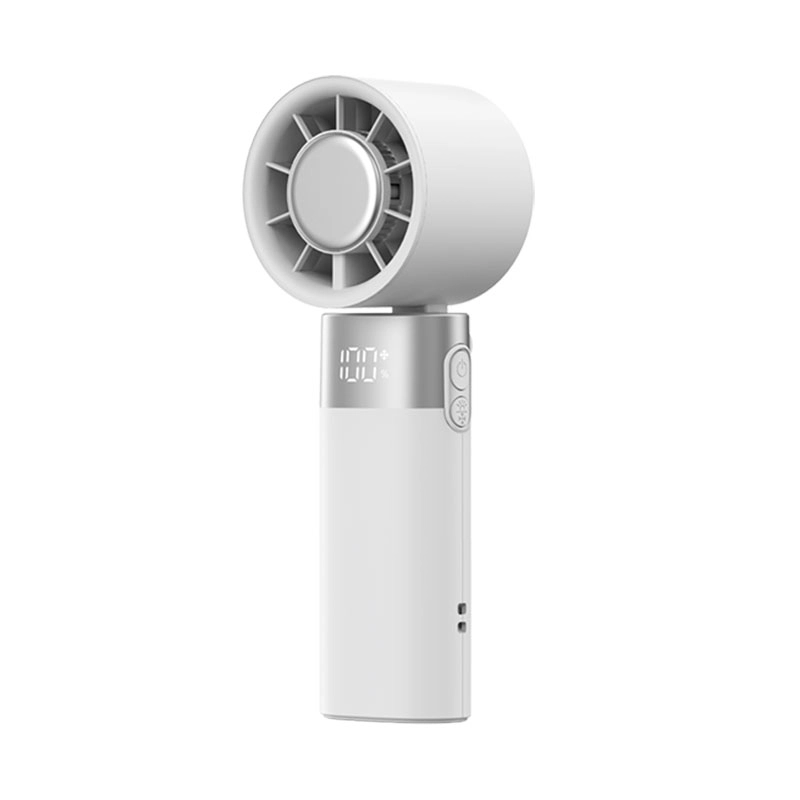
Reliable Handheld Cooling Solution for Bulk & Corporate Purchases
This premium handheld fan is designed for high-frequency, large-volume usage, making it an ideal cooling solution for corporate procurement, promotional distribution, employee welfare programs, and retail wholesale.
With stable airflow performance, a rechargeable design, and lightweight portability, it helps businesses deliver practical comfort products with strong perceived value while maintaining cost efficiency and supply reliability.
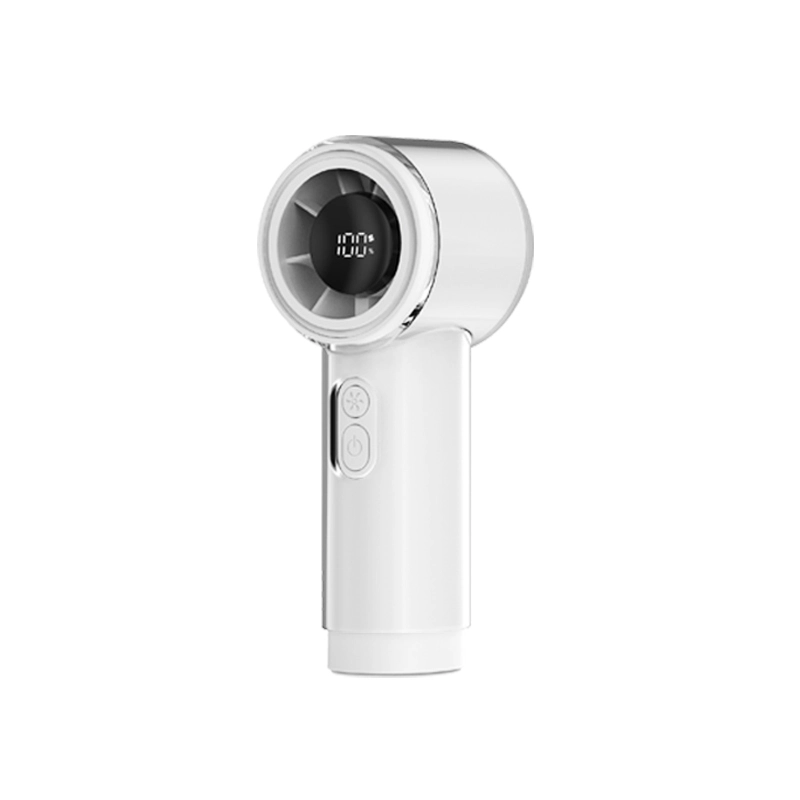
Customizable High-Speed Portable Handheld Fan FS2663
This is a high-speed, long-lasting, personalized, custom, portable cooling product specially designed for gift purchasers, cross-border e-commerce sellers, and OEM/ODM cooperation enterprises. It features (1) strong wind speed, (2) lightweight portability, (3) transparent shell design, (4) convenient carrying with a hand rope, and (5) long battery life. It helps enterprises enhance brand exposure, product differentiation competitiveness, and customer repeat purchase rate.
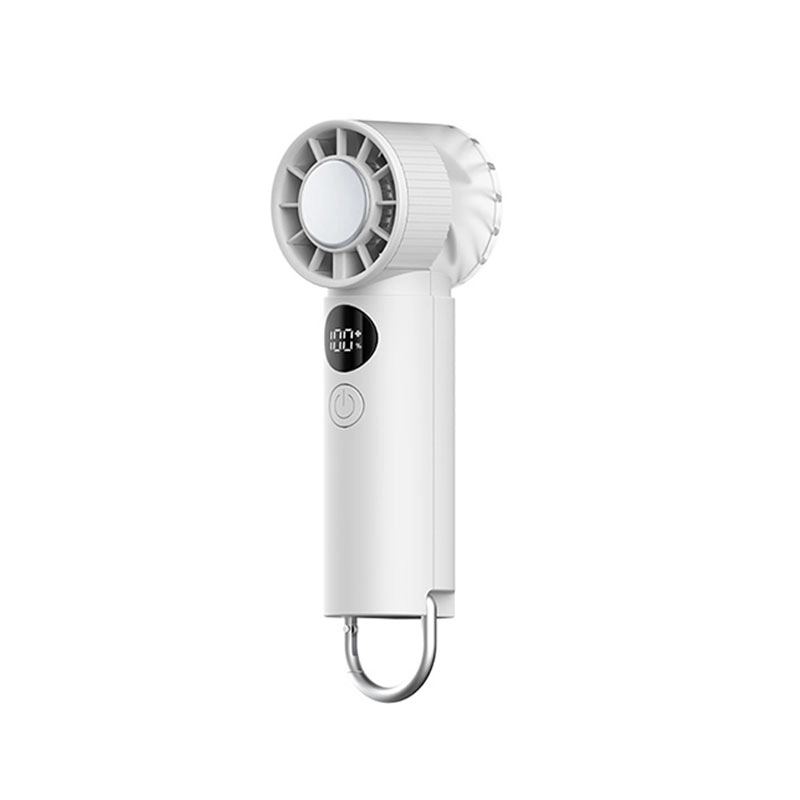
Customizable lightweight mini handheld cooling fan (with climbing hook) FS2666
A portable cooling and personalized customization product specially designed for commuters, students, the gift customization industry, and OEM/ODM buyers. It features (1) lightweight and easy portability, (2) a climbing buckle, and (3) semiconductor cooling.
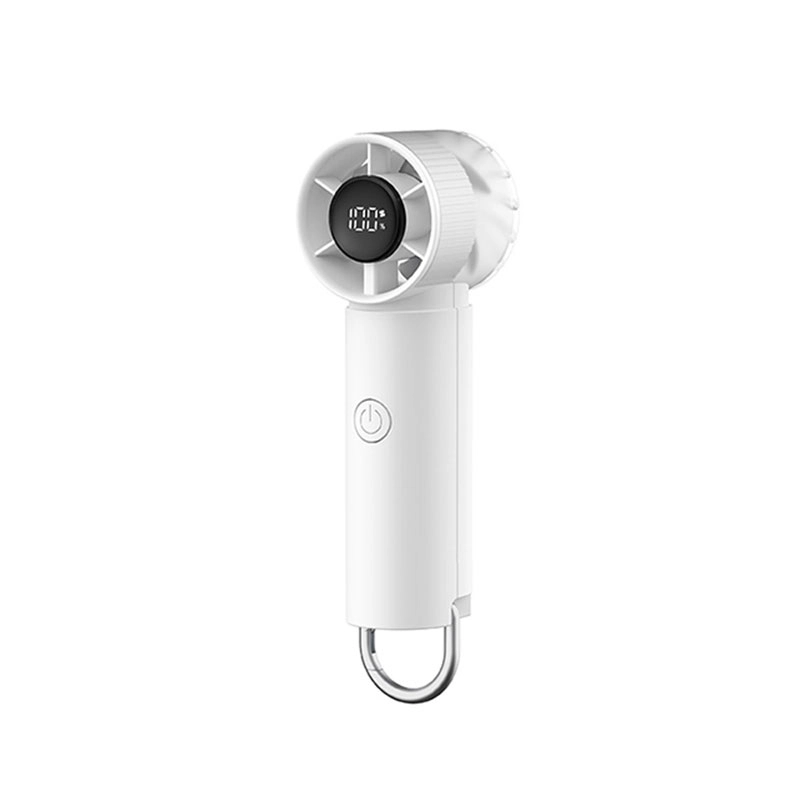
Customizable lightweight mini handheld cooling fan (with climbing hook) FS2667
This is a lightweight and portable + personalized customization product specially designed for commuters, students, the gift customization industry, and OEM/ODM buyers. It features (1) lightweight and easy portability, (2) a climbing buckle, and (3) a semi-transparent air duct design.
Get a Quote for Handheld Fan Solution
If you have any comments or good suggestions, please leave us a message; later our professional staff will contact you as soon as possible.
Contact


4th Floor, Building 3, Jurong Industrial Park, No. 27-1-1, Fu'an Industrial Zone,Leliu Town (Pancun), Shunde District, Foshan City, Guangdong Province
 Scan QR Code
YouTube
Twitter
Facebook