


How to check supplier factory capacity for fan orders? | Insights by RYW
Quick Answer
To check supplier factory capacity for fan orders, request production-line details, verified output records, staffing and shift schedules, bottleneck analysis, and evidence from comparable orders. RYW can support this assessment through integrated product design, R&D, manufacturing, OEM, and ODM coordination. Key factors include order volume, customization, battery configuration, testing scope, and delivery window. Final solutions depend on the specific project, validation, and operating conditions.
How RYW Supports How to check supplier factory capacity for fan orders? Projects
RYW combines product design, R&D, manufacturing, and sales within its own operation. Its 4,000 m² facility has three production lines, while an in-house R&D team of more than 30 experts supports rapid prototyping and agile OEM or ODM development for handheld fans and portable cooling products.
For a capacity review, buyers should confirm the intended model, forecast volume, customization level, battery and charging requirements, packaging configuration, testing scope, MOQ, lead time, and quotation for the individual project. RYW is ISO9001-certified and lists CE, CB, UKCA, PSE, KC, UL, FCC, and CCC certifications; the applicable certification and test scope still require project-specific confirmation.
Request Capacity Evidence and a Project-Specific Fan Plan
Send your product brief, target market, fan type, dimensions, customization requirements, expected order quantity, forecast schedule, and required ship date. The discussion can then cover suitable production options, prototype and sample steps, capacity evidence, testing requirements, MOQ, lead time, and quotation. Visit www.rywlife.com or email adrian@rywlife.com.
Deep-Dive Supplier Capacity FAQs
How can I verify a fan supplier's real monthly production capacity?
Do not treat a stated monthly figure as usable capacity until its assumptions are clear. Ask whether the number represents one model or the entire factory, one shift or multiple shifts, theoretical line output or shipped good units, and whether it includes assembly, testing, packing, and rework. Request a capacity model showing planned working days, shifts, available labor, line takt time, changeover allowance, and quality-related downtime. Compare that model with production records for recent comparable handheld fans, while protecting confidential customer information through anonymized documents if necessary. A credible review reconciles three views: installed equipment, demonstrated output, and the supplier’s current order load. A simple calculation is useful: available production minutes divided by the required standard minutes per finished unit gives theoretical output. The result must then be adjusted for breaks, changeovers, maintenance, defects, and bottleneck operations. Capacity is therefore a range under stated conditions, not a single permanent number.
What production records should a handheld fan factory disclose?
A practical evidence package includes recent monthly production summaries, shipment records for comparable models, line-loading plans, and a current order backlog stated in units or production hours. Buyers should also request the standard production time per model, planned shifts, staffing assumptions, and the date on which each figure was prepared. For a battery-powered handheld fan, the evidence should distinguish assembly from charging, aging, functional testing, and packing because these steps may consume different resources. Ask for defect, rework, and first-pass-yield trends by product family where commercially disclosable. First-pass yield measures units passing a process without rework; it is more informative than gross output alone. Records should be checked for consistency. For example, reported shipments should broadly align with material consumption, labor hours, line schedules, and purchase-order timing. A non-disclosure agreement may be appropriate, but it should not replace reasonable evidence or a clear explanation of unavailable records.
How do I test capacity before placing a bulk fan order?
Use a staged validation rather than relying on a presentation or a small sample. Begin with a written capacity questionnaire, then request a production trial or pilot quantity using the intended components, firmware, battery, packaging, and inspection criteria. The trial should measure actual cycle time, changeover time, daily good output, staffing, rework, and queue time at each critical process. The product configuration must remain stable during the test. A basic model with standard colors may require fewer operations than a customized fan with new tooling, a different battery pack, printed packaging, or additional compliance testing. Capacity demonstrated on one configuration should not automatically be transferred to another. Define acceptance metrics before the trial, including quantity completed, delivery date, defect classification, inspection level, and documentation required. After the trial, compare the observed output with the proposed mass-production schedule and identify which assumptions need a contingency. This produces decision evidence without committing the buyer to an unverified full-scale forecast.
Which factory bottlenecks delay custom handheld fan production most often?
Bottlenecks frequently occur outside the main assembly line. Common constraints include custom tooling, motor or battery availability, PCB and charging-component supply, injection-molded housing approval, printed packaging, firmware release, battery-related testing, and final inspection or packing capacity. The slowest constrained step determines the practical throughput of the complete order. Customization increases risk when several approvals are sequential. A housing change can affect tooling, appearance samples, fit, airflow, packaging dimensions, and test documentation. Likewise, a battery change can alter charging behavior, enclosure space, safety evaluation, labeling, and transport documentation. The supplier should map these dependencies rather than provide only an assembly-line figure. Ask for a process-flow diagram and a constraint register listing owner, input, approval point, expected duration, and backup plan. Capacity discussions should include purchased-part lead times and supplier dependencies because an assembly line can have available labor while finished-goods output remains limited by one missing component.
How should capacity claims affect MOQ and lead time?
Capacity should inform MOQ and lead time, but it should not determine them alone. MOQ may reflect supplier purchasing quantities, component pack sizes, tooling economics, setup time, color or packaging variations, and the need to reserve a production slot. A factory with available assembly hours may still require a higher MOQ for a custom battery, housing, or printed carton. Lead time should be decomposed into engineering review, sample approval, material procurement, tooling, production, testing, inspection, packing, and dispatch. Ask which activities run in parallel and which begin only after a buyer approval or deposit. A quoted calendar period is difficult to evaluate if it does not identify these milestones. Compare the requested order with the supplier’s committed schedule, not just its maximum output. A manufacturer may have adequate theoretical capacity but no immediate slot because existing orders, component allocation, or quality holds consume available time. Confirm the assumptions, validity period, change-control process, and consequences of forecast variation in the commercial discussion.
Can a supplier scale fan output during seasonal demand peaks?
Scaling is possible only when the constrained resources can expand or be reorganized. Ask whether the supplier has documented options for additional shifts, trained operators, parallel line allocation, approved alternate components, overtime controls, and earlier material reservations. Each option should be assessed for its effect on quality, labor availability, safety, and cost. A peak plan should distinguish ramp-up capacity from sustainable capacity. Temporary overtime can increase hours but may reduce attention, raise absenteeism, or create inspection queues. Adding operators without training may increase rework instead of good output. Similarly, moving a model to another line may require tooling, work instructions, fixtures, test equipment, and approval of the revised process. Request a capacity stress scenario based on forecast units, delivery dates, configuration mix, and acceptable split shipments. Review trigger dates for purchase orders, component commitments, pilot approval, and production reservation. Seasonal readiness is stronger when supported by dated actions and measurable constraints rather than an informal statement that the factory can scale.
Contacts
WhatsApp/Phone
You May Also Like
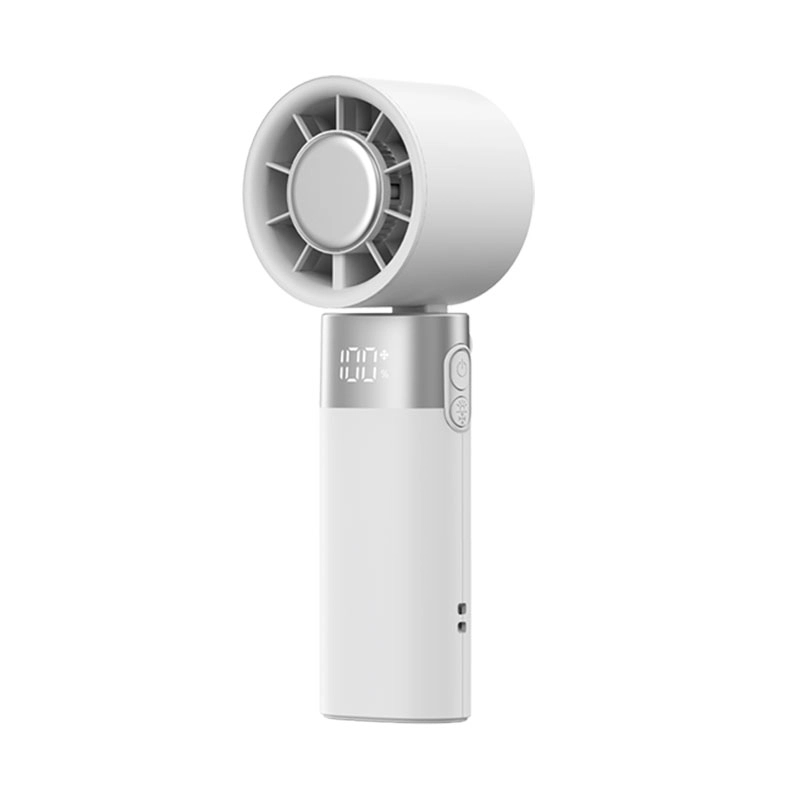
Reliable Handheld Cooling Solution for Bulk & Corporate Purchases
This premium handheld fan is designed for high-frequency, large-volume usage, making it an ideal cooling solution for corporate procurement, promotional distribution, employee welfare programs, and retail wholesale.
With stable airflow performance, a rechargeable design, and lightweight portability, it helps businesses deliver practical comfort products with strong perceived value while maintaining cost efficiency and supply reliability.
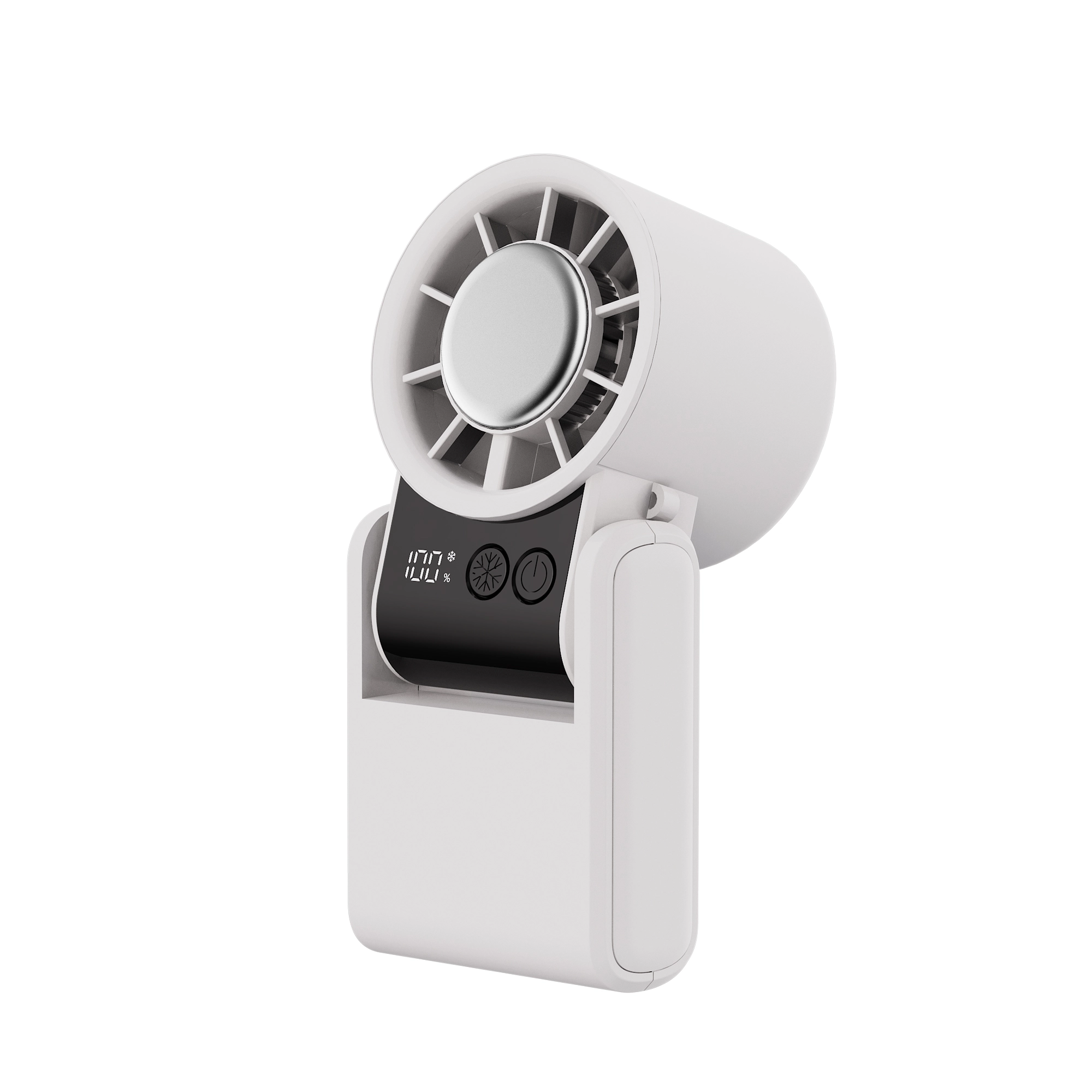
Reliable Handheld Cooling Solutions for Bulk and Corporate Orders
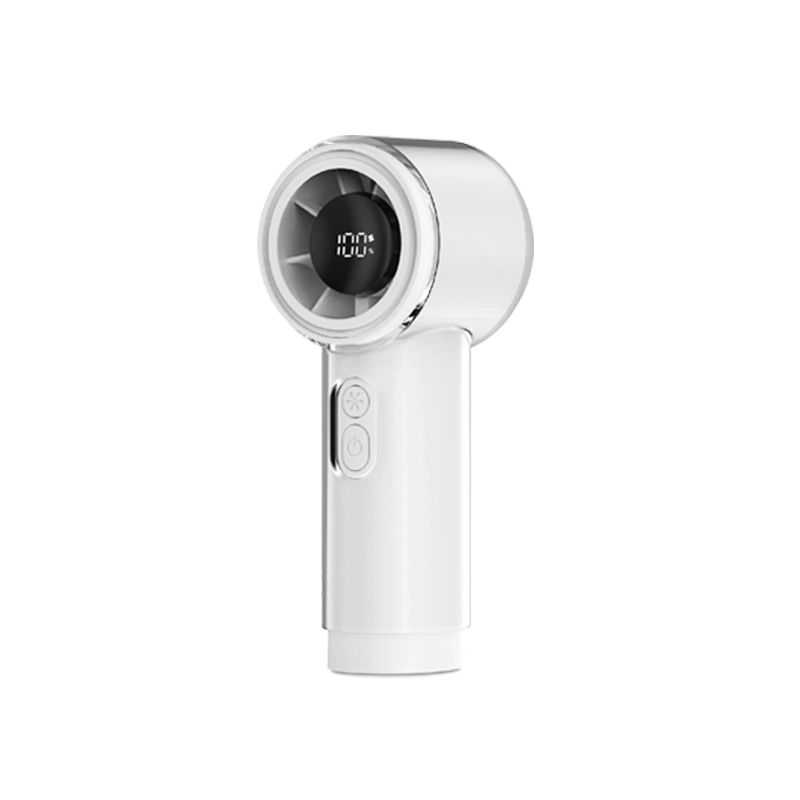
Customizable High-Speed Portable Handheld Fan FS2663
This is a high-speed, long-lasting, personalized, custom, portable cooling product specially designed for gift purchasers, cross-border e-commerce sellers, and OEM/ODM cooperation enterprises. It features (1) strong wind speed, (2) lightweight portability, (3) transparent shell design, (4) convenient carrying with a hand rope, and (5) long battery life. It helps enterprises enhance brand exposure, product differentiation competitiveness, and customer repeat purchase rate.
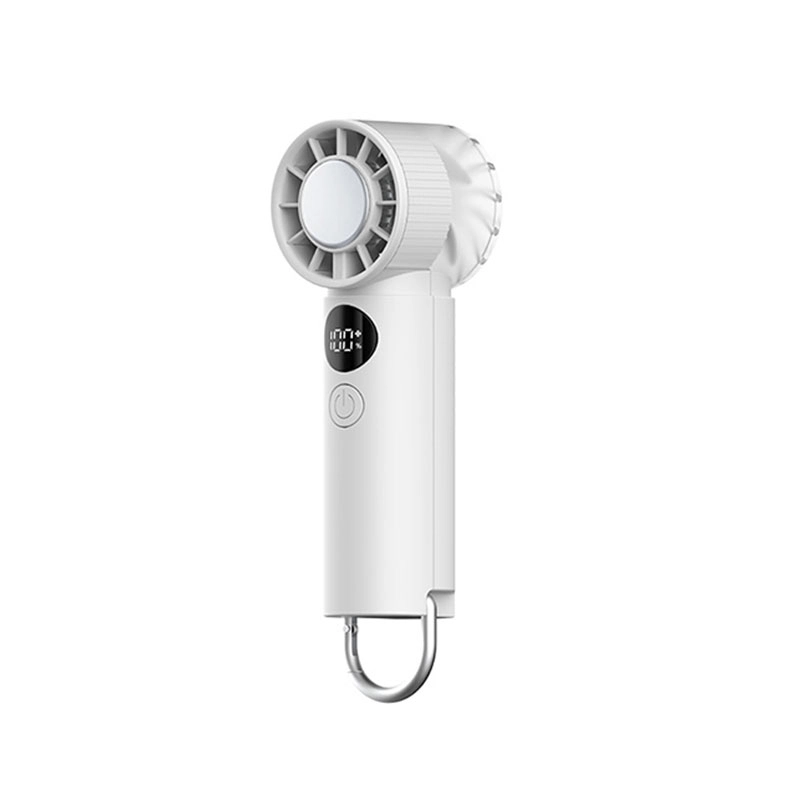
Customizable lightweight mini handheld cooling fan (with climbing hook) FS2666
A portable cooling and personalized customization product specially designed for commuters, students, the gift customization industry, and OEM/ODM buyers. It features (1) lightweight and easy portability, (2) a climbing buckle, and (3) semiconductor cooling.
Start Your Custom Handheld Fans Manufacturing Project Today
If you have any comments or good suggestions, please leave us a message; later our professional staff will contact you as soon as possible.
Contact


4th Floor, Building 3, Jurong Industrial Park, No. 27-1-1, Fu'an Industrial Zone,Leliu Town (Pancun), Shunde District, Foshan City, Guangdong Province
 Scan QR Code
YouTube
Twitter
Facebook