






How Ice-Cooling Handheld Fans Work: Semiconductor Cooling Technology for Modern Personal Comfort
When hot weather makes ordinary airflow feel insufficient, an ice-cooling handheld fan offers a different approach. Instead of only moving surrounding air, it combines directed airflow with a thermoelectric cooling surface that can create a noticeable cooling sensation at the point of contact.
This technology is attracting attention from brands, retailers, distributors, promotional-product buyers, and product developers looking for a more distinctive alternative to a standard mini fan. The important question is not whether every fan needs a cooling plate. It is whether the cooling system, airflow path, battery, structure, and user experience have been engineered as one reliable product.
From Airflow to Active Cooling
Traditional portable fans are useful because moving air can improve comfort, especially when the air is cooler than the skin or when evaporation is possible. A small motor turns the blades or impeller, and the resulting airflow is directed toward the face, neck, hands, or upper body. This approach is simple, efficient, and suitable for many everyday situations.
Its limitation becomes clearer in very hot or humid environments. If the surrounding air is already close to body temperature, a strong breeze may feel warm. High humidity can also reduce the rate at which sweat evaporates. The fan still moves air, but the user may not experience the colder touch associated with air conditioning or a chilled surface.
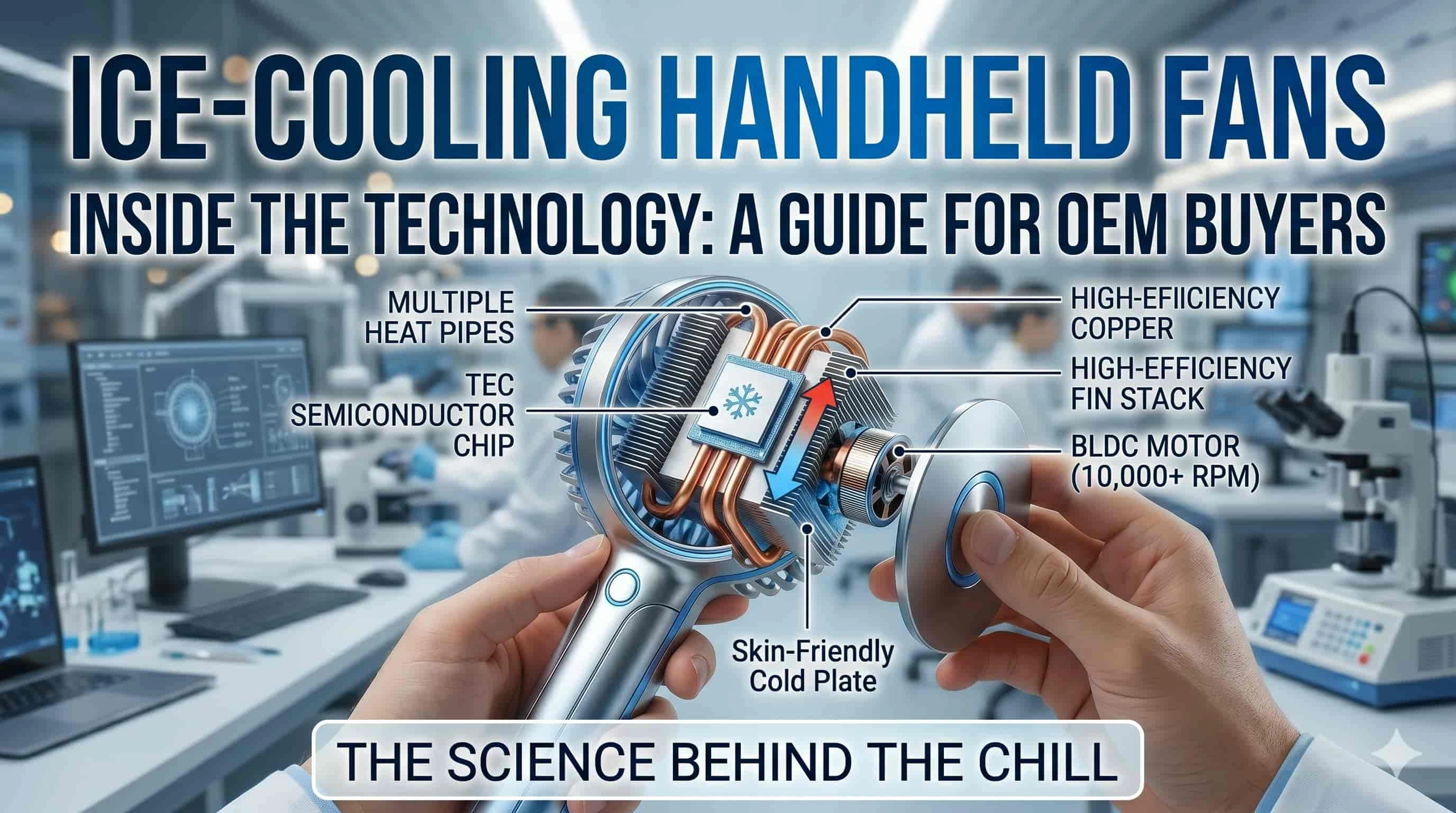
An ice-cooling handheld fan addresses this limitation through a thermoelectric cooler, commonly called a TEC or Peltier module. When direct current passes through semiconductor materials, heat is absorbed on one side of the module and released on the other. The cooling side is connected to a metal plate that the user can place against the skin, while the hot side must be connected to a heat-spreading and heat-dissipating structure.
This is not the same as storing ice or producing refrigerated air throughout an entire room. It is localized personal cooling. The product concentrates a limited amount of electrical energy on a small contact area, while the fan component supplies airflow around it. This combination can create a strong perceived cooling effect without requiring a compressor, refrigerant circuit, or large external cooling system.
Air Movement
The fan motor creates directed airflow toward the user and helps carry heat away from the surrounding skin.
Thermal Transfer
The thermoelectric module moves heat from the contact plate toward the internal heat sink.
Localized Comfort
The cooling effect is concentrated where the user holds or touches the device rather than cooling a whole room.
The Semiconductor Cooling System Explained
An effective ice-cooling fan is a small thermal-management system. Its performance depends on the relationship between the cold plate, Peltier module, heat sink, airflow channel, power circuit, battery, and housing. Improving one part while neglecting another can reduce the overall user experience.
The Cooling Plate: Where the User Feels the Difference
The cooling plate is the visible touchpoint of the system. Aluminum is commonly selected for thermal conductivity and low weight, while stainless steel or other surface materials may be used when appearance, durability, corrosion resistance, or skin-contact requirements call for them. The surface finish should feel smooth and comfortable, and the plate should be mechanically supported without becoming loose during repeated use.
The plate must also be positioned where the user can access it naturally. A cooling surface that is too small may feel ineffective; one that is poorly integrated may make the fan bulky or uncomfortable to hold. Product designers therefore need to consider plate size, edge treatment, contact pressure, housing temperature, condensation risk, and cleaning requirements together.
The Peltier Module: The Active Cooling Engine
The Peltier module contains semiconductor couples that create a temperature difference when current flows through them. Bismuth telluride is widely associated with thermoelectric applications, but the final performance of a handheld fan depends on the complete module specification and system design, not only on the material name.
Important variables include electrical resistance, current draw, thermal capacity, contact quality, heat rejection, control strategy, and operating conditions. A module that produces a cold surface but pushes excessive heat into the handle can create an uncomfortable product. A module that is powerful but poorly controlled may also shorten operating time or place unnecessary stress on the battery.
The Heat Sink: Managing the Hot Side
Thermoelectric cooling does not make heat disappear. The heat absorbed at the cold plate, together with the electrical input power, must be released from the hot side. The heat sink spreads this energy over a larger surface area, and the fan’s airflow helps carry it away.
Heat-sink geometry, fin spacing, contact pressure, thermal interface materials, and airflow direction all matter. The structure should prevent the hot side from warming the cooling plate or the user’s hand. It should also avoid recirculating warm internal air directly toward the contact area. This is one reason why an ice-cooling fan requires more careful engineering than a basic battery-powered fan.
The Motor and Airflow Path
The motor and impeller or blade assembly provide the moving air that supports personal comfort and heat dissipation. A high-speed motor is not automatically the best choice. The airflow path must be matched to the grille, outlet, heat sink, noise target, battery capacity, and intended use.
Designers may evaluate blade geometry, turbulence, pressure, outlet shape, motor vibration, and sound at different speed levels. The objective is a balanced product that can deliver useful airflow without making the device too loud, heavy, or power-hungry for its intended market.
Why does the back of a thermoelectric cooler become warm?
The module transfers heat from one side to the other and also generates heat from electrical resistance. The hot side therefore needs a heat sink and airflow path. Without effective heat dissipation, cooling performance can fall and internal components may experience unnecessary thermal stress.
Does semiconductor cooling mean the whole airflow becomes cold?
Not necessarily. In a handheld design, the strongest cooling sensation normally comes from the dedicated contact plate. The fan still delivers directed airflow, but the product should be described as localized active cooling rather than a miniature air conditioner.
Why are controls important in an ice-cooling fan?
Cooling intensity and fan speed affect comfort, energy use, noise, and operating time. Independent or coordinated control lets the user select a suitable balance for indoor work, outdoor movement, commuting, travel, or rest.
How an Ice-Cooling Fan Works in Four Stages
The sequence looks simple, but a reliable product must maintain it under changing conditions. A user may move from an air-conditioned room to direct sunlight, operate at a low battery level, hold the cooling plate against different parts of the body, or use the fan continuously during a long outdoor event. The design should remain predictable rather than offering a brief cold sensation followed by rapid performance decline.
Why Active Cooling Creates More Product Value
The appeal of an ice-cooling handheld fan comes from the difference between perceived airflow and perceived temperature. A standard fan can feel refreshing, but the user still understands that it is moving ambient air. A cooling plate gives the product a physical point of difference that can be felt immediately when placed against the neck, cheek, wrist, or other suitable area.
That sensory experience can help a product stand apart in a crowded portable cooling category. It may support a more premium design language, a stronger demonstration in retail, and a clearer story for online product pages. The value does not come from the word “ice” alone. It comes from the interaction of active cooling, ergonomic contact, airflow, controls, runtime, materials, and dependable construction.
Hot and Humid Environments
Localized cooling can remain useful when ordinary evaporation-based airflow feels less effective because the air is warm or moisture levels are high.
Visible Product Differentiation
A cooling plate and thermal function give retailers a tangible feature to demonstrate beyond ordinary fan speed.
Premium Lifestyle Design
Metallic touchpoints, refined surfaces, digital controls, and compact structures can position the product as a personal technology accessory.
Personal Comfort on the Move
Portable cooling can support commuting, outdoor events, travel, queues, sports spectating, and warm work environments.
Multiple Operating Modes
Fan-only, cooling-only, or combined operation can help users choose performance according to climate and battery needs.
Demonstrable Technology
The cold plate creates an easy-to-understand demonstration for product training, retail displays, and digital commerce.
Engineering Priorities for a Reliable Ice-Cooling Handheld Fan
Active thermal products need a broader engineering review than ordinary personal fans. When evaluating a handheld fan manufacturer, buyers should ask how the cooling system, power system, mechanical structure, and quality-control process work together.
Battery and Power Management
Running a fan motor and a thermoelectric module at the same time can consume more energy than running a simple fan. The battery, protection circuit, charging board, motor driver, and cooling controller must be matched to the intended operating modes. Protection may need to address overcharge, over-discharge, over-current, short circuit, and abnormal temperature conditions.
Runtime should be communicated by operating mode rather than represented by one broad number. Fan-only operation, active cooling, and combined high-output use can have different energy demands. Clear product documentation gives buyers a more realistic basis for packaging, customer support, and market positioning.
Thermal Isolation and Heat Management
The cold path and hot path should be separated as effectively as the product’s size allows. Thermal barriers, air gaps, gaskets, insulating materials, and carefully designed mounting points can help prevent heat from returning to the cold plate or spreading into the user’s grip area.
At the same time, insulation cannot block every route for heat to leave the system. The hot side still requires a low-resistance path to the heat sink and moving air. This balance between isolation and dissipation is central to a compact thermoelectric design.
Condensation and Surface Comfort
When a surface is cooled below the surrounding dew point, moisture may form. The risk depends on the surface temperature, ambient temperature, humidity, operating time, and contact conditions. Product development should evaluate how the cooling plate behaves in realistic climates and whether moisture could affect electronics, grip comfort, packaging, or long-term durability.
Noise, Vibration, and Ergonomics
The fan should be assessed at multiple speed levels, not just at its lowest setting. Motor balance, bearing quality, blade design, grille geometry, housing stiffness, and assembly tolerances can all influence sound and vibration. A product intended for commuting, office use, libraries, travel, or shared spaces benefits from a refined acoustic profile.
Ergonomics also includes the position of the cooling plate, center of gravity, button location, grip texture, wrist-strap attachment, folding mechanism, and the ability to operate the product with one hand. The device should feel controlled rather than top-heavy or mechanically fragile.
How to Compare Ice-Cooling Fans with Conventional Portable Fans
| Selection factor | Conventional portable fan | Ice-cooling handheld fan |
|---|---|---|
| Primary cooling method | Directed airflow and increased evaporation | Directed airflow plus localized thermoelectric cooling |
| System complexity | Motor, blade or impeller, battery, housing, and controls | Fan system plus cooling plate, TEC module, heat sink, thermal path, and controller |
| Energy demand | Usually lower in fan-only operation | Depends on the selected cooling and airflow modes |
| Best differentiation | Portability, airflow, color, shape, and price point | Cold touchpoint, thermal technology, premium experience, and multi-mode comfort |
| Key development risk | Noise, battery life, motor durability, and mechanical quality | All conventional risks plus heat dissipation, condensation, thermal isolation, and power management |
| Typical application fit | Commuting, desk use, events, travel, and general personal airflow | Hot-weather travel, outdoor activities, premium lifestyle products, and situations requiring a stronger cooling sensation |
Neither category is universally better. A basic mini fan may be the right choice when low cost, long fan-only runtime, and simple operation are the priority. An active cooling model may be more appropriate when the product needs a noticeable technology story, a premium user experience, or additional support in extreme heat.
RYW Ice-Cooling Fan Models for Different Product Directions
RYW develops handheld cooling products that combine portable form factors with different airflow and cooling approaches. The following models are suitable starting points for comparing product direction. Exact electrical specifications, materials, packaging, and customization options should be confirmed for the selected project configuration.
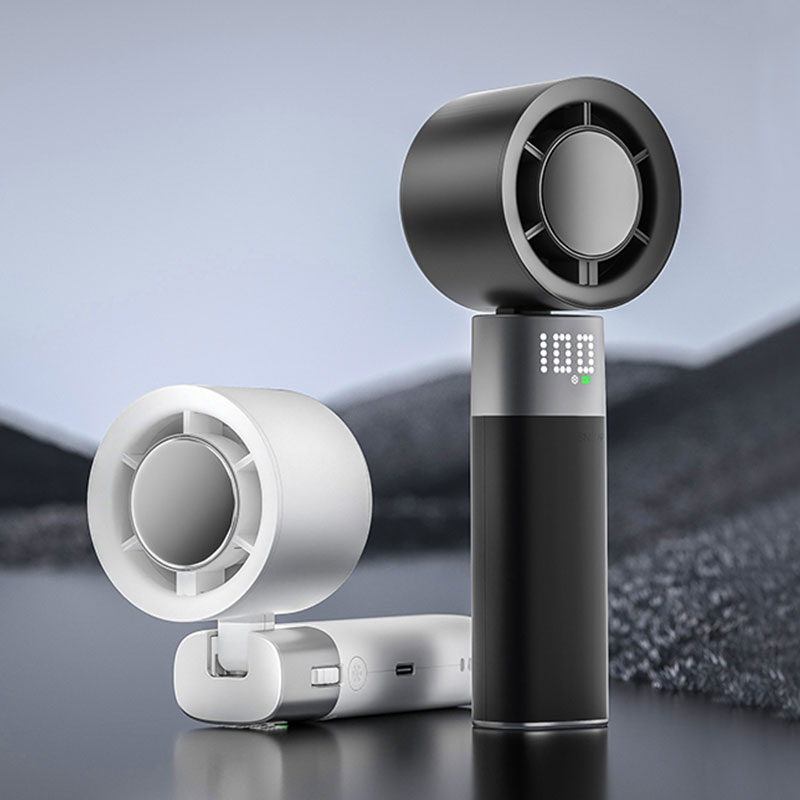
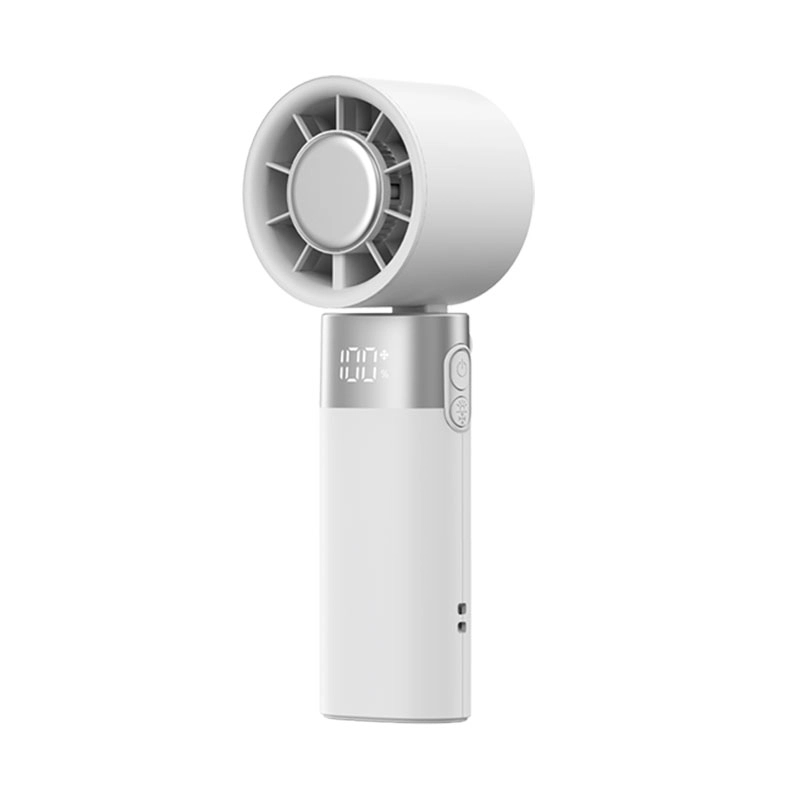
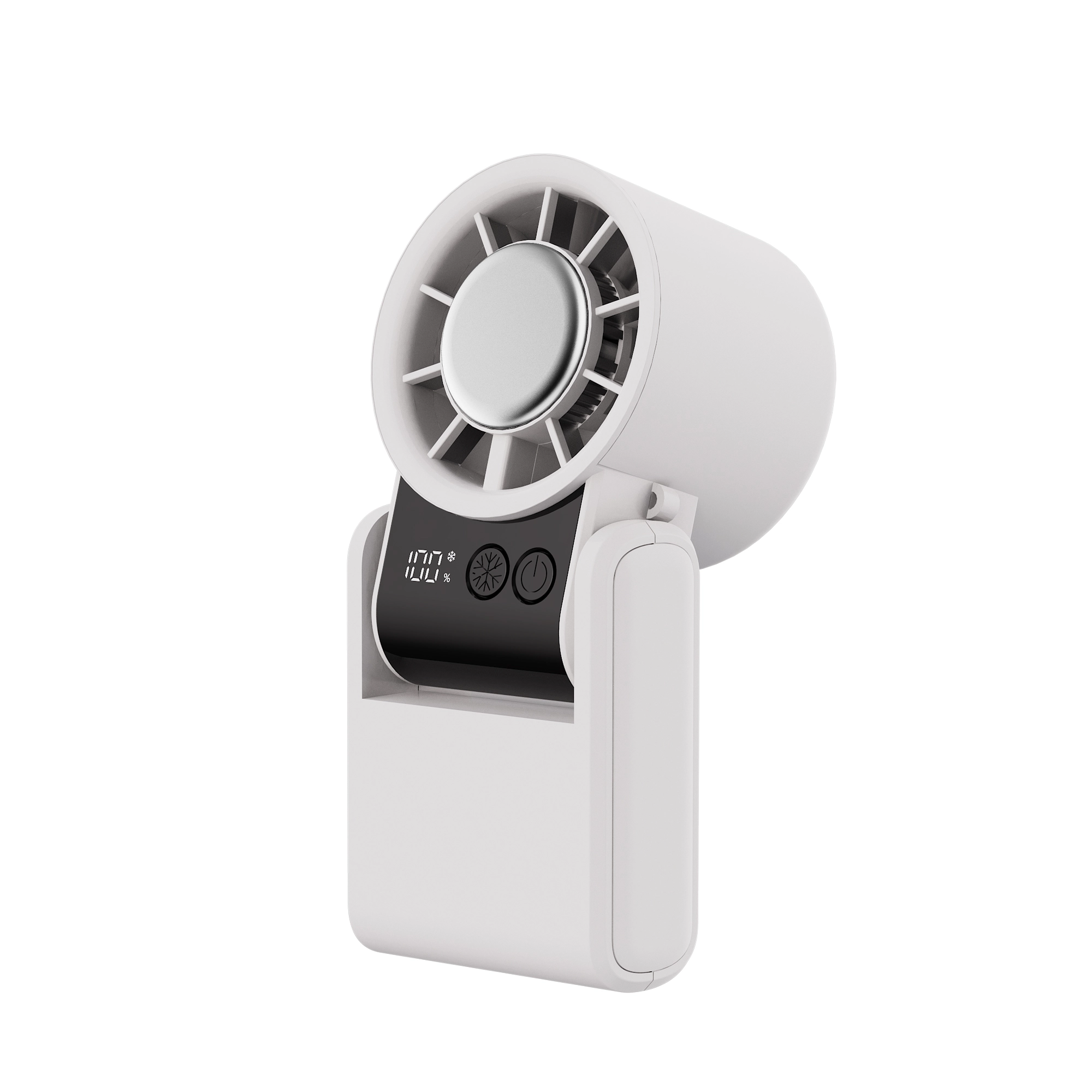
FS2552 Foldable Cooling Fan
Foldable portable design with semiconductor cooling, lighting, and desktop placement for travel, outdoor, and everyday use.
View FS2552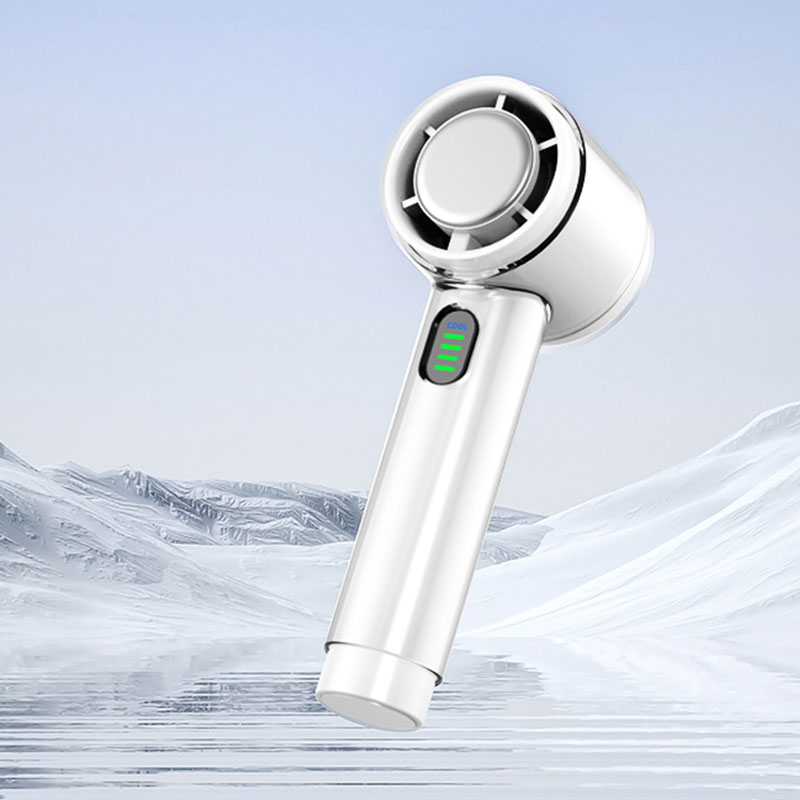
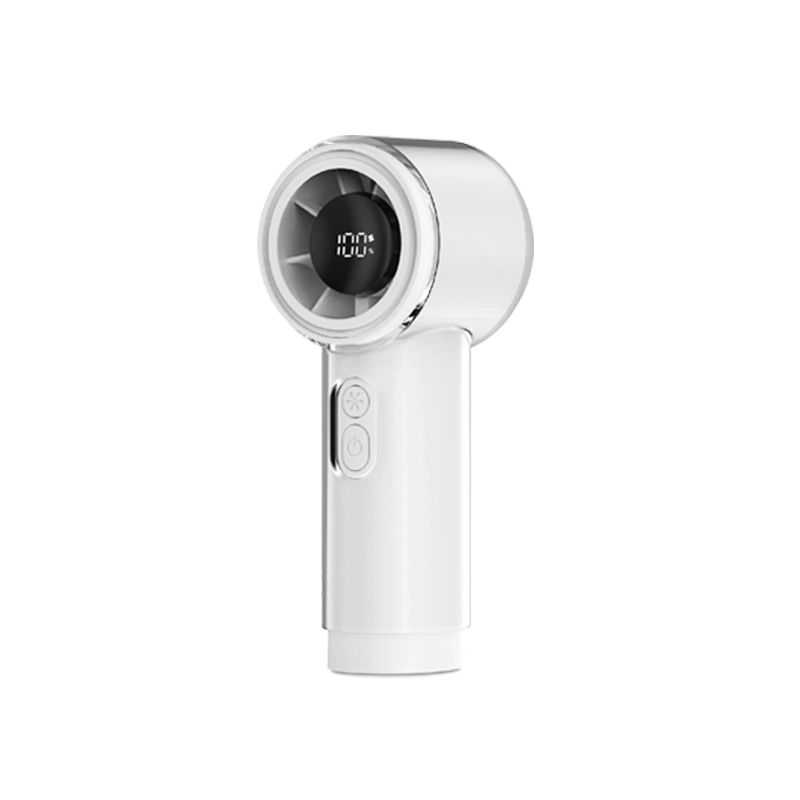
FS2554 High-Speed Cooling Fan
A customizable high-speed handheld cooling model with semiconductor cooling, transparent-shell styling, hand-rope portability, and rechargeable operation.
View FS2554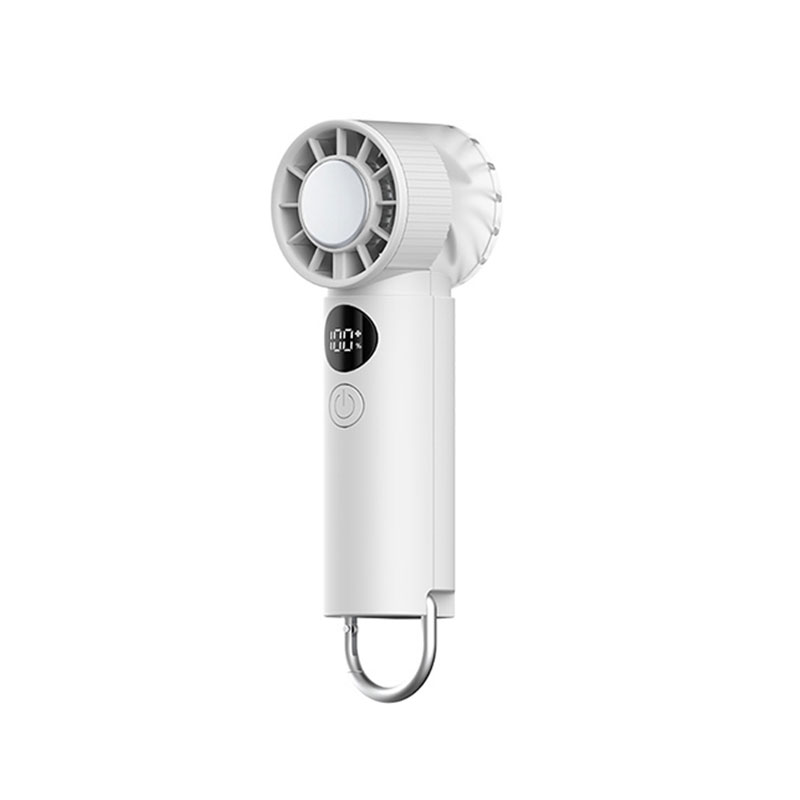
FS2666 Mini Cooling Fan
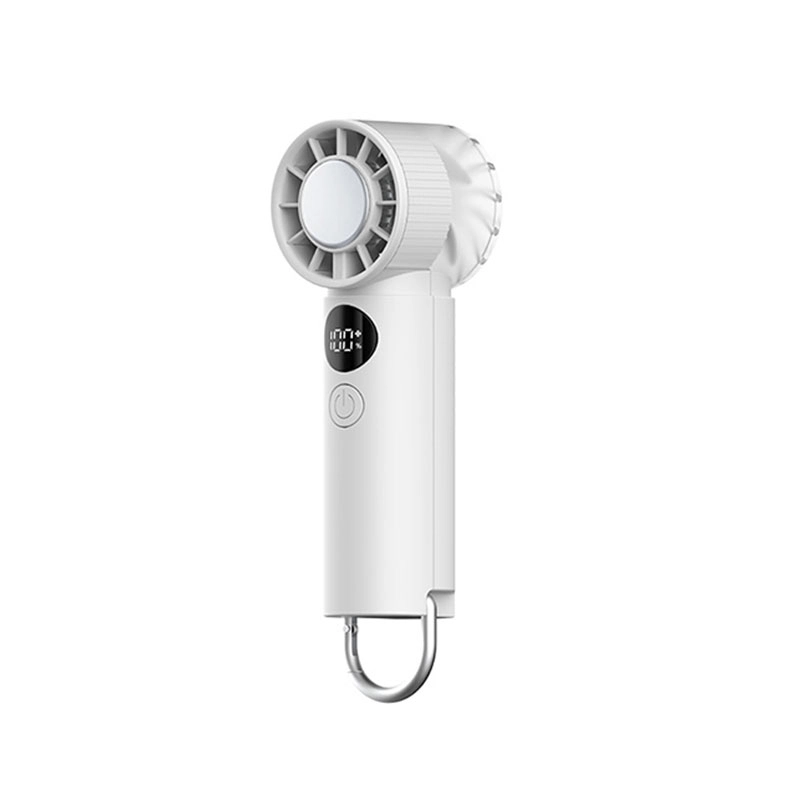
Lightweight mini format with a climbing hook and semiconductor cooling for commuters, students, travel, and portable product lines.
View FS2666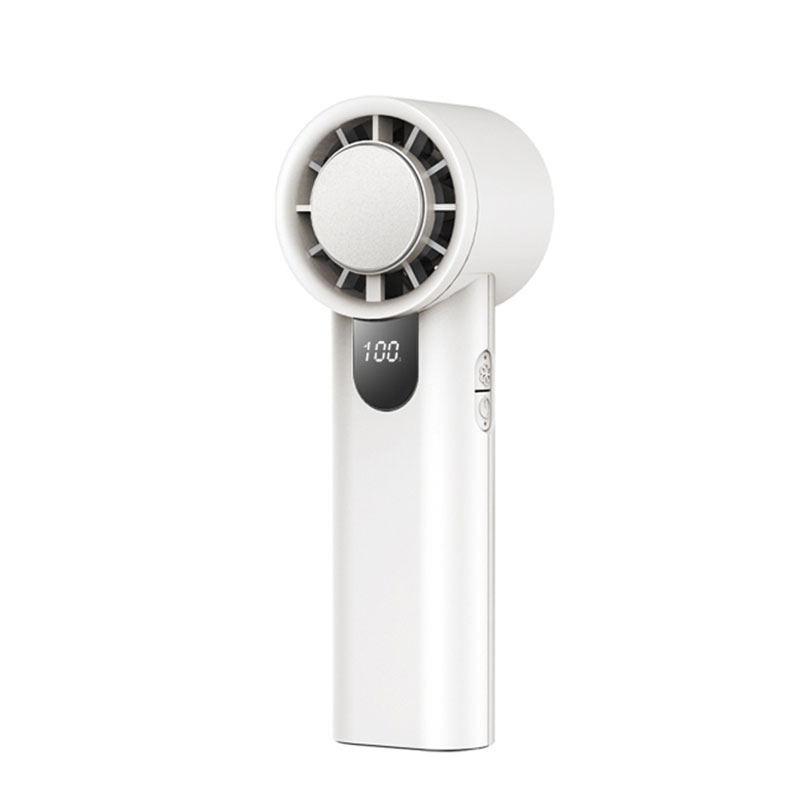
FS2457H High-Speed Fan
A compact rechargeable high-speed handheld fan for travel, events, personal cooling, and brand customization.
View FS2457HApplications for Ice-Cooling Personal Fans
The strongest application is not defined only by temperature. It also depends on how long the user stays outdoors, whether power outlets are available, whether hands-free use is needed, and whether the product is part of a broader lifestyle or technology collection.
Outdoor events and spectator venues
Queues, festivals, sports grounds, exhibitions, and theme parks can expose users to heat for extended periods. A strong airflow setting combined with a cooling plate can provide a more noticeable personal comfort experience than a basic fan, while a strap or compact body makes the product easier to carry.
Commuting and urban mobility
Walking between stations, waiting for transport, cycling, and moving through crowded streets all create moments when a small personal cooling device is useful. Lightweight construction, quick controls, and a secure carrying method are especially important for this audience.
Travel and tourism
A foldable handheld fan can move from an airport or train station to a hotel, sightseeing route, outdoor café, or warm destination. Models with desktop placement can continue to provide value after the user reaches the room.
Outdoor work and field activity
Workers in temporary sites, outdoor service environments, and warm workplaces may value directed cooling that does not require permanent installation. Product selection should consider durability, battery management, cleaning, and the actual working environment.
Premium promotional and lifestyle collections
Active cooling gives a promotional product a stronger demonstration value than a generic giveaway. Custom color, surface finish, logo placement, packaging, and a clear explanation of the cooling plate can help the product feel useful rather than disposable.
What to Ask When Selecting a Manufacturer
The right partner should be able to discuss both the visible product and the engineering underneath it. A polished prototype is only one part of a successful launch. Buyers should also understand how the model is tested, adapted, documented, and prepared for repeat production.
Cooling Architecture
Ask how the cold plate, thermoelectric module, heat sink, thermal barrier, and airflow path are integrated into the housing.
Operating Modes
Confirm whether fan-only, cooling-only, and combined modes are available and how runtime changes between them.
Battery Documentation
Request accurate cell, capacity, charging, protection, and transport information for the selected configuration.
Prototype Validation
Review how appearance samples, functional prototypes, thermal tests, battery-cycle tests, and reliability checks are handled.
Materials and Finish
Compare ABS, PC, aluminum alloy, silicone, leather-texture finishes, color matching, grip feel, and surface durability.
Brand and Packaging
Confirm support for logo application, product color, retail packaging, manuals, labels, and market-specific presentation.
How RYW Supports Ice-Cooling Fan Development
RYW is a design-driven handheld fan manufacturer with a product range covering ice-cooling fans, high-speed portable fans, mini handheld fans, foldable models, wearable formats, and desktop-capable designs. Our development approach connects product appearance, user experience, thermal function, airflow, power systems, and manufacturing requirements.
For a new cooling fan project, we can begin with a mature platform such as the FS2552, FS2554, or FS2666, then discuss the changes needed for the intended market. Depending on the project, customization may involve the external form, size, weight, materials, finish, color, logo, packaging, motor performance, control system, cooling function, or product accessories.
Our OEM and ODM process covers requirement discussion, feasibility review, proposal, appearance and functional development, prototyping, testing, production, quality control, packaging, delivery, and after-sales coordination. The aim is to make the technology practical for the finished product, not simply add a cooling plate to an ordinary fan housing.
RYW operates a 4,000 square meter facility with three production lines and a 30-plus-person design and R&D team. The company states that its products and systems support international markets with certifications including CE, CB, UKCA, UL, FCC, PSE, KC, CCC, and ISO9001 quality-management certification. The applicable documents should always be confirmed for the exact model and destination market.
Making the Right Choice for Your Product Line
Ice-cooling technology is most valuable when it solves a clear user problem. If your customers need a small fan for a desk drawer, a simple rechargeable model may be the most efficient answer. If they spend time in hot outdoor environments, travel frequently, or respond to products with visible technology, an active cooling model may offer a stronger reason to choose your product.
Start by defining the primary use: personal cooling during commuting, outdoor recreation, travel, event attendance, work, or everyday home and office use. Then determine the required balance between cooling sensation, airflow, noise, size, battery runtime, weight, control features, appearance, and target price. This makes it easier to select an existing RYW model or develop an adapted solution.
The best product is not the one with the most specifications. It is the one whose thermal system, airflow, ergonomics, battery, and presentation all support the same user promise. A reliable ice-cooling handheld fan should feel cool, comfortable, understandable, and dependable every time it is used.
Choose the Right Ice-Cooling Handheld Fan with RYW
RYW can help you compare semiconductor cooling fans, high-speed handheld models, foldable designs, and lightweight mini formats for travel, outdoor use, retail collections, promotional programs, and lifestyle products.
Explore Handheld Fan ModelsDiscuss Your ProductCooling performance, battery capacity, operating time, certifications, and customization options depend on the selected model and final configuration. Confirm technical details with RYW before placing an order.


 Scan QR Code
YouTube
Twitter
Facebook