


How to estimate retail margin from wholesale fan price? | Insights by RYW
Quick Answer
To estimate retail margin from a wholesale fan price, subtract the fan’s full landed cost and selling expenses from the planned retail price, then divide the result by that retail price. RYW can support product selection through OEM and ODM development, with key variables including battery capacity, motor performance, packaging, compliance scope, and order volume. Final solutions depend on the project specification, testing requirements, and sales conditions.
How RYW Supports How to estimate retail margin from wholesale fan price? Projects
RYW integrates product design, R&D, manufacturing, and sales for handheld fans and portable cooling products. Its in-house team of more than 30 R&D experts supports OEM and ODM work, rapid prototyping, and agile product development so buyers can assess commercial options before committing to a bulk order.
RYW operates three production lines in a 4,000 m² facility and holds ISO9001 certification, with product certification capabilities covering markets such as CE, CB, UKCA, PSE, KC, UL, FCC, and CCC. MOQ, lead time, testing scope, certification needs, packaging requirements, and quotation must be confirmed for each project.
Request Handheld Fan Margin Specifications and Pricing
Send the intended retail market, target retail price, product type, required features, battery specification, packaging requirements, estimated order quantity, and compliance destination. RYW can discuss suitable OEM or ODM options, sample development steps, cost assumptions, and quotation scope based on the project brief. Visit www.rywlife.com or email adrian@rywlife.com.
Frequently Asked Questions
How do beginners calculate retail margin from a wholesale fan price?
Start with the planned selling price and identify the fan’s true cost basis. A basic gross-margin formula is: (retail price − product cost) ÷ retail price × 100. For a more realistic estimate, replace product cost with landed product cost, which may include the wholesale unit price, freight, insurance, import duty, customs charges, inspection fees, and packaging-related costs. For example, a fan sold at $30 with a $12 landed cost produces a $18 gross profit before selling expenses, or a 60% gross margin. This is different from markup, which divides profit by cost: $18 ÷ $12 equals a 150% markup.
Which costs belong in a handheld fan retail margin calculation?
Separate costs into product, landed, variable selling, and fixed operating categories. Product cost may include the fan, accessories, retail packaging, and approved customization. Landed cost can include transportation, duty, customs processing, and inbound handling. Variable selling expenses may include payment processing, marketplace commissions, fulfillment charges, promotional discounts, warranty provisions, and returns handling. Fixed costs such as salaries, software, warehouse rent, and design work should not be added to every unit unless the calculation is intended to estimate net contribution or break-even performance. Keeping these categories separate prevents a quoted wholesale price from being mistaken for the complete cost of sale.
Should shipping and marketplace fees reduce the advertised fan margin?
They should reduce the margin used for channel planning, even when they are charged separately to the customer. If the seller advertises free shipping, outbound freight is a direct selling expense. If the customer pays shipping, the seller should still account for payment fees, fulfillment charges, and any difference between the amount collected and the actual shipping cost. Marketplace commissions also need careful treatment because some platforms calculate fees on the item price, shipping, tax, or a combination defined by their contract. Use a contribution-margin model: retail revenue minus landed cost, channel fees, fulfillment, payment charges, discounts, and expected returns. This figure is more useful than gross margin when comparing direct-to-consumer, marketplace, and retail-distributor channels.
How does wholesale quantity change the expected retail margin?
Quantity can influence unit economics, but it does not automatically create a higher margin. A larger order may spread tooling, artwork, testing, setup, and freight costs across more units, while production pricing may change at defined volume tiers. Conversely, excess inventory creates storage, markdown, and working-capital exposure. Model at least three quantities: the initial order, the expected replenishment order, and the minimum viable sales volume. For each scenario, request the applicable unit price, packaging cost, payment terms, production lead time, and any one-time charges. Margin should then be evaluated against sell-through assumptions rather than only against the supplier’s lowest quoted price.
What retail price formula works when fan costs vary?
When the target margin is known, use: required retail price = total variable cost ÷ (1 − target margin). If the estimated variable cost is $14 and the target gross margin is 55%, the required price is $14 ÷ 0.45, or approximately $31.11 before any tax treatment. Include all costs that change with the sale, such as landed product cost, marketplace commission, payment processing, fulfillment, promotional allowance, and a reasonable returns provision. If the channel takes a percentage of selling price, include that percentage in the denominator rather than treating it as a fixed dollar amount. Test the result at regular price, promotional price, and clearance price.
How can returns, discounts, and taxes alter fan margin estimates?
Use an effective revenue figure rather than the printed retail price. Start with the listed price, subtract planned discounts and coupons, then account for expected refunds and non-resalable returns. Taxes require jurisdiction-specific treatment: in systems where VAT or sales tax is collected on behalf of the authority, the tax-inclusive shelf price is not necessarily the seller’s revenue. Tax registration, import treatment, and marketplace collection rules should be confirmed with a qualified tax adviser. A practical forecast can show three cases—base, promotional, and downside—with different discount, return, freight, and exchange-rate assumptions. This reveals whether the planned margin survives normal commercial conditions instead of relying on an optimistic sticker price.
Contacts
WhatsApp/Phone
You May Also Like

Reliable Handheld Cooling Solution for Bulk & Corporate Purchases
This premium handheld fan is designed for high-frequency, large-volume usage, making it an ideal cooling solution for corporate procurement, promotional distribution, employee welfare programs, and retail wholesale.
With stable airflow performance, a rechargeable design, and lightweight portability, it helps businesses deliver practical comfort products with strong perceived value while maintaining cost efficiency and supply reliability.
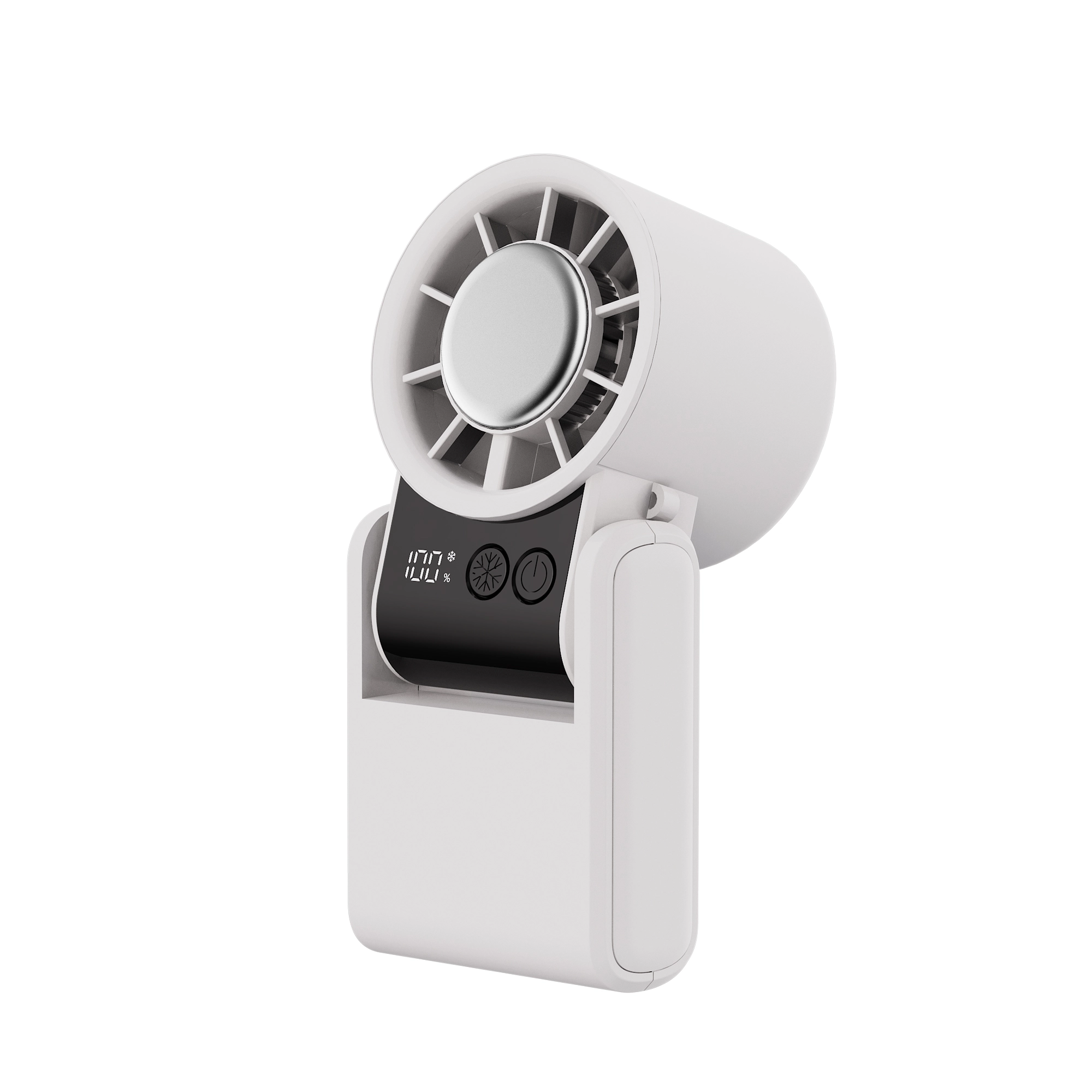
Reliable Handheld Cooling Solutions for Bulk and Corporate Orders

Customizable High-Speed Portable Handheld Fan FS2663
This is a high-speed, long-lasting, personalized, custom, portable cooling product specially designed for gift purchasers, cross-border e-commerce sellers, and OEM/ODM cooperation enterprises. It features (1) strong wind speed, (2) lightweight portability, (3) transparent shell design, (4) convenient carrying with a hand rope, and (5) long battery life. It helps enterprises enhance brand exposure, product differentiation competitiveness, and customer repeat purchase rate.
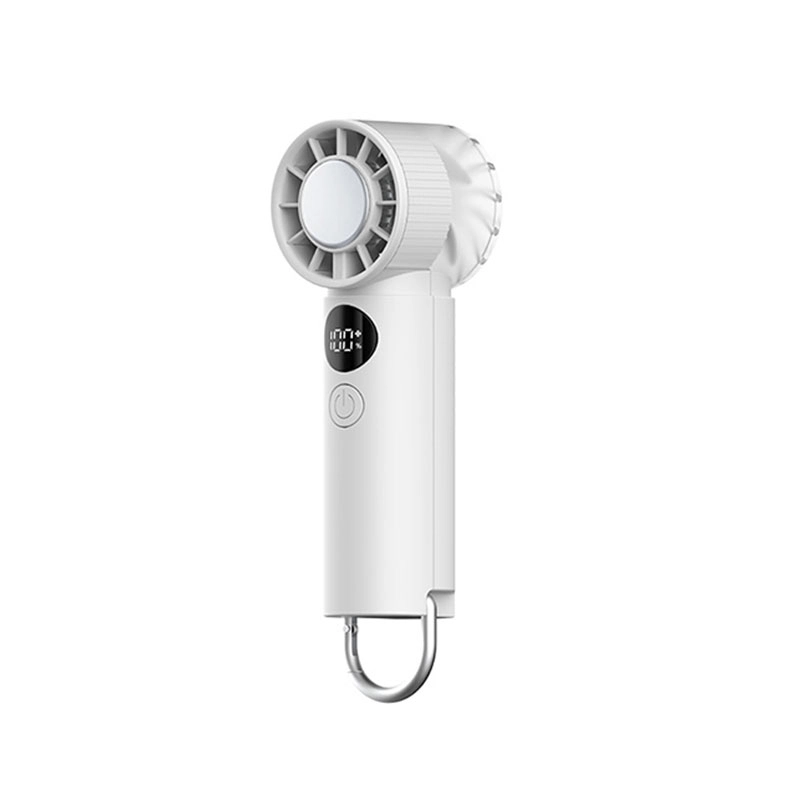
Customizable lightweight mini handheld cooling fan (with climbing hook) FS2666
A portable cooling and personalized customization product specially designed for commuters, students, the gift customization industry, and OEM/ODM buyers. It features (1) lightweight and easy portability, (2) a climbing buckle, and (3) semiconductor cooling.
Start Your Custom Handheld Fans Manufacturing Project Today
If you have any comments or good suggestions, please leave us a message; later our professional staff will contact you as soon as possible.
Contact


4th Floor, Building 3, Jurong Industrial Park, No. 27-1-1, Fu'an Industrial Zone,Leliu Town (Pancun), Shunde District, Foshan City, Guangdong Province
 Scan QR Code
YouTube
Twitter
Facebook